Our verdict
Dong Xuan Center on Herzbergstraße in Berlin's Lichtenberg district is one of Germany's largest Vietnamese trading markets, drawing both the city's Vietnamese community and curious Berliners for street food, fresh produce, and a shopping culture rooted in post-reunification migration history. The experience sits outside any conventional restaurant category: part covered market, part food hall, entirely its own register of urban eating.

Pearl is the En Primeur Club membership app, where members save venues, book tables and use the concierge.
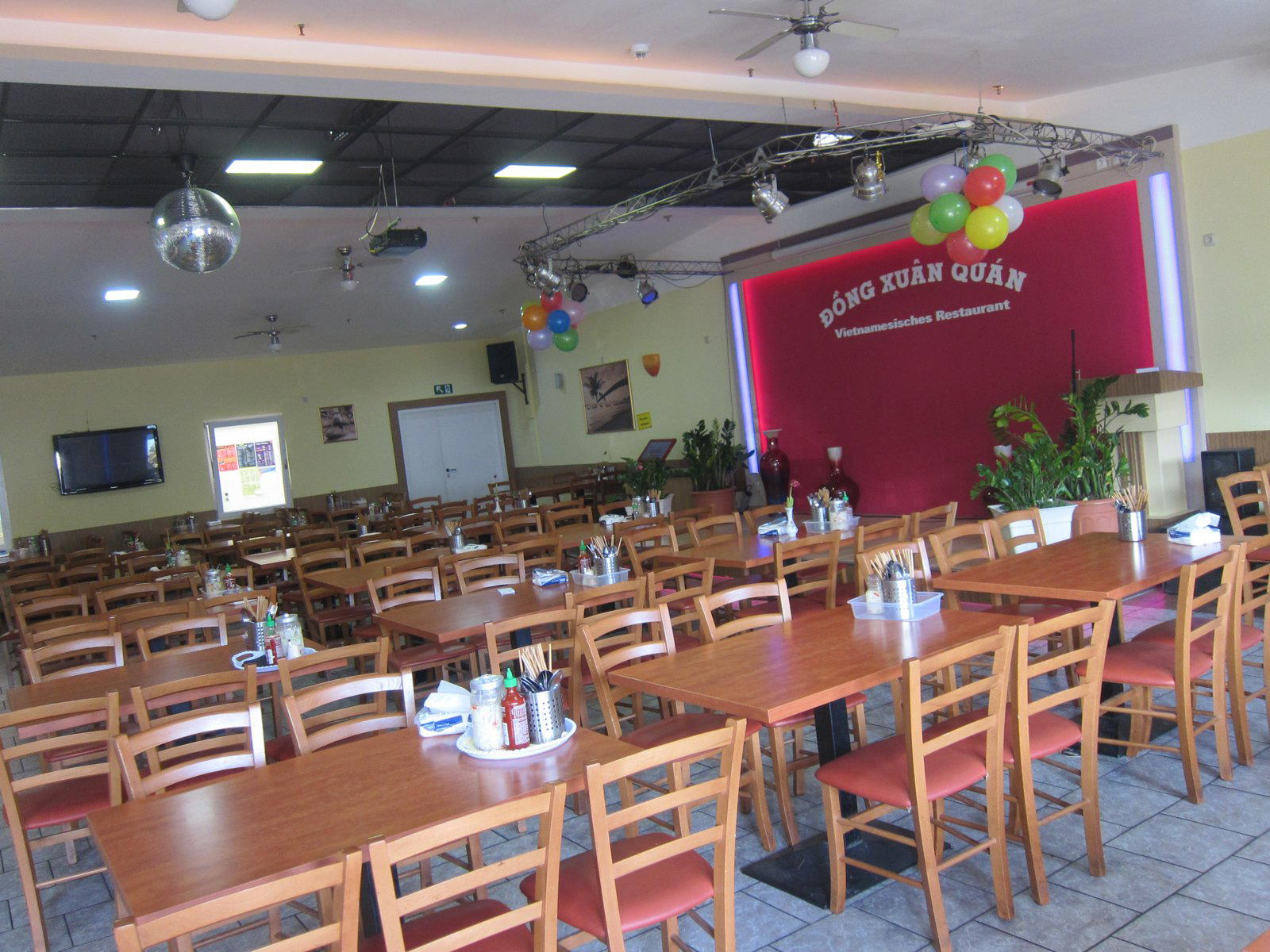
Where Lichtenberg's Vietnamese Market Redefines the Berlin Eating Ritual
Arriving at Herzbergstraße 128-139 on a weekend morning, the first signal is sensory rather than architectural. Steam rises from portable woks near the entrance. Vendors call out in Vietnamese and German simultaneously. The covered walkways that connect the market's warehouse-scale buildings carry the smell of pho broth, freshly fried dough, and dried seafood in overlapping registers. This is not the curated food-hall experience that has proliferated across central Berlin. It is a working market, and the eating here follows rhythms set by the vendors and the community rather than by any hospitality concept.
Dong Xuan Center occupies a particular position in Berlin's eating geography that becomes more legible when you understand the city's post-reunification demographic history. East Germany hosted tens of thousands of Vietnamese contract workers during the socialist era; when reunification came, a significant number remained, building communities across former East Berlin districts including Lichtenberg and Marzahn. That history underpins the scale and authenticity of what Dong Xuan represents. It is less a dining destination than a living document of that migration, and the food available inside reflects decades of community provisioning rather than adaptation for outside tastes.
The Ritual of Eating Here
The dining customs at Dong Xuan diverge substantially from what Berlin's restaurant culture elsewhere normalises. There are no reservations, no set mealtimes in any recognisable sense, and no printed menus with English translations as a matter of course. You approach a stall, you point or you ask, and the transaction is immediate. Pho arrives in deep bowls with accompaniments, fresh herbs, bean sprouts, chilli slices, arranged on the side for self-assembly. Banh mi are constructed to order. Grilled skewers move from charcoal directly to paper wrapping.
This format of eating, sometimes called quan com binh dan in its Vietnamese street-food equivalent, is built around accessibility and pace rather than occasion. The social logic is communal: tables are shared without ceremony, and the rhythm of the market continues around you while you eat. For visitors accustomed to the tasting-menu pacing that defines much of Berlin's high-profile dining scene, the extended courses at Rutz, the deliberate minimalism of Nobelhart & Schmutzig, or the format precision at FACIL, Dong Xuan operates on an entirely different axis. The meal is incidental to the market visit rather than the destination itself.
That distinction matters editorially. Berlin's premium dining circuit, which includes three-Michelin-starred counters and creative tasting menus at venues like CODA Dessert Dining and the Chinese-influenced precision of Restaurant Tim Raue, operates on reservation systems, dress considerations, and carefully sequenced service. Dong Xuan answers none of those conventions. Its authority comes from a different source: community scale, supply-chain depth (the wholesale sections of the market stock ingredients unavailable in most Berlin supermarkets), and the kind of consistency that comes from decades of practice rather than critical recognition.
What the Market Stocks, and Why It Matters
Understanding Dong Xuan as a food destination requires separating the wholesale and retail market functions from the food-stall eating. The market's trading floors supply Vietnamese and pan-Asian groceries, fresh produce, preserved goods, and specialty ingredients to restaurants and home cooks across Berlin and beyond. The availability of ingredients here, particular varieties of rice flour, fresh galangal, certain fermented pastes, shapes what Vietnamese cooking looks like across the city. Markets of this scale and specialisation are rare in German cities; comparable concentrations exist in parts of Paris's 13th arrondissement and in specific London postcodes, but Dong Xuan's size relative to Berlin's Vietnamese population makes it a significant node.
For the food stalls specifically, the proximity to wholesale supply means ingredient freshness and cost structures that differ from restaurant economics. A bowl of pho here is priced at a fraction of what a comparable bowl would cost in a sit-down restaurant in Mitte or Prenzlauer Berg, not because quality is compromised, but because the supply chain is shorter and the overheads follow market-stall rather than restaurant logic.
Getting There and Timing the Visit
Dong Xuan Center sits in Lichtenberg, reachable via the S-Bahn (S41/S42 ring line to Frankfurter Allee, then tram or bus connections east) or direct tram services along Herzbergstraße. Weekend mornings draw the heaviest foot traffic, both from the Vietnamese community shopping for the week and from Berliners who have learned that the market operates on its own schedule. Arriving before noon increases the range of stall options; later visits still yield food but with reduced vendor variety.
The market is largely cash-oriented. Card payment is not universal across stalls, and carrying euros in small denominations is advisable. Language expectations are realistic: German and Vietnamese are the operating languages, and while many vendors have functional German, English is less reliably available than in central Berlin's tourist-facing venues.
Logistics at a Glance
| Factor | Dong Xuan Center | Central Berlin food halls | Michelin-tier Berlin restaurants |
|---|---|---|---|
| Booking required | No | No | Yes (weeks to months ahead) |
| Price range per person (food) | Low (market stall) | Mid-range | High (€€€€) |
| Language accessibility | Vietnamese/German primary | German/English | English widely available |
| Payment | Cash preferred | Card accepted | Card accepted |
| Peak timing | Weekend mornings | Lunch and evenings | Dinner (set sittings) |
For visitors building a wider picture of German dining at its most formal and technically precise, the contrast with Dong Xuan is instructive. The Michelin circuit in Germany extends well beyond Berlin: Schwarzwaldstube in Baiersbronn, Aqua in Wolfsburg, JAN in Munich, Vendôme in Bergisch Gladbach, Victor's Fine Dining by Christian Bau in Perl, ES:SENZ in Grassau, Schanz in Piesport, Waldhotel Sonnora in Dreis, Restaurant Haerlin in Hamburg, and Bagatelle in Trier. Internationally, the formal-dining reference points shift again at venues like Le Bernardin in New York City or Lazy Bear in San Francisco. Dong Xuan sits at the opposite end of every axis those restaurants occupy, and understanding that contrast sharpens what each format actually offers. See our full Berlin restaurants guide for the complete picture across price tiers and cuisine categories.
Frequently asked questions
Where do I go for Dong Xuan Center?
Dong Xuan Center is located at Herzbergstraße 128-139, 10365 Berlin, Germany, Berlin.
How does Dong Xuan Center differ from Berlin's Vietnamese restaurants in Mitte or Prenzlauer Berg?
Dong Xuan Center in Lichtenberg operates as a wholesale and retail trade market first, with food stalls running as a secondary function serving the market's own community. That origin determines everything: the cooking is not adapted for non-Vietnamese diners, the setting is industrial, and the pricing reflects cost rather than positioning. The Vietnamese restaurants in Mitte or Prenzlauer Berg are standalone dining businesses oriented toward a broader Berlin audience, a structurally different proposition at Herzbergstraße 128-139.
What dish is Dong Xuan Center famous for?
The market's food stalls are associated most closely with Vietnamese staples: pho, banh mi, and grilled meats prepared at portable woks on the market floor. There is no single signature dish, but the cooking is driven by vendors who supply and cook within the same wholesale complex at Herzbergstraße 128-139. The draw is the breadth and informality rather than one headline item.
Should I book Dong Xuan Center in advance?
No reservation is possible or needed. The market operates on a walk-in basis, with food stalls serving customers directly from counters and portable cooking setups. Weekend mornings draw the largest crowds, so arriving early gives you more vendor options and shorter waits at the busier stalls.
What's the defining dish or idea at Dong Xuan Center?
The defining idea is the combination of wholesale market infrastructure and working food culture in one site. You are eating in a functioning trade hub in Lichtenberg, not a purpose-built food hall. The stalls exist primarily to feed the traders, suppliers, and community members who move through Herzbergstraße daily, which sets the tone and the pricing.
Can Dong Xuan Center accommodate dietary restrictions?
The stall format at Dong Xuan means there is no standardised menu or allergy protocol across vendors. Most cooking is meat-forward, rooted in Vietnamese and broader Southeast Asian traditions. Visitors with specific dietary requirements should communicate directly with individual stall operators, bearing in mind that language may be a factor at some counters.
Is Dong Xuan Center worth it?
For anyone tracking where Berlin's Vietnamese community actually eats, rather than where restaurants present the cuisine to a general audience, Dong Xuan Center at Herzbergstraße 128-139 in Lichtenberg is the clearest reference point in the city. The food is priced at market rates, the atmosphere is unmediated, and the scale of the complex, warehouse buildings housing both trade and food, has no direct equivalent elsewhere in Berlin.
Style and Standing
A quick peer list to put this venue’s basics in context.
| Venue | Cuisine | Price | Awards | Notes |
|---|---|---|---|---|
| Dong Xuan CenterThis venue (the venue you are viewing) | Authentic Vietnamese Street Food | $1–10 | Not listed | Not listed |
| CODA Dessert Dining | Dessert-Inspired Fine Dining | $200–300 | 2 Michelin Stars · World's 50 Best #82 | Creative |
| Rutz | Modern German Fine Dining | $200–300 | 3 Michelin Stars · La Liste Top Restaurants | Modern European, Modern Cuisine |
| Nobelhart & Schmutzig | Hyper-Local Modern German Fine Dining | $100–150 | 1 Michelin Star · World's 50 Best #76 | Modern German, Creative |
| FACIL | Modern Fusion Fine Dining | $200–300 | 2 Michelin Stars · La Liste Top Restaurants | Contemporary European, Creative |
| Horváth | Modern Austrian Vegetable Cuisine | $200–300 | 2 Michelin Stars · La Liste Top Restaurants | Modern Austrian, Creative |
Continue exploring
More in Berlin
Restaurants in Berlin
All restaurants in Berlin →
Bars in Berlin
All bars in Berlin →

Details
- Lively
- Trendy
- Casual Hangout
- Open Kitchen
- A La Carte
- Vegetarian Friendly
Loud, lively, and colorful atmosphere immersing visitors in a bustling Asian market environment.