Michelin Plate · Tabelog 100 #39
Our verdict
Born from the friendship between two of Tokyo's most decorated kitchens, Den Kushi Flori sits in Aoyama's basement-level dining circuit where Japanese-French fusion runs on genuine creative conviction rather than novelty. The menu shifts constantly, pairing tempura with sherry or sweetfish with baked custard, and holds a Michelin Plate (2025) alongside a sustained climb up the Opinionated About Dining Japan rankings, reaching #117 in 2024 and #130 in 2025.

Pearl is the En Primeur Club membership app, where members save venues, book tables and use the concierge.
Where Two Kitchens Become One Argument
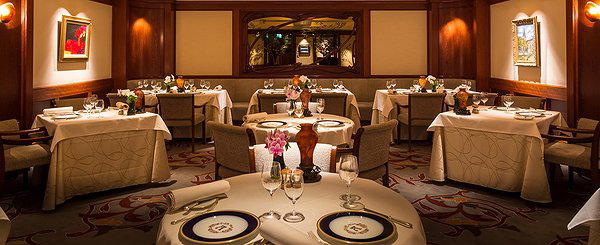
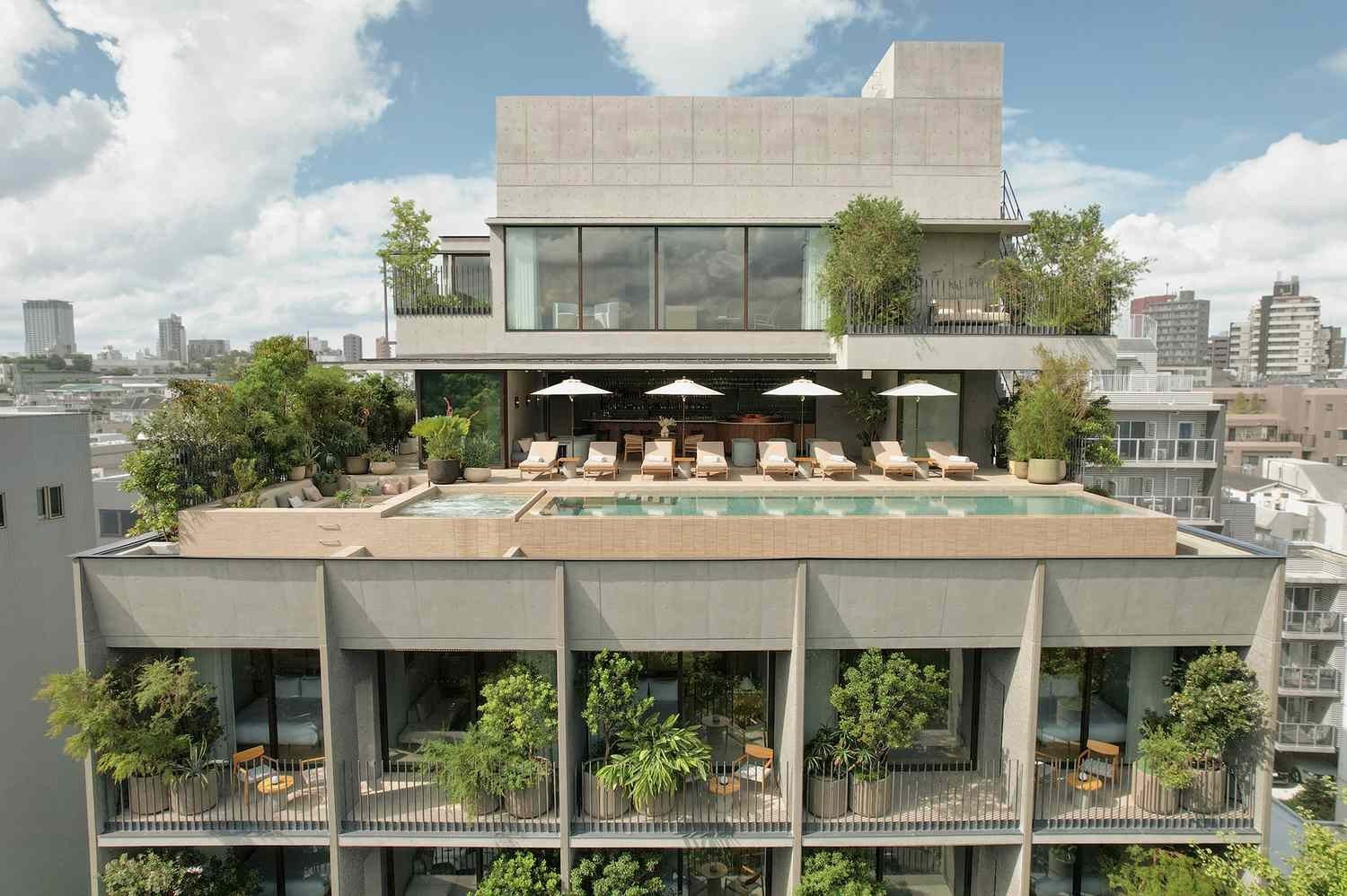
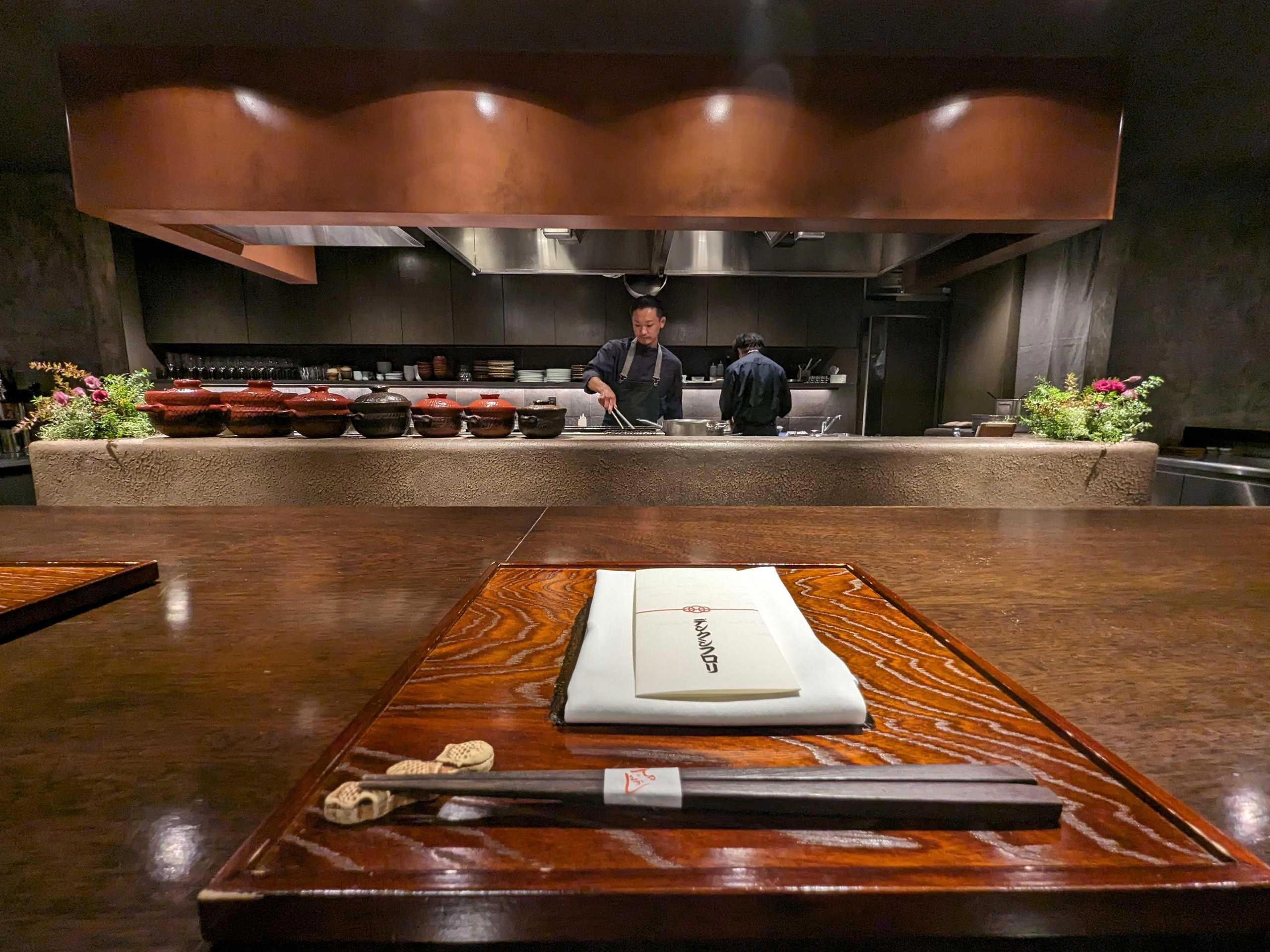
Aoyama's basement dining rooms operate at a remove from the street-level buzz of Omotesando, and Den Kushi Flori, one floor below a mid-rise on Jingumae 5-chome, fits that pattern exactly. The address places it within walking distance of some of Tokyo's most considered dining, yet the room itself functions as a kind of laboratory annexe: quieter than the parent restaurants it draws from, more experimental in register, and structured around the premise that collaboration between kitchens produces something neither could reach alone.
The concept joins Den, the two-Michelin-starred creative Japanese kitchen, with Florilège, the French tasting-menu restaurant that has held two stars and earned sustained recognition across international dining surveys. The connector is the word kushi, Japanese for skewer, which signals a joining rather than a cooking method. This is not a yakitori house or a kushikatsu counter. The name describes a structural idea: two distinct culinary traditions threaded onto a single format, held together by the working relationship between the kitchens' respective teams under Chef Susumu Shimizu.
The Logic of Never Repeating a Dish
Tokyo's fusion dining scene has a credibility problem that most of its practitioners prefer not to acknowledge. The city's Michelin infrastructure and its culture of disciplined craft make it an uncomfortable host for work that looks improvisational. Den Kushi Flori's answer to that tension is methodological rather than aesthetic: the kitchen commits to never making the same dish twice. That commitment functions as a quality signal rather than a marketing position. A kitchen that cannot return to a reliable formula has to get each new construction right the first time. The regulars understand this, and it is precisely why they return. The experience is not reproducible, which is a rare guarantee in a dining culture where consistency is usually the measure of seriousness.
The approach yields combinations that read as genuinely experimental rather than trend-following. Tempura served with sherry bypasses the usual dipping broth to find an aged, oxidative counterpoint instead. Sweetfish presented inside a baked custard tart relocates a highly seasonal Japanese ingredient into a French pastry shell, asking the diner to think about both traditions simultaneously. These are not arbitrary combinations. They carry the internal logic of two kitchens that know their own source material well enough to stress-test it.
How It Sits in the Aoyama-Shibuya Dining Tier
At ¥¥¥, Den Kushi Flori prices below its parent restaurants and below most of its high-recognition peers in this part of Tokyo. The comparison table below maps it against its immediate competitive set:
| Venue | Price | Category | Recognition |
|---|---|---|---|
| Den Kushi Flori | ¥¥¥ | Japanese-French Fusion | Michelin Plate 2025, OAD #130 Japan 2025 |
| Crony | ¥¥¥¥ | Innovative French | Michelin 2 Stars |
| L'Effervescence | ¥¥¥¥ | French | Michelin 3 Stars |
| RyuGin | ¥¥¥¥ | Kaiseki | Michelin 3 Stars |
| Harutaka | ¥¥¥¥ | Sushi | Michelin 3 Stars |
The price differential matters because it positions Den Kushi Flori as an entry point into serious collaborative cooking without requiring the commitment of a three-star dinner. For the Aoyama regular who has already worked through the ¥¥¥¥ tier, it also offers something those rooms cannot: a format without a fixed template, where the kitchen's current thinking is always the subject of the meal.
What Keeps Regulars Coming Back
In a city where tasting menus can feel choreographed to the point of theatre, the draw here is deliberate unpredictability. Regulars who have dined across multiple visits are not returning for a favourite dish. They are returning to see what the kitchen's current thinking looks like, which requires them to show up without fixed expectations. That is a different kind of loyalty than the one built around a signature preparation.
The Opinionated About Dining trajectory supports the idea that the format is deepening rather than plateauing. The restaurant entered the OAD Japan list as Highly Recommended in 2023, moved to #117 in 2024, and settled at #130 in 2025. Consistent multi-year presence on that list, combined with a Michelin Plate in 2025, suggests the kitchen has stabilised its identity without calcifying its output.
For readers exploring the broader Japanese dining circuit, comparable ambition in the fusion register appears at HAJIME in Osaka, where French technique meets a Japanese ingredient philosophy, and at akordu in Nara, which applies European structure to regional produce. Internationally, the cross-cultural cooking argument surfaces at Dos Palilos in Barcelona and Aalto in Milan. Den Kushi Flori's specific contribution is the institutional depth behind the fusion: both parent restaurants are decorated, long-running operations with distinct identities, which means the cross-pollination here is backed by genuine technical foundations on both sides.
Frequently asked questions
Is DEN KUSHI FLORI focused on a specific cuisine style?
Is there a head chef associated with DEN KUSHI FLORI?
The chef associated with DEN KUSHI FLORI is Susumu Shimizu.
What should I order at DEN KUSHI FLORI?
The kitchen does not repeat dishes across services, which makes standard ordering advice structurally redundant. What holds across any visit is the format: Japanese-Western pairings built around the combined logic of Den and Florilège, the kind that produces tempura alongside sherry or sweetfish set inside a baked custard tart. The Michelin Plate recognition (2025) and a climb from Highly Recommended to #117 on Opinionated About Dining Japan's 2024 list suggest the kitchen's instincts are reliable enough that the day's menu is the order.
What's the pricing like at DEN KUSHI FLORI?
Pricing at DEN KUSHI FLORI is listed as ¥¥¥.
When can I go to DEN KUSHI FLORI?
Hours at DEN KUSHI FLORI: Hours: Monday Closed Tuesday 6:30–10 pm Wednesday 12–3 pm, 6:30–10 pm Thursday 12–3 pm, 6:30–10 pm Friday 12–3 pm, 6:30–10 pm Saturday 12–3 pm, 6–10 pm Sunday 12–3 pm, 6–10 pm.
What's DEN KUSHI FLORI's location?
DEN KUSHI FLORI is located at Japan, 〒150-0001 Tokyo, Shibuya, Jingumae, 5 Chome−46−7 GEMS青山CROSS B1A, Tokyo.
Cost Snapshot
A quick peer list to put this venue’s basics in context.
| Venue | Cuisine | Price | Awards | Notes |
|---|---|---|---|---|
| DEN KUSHI FLORIThis venue (the venue you are viewing) | French-Japanese Fusion | $50–100 | Michelin Plate · Tabelog 100 #39 | Not listed |
| Harutaka | Edo-Style Omakase Sushi | $200–300 | 3 Michelin Stars · World's 50 Best #76 | Sushi |
| RyuGin | Modern Kaiseki | $500+ | 3 Michelin Stars · World's 50 Best #41 | Kaiseki, Japanese |
| L'Effervescence | Modern French with Japanese Influences | $200–300 | 3 Michelin Stars · World's 50 Best #69 | French |
| HOMMAGE | Modern French with Japanese Influences | $150–200 | 2 Michelin Stars · World's 50 Best #78 | Innovtive French, French |
| MAZ | Innovative Peruvian-Japanese Fusion | $150–200 | 2 Michelin Stars · World's 50 Best #28 | Innovative |
Recognition history
Dated appearances from independent guides and award organizations, with the underlying list record or original source where available.
Michelin Plate
Michelin
Opinionated About Dining Top Restaurants in Japan Recommended
Opinionated About Dining
Tabelog 100 #39 · No. 39
Tabelog · Tabelog 100 - Innovative / Creative cuisine - 2025
Full recognition history (7 entries)
Michelin Plate
Michelin
Opinionated About Dining Top Restaurants in Japan Ranked #130
Opinionated About Dining
Opinionated About Dining Top Restaurants in Japan Ranked #117
Opinionated About Dining
Opinionated About Dining Top Restaurants in Japan Highly Recommended
Opinionated About Dining