Our verdict
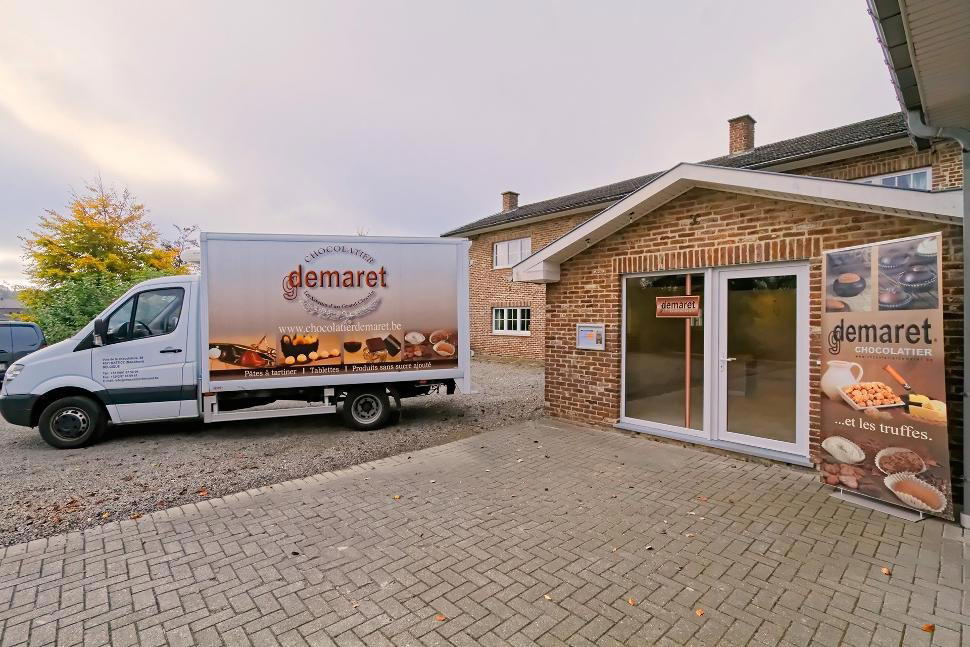
Demaret sits on Voie de la Chocolaterie in Herve, a town whose name carries the weight of one of Belgium's most protected regional cheeses. The restaurant occupies a food-producing corridor in the Pays de Herve, where dairy traditions and artisan produce have shaped the local table for centuries. Dining here connects directly to that agricultural context, placing it alongside Herve's small cluster of address-driven tables.

Pearl is the En Primeur Club membership app, where members save venues, book tables and use the concierge.
A Town Built on Terroir
The address says everything before you arrive. Voie de la Chocolaterie, the road of the chocolate factory, runs through Herve, a compact Walloon town in the province of Liège that has exported its name across Europe in the form of a soft, washed-rind cheese with AOC protection since 1996. The Pays de Herve is agricultural land in the most literal sense: rolling pasture, dairy farms, and a food-producing identity that predates any restaurant guide. Dining in Herve means eating inside that context, not adjacent to it.
That geographical specificity matters when assessing where Demaret sits. Belgium's serious restaurant scene concentrates in Antwerp, Ghent, and Brussels, with outposts of high ambition scattered through Flanders and the southern provinces. Venues like Zilte in Antwerp and Vrijmoed in Gent operate at the top of that national conversation. Herve operates in a quieter register, where the draw is locality rather than spectacle, and where a restaurant's relationship to the surrounding landscape counts for more than its placement on an international list.
Herve's Table: Context for a Small City's Dining
Herve is not a dining destination in the conventional sense. It does not have the critical mass of addresses that pulls weekend visitors from Liège or Maastricht on reputation alone. What it has instead is a compact cluster of tables that reflect distinct European dining traditions without the overhead or theatre of a major urban market. L'Epicurien anchors the French bistro register at the €€ tier, while L'inizio covers Italian at a comparable price point. Aux Etangs completes a small but coherent local offer. Demaret joins that group at an address that connects it, at least nominally, to the town's confectionery and dairy heritage.
For broader orientation across the town's dining options, the full Herve restaurants guide maps the current offer in more detail.
The Cultural Weight of Belgian Provincial Dining
Belgian provincial dining carries a distinct character that separates it from both the formality of Brussels institutions and the produce-driven minimalism that has defined Flanders' top tier over the past decade. In Wallonia especially, the table remains tied to French culinary grammar, saucing technique, cheese courses, structured meal progression, adapted through local ingredients and a pace that resists the efficiency pressure of urban service. This is the tradition that shaped places like d'Eugénie à Emilie in Baudour, another Walloon address working within that inherited French framework.
Herve cheese itself is a useful reference point. The AOC designation requires production within a defined geographic zone using milk from Herve cows, and the resulting product, pungent, washed-rind, unmistakably regional, represents a food culture that values specificity over homogeneity. A restaurant on the Voie de la Chocolaterie operates in direct proximity to that tradition, whether it foregrounds it or not.
At the higher end of the national spectrum, Belgium has produced a generation of kitchens that have earned serious international attention: Hof van Cleve in Kruishoutem, Boury in Roeselare, Willem Hiele in Oudenburg, and Le Chalet de la Forêt in Uccle. These are kitchens that have repositioned Belgium within the European fine dining conversation. Provincial addresses like Demaret exist in a different tier, not in competition with those rooms, but part of the same national food culture that makes Belgium's restaurant density per capita one of the highest in Europe.
Where Demaret Sits in the Local Order
Specific details on Demaret's format, kitchen approach, and menu structure are not publicly established in a way that permits confident reporting, the restaurant's online presence is limited, which is itself a data point. In Herve's modest dining scene, an address on the Voie de la Chocolaterie with an established name but a low digital footprint typically suggests a neighbourhood restaurant operating on local reputation and repeat custom rather than inbound tourism traffic.
That pattern is common across Wallonian provincial dining. Kitchens in towns of Herve's scale often serve a community function first, drawing from a regular clientele within a 15-kilometre radius, with walk-in or telephone booking remaining the primary access method. The contrast with Liège-based addresses or further-flung Walloon destinations is one of intention as much as execution.
For context on how Belgian dining operates across a wider geographic range, kitchens as different as Ralf Berendsen in Neerharen, Cuchara in Lommel, and La Durée in Izegem each illustrate how Belgian provincial restaurants build distinct identities within their local contexts. The same logic applies in Herve.
Brussels, an hour's drive west, offers a fuller range of formal dining for visitors combining the Herve region with a city visit. Bozar Restaurant represents the capital's cultural-institution dining tier, while De Jonkman in Sint-Kruis provides a Flemish point of reference for produce-led Belgian cooking at the formal end.
Planning a Visit
Herve sits in the eastern reaches of the province of Liège, approximately 15 kilometres from the city of Liège itself and close to the Belgian-Dutch border. The town is accessible by car via the E40 motorway corridor, with Liège-Guillemins serving as the nearest major rail hub for travellers arriving by train from Brussels or Amsterdam. Given the limited public transport within Herve itself, a car is the practical choice for reaching an address on the Voie de la Chocolaterie.
As no booking method, hours, or pricing information is publicly confirmed for Demaret, visitors planning a specific trip should verify current details directly before travelling. For a town of Herve's scale, the local dining scene is leading treated as part of a broader regional day rather than a standalone destination journey.
Frequently asked questions
Can I bring kids to Demaret?
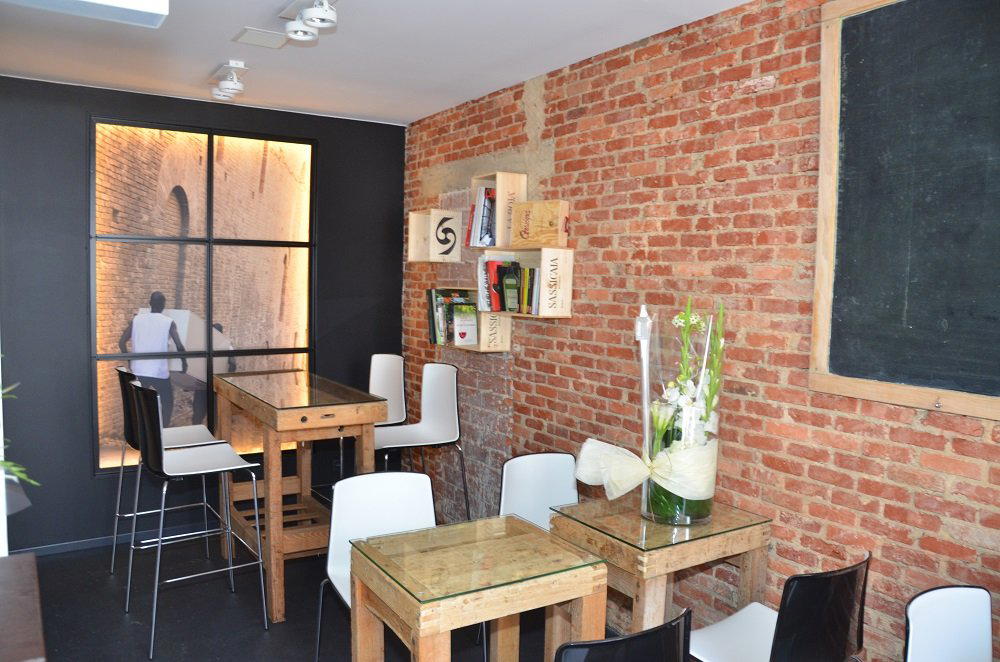
Herve is a compact Walloon town rather than a formal dining circuit, and provincial restaurants in this part of the province of Liège tend to operate as neighbourhood addresses rather than strict fine-dining rooms. The address on Voie de la Chocolaterie places it in a residential pocket of Herve, which suggests an informal rather than ceremonial setting.
What's the vibe at Demaret?
Demaret sits on Voie de la Chocolaterie in Herve, a small Walloon town in the eastern province of Liège, a setting that points toward the character of Belgian provincial dining rather than the formality of a Brussels institution or the produce theatre of a Flemish destination restaurant. Provincial rooms in this region typically run at a deliberate pace, with a focus on the table rather than the room.
Is Demaret a good restaurant to visit when travelling between Liège and the Belgian-Dutch border?
Herve sits roughly 15 kilometres east of Liège city, close to the Belgian-Dutch border, which places Demaret on a logical route for travellers moving through the eastern province rather than a detour requiring dedicated planning. The town itself is the source of AOC Herve cheese, giving the area a credible food identity beyond the restaurant alone. For anyone passing through Wallonia's eastern corridor, the combination of a defined local food culture and a dining address in the centre of Herve makes the stop a coherent one.
What should I eat at Demaret?
Herve is one of Belgium's most historically rooted food towns, known above all for Herve cheese, a washed-rind AOC product with a sharp, pungent character that has been produced in this area for centuries. Belgian provincial kitchens in this part of Liège province frequently draw on that local larder.
Budget and Context
| Venue | Cuisine | Price | Awards | Notes |
|---|---|---|---|---|
| DemaretThis venue (the venue you are viewing) | Belgian Chocolatier Cafe | Not listed | Not listed | Not listed |
| l'Epicurien | Modern French Bistro | $50–100 | Michelin Bib Gourmand | French |
| L'inizio | Modern Italian | Not listed | Michelin Plate | Italian |
| Aux Etangs | Modern French Gastronomic | $100–150 | Not listed | Not listed |
Continue exploring
More in Herve
Restaurants in Herve
All restaurants in Herve →
Bars in Herve
Browse all →

Details
- Cozy
- Casual Hangout
- A La Carte
Current opening hours
- Monday
- Closed
- Tuesday
- 9 AM–12 PM, 1–5:30 PM
- Wednesday
- 9 AM–12 PM, 1–5:30 PM
- Thursday
- 9 AM–12 PM, 1–5:30 PM
- Friday
- 9 AM–12 PM, 1–5:30 PM
- Saturday
- 10 AM–12 PM, 2–5 PM
- Sunday
- Closed
Hours can change for holidays and private events. Hours as of .
Charming setting with warm welcome.