Delta King
Delta King occupies a restored 1927 riverboat permanently moored on the Sacramento River at Old Sacramento's waterfront. The vessel has operated across multiple formats over the decades, making it one of the more singular dining and lodging addresses in the California capital, a physical record of the city's relationship with its waterway as much as a restaurant destination.
 Discover on Pearl
Pearl is the En Primeur Club membership app — saves, bookings, and concierge access live there. Same editors, same standards.
- Address
- 1000 Front St, Sacramento, CA 95814
- Phone
- +19164414440
- Website
- deltaking.com
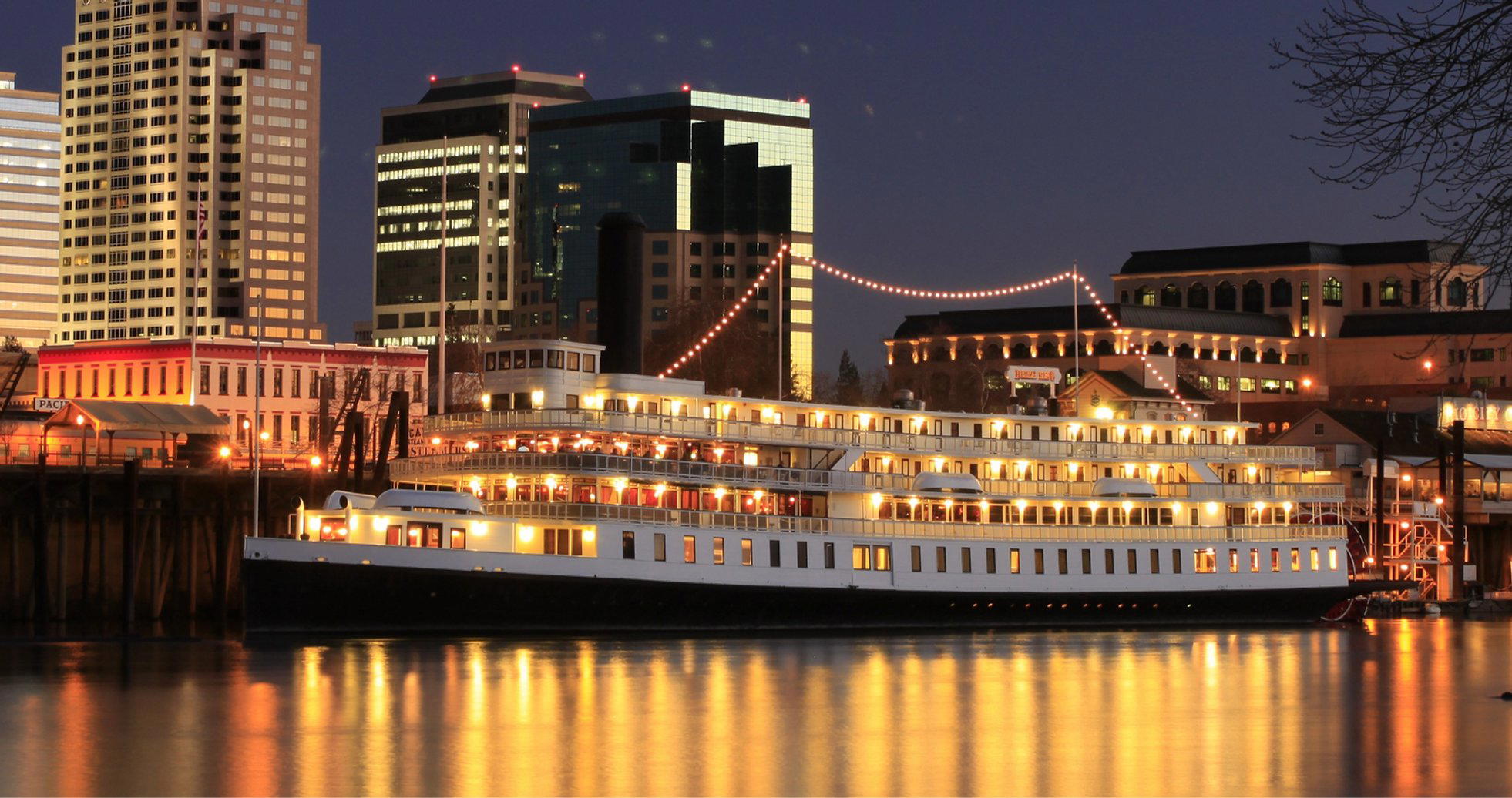
A Riverboat That Stayed: Delta King on the Sacramento Waterfront
Old Sacramento's waterfront has shifted considerably since the Gold Rush-era buildings along Front Street were first stabilized and restored in the 1960s and 1970s. What arrived as a heritage tourism district has evolved into something more layered: a neighbourhood where the Sacramento River is not background scenery but an active commercial and social edge. Among the permanent fixtures along that edge, the Delta King occupies a category largely its own. The vessel, a sternwheeler built in 1927, was once part of a passenger fleet running the Sacramento-to-San Francisco route through the Sacramento-San Joaquin Delta. Its current life as a moored hotel and dining destination at 1000 Front St represents a long reinvention arc in California hospitality.
From Passenger Route to Permanent Berth: The Arc of Reinvention
The riverboat era that produced Delta King was a specific chapter in California infrastructure, predating the highway systems and airport expansion that eventually made passenger river transit redundant. The Delta King and its sister vessel the Delta Queen operated through the 1940s before being retired from passenger service. What followed was a long period of changing ownership, partial restoration attempts, and relocation across different West Coast ports before the boat arrived in Sacramento in the late 1980s. The restoration project that brought it to its current berth at Old Sacramento was substantial, the vessel required structural stabilization, interior reconstruction, and conversion to meet the overlapping requirements of a hotel, a restaurant operation, and a permanently moored historic structure.
That evolution from transit vessel to hospitality venue is the frame through which Delta King makes most sense as a Sacramento address. It is not a restaurant that happens to be on a boat; it is a historic artifact that has been progressively adapted to meet the commercial needs of each decade it has operated in. That distinction matters when calibrating expectations. Venues built from scratch around a dining concept, like The Kitchen or Localis, both operating at the higher end of Sacramento's contemporary dining tier, make different promises than a heritage site that has layered hospitality programming onto a pre-existing physical structure.
What the Setting Actually Delivers
Approaching Delta King along the riverfront boardwalk, the scale of the vessel reads immediately against the low-rise brick of Old Sacramento's commercial row. The exterior profile, the paddlewheel, the twin stacks, the multi-deck silhouette, is recognizable as a specific type of American river architecture that has largely disappeared from active use. Inside, the renovation has preserved structural elements of the original passenger ship while reconfiguring the internal layout for contemporary use. The dining spaces occupy the main deck, with views across the Sacramento River toward the opposite bank and the grain elevators and rail infrastructure that characterize the industrial working waterfront upstream.
This kind of setting concentrates meaning in a way that a purpose-built restaurant rarely manages. Comparable waterfront dining experiences along the American coasts, the integration of food and maritime heritage visible at something like Le Bernardin's rigorous seafood focus in New York, or the farm-to-table sourcing discipline at Blue Hill at Stone Barns in Tarrytown, achieve their authority through culinary depth. Delta King's authority is partly architectural: the room itself carries historical weight before a plate arrives.
Delta King in Sacramento's Dining Tier
Sacramento's dining scene has moved decisively upward in seriousness over the past fifteen years, driven partly by proximity to some of California's most productive agricultural land and partly by investment from chefs who found the city more accessible than San Francisco or Los Angeles. At the leading end, venues like The Kitchen operate at price points and reservation pressures that position them alongside comparable formats in larger markets. Operations like Adamo's Kitchen, Aioli Bodega Espanola, and Allora occupy mid-tier positions with distinct culinary identities. Delta King sits somewhat orthogonally to this ranking structure: its primary competitive differentiator is the physical experience of dining on a historic riverboat, which places it in a comparable set that includes notable destination dining formats rather than strictly cuisine-forward comparisons.
Across California and the wider American West, a handful of venues achieve recognition through the convergence of setting and food rather than culinary innovation alone. Single Thread Farm in Healdsburg integrates agricultural provenance with a structured tasting format. Addison in San Diego brings Michelin-level precision to a setting that carries its own architectural weight. The French Laundry in Napa has for decades used its historic stone building as part of the overall experience contract. Delta King's version of this is less formally curated but draws from the same logic: where you eat is part of what you eat.
For context on how American dining venues use historic infrastructure as part of their identity, the comparison extends nationally. Emeril's in New Orleans and The Inn at Little Washington in Washington both demonstrate how a building or location can be load-bearing to the dining proposition. Lazy Bear in San Francisco, Smyth in Chicago, Providence in Los Angeles, and Atomix in New York City each demonstrate that the highest tier of American dining is intensely format-conscious. Atelier Moessmer Norbert Niederkofler in Brunico shows how this logic extends internationally. Delta King plays in a different tier of this game, but the logic is the same: the physical context is part of the offer.
Planning a Visit
Delta King sits at 1000 Front St in Old Sacramento, accessible by foot from downtown Sacramento via the Tower Bridge pedestrian crossing or the riverfront path. Old Sacramento itself is a short distance from the central business district. Visitors planning around Old Sacramento's weekend crowds should factor in that the boardwalk and surrounding historic district draws significant foot traffic on summer afternoons, which affects both parking and the general character of an early evening arrival.
Where the Accolades Land
Comparable venues nearby, for context on price, style, and recognition.
| Venue | Cuisine | Price | Awards | Notes |
|---|---|---|---|---|
| Delta KingThis venue — the venue you are viewing | American Steakhouse with Seasonal Dishes | $$ | , | |
| Roxie Deli & Barbeque | American BBQ Deli | $$ | , | East Sacramento |
| Capitol Garage | American Fusion Eclectic | $$ | , | Mansion Flats |
| Cornerstone | Classic American Comfort Food | $$ | , | Mansion Flats |
| Sauced BBQ & Spirits | Southern BBQ | $$ | , | Downtown Commons |
| Frog & Slim | Modern American Steakhouse | $$$ | , | Richmond Grove |
Continue exploring
More in Sacramento
Restaurants in Sacramento
Browse all →
Bars in Sacramento
Browse all →
Hotels in Sacramento
Browse all →
Wineries in Sacramento
Browse all →
At a Glance
- Historic
- Scenic
- Elegant
- Iconic
- Special Occasion
- Date Night
- Brunch
- Waterfront
- Historic Building
- Extensive Wine List
- Craft Cocktails
- Local Sourcing
- Waterfront
Warm, elegant atmosphere in a restored historic riverboat dining room with spectacular city and river views, moderate noise level.