Degusteria del Gigante

Michelin Plate
Our verdict
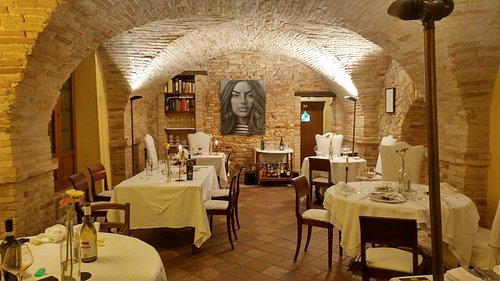
A Michelin Plate-recognised address in San Benedetto del Tronto's historic upper town, Degusteria del Gigante occupies a 19th-century building with 15th-century foundations behind the Torre dei Gualtieri. The menu centres on seasonal Marche cooking with a modern reinterpretation, kept deliberately short and market-driven, at a mid-range price point that makes it one of the more considered options in the city's dining scene.

Pearl is the En Primeur Club membership app — saves, bookings, and concierge access live there. Same editors, same standards.
- Address
- Via degli Anelli, 19, 63074 San Benedetto del Tronto AP, Italy
- Phone
- +39 0735 588644
- Hours
- Mon 8–11 PMTue ClosedWed–Sun 8–11 PM
- Website
- degusteriadelgigante.it
- Directions
- Get directions
The menu
What to order
- Coniglio in porchetta
- Ravioli di polpo e patate
- Spaghetti con emulsione di cozze
- Ostrica
- Uovo in porchetta
A Historic Building and the Cooking That Belongs Inside It
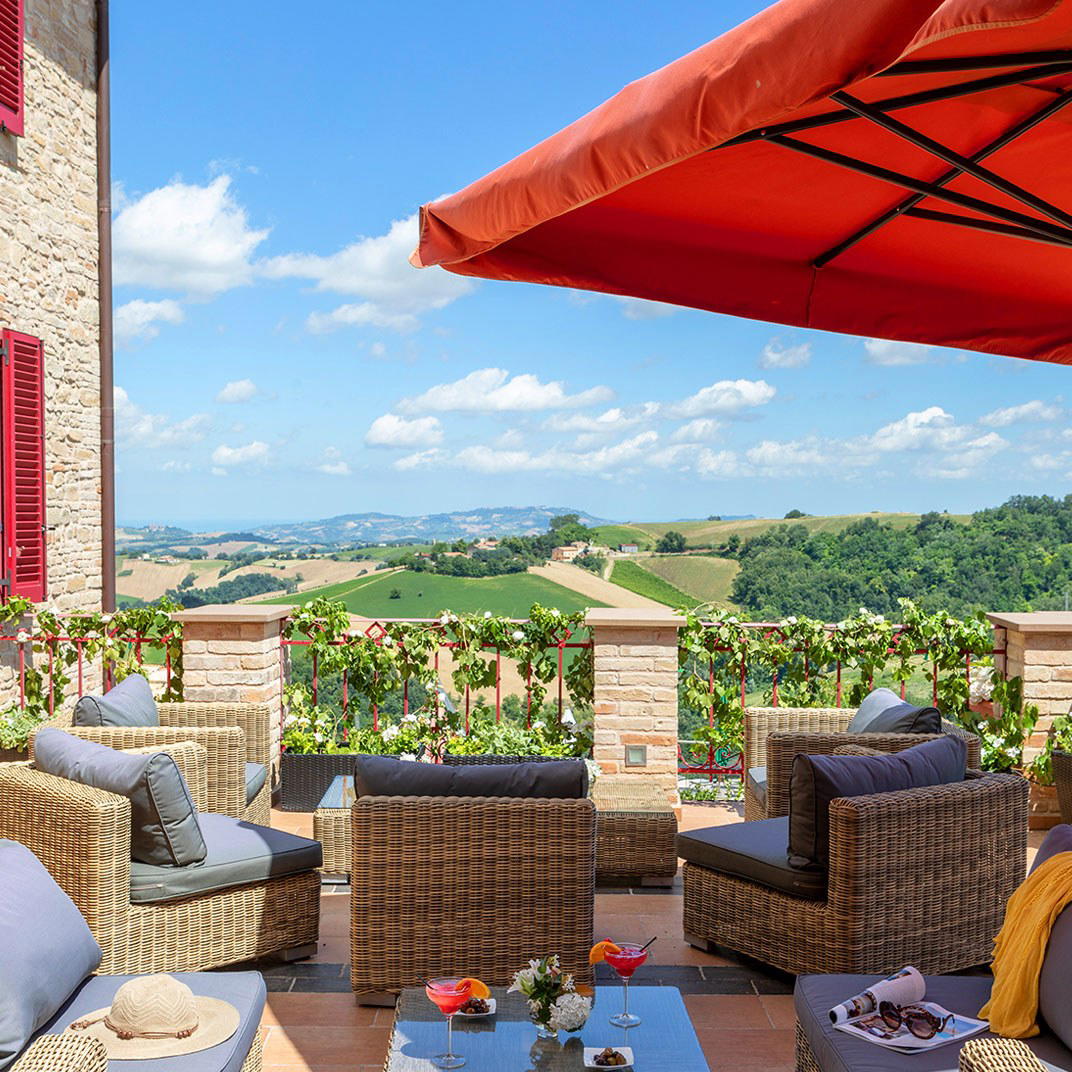
The upper town of San Benedetto del Tronto — the paese alto — operates on a different register from the seaside strip below. Streets narrow, stonework ages, and the Torre dei Gualtieri anchors the neighbourhood in a history that the Adriatic waterfront rarely acknowledges. It is in this part of the city that Degusteria del Gigante occupies a 19th-century building whose foundations date to the 15th century. The physical setting is not incidental: it frames the approach to the food before a single dish arrives. In a region where the relationship between place and plate is taken seriously, that kind of architectural continuity carries weight.
For visitors building a fuller picture of the city, our full San Benedetto del Tronto restaurants guide covers the broader dining scene, and you can find accommodation options in our San Benedetto del Tronto hotels guide.
Marche Cooking and What It Actually Means
The Marche region occupies an awkward position in the broader story of Italian gastronomy. It sits between the more celebrated cooking traditions of Emilia-Romagna to the north and Abruzzo to the south, and its culinary identity, built on rabbit, wild fennel, vincigrassi, stuffed olives, and the particular fish of the central Adriatic, rarely receives the international attention it deserves. Restaurants such as Uliassi in Senigallia have shifted the perception of what Adriatic coastal cooking can achieve at altitude, but the majority of Marche's most compelling food remains rooted in territory rather than in headline-generating ambition.
Degusteria del Gigante sits in that territorial tradition. The menu is described as regional cuisine skilfully reinterpreted with a modern approach, with the emphasis placed on flavour and seasonal ingredients rather than a wide selection of dishes. That restraint in scope is, in the context of Marche cooking, a deliberate editorial choice: it signals a kitchen that buys from the market daily and builds around what is good rather than what is comprehensive. The boned caramelised rabbit served with its own jus is cited as a house speciality, and its lineage is openly acknowledged, it draws on the better-known traditional Marche preparation, reworked rather than replicated. Fish-based recipes appear according to market availability, which means the menu shifts across the week.
This model of tight, market-dependent menus is consistent with how the better informal restaurants across central Italy have been operating for at least a decade. Venues such as 21.9 in Piobesi d'Alba and Andrea Monesi - Locanda di Orta in Orta San Giulio apply the same principle in different regional idioms: fewer dishes, higher sourcing standards, seasonal rotation as the primary menu logic. The approach trades breadth for depth, and the trade generally works.
Where Degusteria del Gigante Sits in Its Price Tier
The restaurant carries a mid-range price point (€€), which in Italy's current dining market positions it in a tier that requires careful management: too inexpensive to sustain luxury sourcing at volume, too considered in its approach to compete on quantity. The Michelin Plate recognition, awarded in both 2024 and 2025, confirms that the kitchen is meeting a standard of consistent quality within that constraint. A Michelin Plate does not carry the prestige of a star, but it is a meaningful signal that the guide's inspectors found the cooking worth noting, it separates the restaurant from the undifferentiated mid-market and places it in a category of addresses worth a deliberate visit rather than an opportunistic one.
For comparison, the top end of Italian restaurant recognition, venues such as Osteria Francescana in Modena, Le Calandre in Rubano, Enoteca Pinchiorri in Florence, Enrico Bartolini in Milan, and Dal Pescatore in Runate, occupy the €€€€ tier with three Michelin stars and a completely different proposition. Degusteria del Gigante is not competing in that tier, nor is it trying to.
Within San Benedetto del Tronto itself, Arca represents a modern cuisine approach at a different register, and the two addresses together give the city a more varied dining argument than its size might suggest.
The Menu Logic: Seasonal, Short, and Market-Led
A menu built around daily market visits has a particular rhythm that rewards return visits over single occasions. On any given day, the fish section may reflect what came in from the central Adriatic that morning; on another, it may be absent in favour of land-based preparations. The rabbit dish, as a house speciality, provides consistency alongside that variability, a fixed point around which the seasonal rotation moves. This is a familiar structure in Italian country cooking, where a small number of signature preparations carry the restaurant's identity while the wider menu remains responsive to the season.
The Marche culinary tradition that informs this approach is worth understanding on its own terms. The region's cooking has always been shaped by the intersection of the Apennine interior and the Adriatic coast: stockfish preparations borrowed from trade routes, rabbit and game from the hill country, handmade pasta formats such as vincigrassi and maccheroni al ferretto, and the olive all'ascolana that remains one of Italy's most distinctive regional snacks. A kitchen working seriously in this tradition has substantial material to draw from, and the choice to keep the menu short suggests a preference for doing fewer things with more attention.
Other destinations along the Adriatic and in the broader central Italian corridor have produced Michelin-recognised cooking in a similar vein. Reale in Castel di Sangro and Quattro Passi in Marina del Cantone each represent a different application of the region-first, ingredient-led principle at higher price points. Atelier Moessmer Norbert Niederkofler in Brunico and Piazza Duomo in Alba show what the same philosophies can produce when resources and acclaim accumulate over time. Degusteria del Gigante operates at a different scale, but within the same broader commitment to territory as the primary source of culinary meaning.
Planning a Visit
The restaurant sits behind the Torre dei Gualtieri in the upper historic district of San Benedetto del Tronto, at Via degli Anelli 19. The €€ price range makes it an accessible option for a longer stay in the city; given the market-dependent menu, a midweek visit may offer different options from a weekend one. For further orientation in the city, our bars guide, wineries guide, and experiences guide cover the wider scene.
Frequently Asked Questions
Frequently asked questions
How much does it cost to eat at Degusteria del Gigante?
Pricing at Degusteria del Gigante is listed as €€.
Where exactly is Degusteria del Gigante?
Degusteria del Gigante is located at Via degli Anelli, 19, 63074 San Benedetto del Tronto AP, Italy, San Benedetto del Tronto.
Budget and Context
| Venue | Cuisine | Price | Awards | Notes |
|---|---|---|---|---|
| Degusteria del GiganteThis venue — the venue you are viewing | Modern Marchigian | $50–100 | Michelin Plate | Not listed |
| Atelier Moessmer Norbert Niederkofler | Italian, Creative | Not listed | Michelin 3 Star | Not listed |
| Dal Pescatore | Italian, Italian Contemporary | Not listed | Michelin 3 Star | Not listed |
| Enoteca Pinchiorri | Contemporary Italian Fine Dining | $200–300 | 3 Michelin Stars · World's 50 Best #32 | Italian - French, Italian Contemporary |
| Enrico Bartolini | Creative | Not listed | Michelin 3 Star | Not listed |
| Osteria Francescana | Avant-Garde Italian Contemporary | $300–500 | 3 Michelin Stars · World's 50 Best #1 | Progressive Italian, Creative |
Recognition history
Dated appearances from independent guides and award organizations, with the underlying list record or original source where available.
Michelin Plate
Michelin
Full recognition history (3 entries)
Michelin Plate
Michelin
Michelin Plate
Michelin
Continue exploring
More in San Benedetto del Tronto
Restaurants in San Benedetto del Tronto
Browse all →
Bars in San Benedetto del Tronto
Browse all →
Hotels in San Benedetto del Tronto
Browse all →

Details
- Intimate
- Romantic
- Elegant
- Cozy
- Date Night
- Special Occasion
- Celebration
- Historic Building
- Open Kitchen
- Sommelier Led
- Local Sourcing
- Farm To Table
- Street Scene
- Tasting Menu
- A La Carte
- Local Wines
- Verdicchio
- Vegetarian Friendly
- Pescatarian Friendly
- Allergy Accommodating
Current opening hours
- Monday
- 8–11 PM
- Tuesday
- Closed
- Wednesday
- 8–11 PM
- Thursday
- 8–11 PM
- Friday
- 8–11 PM
- Saturday
- 8–11 PM
- Sunday
- 8–11 PM
Hours can change for holidays and private events. Last verified .
Suggestive vaulted ceilings resembling a grotto interior with comfortable, spacious environments; intimate and refined with soft background music.