De Oude Tijden
De Oude Tijden occupies a address on Gelkingestraat in central Groningen, placing it within reach of the city's growing roster of serious dining rooms. Groningen's restaurant scene has quietly matured over the past decade, and addresses like this one sit alongside neighbours such as Blumé and Nassau in a tier that takes the northern Dutch table seriously. Booking ahead is advisable for evening sittings.
 Discover on Pearl
Pearl is the En Primeur Club membership app — saves, bookings, and concierge access live there. Same editors, same standards.
- Address
- Gelkingestraat 21, 9711 NA Groningen, Netherlands
- Phone
- +31505892467
- Website
- debeteretijden.nl
A Street, a City, and What the North Has Been Building
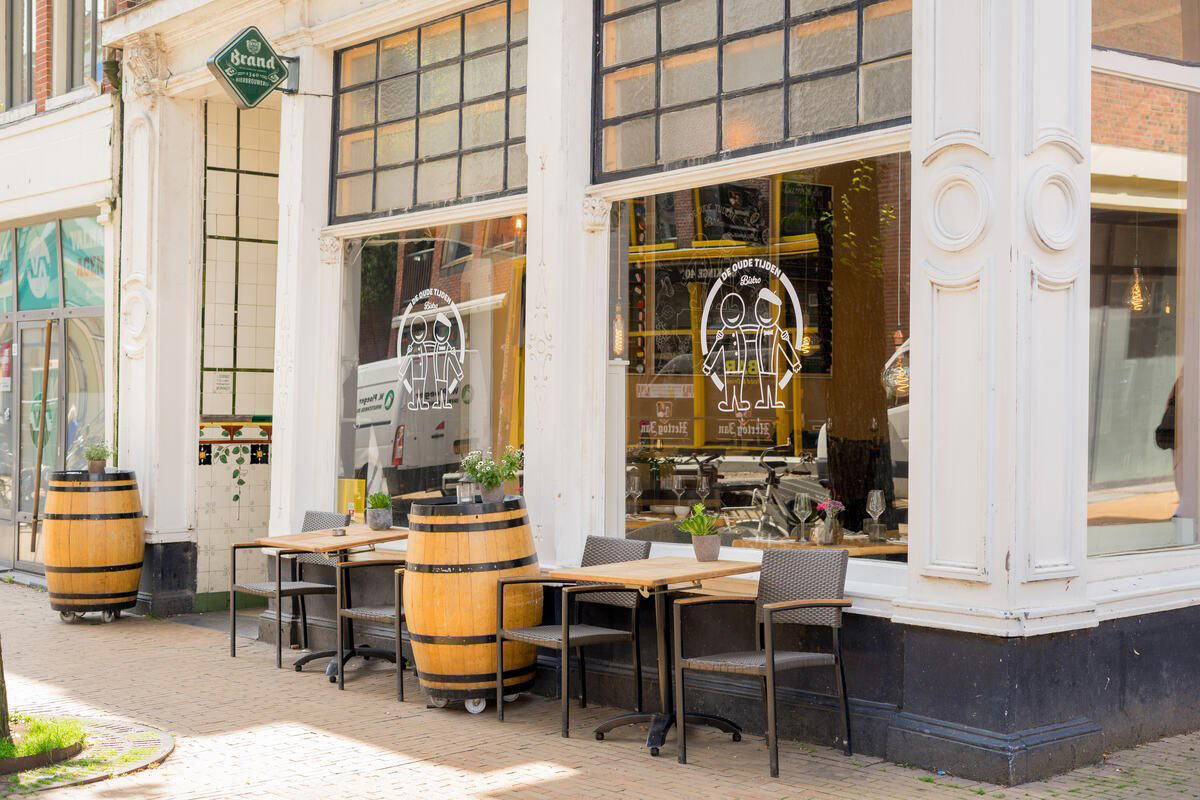
Gelkingestraat cuts through the older retail core of Groningen, a few minutes on foot from the Grote Markt. The street itself is unremarkable by design: narrow, slightly worn at the edges, the kind of address that forces a restaurant to earn its place through what happens inside rather than through setting alone. That dynamic is not unusual for northern Dutch cities, where the dining culture has historically rewarded substance over spectacle. Groningen has been building a more considered restaurant scene for the better part of a decade, and the cluster of addresses around the city centre now includes enough range to justify a dedicated visit from elsewhere in the country.
De Oude Tijden sits at number 21 on that street. The name translates loosely as "the old times," a phrase that in Dutch carries a certain warmth without sentimentality, the kind of register that suggests familiarity and continuity rather than nostalgia as aesthetic. Whether the interior delivers on that register depends on the season and the hour, but the address alone places it within a neighbourhood that rewards walking slowly and eating deliberately.
Groningen's Dining Tier and Where This Address Sits
The city's restaurant offer has stratified in ways that were less visible five years ago. At the accessible end, places like Bellami's - Bar à Manger and Bramble have built loyal followings around relaxed formats and honest cooking. A step up in formality, Blumé and Bisque both work in the Modern French register at the €€€ price point, signalling that the city can support kitchens with genuine technical ambition. Argo adds further variety to the mid-to-upper tier. De Oude Tijden occupies this same central Groningen geography, in a scene where competition has sharpened expectations and diners are arriving with a clearer sense of what they want from an evening out.
That sharpening of expectations matters. In cities with a single dominant fine-dining address, the conversation tends to start and end there. Groningen has moved past that stage. The presence of several serious rooms within walking distance of each other means that any individual address is implicitly compared against its neighbours, not just on food, but on atmosphere, pacing, and the overall coherence of the experience. It is a healthy condition for a dining scene, and it tends to raise the floor more than the ceiling.
The Broader Dutch Context
Northern Netherlands has produced a number of addresses that register beyond regional interest. De Librije in Zwolle has long demonstrated that serious cooking does not require a major metropolitan address. De Nieuwe Winkel in Nijmegen has built an international profile through its plant-forward approach. Further south, addresses like Inter Scaldes in Kruiningen, De Lindenhof in Giethoorn, and Tribeca in Heeze reinforce the pattern: Dutch fine dining has decentralised, and the quality signals are increasingly distributed across provinces rather than concentrated in Amsterdam or The Hague. De Groene Lantaarn in Staphorst, Brut172 in Reijmerstok, De Lindehof in Nuenen, De Bokkedoorns in Overveen, and De Treeswijkhoeve in Waalre all belong to this wider geography of serious Dutch tables operating outside the capital. Internationally, the format of an intimate dining room with a strong point of view finds analogues at places like Le Bernardin in New York City and Lazy Bear in San Francisco, both of which have demonstrated how a defined atmosphere and consistent execution can anchor a restaurant's identity across years.
Groningen's position in this decentralised map is still consolidating. The city has the student population and the cultural infrastructure to sustain ambition, and its distance from Amsterdam, roughly two hours by train, means it operates as a genuine destination rather than a suburb of the capital's dining scene. That independence is an asset for the restaurants that choose to build here.
Atmosphere as the Primary Register
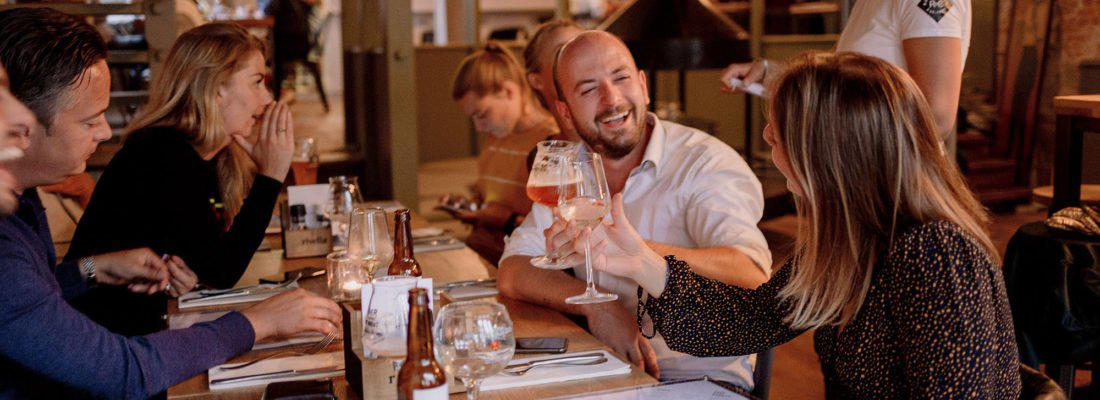
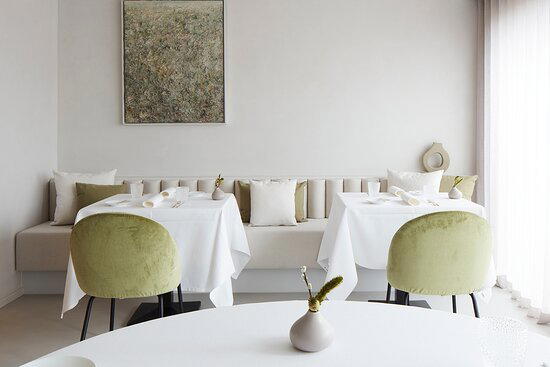
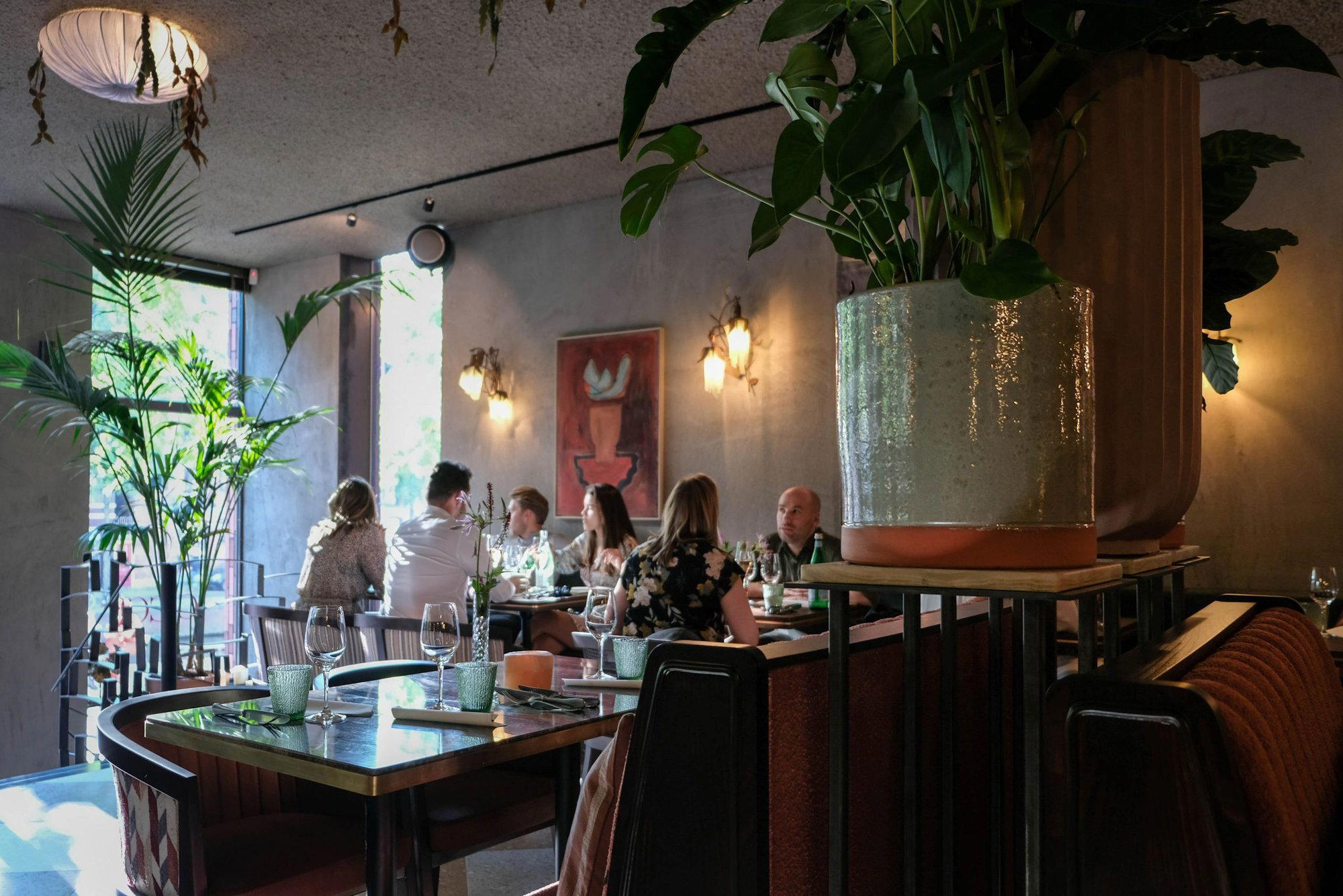
In a room named for continuity and older times, atmosphere is not incidental, it is the opening argument. Northern Dutch interiors in this register tend toward warmth achieved through material rather than decoration: wood that has aged, light that arrives at an angle, the low-frequency sound of a room that is neither too full nor too empty. The sensory proposition of a well-run smaller dining room in a city like Groningen differs from its equivalent in a larger European capital. The scale is compressed, the ambient noise lower, the pace more deliberate. A table of two can expect to feel the room rather than simply occupy a position within it.
Autumn and winter are the seasons that tend to suit this kind of address most naturally. The short northern afternoons push diners inside earlier, and the combination of low light and a warm room creates conditions that a purely summer-terrace culture cannot replicate. If there is a period to visit Groningen and engage with its indoor dining rooms at their most atmospheric, it falls between October and February, when the city centres on its interior life.
Planning a Visit
Gelkingestraat 21 is accessible on foot from Groningen's main train station in under fifteen minutes, passing through the city's compact centre. For visitors arriving specifically to eat well in Groningen, the city repays an overnight stay: the concentration of serious rooms means that a single evening does not exhaust the options, and the Saturday lunch trade at several addresses is worth considering as an alternative to a crowded Friday dinner service.
Nearby-ish Comparables
Comparable venues nearby, for context on price, style, and recognition.
| Venue | Cuisine | Price | Notes |
|---|---|---|---|
| De Oude TijdenThis venue — the venue you are viewing | Modern Dutch Fine Dining | $$$$ | |
| De Betere Tijden | Modern Dutch | $$$ | Binnenstad-Zuid |
| Konbu streetfood | Southeast Asian Street Food with Pho and Ramen | $$ | Binnenstad-Zuid |
| Mr Smith's Loft | International Street Food | $$ | Binnenstad-Zuid |
| De Haan | Modern French-Dutch Fine Dining | $$$ | Westerhaven |
| Buurman&Buurman | Neapolitan Pizza | $$ | Korrewegwijk |
Continue exploring
More in Groningen
Restaurants in Groningen
Browse all →
Hotels in Groningen
Browse all →
At a Glance
- Cozy
- Intimate
- Charming
- Date Night
- Special Occasion
- Historic Building
- Local Sourcing
Cozy and intimate huiskamer atmosphere with a relaxed, unpretentious feel.