
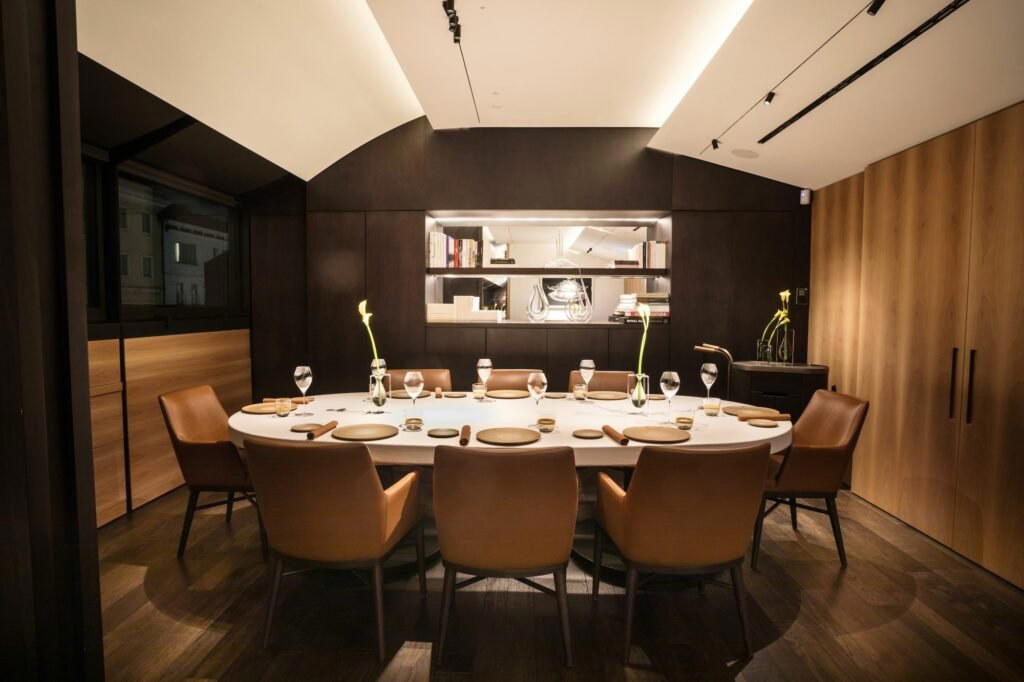
In Brera's quieter residential pocket, DanielCanzian frames contemporary Italian cooking through the warmth of a neighbourhood restaurant rather than the formality of a destination table. A Michelin Plate holder in 2024 and 2025, it offers a Veneto-accented tasting menu in four, five, or six courses, set inside a dining room furnished with custom-made pieces that reflect the kitchen's sensibility.
Pearl is the En Primeur Club membership app — saves, bookings, and concierge access live there. Same editors, same standards.
- Address
- Via Castelfidardo angolo via San Marco, 20121 Milano MI, Italy
- Phone
- +39 02 6379 3837
- Website
- danielcanzian.com
- Directions
- Get directions
 Saves & bookings on Pearl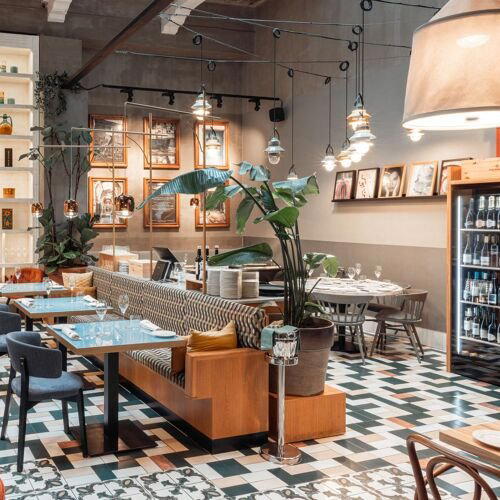
Brera's Neighbourhood Register
DanielCanzian, on the corner of via Castelfidardo and via San Marco, sits firmly in that tradition.
That corner address matters more than it might seem. It places the restaurant at the edge of Brera's commercial pull and the beginning of its quieter residential run, which shapes who turns up and what they expect. The room is fitted with custom-made furnishings, a detail that reads less as an interior design statement and more as an extension of the kitchen's precision into the physical space. In a neighbourhood where the trattoria model still has cultural authority, that kind of considered restraint lands differently than it would in, say, the design-maximalist rooms clustered around the Duomo.
The Contemporary Italian Question
Italian contemporary cuisine as a category carries a particular tension. It sits between the comfort of regional tradition and the ambition of modernist technique, and the restaurants that navigate it most convincingly are usually the ones that resist the temptation to signal both simultaneously. Across Milan's mid-to-upper price tier, where DanielCanzian's €€€ positioning places it, below the €€€€ rooms of Il Luogo Aimo e Nadia and operators like Enrico Bartolini or Seta, the expectation is technical confidence delivered without the weight of a full tasting-menu production.
What gives DanielCanzian its editorial reference point within that tier is the Veneto thread running through its menu architecture. A dedicated tasting menu built around Veneto roots, offered in four, five, or six courses, is a structural commitment: it tells you the kitchen is not chasing fashionable neutrality but is instead working from a specific regional grammar. The John Dory with autumn vegetables and Marsala sauce, cited in the Michelin documentation, is the kind of dish that places a kitchen precisely: it uses classic northern Italian sauce logic but applies it to a fish that demands careful handling, and the Marsala choice is declarative rather than safe. For context, the Veneto tasting-menu format also draws a line of comparison to operations like Le Calandre in Rubano, which treats the same regional inheritance with three-star ambition; DanielCanzian works the same source material at a more accessible register without abandoning the underlying rigour.
Michelin Plate and What It Signals
The Michelin Plate is worth understanding in its own terms rather than as a consolation for the absence of a star. The Plate designation marks restaurants where Michelin inspectors found cooking of quality, consistent, product-led, technically sound, without the additional layers of creativity or singularity that push a kitchen into star territory. In a city where the starred tables (Sine by Di Pinto, Andrea Aprea at two stars, Cracco in Galleria) occupy a different commercial and experiential tier, the Plate functions as a reliable quality marker for the restaurants that constitute the working fabric of serious Milan dining.
. Volume at that level, sustaining a rating above 4.4, suggests consistent execution rather than a single memorable performance. The distinction matters in this part of the market: the neighbourhood restaurant tradition that Brera supports depends on repeat visits, and repeat visits depend on consistency more than on drama.
For a broader map of how DanielCanzian sits within Italy's contemporary scene, it is useful to place it against restaurants working at different scales of the same tradition: Osteria Francescana in Modena and Piazza Duomo in Alba operate at the opposite end of the ambition spectrum, while Dal Pescatore in Runate and Enoteca Pinchiorri in Florence represent the formal regional-rooted end of Italian fine dining. DanielCanzian's Plate status and price positioning make it a different kind of recommendation from any of those, but the comparison clarifies what it is offering: regional seriousness at a neighbourhood pace.
The Trattoria Ethos and Where DanielCanzian Fits
There is a version of the neighbourhood restaurant that Italian food culture has always understood better than most: it is not the trattoria of checked tablecloths and house wine by the carafe, but it shares the trattoria's underlying logic. The cooking answers to a local clientele first. The format accommodates those who want three courses and those who want six. The room feels like it belongs to the street it sits on. That ethos is harder to sustain as a restaurant's profile rises, and it is the thing that distinguishes a serious neighbourhood table from a destination restaurant with neighbourhood branding.
DanielCanzian's four-to-six-course format is a practical expression of that logic. It gives the kitchen the structure to show technical range while giving the diner the agency to calibrate the experience to their appetite and schedule. In a city where the Brera aperitivo culture and the longer Milanese lunch still shape how people eat, that flexibility is not a small thing. Comparable mid-tier contemporaries in the city, Belé and Casa Camperio among them, operate within the same register, though each with a different regional or stylistic emphasis. DaV by Da Vittorio Louis Vuitton represents the more formal, brand-anchored end of that mid-tier spectrum.
For Italian contemporary cooking working the same tradition in different geographies, Agli Amici Rovinj and L'Olivo in Anacapri offer useful comparisons; each translates regional roots into a contemporary format without abandoning the hospitality logic that makes that kind of cooking make sense. At the northern Italian high-craft end, Atelier Moessmer Norbert Niederkofler in Brunico operates on a different plane of ambition but shares the commitment to regional specificity that runs through DanielCanzian's Veneto menu.
Planning a Visit
DanielCanzian is at Via Castelfidardo on the corner of via San Marco in Milan's 20121 postal district, a direct walk from the Moscova metro stop on line M2. The €€€ price positioning places it in the mid-to-upper bracket for Milan dining, below the starred rooms operating at €€€€ but above the casual trattoria tier. The tasting menu runs in four, five, or six courses, giving meaningful choice over pacing and spend.
Recognition, Side-by-Side
Comparable venues nearby, for context on price, style, and recognition.
| Venue | Cuisine | Price | Awards | Notes |
|---|---|---|---|---|
| DanielCanzianThis venue — the venue you are viewing | Contemporary Venetian Haute Cuisine | $$$$ | Michelin Plate | Not listed |
| Don Carlos | Modern Milanese & Campanian Fine Dining | $$$$ | Michelin Plate | Brera |
| Rovello | Refined Lombard Cuisine | $$$$ | Michelin Plate | Magenta - S. Vittore |
| Il Liberty | Modern Italian Mediterranean | $$$ | Michelin Plate | Porta Garibaldi - Porta Nuova |
| Armani/Ristorante | Contemporary Italian Fine Dining | $$$$ | Michelin Plate | Brera |
| Voce Aimo e Nadia | Modern Italian Fine Dining | $$$$ | Michelin Plate | Duomo |
Recognition history
Dated appearances from independent guides and award organizations, with the underlying list record or original source where available.
Michelin Plate
Michelin
Michelin Plate
Michelin
Michelin Plate
Michelin
Continue exploring
More in Milan
Restaurants in Milan
Browse all →
Bars in Milan
Browse all →
Hotels in Milan
Browse all →

At a Glance
- Elegant
- Sophisticated
- Intimate
- Romantic
- Modern
- Date Night
- Business Dinner
- Special Occasion
- Chefs Counter
- Open Kitchen
- Extensive Wine List
- Local Sourcing
Current opening hours
- Monday
- Closed
- Tuesday
- 12:30–2:30 PM, 7:30–11:30 PM
- Wednesday
- 12:30–2:30 PM, 7:30–11:30 PM
- Thursday
- 12:30–2:30 PM, 7:30–11:30 PM
- Friday
- 12:30–2:30 PM, 7:30–11:30 PM
- Saturday
- 12:30–2:30 PM, 7:30–11:30 PM
- Sunday
- Closed
Hours can change for holidays and private events. Last verified .
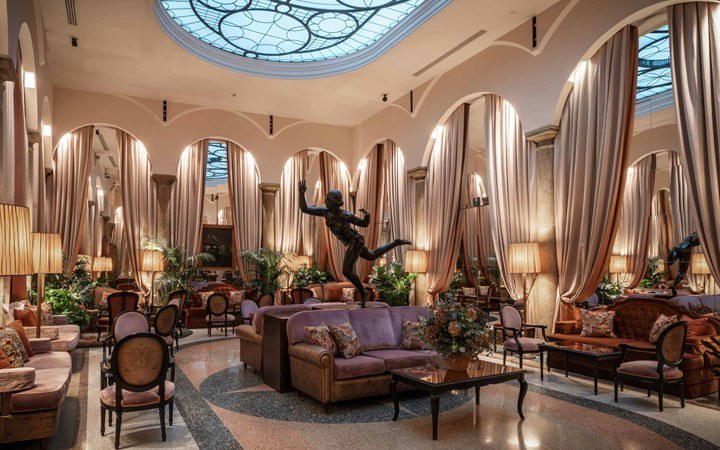
Essential and welcoming room with pastel colors, terrariums full of plants, warm lighting, and a serene, refined atmosphere.