
Michelin Plate
Our verdict
A long-established address on Rotonda's Corso Garibaldi, Da Peppe holds consecutive Michelin Plate recognition for cooking that draws directly from the agricultural traditions of the Parco del Pollino. Portions are generous, prices sit at the single-euro tier, and guestrooms in the adjoining family B&B make it a practical base for exploring one of Basilicata's least-visited corners.

Pearl is the En Primeur Club membership app — saves, bookings, and concierge access live there. Same editors, same standards.
- Address
- Corso Garibaldi, 13, 85048 Rotonda PZ, Italy
- Phone
- +39 345 407 0498
- Directions
- Get directions
The menu
What to order
- Tagliolini with black truffle
- Spaghetti alla chitarra with crusco peppers
- Suckling pig
- Pasta with wild boar
Where the Pollino Sets the Menu
Rotonda sits at roughly 600 metres elevation in the Parco Nazionale del Pollino, the largest national park in Italy by protected area. The village's historic centre is compact enough to cross on foot in minutes, and Corso Garibaldi, its principal street, runs past the kind of stone facades that have changed more slowly than the food traditions they frame. Da Peppe occupies one of those addresses, a family-run restaurant and B&B; that has served the town's traditional cooking long enough to earn consecutive Michelin Plate recognition in 2024 and 2025, the guide's signal for consistently good cooking at a defined price point.
The Michelin Plate category matters here because it places Da Peppe in a different conversation from the Michelin-starred restaurants that have come to define Italian fine dining internationally. Properties like Osteria Francescana in Modena, Enoteca Pinchiorri in Florence, or Le Calandre in Rubano operate at the €€€€ tier with tasting menus designed partly as cultural statements. Da Peppe's price range registers as a single euro symbol, which in Michelin's framework typically means two courses and a glass of wine for under €35. That pricing, combined with Plate recognition across two consecutive years, positions it as a reliable, locally-anchored address rather than a destination for gastronomes travelling specifically to eat.
What the Pollino Puts on the Plate
Basilicata is among Italy's least populous regions, and the Pollino area within it is further removed from the circuits that drive culinary tourism in the north. That isolation has functioned as a kind of preservation mechanism. The region's cooking relies on a core of ingredients with Protected Designation of Origin or traditional status: Fagiolo di Rotonda, the multicoloured local bean grown specifically in this municipality; Peperone di Senise, the sweet dried pepper used throughout the region; and the black pig of the Pollino, a heritage breed connected to these highlands for centuries. These are not ingredients sourced from a broader Italian pantry and applied here. They grow and are raised within a short radius of the restaurant.
This is the defining characteristic of Da Peppe's kitchen, and it aligns the restaurant with a pattern seen across Italy's mountain south, where the most credible local cooking is not modernising or abstracting its ingredients but expressing them with directness. The Michelin description notes dishes that are "always expertly prepared" and portions described as "copious," which is consistent with Lucano tradition, where a meal is structured as a sequence of substantial courses rather than a study in restraint. Visitors comparing this to the pared-down tasting formats at places like Reale in Castel di Sangro or the technically precise seafood work at Uliassi in Senigallia will find a different set of values operating here, not lesser ones, but differently motivated.
Basilicata's kitchen has received increasing editorial attention over the past decade as travellers move past the region's more-visited neighbours. Dimora Ulmo in Matera and Al Becco della Civetta in Castelmezzano represent different registers of the same regional tradition, one in a luxury hotel context and one in another dramatically situated Lucano village. Da Peppe in Rotonda sits with both of them in representing a cuisine that has not yet been heavily filtered through the demands of food tourism.
The Logic of Eating Here
The restaurant's Michelin recognition across two years signals consistency, which in a village restaurant operating at the single-euro price point is a more meaningful credential than it might appear. Michelin's inspectors visit anonymously and repeatedly before awarding even the Plate designation, which means the kitchen is not performing for visits. It is cooking its local menu to a stable standard. For the surrounding area, that translates into a dependable address for anyone spending time in the Pollino, whether hiking the park's trails, visiting the nearby Piano Ruggio plateau, or travelling the route between the Calabrian coast and Potenza.
The family B&B attached to the restaurant adds a logistical layer that matters in this part of Basilicata, where overnight accommodation options in the immediate area are limited. Staying on-site removes the calculus of driving mountain roads after dinner and puts guests directly inside the village, with early access to whatever the morning looks like in one of southern Italy's quieter corners. For the broader context of where to eat and stay in the area, the full Rotonda restaurants guide and the full Rotonda hotels guide provide additional options. The Rotonda bars guide, wineries guide, and experiences guide cover the wider scene.
Da Peppe's address on Corso Garibaldi 13 puts it in the heart of Rotonda's historic centre. Given the restaurant's size and village context, walking in during standard Italian lunch or dinner hours is typically how reservations are handled at this tier, though visiting during high summer or on local festival dates warrants checking ahead. Pricing at the single-euro tier means a full meal, including wine, stays accessible for most travellers.
Da Peppe in the Wider Picture of Italian Regional Cooking
Italy's restaurant conversation concentrates on its northern and coastal addresses. The three-star tier, represented by kitchens like Dal Pescatore in Runate, Enrico Bartolini in Milan, Piazza Duomo in Alba, Quattro Passi in Marina del Cantone, Casa Perbellini 12 Apostoli in Verona, and Atelier Moessmer Norbert Niederkofler in Brunico, operates with entirely different infrastructure: media exposure, reservation systems, international clientele, and cuisine frameworks that borrow from French or global-modernist references. Da Peppe operates in a different register entirely, one grounded in proximity to a specific mountain territory and the expectation that cooking should express that territory directly.
That directness is not a gap in sophistication. It is the point. The Fagiolo di Rotonda, for instance, is among the few beans in Italy with municipal-level PDO protection, which reflects a level of specificity that high-concept kitchens often try to simulate from a distance. Here it appears on the plate because it is grown in the fields immediately outside town. That relationship between land and table, without the mediation of sourcing logistics or menu concept, is what regional Italian cooking at its most coherent looks like, and Michelin's consecutive Plate recognition suggests Da Peppe is executing it reliably.
Planning Your Visit
Rotonda is reached most practically by car from either Cosenza to the south or Potenza to the north, with the drive through the Pollino rewarding in itself. Da Peppe sits on the main corso of the historic centre, making it walkable from any accommodation within the village. The attached B&B means visitors can consolidate their stay here, particularly useful if the plan involves more than one meal in the area. Given the price point, budget planning is direct: the single-euro tier means this is among the most accessible addresses carrying Michelin recognition anywhere in the Italian south.
Frequently asked questions
Is Da Peppe suitable for children?
Yes. Da Peppe is a family-run restaurant operating at the single-euro price tier in a small village setting — the format is relaxed and unpretentious. The cooking is traditional Basilicata fare rather than tasting-menu theatre, which makes it a practical stop for families passing through the Pollino.
What's the vibe at Da Peppe?
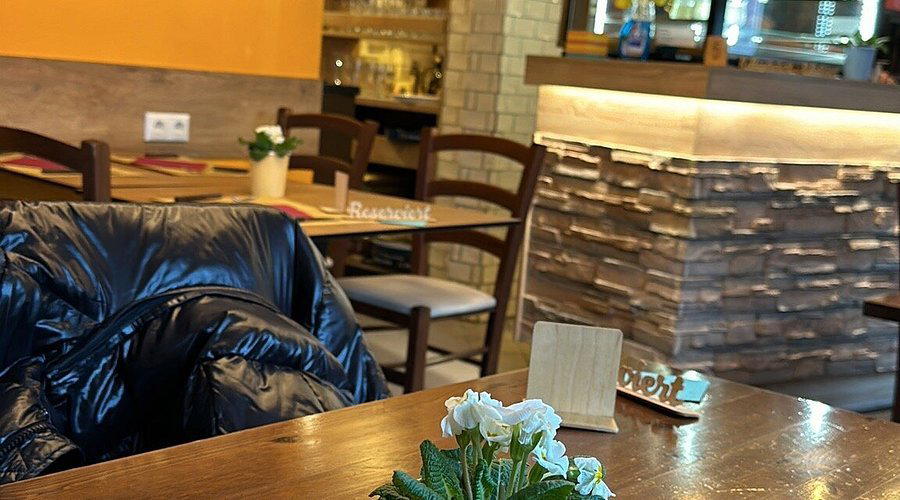
Grounded and local. This is a long-established village restaurant on Corso Garibaldi in Rotonda's historic centre, not a destination dining room chasing attention. Two consecutive Michelin Plates signal consistent quality, but the atmosphere runs closer to a neighbourhood table than a formal dining experience.
Is Da Peppe award-winning?
Da Peppe has received recognition including: Situated in the historic centre of a small village in the Parco del Pollino, this long-established restaurant serves traditional and copious local dishes that are always expertly prepared. Guestrooms are also available in the family B&B; of ….
What should I eat at Da Peppe?
Follow the Pollino larder. The Parco del Pollino has given Basilicata three ingredients with protected status: the Fagiolo di Rotonda bean, the Peperone di Senise, and the Podolica cattle that supply the local beef and aged cheeses. At a kitchen the Michelin Guide describes as serving traditional and copious local dishes, those are the anchors worth ordering around.
How much does it cost to eat at Da Peppe?
Pricing at Da Peppe is listed as €.
Quick Comparison
| Venue | Cuisine | Price | Awards | Notes |
|---|---|---|---|---|
| Da PeppeThis venue — the venue you are viewing | Modern Lucanian Italian | Not listed | Michelin Plate | Not listed |
| Atelier Moessmer Norbert Niederkofler | Italian, Creative | Not listed | Michelin 3 Star | Not listed |
| Dal Pescatore | Italian, Italian Contemporary | Not listed | Michelin 3 Star | Not listed |
| Enoteca Pinchiorri | Contemporary Italian Fine Dining | $200–300 | 3 Michelin Stars · World's 50 Best #32 | Italian - French, Italian Contemporary |
| Enrico Bartolini | Creative | Not listed | Michelin 3 Star | Not listed |
| Osteria Francescana | Avant-Garde Italian Contemporary | $300–500 | 3 Michelin Stars · World's 50 Best #1 | Progressive Italian, Creative |
Recognition history
Dated appearances from independent guides and award organizations, with the underlying list record or original source where available.
Michelin Plate
Michelin
Full recognition history (3 entries)
Michelin Plate
Michelin
Michelin Plate
Michelin
Continue exploring
More in Rotonda
Restaurants in Rotonda
Browse all →
Bars in Rotonda
Browse all →
Hotels in Rotonda
Browse all →
Details
- Cozy
- Intimate
- Rustic
- Date Night
- Family
- Group Dining
- Historic Building
- Local Sourcing
- A La Carte
- Vegetarian Friendly
- Allergy Accommodating
Cozy, intimate, and welcoming atmosphere with warm hospitality, tasteful decor, and a family-like feel in a small historic village setting.