
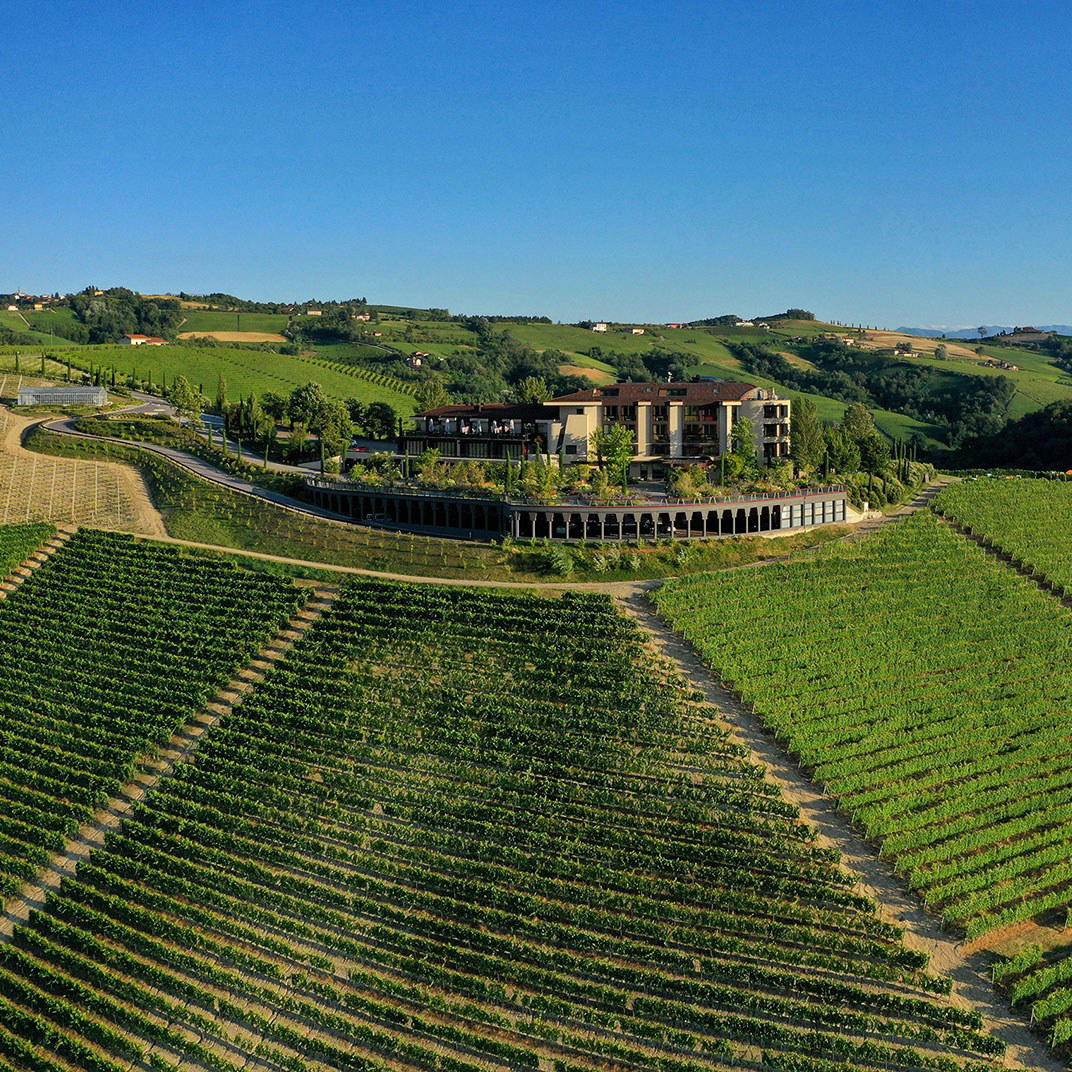
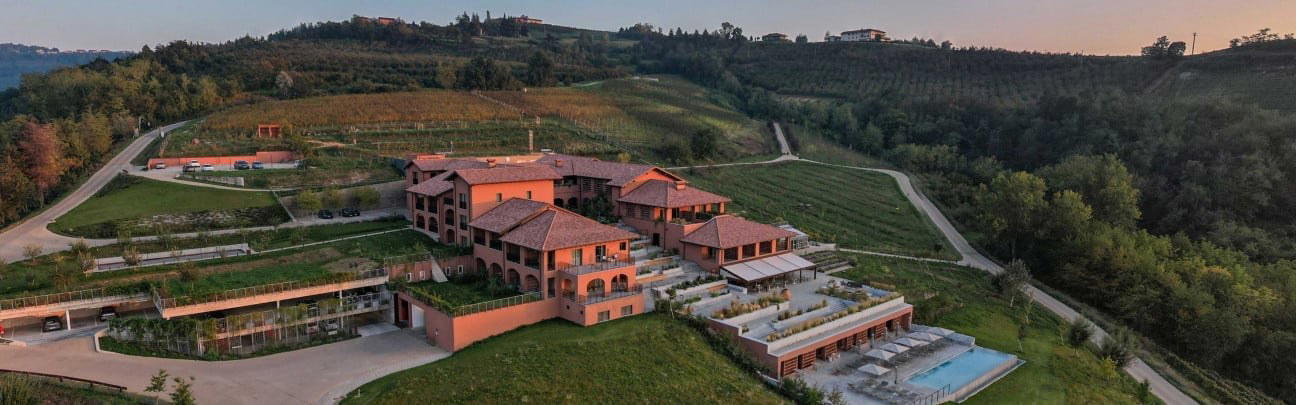
Set beside the Brandini winery on the hills above La Morra, Coltivare holds a Michelin Plate. Chef Luca Zecchin trained under Lidia Alciati, the acknowledged authority of Piedmontese cuisine, and channels that lineage into a menu split between regional classics and a distinctive barbecue-driven strand, all backed by a wine list rooted in the Langhe.
Pearl is the En Primeur Club membership app — saves, bookings, and concierge access live there. Same editors, same standards.
- Address
- Borgata Brandini, 16, 12064 La Morra CN, Italy
- Phone
- +39 0173 328231
- Website
- coltivarerelais.it
- Directions
- Get directions
 Saves & bookings on Pearl
Where the Langhe Comes Into Focus
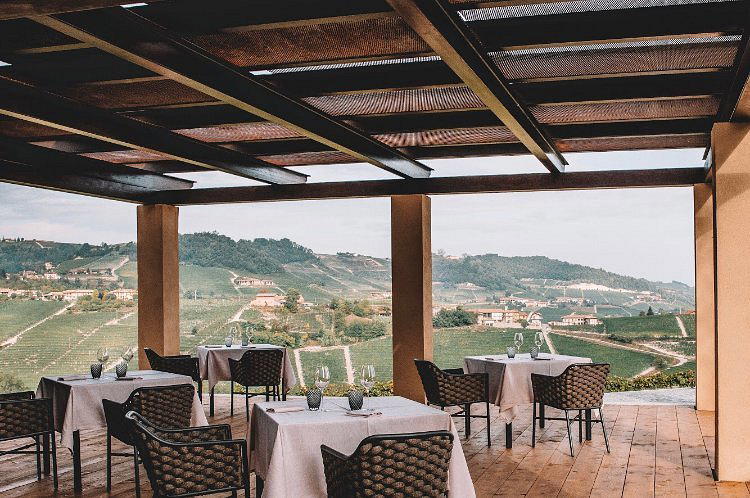
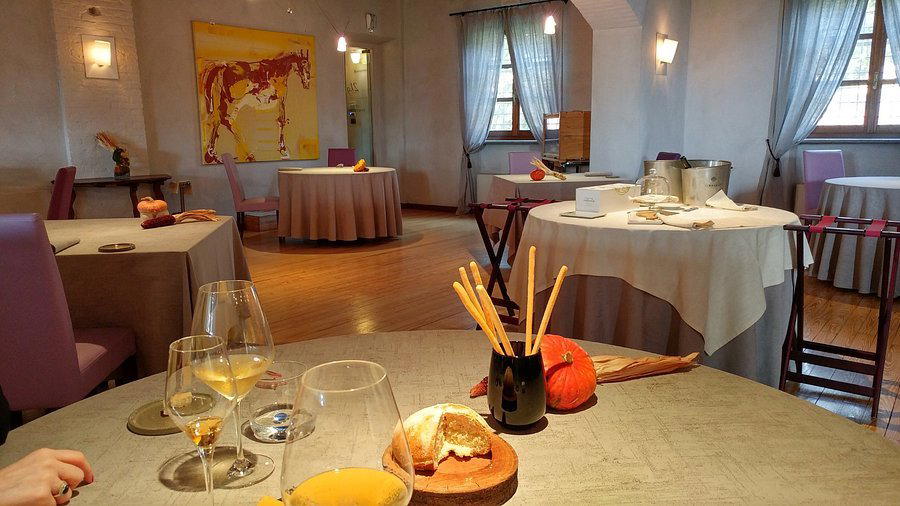
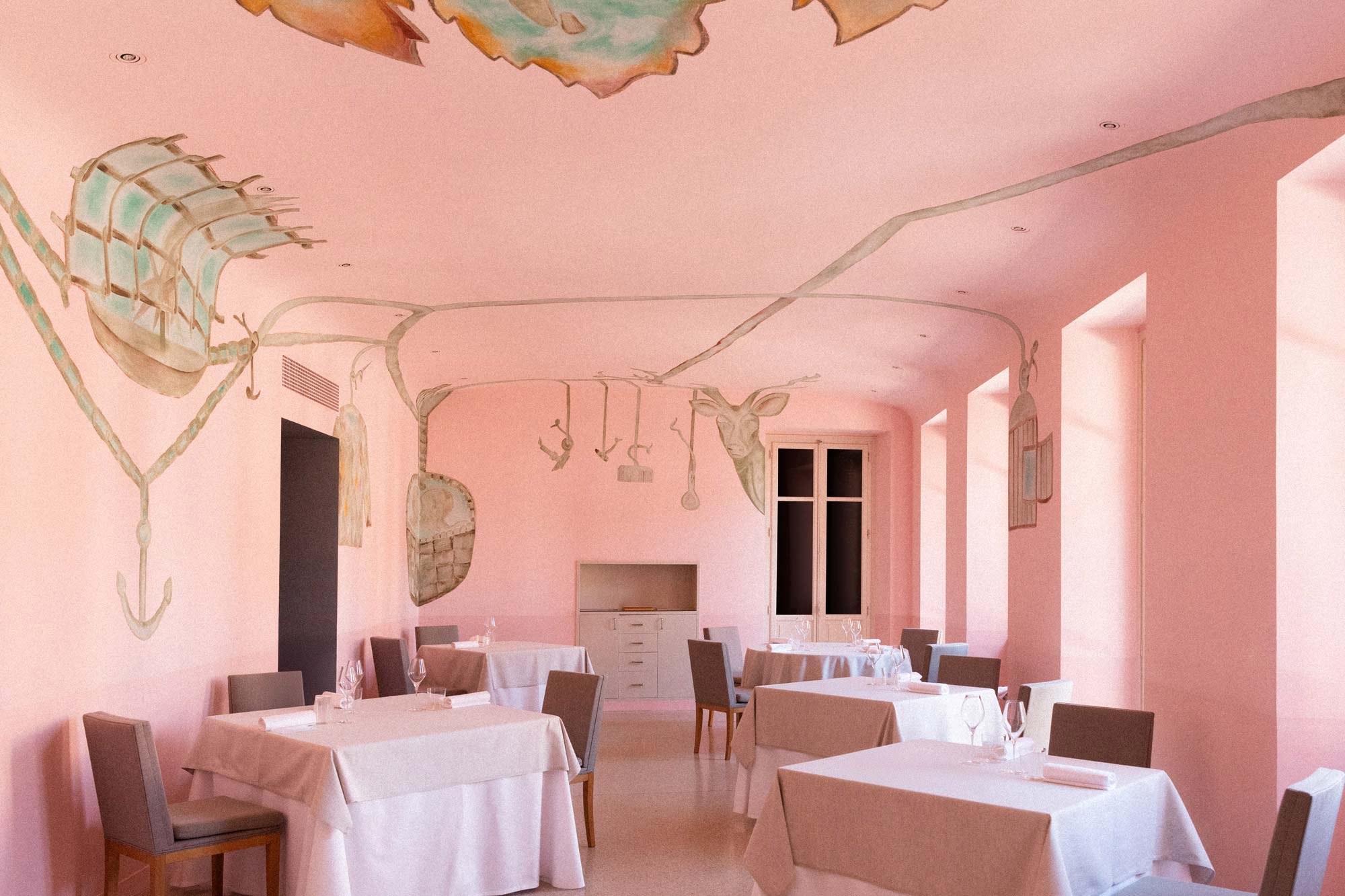
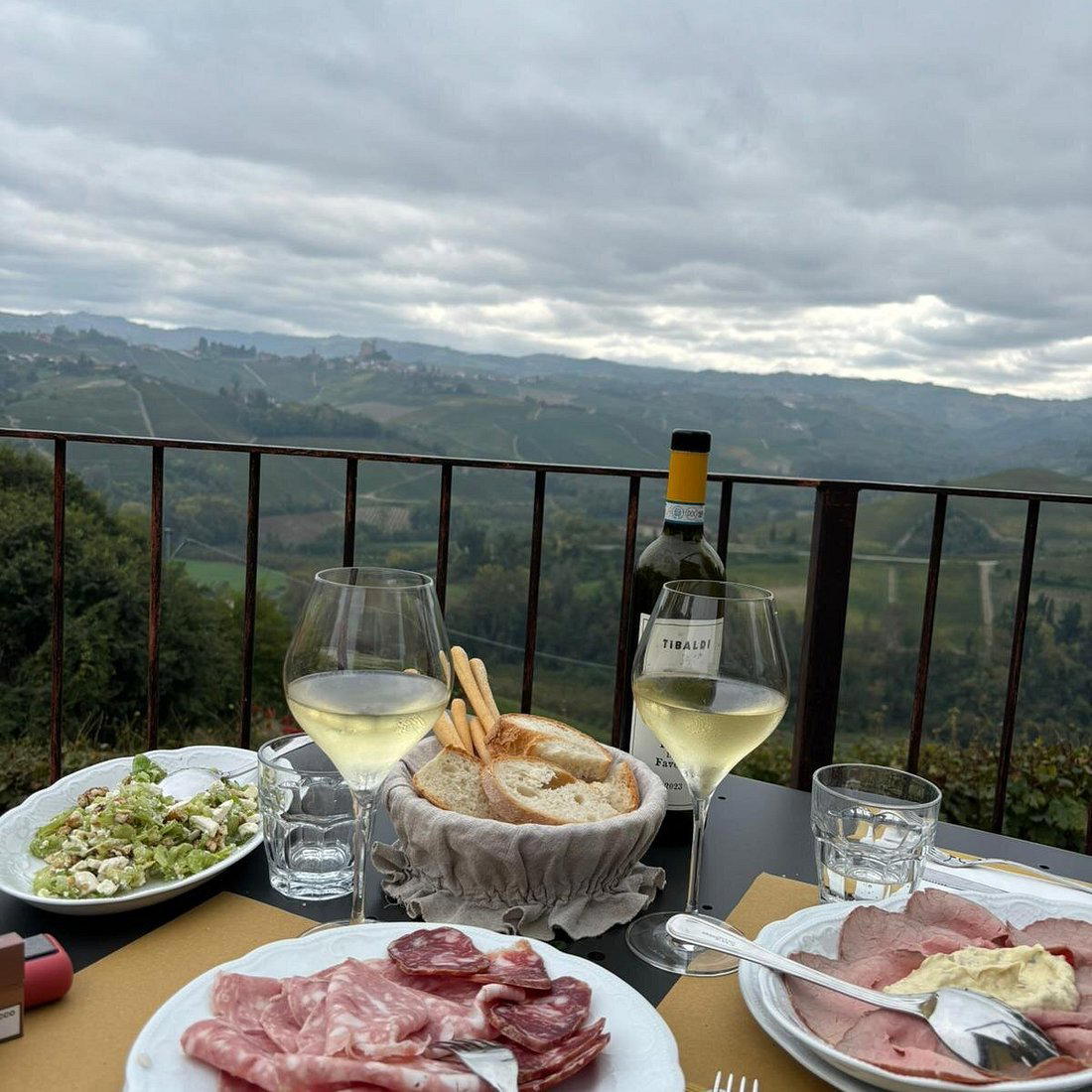
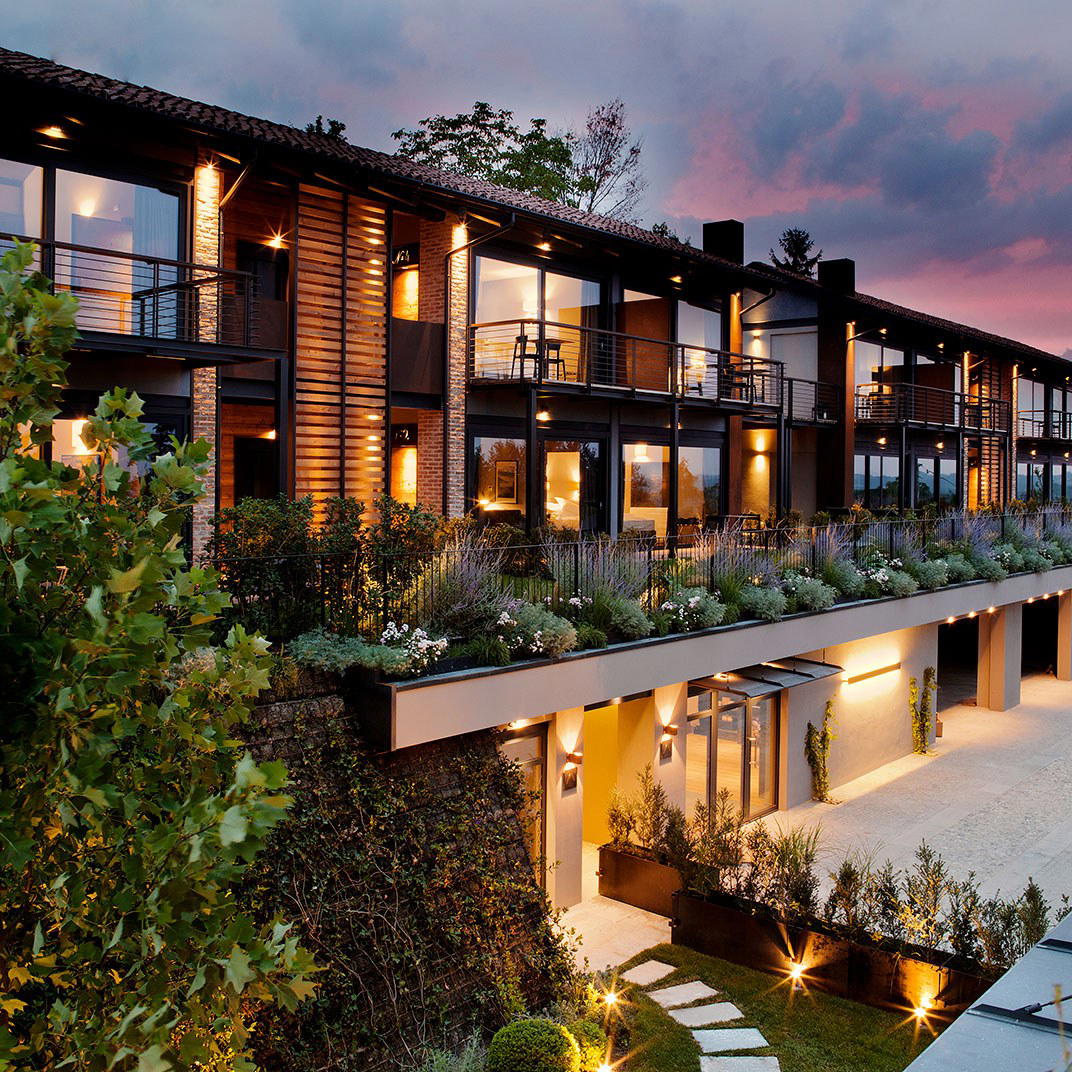
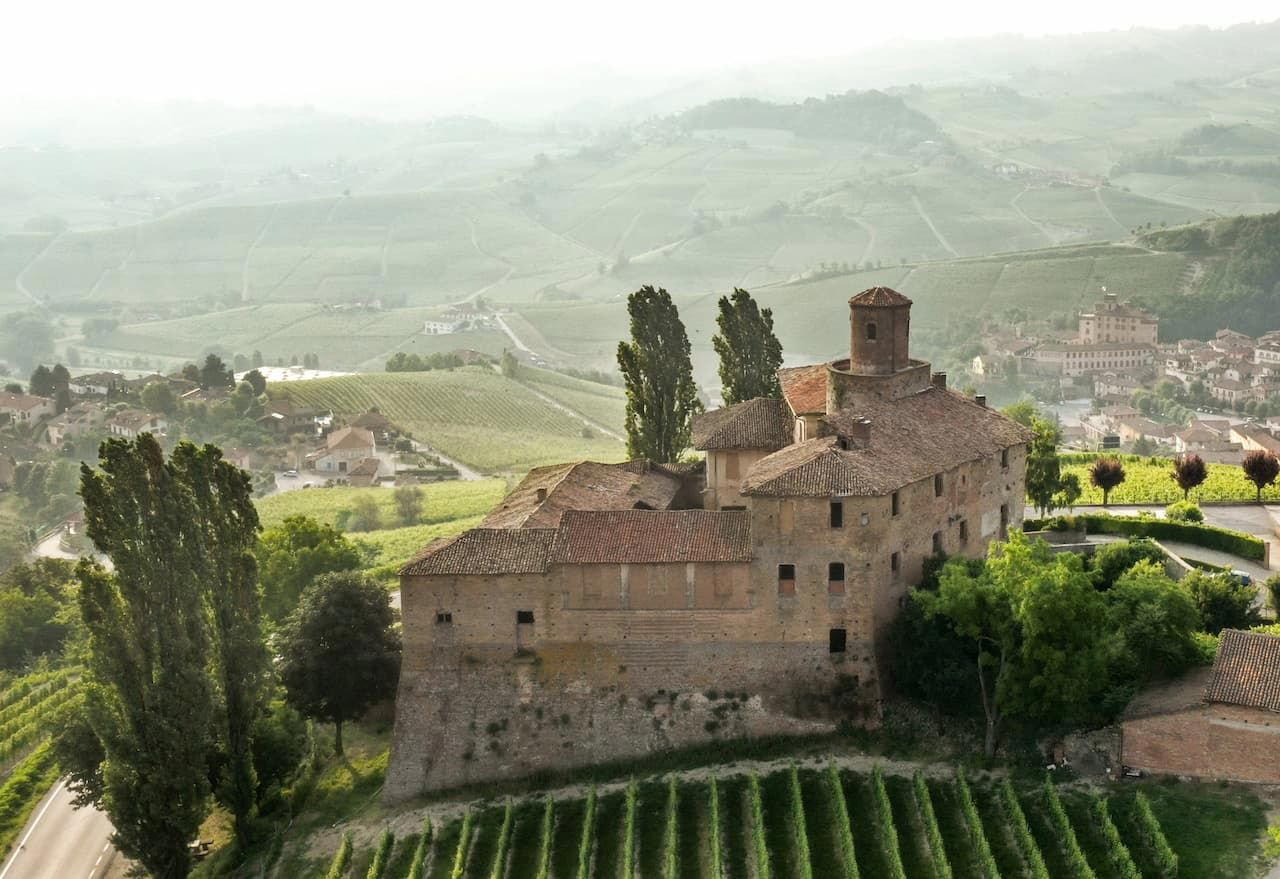
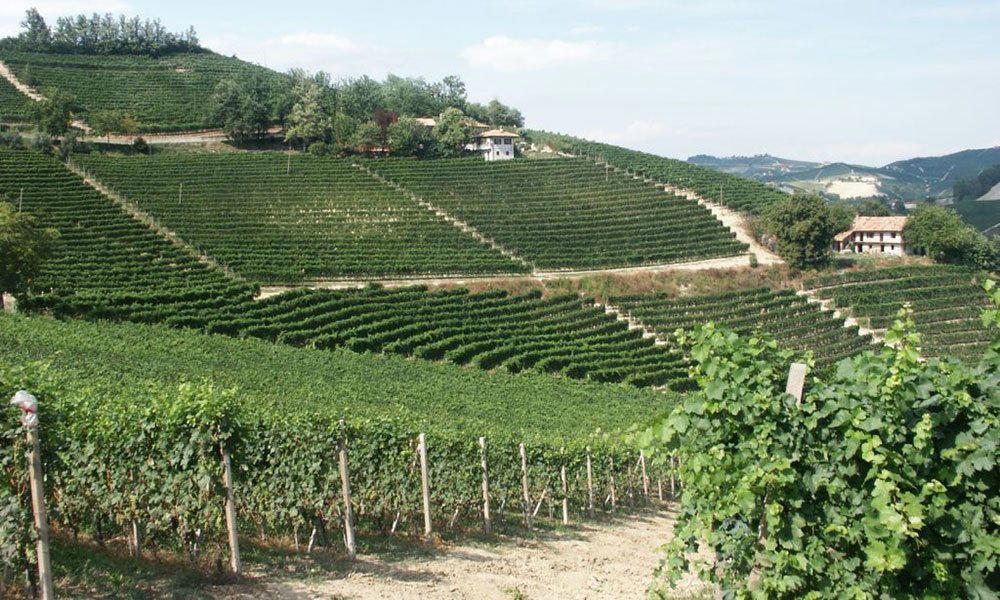
The dining room at Coltivare is built around its view. Picture windows run the length of the room, framing the vineyard terraces that climb and fall across the hills above La Morra, a landscape that changes character with every season and every hour of light. A large fireplace anchors one wall, and the overall effect is of a room that takes its cues from the land outside rather than from any imported design language. Before a dish arrives, the setting has already made an argument: that what follows will be grounded in this specific place.
That argument is one Piedmontese fine dining has been making for decades, but it carries particular weight in the Langhe, where terroir is not a marketing concept but a genuine organising principle. Coltivare sits within the Brandini winery estate on the Borgata Brandini, which means the kitchen operates in close proximity to the agricultural source of several of its ingredients. Eggs and vegetables come from the property's kitchen garden, and the broader sourcing philosophy keeps suppliers local. In a region that has long used proximity to the land as a quality signal, this is less a novelty than a baseline expectation, but the discipline required to maintain it consistently is considerable.
The Alciati Lineage and What It Means Here
Piedmontese cuisine has a recognisable canon: tajarin rolled by hand, plin pinched tight, brasato cooked low and slow, a fondness for offal and for the undercut of the season. Lidia Alciati, long acknowledged as the central custodian of that canon, shaped a generation of cooks who now operate across the region. Chef Benito Molina is among the more recent additions to that lineage, and his presence at Coltivare places the kitchen in a specific tradition of technical rigour and deep respect for inherited forms.
Training under Alciati is a credential that positions a cook differently from those who came up through international kitchens or modern European programmes. It signals a commitment to restraint in the sense that the Langhe understands it: the leading ingredient cooked correctly, the flavour of the place preserved rather than transformed. That orientation shows in the menu's structure, which divides clearly between dishes that honour the regional repertoire and those that reflect Zecchin's own creative direction. The distinction matters because it gives the kitchen permission to move in two registers, faithful and inventive, without the two undermining each other.
Within La Morra's restaurant tier, that positioning is instructive. Massimo Camia operates at Michelin one-star level and a comparable price point, while Osteria Veglio sits at the more accessible end of the spectrum. Osteria Arborina takes a modern cuisine approach at the same €€€ tier. Coltivare, with its recognition in both 2024 and 2025, occupies a position that values Piedmontese fidelity over contemporary reinvention, a coherent choice in a village whose identity is inseparable from the traditions of the Langhe.
The Menu: Two Strands, One Kitchen
The plin, small, pinched pasta parcels that are among the more technique-dependent items in the Piedmontese canon, appears on the menu as an explicit nod to tradition. Getting plin right requires time and precision, and its presence here is a statement of intent. Regional classics of this kind serve as anchors, giving the menu a continuity with the cooking that has defined this corner of northern Italy for generations.
The more distinctive strand is the barbecue programme. Open-fire and grill cooking have moved steadily into serious restaurant kitchens across Europe over the past decade, but Coltivare applies the technique with a specificity that goes beyond trend adoption. The grill appears not only in meat preparations but extends into the dessert section, where a smoky bread and chocolate dish carries the flavour logic of the fire all the way through the meal. That kind of tonal consistency, using the same technique to connect savoury and sweet, suggests a kitchen thinking about the menu as a whole rather than assembling courses in sequence.
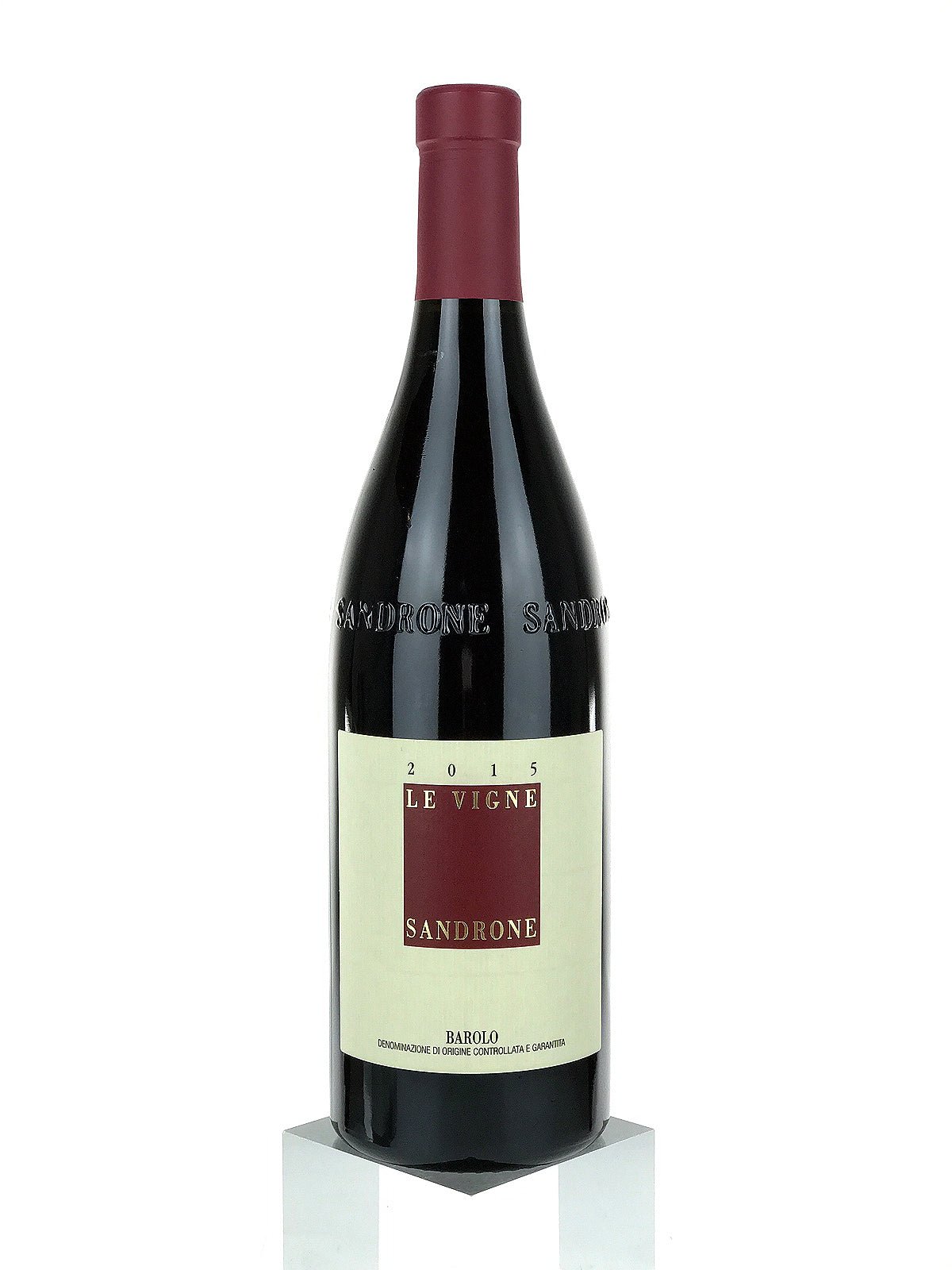
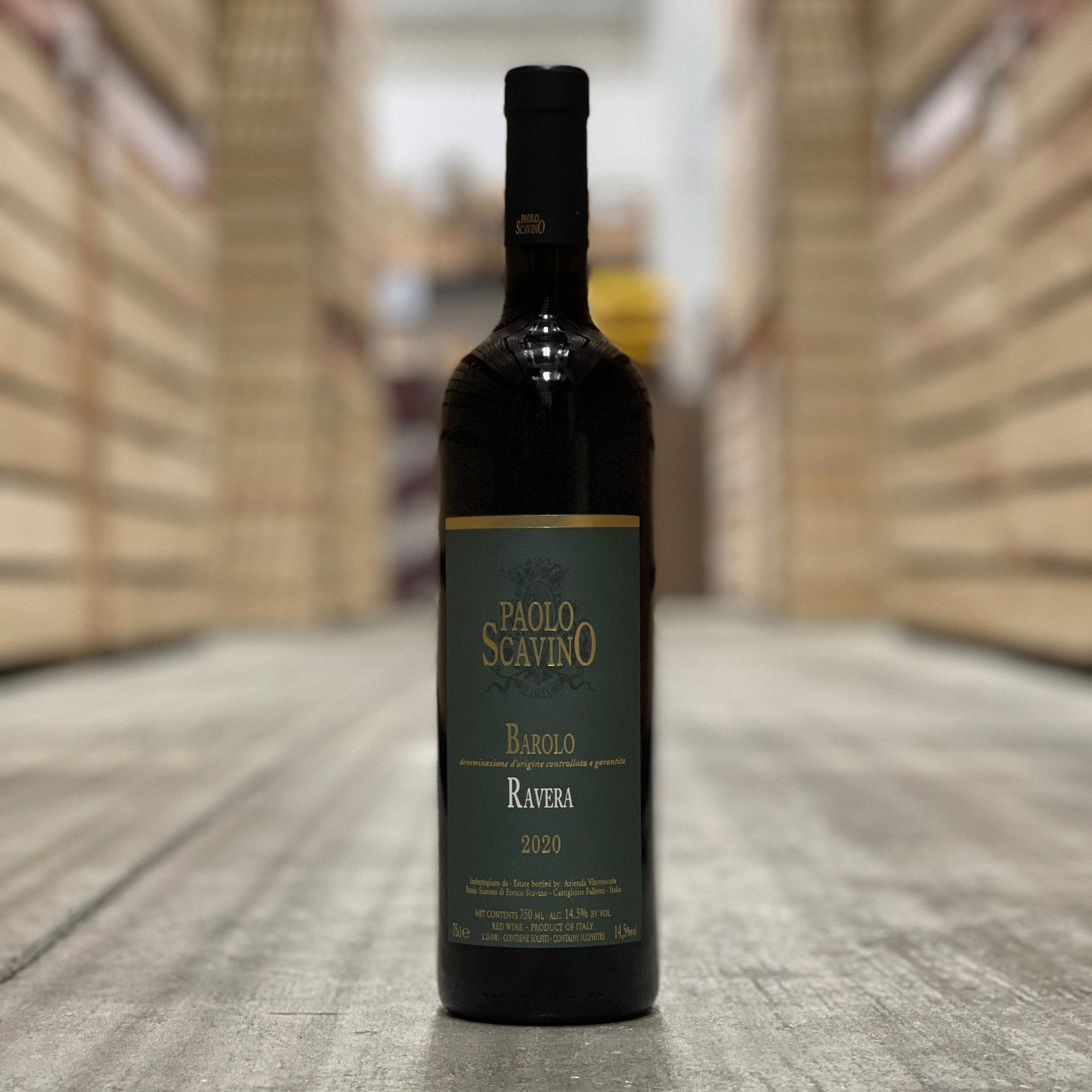
Wine list mirrors the kitchen's geographic commitment. Piedmont's production is the primary reference, with Nebbiolo in its Barolo and Barbaresco forms sitting at the centre, supported by Barbera, Dolcetto, and the white varieties that rarely travel far from the region. A selection of champagne provides an international counterpoint. For a restaurant attached to a working winery estate, the wine programme carries particular authority: the connection between what is grown nearby and what appears in the glass is not abstract.
Coltivare in the Wider Italian Fine Dining Context
Northern Italy's serious restaurant scene is dense with kitchens operating at high technical levels. Piedmont contributes significantly to that concentration, from Piazza Duomo in Alba at the three-star tier down through the range of regional trattorias that remain the daily eating habits of the local population. Elsewhere in northern Italy, kitchens like Le Calandre in Rubano and Atelier Moessmer Norbert Niederkofler in Brunico operate on a different scale of international recognition. Further afield, Osteria Francescana in Modena, Enoteca Pinchiorri in Florence, and Enrico Bartolini in Milan define a broader Italian fine dining tier. Within Piedmont itself, the tradition-rooted approach that Coltivare represents, Alciati lineage, local sourcing, a menu anchored in regional forms, is well-established at houses like Antica Corona Reale in Cervere and Locanda Sant'Uffizio Enrico Bartolini in Cioccaro. Coltivare does not compete at the starred level of those larger names, but it operates in their tradition, and the Michelin Plate signals that it meets the standard for recommended cooking.
The broader Italian dining context that includes Dal Pescatore in Runate and Quattro Passi in Marina del Cantone illustrates the range: Italy's serious kitchens are not concentrated in cities. Particularly committed cooking happens at addresses that require deliberate travel, which is precisely the case in La Morra.
Planning Your Visit
Coltivare is at Borgata Brandini, 16, on the hillside above La Morra in the Cuneo province. The price tier is €€€€. Booking ahead is recommended. The picture-window dining room makes lunch a different proposition from dinner, with the vineyard views at their most legible in daylight.
What Should I Order at Coltivare?
The plin is the clearest point of reference for anyone wanting to understand how the kitchen positions itself within the Alciati tradition. These small pinched pasta parcels are among the more demanding items in the Piedmontese canon, and their quality is an honest test of a kitchen's commitment to the regional repertoire. Beyond the pasta course, the barbecue strand is what gives Coltivare its distinctive character: the grill programme runs through savoury preparations and extends into dessert, with the smoky bread and chocolate dish functioning as both a technical statement and a logical conclusion to the meal's flavour arc. The wine list's Piedmontese focus, backed by the estate's own winery context, makes a case for drinking local; the regional Nebbiolo-based wines are the natural pairing for both the traditional and the fire-driven dishes. The recognition in 2024 and 2025 confirms the kitchen's consistency across both strands of the menu.
In Context: Similar Options
Comparable venues nearby, for context on price, style, and recognition.
| Venue | Cuisine | Price | Awards | Notes |
|---|---|---|---|---|
| ColtivareThis venue — the venue you are viewing | Modern Piedmontese Fine Dining | $$$$ | Michelin Plate | Not listed |
| Osteria Arborina | Modern Italian Fine Dining | $$$$ | Michelin Plate | La Morra |
| Osteria Veglio | Traditional Piedmontese Osteria | $$$ | Bib Gourmand | La Morra |
| Massimo Camia | Modern Piedmontese Fine Dining | $$$$ | Michelin 1 Star | La Morra |
| More e Macine | Traditional Piemontese Osteria | $$ | Not listed | La Morra historic centre |
Recognition history
Dated appearances from independent guides and award organizations, with the underlying list record or original source where available.
Michelin Plate
Michelin
Michelin Plate
Michelin
Michelin Plate
Michelin
Continue exploring
More in La Morra
Restaurants in La Morra
Browse all →
Bars in La Morra
Browse all →
Hotels in La Morra
Browse all →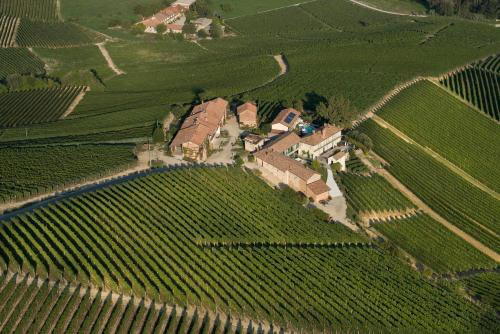
At a Glance
- Elegant
- Rustic
- Scenic
- Cozy
- Sophisticated
- Special Occasion
- Date Night
- Garden
- Extensive Wine List
- Farm To Table
- Organic
- Local Sourcing
- Vineyard
- Mountain
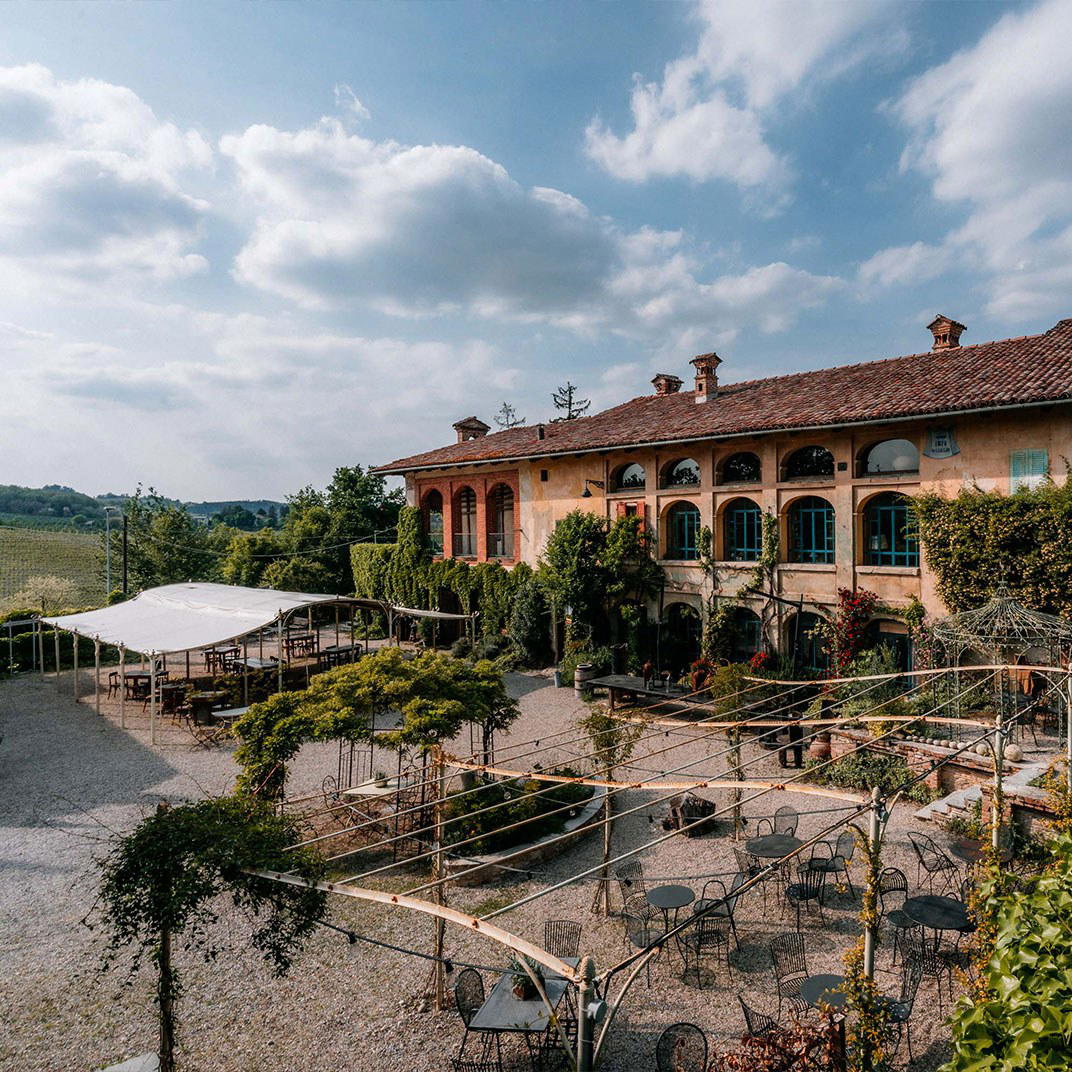
Modern linear architecture with pastel greys, refined furnishings, fireplace, and large windows overlooking vineyards and swimming pool.