
Cocotte sits in Lyon's 4th arrondissement as the kind of neighbourhood address that earns the French word 'cantine' in the truest sense: a place you return to on a Tuesday as readily as a Saturday. The cooking is colourful, slow, and personal, placing it squarely in the tradition of Lyon's everyday bistrot culture rather than its white-tablecloth circuit.
Pearl is the En Primeur Club membership app — saves, bookings, and concierge access live there. Same editors, same standards.
- Address
- 2 Cr d'Herbouville, 69004 Lyon, France
- Phone
- +33 4 72 98 85 03
- Website
- cocotte-resto.com
- Directions
- Get directions
 Saves & bookings on Pearl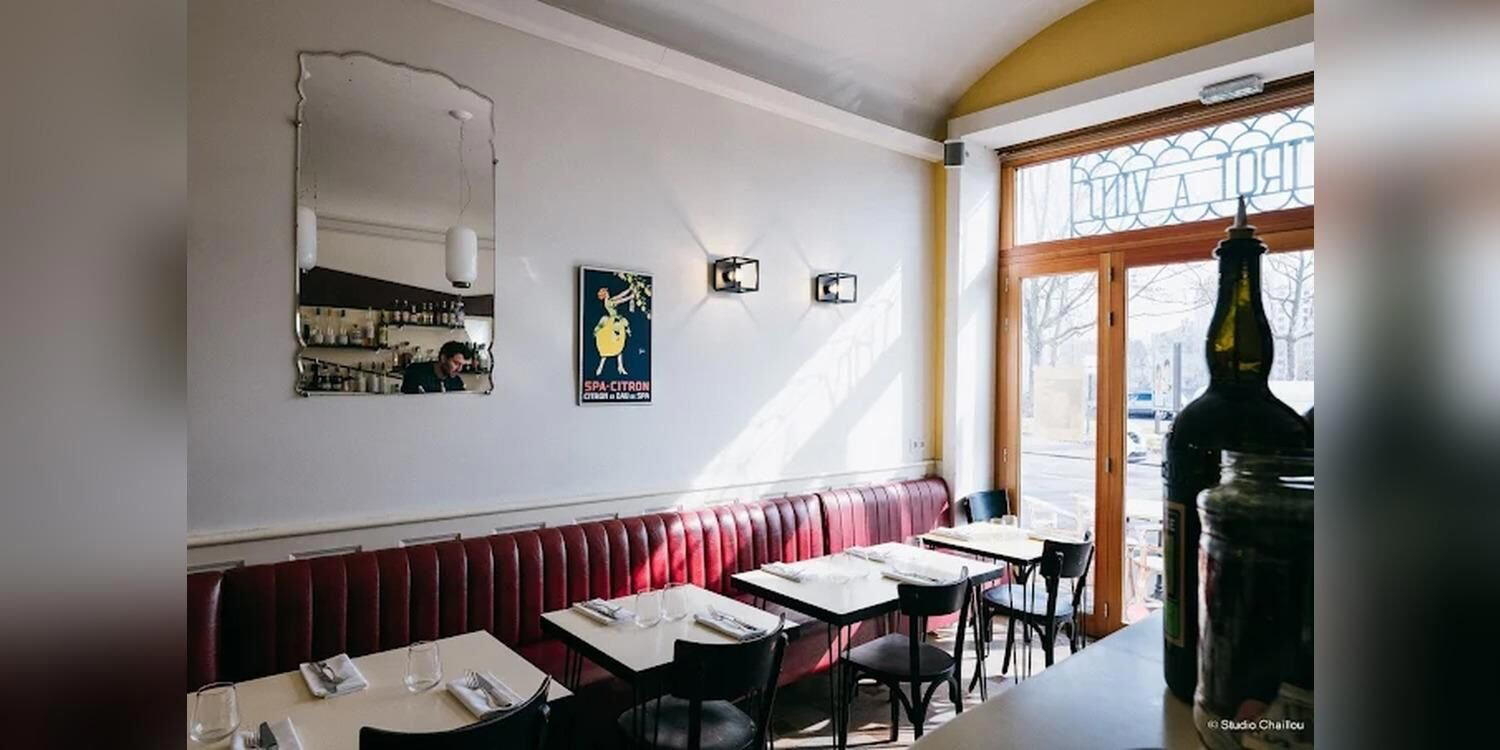
The Rhythm of a Lyon Neighbourhood Table
Lyon's dining identity runs on two distinct tracks. One is the grand-occasion circuit: multi-course tasting menus, formal pacing, and the kind of silverware that arrives on a folded cloth. The other is the everyday track, the track that actually defines how Lyonnais people eat most of the time. The neighbourhood cantine operates at a different tempo entirely. Dishes arrive when ready, the room fills with regulars who know the staff, and the food earns loyalty not through spectacle but through consistency. Cocotte, at 2 Cours d'Herbouville in the 4th arrondissement, belongs firmly to the second tradition.
The 4th sits on the slopes of La Croix-Rousse, a hillside neighbourhood whose identity was shaped by the silk weavers who once lived and worked there, and whose dining culture today runs to independent, owner-operated addresses rather than destination restaurants. It is not the part of Lyon where visitors tend to start their eating itinerary, which means the room at Cocotte fills with people who live nearby rather than people ticking boxes. That shift in clientele changes the entire dynamic of a meal.
What the Cantine Format Actually Asks of You
The dining ritual at an address like this is less performative than at Lyon's upper tier, places like Le Neuvième Art or Takao Takano, where the meal is structured as a sequence with deliberate pauses and explanation. Here, the expectation is simpler: arrive, settle, order, eat. The pacing is driven by the kitchen rather than a choreographed service team. That informality is not a concession; it is the point. French bistrot culture has always argued that the leading food need not announce itself.
Cooking at Cocotte has been described, with clear affection, as food that belongs in your weekly rotation rather than your annual calendar. The phrase used in early assessments, that it would serve as someone's everyday restaurant if they lived nearby, carries a specific weight in Lyon. In a city where La Mere Brazier set the template for institutionalised Lyonnais cooking, and where the bouchon tradition has become both a living practice and a tourist category, the neighbourhood cantine occupies a quieter but no less important position. It is where the city actually feeds itself.
Colour, Slowness, and What Those Words Mean on a Plate
Two descriptors come up consistently in relation to Cocotte's cooking: colourful and slowly cooked. Neither is decorative language. In the context of French provincial cooking, slow preparation signals a commitment to process over convenience, the kind of kitchen discipline that produces depth in braises, proper reduction in sauces, and texture that comes from time rather than technique for its own sake. Colour, in this context, means produce-led cooking where the visual range of the plate reflects a genuine engagement with vegetables and seasonal ingredients rather than a monotone protein-and-sauce approach.
This places Cocotte at an interesting distance from Lyon's more traditional registers. The classic bouchon canon, quenelles, tablier de sapeur, cervelle de canut, is deliberately monochrome in its aesthetic, a product of working-class thrift and offal-led resourcefulness. Cocotte's described personality suggests a kitchen that draws on that tradition's values of honesty and depth while applying a lighter, more contemporary hand. The result, according to those who treat it as a regular address, is food with what they call personality: dishes that taste like decisions were made about them.
Placing Cocotte in Lyon's Current Eating Scene
Lyon's restaurant spectrum in 2024 runs from the destination-level investment of a meal at Au 14 Février or Burgundy by Matthieu down through neighbourhood bistrots and bouchons to quick-lunch addresses near the Part-Dieu. Cocotte sits in the mid-to-upper end of the neighbourhood tier: not a special-occasion venue, but clearly operating above the level of a utilitarian lunch spot. The food has enough individuality to justify a visit from outside the immediate quarter, while the format remains sufficiently relaxed that it does not require any particular occasion to justify the booking.
For context on where Lyon sits within the broader French dining map, it is worth noting that the city has long been positioned as France's most serious eating city outside Paris, a claim supported by density of credentialed kitchens per capita rather than a single flagship address. France's highest-profile restaurants, from Alléno Paris au Pavillon Ledoyen to Mirazur in Menton and Troisgros in Ouches, operate at a register of sustained technical ambition. What Lyon also produces, and this is the less-written-about achievement, is a deep bench of neighbourhood addresses that cook seriously without performing seriousness. Cocotte belongs in that second category.
The same civic eating culture also sustains the expectation, held by Lyonnais diners, that a neighbourhood table should cook properly. Cocotte is a beneficiary of that expectation. So, in different ways, are international visitors who have discovered that the leading meals in Lyon are not always particularly expensive ones. Compare that ethos to the ambition visible at something like Le Bernardin in New York or Emeril's in New Orleans, and you see how different culinary cultures produce entirely different hierarchies of what counts as a serious meal.
Planning Your Visit
Cocotte is at 2 Cours d'Herbouville in the 4th arrondissement, a ten-minute walk from stronger examples from the Croix-Rousse funicular. Given its positioning as a neighbourhood regular rather than a destination booking, tables are likely available with shorter notice than Lyon's tasting-menu addresses, though arriving without a reservation for a weekend dinner carries the usual risk at any address that has earned a local following. Reservations are essential. Dress is informal. This is not a white-tablecloth room, and the food does not ask you to dress for it.
Category Peers
Comparable venues nearby, for context on price, style, and recognition.
| Venue | Cuisine | Price | Notes |
|---|---|---|---|
| CocotteThis venue — the venue you are viewing | French-Italian Bistro | $$$ | Not listed |
| La Table d'Eugène | Semi-Gastronomic French | $$$ | Quartier Bas des Pentes Presqu'île |
| Plato | French Bistronomique | $$$ | Quartier Croix-Rousse Centre |
| L'Écume | Modern French Bistro | $$$ | Quartier Gerland |
| LE ROOFTOP TETEDOIE | Modern French Rooftop | $$$ | Quartier Colline des Funiculaires |
| La Table de Max | French Beef & Lobster Bistro | $$$ | Quartier Guillotière |
Recognition history
Dated appearances from independent guides and award organizations, with the underlying list record or original source where available.
Star Wine List
Star Wine List
Continue exploring
More in Lyon
Restaurants in Lyon
Browse all →
Bars in Lyon
Browse all →
Hotels in Lyon
Browse all →

At a Glance
- Cozy
- Elegant
- Intimate
- Classic
- Date Night
- Special Occasion
- Celebration
- Courtyard
- Standalone
- Local Sourcing
- Farm To Table
- Organic
Current opening hours
- Monday
- Closed
- Tuesday
- 12–2:30 PM, 7–10 PM
- Wednesday
- 12–2:30 PM, 7–10 PM
- Thursday
- 12–2:30 PM, 7–10 PM
- Friday
- 12–2:30 PM, 7–10 PM
- Saturday
- 12–2:30 PM, 7–10 PM
- Sunday
- Closed
Hours can change for holidays and private events. Last verified .
Warm and welcoming atmosphere with charming interior design, small intimate setting that requires advance reservations due to limited capacity.