Our verdict
Plato occupies a quietly serious position on Rue Villeneuve in Lyon's 4th arrondissement, a neighbourhood where the city's cooking traditions and its appetite for outside influence sit in productive tension. The address places it within reach of the Croix-Rousse plateau, a working-class district that has become one of Lyon's more interesting dining corridors, drawing kitchens that treat local produce as a starting point rather than a constraint.

Pearl is the En Primeur Club membership app, where members save venues, book tables and use the concierge.

The menu
What to order
- Foie gras poelé
- Os à moelle aux truffes
- Millefeuille framboise
Where Croix-Rousse Meets the Global Kitchen
Lyon's 4th arrondissement has never been the city's flashiest dining address. The Croix-Rousse plateau, which slopes down toward the Saône, has historically been weavers' territory, the canuts who built the silk trade lived and worked here, and the neighbourhood still carries that density of purpose. What has changed in recent years is that this quartier has begun to attract kitchens less interested in competing with the Presqu'île's established fine-dining corridor and more interested in doing something at a different register: tighter, more personal, less ceremonially French. Plato, at 1 Rue Villeneuve, sits inside that shift.
The address itself signals something. Rue Villeneuve is not a street where you end up by accident. Visitors who find their way here are usually looking for it, which means the clientele tends to arrive with some intention. That self-selection matters in a city where dining out carries the weight of serious cultural practice. Lyon does not produce casual restaurant-goers in the way other French cities do. The tradition, stretching from the La Mere Brazier lineage through to today's contemporary generation, is one of genuine engagement with what is on the plate.
The Technique Question in a City of Traditions
France's provincial fine-dining scene has spent the better part of two decades sorting itself into camps: those who double down on classical regionalism, and those who treat the local pantry as raw material for a wider technical conversation. Lyon has produced examples of both. Le Neuvième Art operates at the high end of the creative register, with a full tasting menu format and the awards recognition to match. Takao Takano brings Japanese precision into an explicitly French product context, a model that has proven influential across the city. Au 14 Février, also with Japanese-French crossover at its core, has built a following around the same intersection of imported technique and Rhône-Alpes ingredients.
What this pattern reveals is that Lyon's younger restaurants are increasingly comfortable treating global culinary methodology as a resource rather than a threat to local identity. The tension between technique imported from outside France and produce that is emphatically of this region, Bresse poultry, Charolais beef, Dombes fish, the market gardens of the Ain, is now one of the city's defining creative dynamics. Burgundy by Matthieu represents another variation on this: Burgundian register applied with a contemporary sensibility, positioned at the €€€ tier where ambition and accessibility overlap.
Plato enters this conversation from its Croix-Rousse position, which places it slightly apart from the Presqu'île concentration of high-spend covers. That geographic displacement is not a weakness. It reflects the neighbourhood's character: more interested in the food than in the room, more likely to reward repeat visits than to chase first-impression spectacle.
Lyon in the French Fine-Dining Hierarchy
To understand what any serious Lyon restaurant is working against, and working within, it helps to hold the wider French context in view. The institutions of French gastronomy set a demanding reference point. Paul Bocuse - L'Auberge du Pont de Collonges just north of the city remains the most documented example of Lyon's place in that national narrative. Further afield, Troisgros - Le Bois sans Feuilles in Ouches, Auberge de l'Ill in Illhaeusern, and Bras in Laguiole each represent the kind of deep-rooted, regionally anchored cooking that has defined French gastronomic credibility for generations.
The restaurants that operate at a different pitch, Alléno Paris au Pavillon Ledoyen, Flocons de Sel in Megève, Mirazur in Menton, AM par Alexandre Mazzia in Marseille, share an interest in technique as a primary creative language while remaining anchored in French product culture. That sensibility has filtered into Lyon's mid-tier and emerging addresses, which increasingly treat methodology as the conversation rather than the frame.
Internationally, the same dynamic appears in different forms at places like Le Bernardin in New York, where classical French rigour applies to non-French product, or at Atomix, where Korean culinary logic operates through a fine-dining format borrowed from European tradition. Lyon's version of this exchange is more grounded in a specific terroir, but the underlying question, what happens when technique crosses a border and meets a regional product, is the same.
Planning Your Visit
Plato sits at 1 Rue Villeneuve in the 4th arrondissement, reachable from the Croix-Rousse metro station (line C) in a short walk downhill. The neighbourhood has a rhythm that rewards afternoon arrival: the morning market energy of Croix-Rousse has cleared, the evening dinner service has not yet begun, and the streets carry the particular quiet of a working Lyon quartier between shifts. For context on the wider dining scene across the city, our full Lyon restaurants guide covers the range of formats and price points available. Comparable addresses in the city's contemporary French tier, including Le Neuvième Art and Takao Takano, typically book two to four weeks ahead for weekend covers, which gives a reasonable benchmark for planning. Restaurants in this part of the 4th tend toward evening-only service during the week, with some Saturday lunch covers; confirm directly before travelling.
Frequently asked questions
How would you describe the vibe at Plato?
The Croix-Rousse 4th arrondissement sets the register here before you walk through the door. This is a neighbourhood that has always valued substance over theatre, and restaurants that succeed on Rue Villeneuve tend to attract a local clientele with genuine interest in what is on the plate rather than in the occasion itself. The atmosphere is more likely to resemble the focused quiet of a well-regarded neighbourhood address than the performative energy of a Presqu'île destination restaurant.
What do regulars order at Plato?
What the Croix-Rousse context does suggest is that kitchens in this part of Lyon lean on the produce channels shared by the city's broader restaurant community: the Halles Paul Bocuse, the Quai Saint-Antoine market, and the direct relationships with Ain and Rhône-Alpes producers that define Lyon's ingredient supply. A kitchen working in the local-ingredients, global-technique register, the approach that has become a thread across Lyon's contemporary addresses, from Takao Takano to Au 14 Février, would typically express that through seasonal menus where the produce leads and the technique is visible but not decorative. Confirm the current format directly when booking.
Is Plato a good choice for a first serious meal in Lyon's 4th arrondissement?
For visitors approaching Lyon's Croix-Rousse dining scene for the first time, Rue Villeneuve is a reasonable entry point into the neighbourhood's character: less tourist-facing than the Vieux-Lyon bouchon circuit, more representative of how the city actually eats at a considered level. The 4th arrondissement's creative French addresses sit at a different price point and pace than the Presqu'île's flagship rooms, and that distinction is worth understanding before booking. Cross-referencing with the EP Club Lyon guide will help orient the wider choice, particularly if the itinerary includes Assiette Champenoise-level ambition elsewhere in the trip.
Just the Basics
Comparable venues nearby, for context on price, style, and recognition.
| Venue | Cuisine | Price | Notes |
|---|---|---|---|
| PlatoThis venue (the venue you are viewing) | French Bistronomique | $50–100 | Not listed |
| Chez Steff | Modern French Mediterranean Bistro | $50–100 | Quartier Parc Duquesne, Modern French Mediterranean Bistro |
| Bouchon Comptoir Brunet | Traditional Lyonnaise Bouchon | $30–50 | Quartier Bellecour Cordeliers, Traditional Lyonnaise Bouchon |
| Arsëne | Modern French Neo-Bistro | $50–100 | Quartier Bellecour Carnot, Modern French Neo-Bistro |
| Piedra | Modern French Bistronomic with Global Influences | $30–50 | Quartier Croix-Rousse Est et Rhône, Modern French Bistronomic with Global Influences |
| La Table de Max | French Beef & Lobster Bistro | $50–100 | Quartier Guillotière, French Beef & Lobster Bistro |
Continue exploring
More in Lyon
Restaurants in Lyon
All restaurants in Lyon →
Bars in Lyon
All bars in Lyon →


Details
- Elegant
- Cozy
- Modern
- Intimate
- Date Night
- Special Occasion
- Group Dining
- Open Kitchen
- Local Sourcing
- A La Carte
- Vegetarian Friendly
Current opening hours
- Monday
- 11:30 AM–2 PM, 7:30–10 PM
- Tuesday
- 11:30 AM–2 PM, 7:30–10 PM
- Wednesday
- 11:30 AM–2 PM, 7:30–10 PM
- Thursday
- 11:30 AM–2 PM, 7:30–10 PM
- Friday
- 11:30 AM–2 PM, 7:30–10 PM
- Saturday
- 11:30 AM–2 PM, 7:30–10 PM
- Sunday
- Closed
Hours can change for holidays and private events. Hours as of .
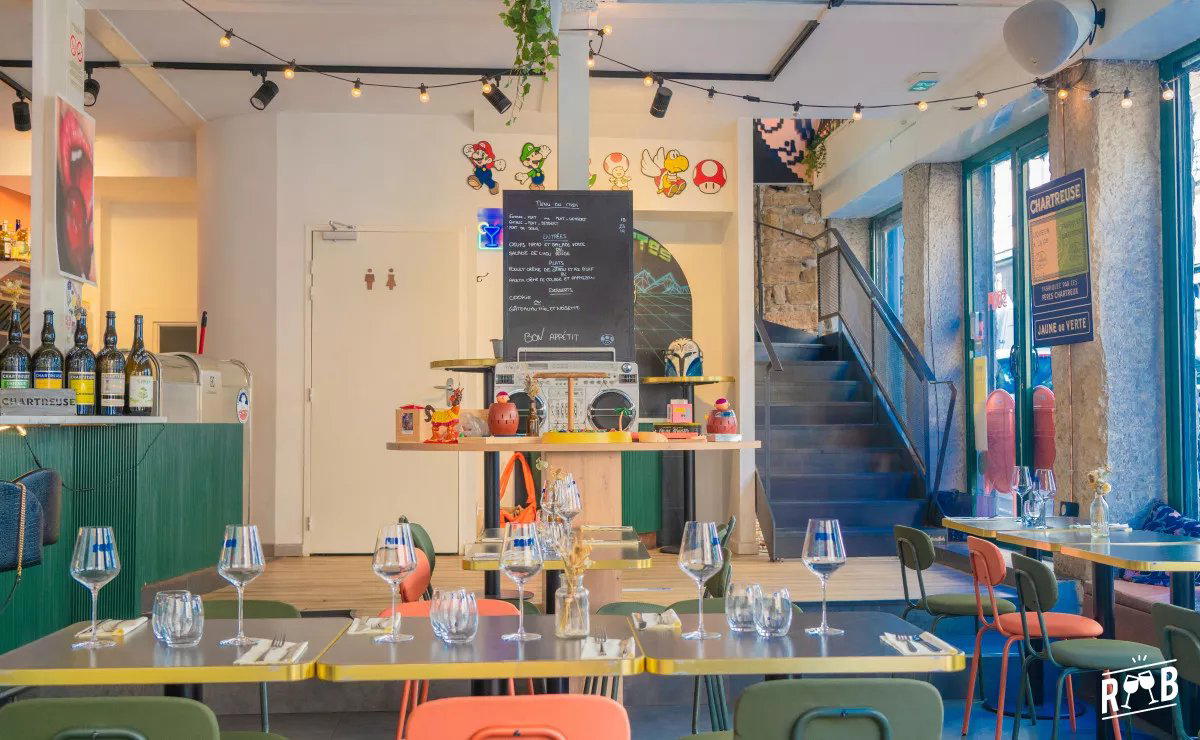
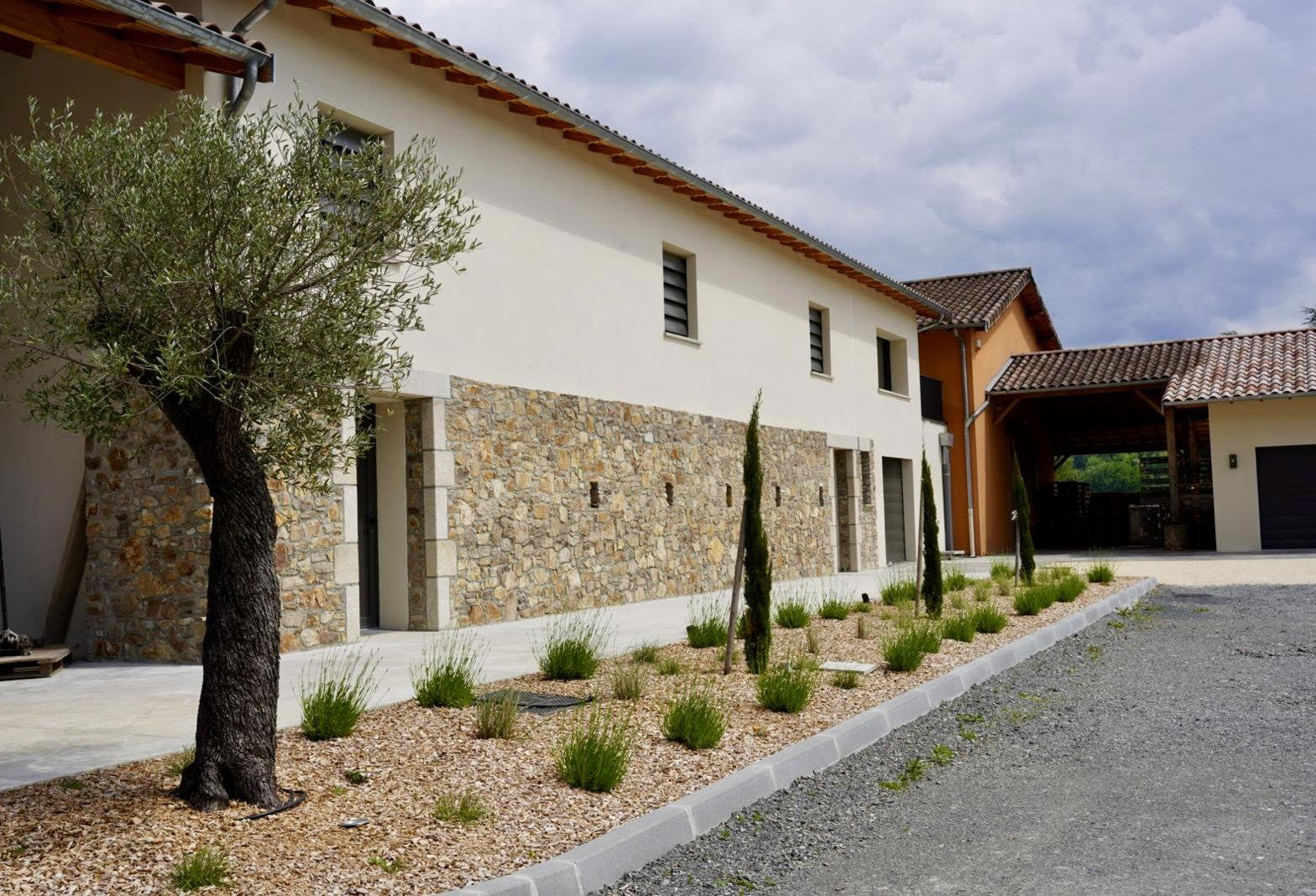
Bright décor with glass roof creating a zen, elegant, and warm atmosphere well-suited for romantic dinners or groups.