Clos Apalta Residence

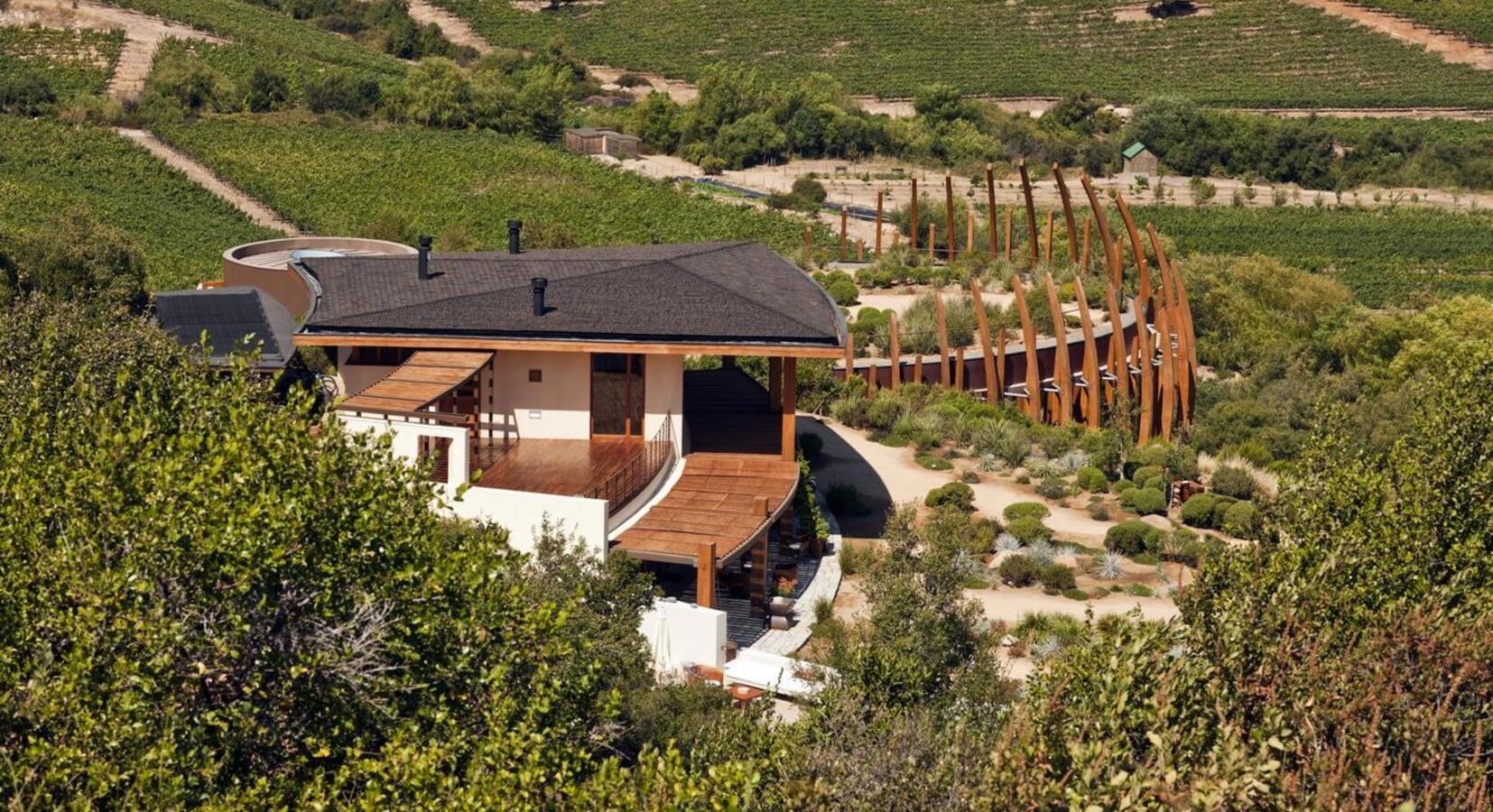
Set among the steep vine terraces of Apalta's Colchagua Valley, Clos Apalta Residence is a small-scale fine dining destination where Chilean ingredients meet a kitchen shaped by international technique. Private villas, vineyard views across one of South America's most concentrated wine appellations, and a dining format designed for guests who have travelled some distance to be here place it in a narrow comparable set of estate restaurants built around total immersion.
Pearl is the En Primeur Club membership app — saves, bookings, and concierge access live there. Same editors, same standards.
- Address
- Km 4 Apalta, Colchagua, Santa Cruz, O'Higgins, Chile
- Phone
- +56 9 7733 1383
- Website
- closapaltaresidence.com
- Directions
- Get directions
 Saves & bookings on Pearl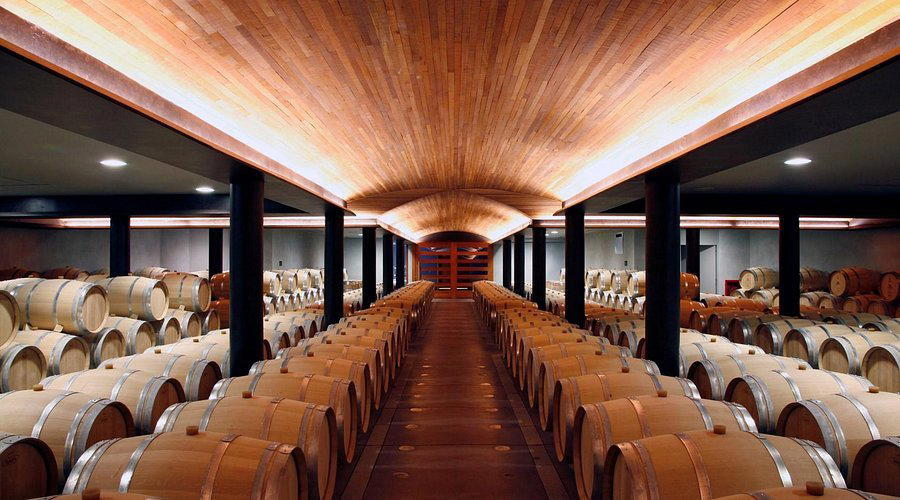
Where the Vineyard Is the Room
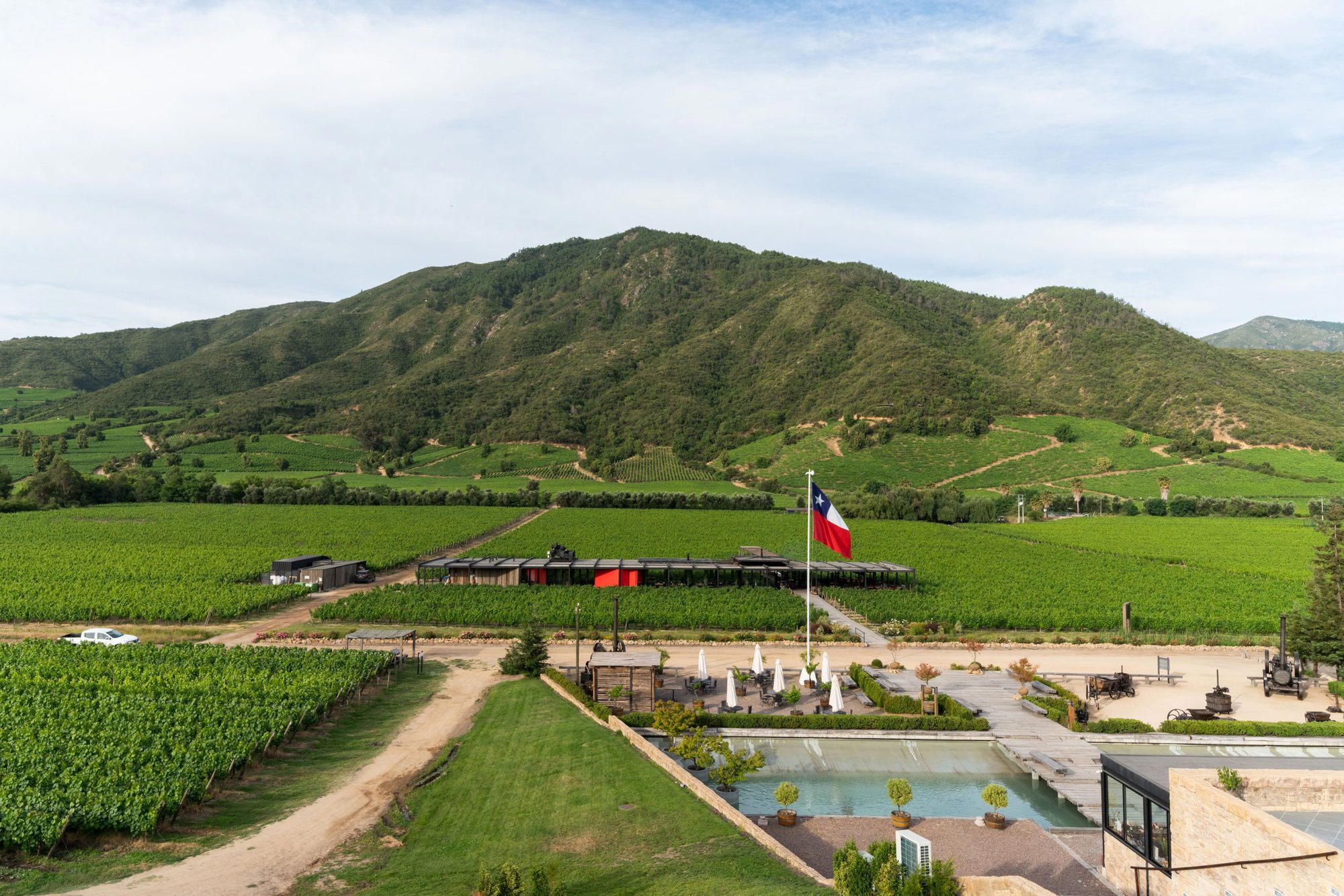
The approach to Clos Apalta Residence sets the register before you reach the door. The road from Santa Cruz climbs through the Colchagua Valley, crosses the Tinguiririca river, and deposits you at the foot of a hillside that Chilean winemakers have spent decades arguing is among the country's most expressive terroir. The Apalta bowl, with its amphitheatre of granite and clay slopes, traps heat and produces fruit with a density that the valley's neighbours rarely match. The Residence sits at the edge of that vineyard, and the architecture makes the connection deliberate: the vines are the view, the context, and, in practice, the reason most guests are here.
This places Clos Apalta Residence in a small and specific category of fine dining destinations. Unlike urban restaurants, which draw from a passing population, estate fine dining operations in wine country are built for visitors who have already committed: committed to the region, to the producer, and often to a longer stay. The format recalls what lodges in Patagonia do with local provenance, see Awasi Patagonia in Torres del Paine for a parallel, or what high-altitude operations in the Atacama do with landscape immersion, as at Awasi Atacama in San Pedro de Atacama. The dining room is not separated from the estate's identity. It is an extension of it.
Chef Erhan Kostepen and the Logic of International Training in a Regional Kitchen
Chile's premium restaurant tier has been shaped, over the past fifteen years, by a generation of chefs who left the country to train and then returned with techniques that they applied to local ingredients. The pattern is visible at Boragó in Santiago, where Rodolfo Guzmán's work with Chilean native flora draws on European modernist methods, and at Allería in Providencia, where similar logic plays out in a more urban format. Erhan Kostepen, the chef at Clos Apalta Residence, fits that broader pattern. Chef Erhan Kostepen brings an international training lineage to Colchagua. That cross-continental arc is common among the chefs running serious estate restaurants in South America's wine regions: the cuisine is anchored in local produce and regional identity, but the grammar of the cooking is shaped by somewhere else.
What this means at the table is a kitchen that knows how to handle structure: how to balance acidity, how to build a tasting sequence that moves, how to let an ingredient read as itself rather than as a vehicle for technique. In a region where the wine already does a great deal of the heavy lifting on flavour complexity, fine dining kitchens have to earn their place in the evening rather than competing with the cellar. The restaurants that do this well, at estate operations globally, from Napa to Burgundy to Mendoza, tend to be restrained rather than demonstrative. The cooking serves the experience of the place, not the other way around.
The Estate Format: Private Villas, Intimate Atmosphere, and the Rhythm of a Stay
Clos Apalta Residence operates with private villas rather than hotel rooms, which places it in a different comparable set from conventional wine-country hotels. The villa model changes the rhythm of a stay: there is no lobby traffic, no shared breakfast room, no background noise from other guests. What remains is a quiet that is specific to vineyard estates and difficult to replicate in towns. For guests coming from Santiago, roughly 190 kilometres by road, the shift in pace is part of the offer.
The intimate atmosphere noted in the Residence's highlights is not a marketing phrase here but a structural fact. Small capacity, private accommodation, and a remote location produce a specific kind of quiet that larger wine-country resorts cannot manufacture. For comparison within Chile's fine dining circuit, urban equivalents like Naoki in Vitacura or CasaMolle in El Molle operate with similar calibre of intent but in environments where the guest's attention is divided. At Clos Apalta, the vineyard does most of the environmental work.
Internationally, the format has parallels at properties like Alain Ducasse at Louis XV in Monte Carlo or the estate-anchored tasting experiences attached to premier producers in Burgundy and Napa.
The Wine Context: Why Apalta Matters
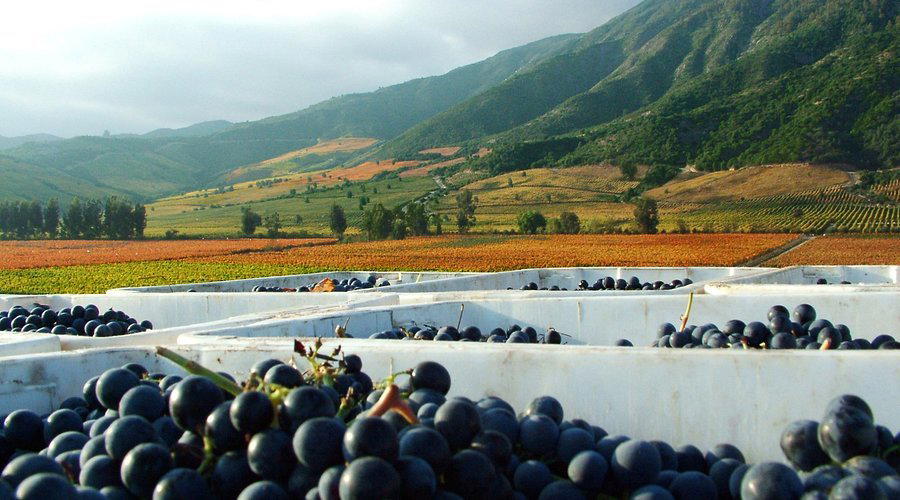
For guests approaching the restaurant through the dining experience rather than the accommodation, the vineyard's position in the Chilean wine hierarchy is worth understanding. Apalta produces Carménère and Cabernet-dominant red blends that consistently attract the country's highest critical scores. The winery's flagship bottling has appeared on international lists comparing it to Bordeaux first growths, a comparison the Chilean wine trade does not make lightly. This gives the Residence an advantage that few fine dining operations can claim: the wine pairing is, in itself, a primary reason to be here rather than a supporting act. For context on what estate-anchored dining looks like when wine is the anchor rather than the menu, the format sits closer to the tasting experiences offered at Burgundy domaines or California cult producers than to a standalone restaurant.
For anyone building a broader Colchagua itinerary, the valley has developed a critical mass of wine producers and accommodation that makes multi-day visits direct. The valley's wineries, hotels, restaurants, bars, and experiences are all within easy reach for a longer stay.
Getting Here and Planning the Visit
The Residence sits at Km 4 Apalta, Colchagua, reached by driving south from Santiago on the Ruta 5, exiting at San Fernando onto the Carretera del Vino toward Santa Cruz, then continuing 36 kilometres before turning right toward Apalta past the Lapostolle Winery. GPS coordinates are -34.6413, -71.3051. The nearest international airport is Santiago, approximately 190 kilometres away; the nearest train station is San Fernando, 51 kilometres from the property. For guests who prefer to arrive by air and collect a car at Santiago, the drive through the O'Higgins region gives enough road time to register the transition from capital to wine country. Reservations are essential for dining and villa stays. Given the small-scale format, advance planning is advisable, particularly for visits during the harvest period between February and April.
Comparable Spots, Quickly
Comparable venues nearby, for context on price, style, and recognition.
| Venue | Cuisine | Price | Notes |
|---|---|---|---|
| Clos Apalta ResidenceThis venue — the venue you are viewing | French-inspired Chilean Fine Dining | $$$$ | Not listed |
| Viña Montes | Wood-Fired Chilean Grill | $$$$ | Apalta |
| The Singular Santiago, Lastarria Hotel | Modern French-Chilean Fine Dining | $$$$ | Lastarria |
| Izakaya Kotaro | Authentic Japanese Izakaya | $$$ | Hanga Roa |
| Bocanáriz | Modern Chilean Wine Bar | $$$ | Lastarria |
| Osaka | Nikkei Peruvian-Japanese Fusion | $$$$ | Vitacura |
Recognition history
Dated appearances from independent guides and award organizations, with the underlying list record or original source where available.
Relais Chateaux Award
Relais Chateaux
Relais Chateaux Award
Relais Chateaux
Continue exploring
More in Valle de Apalta
Restaurants in Valle de Apalta
Browse all →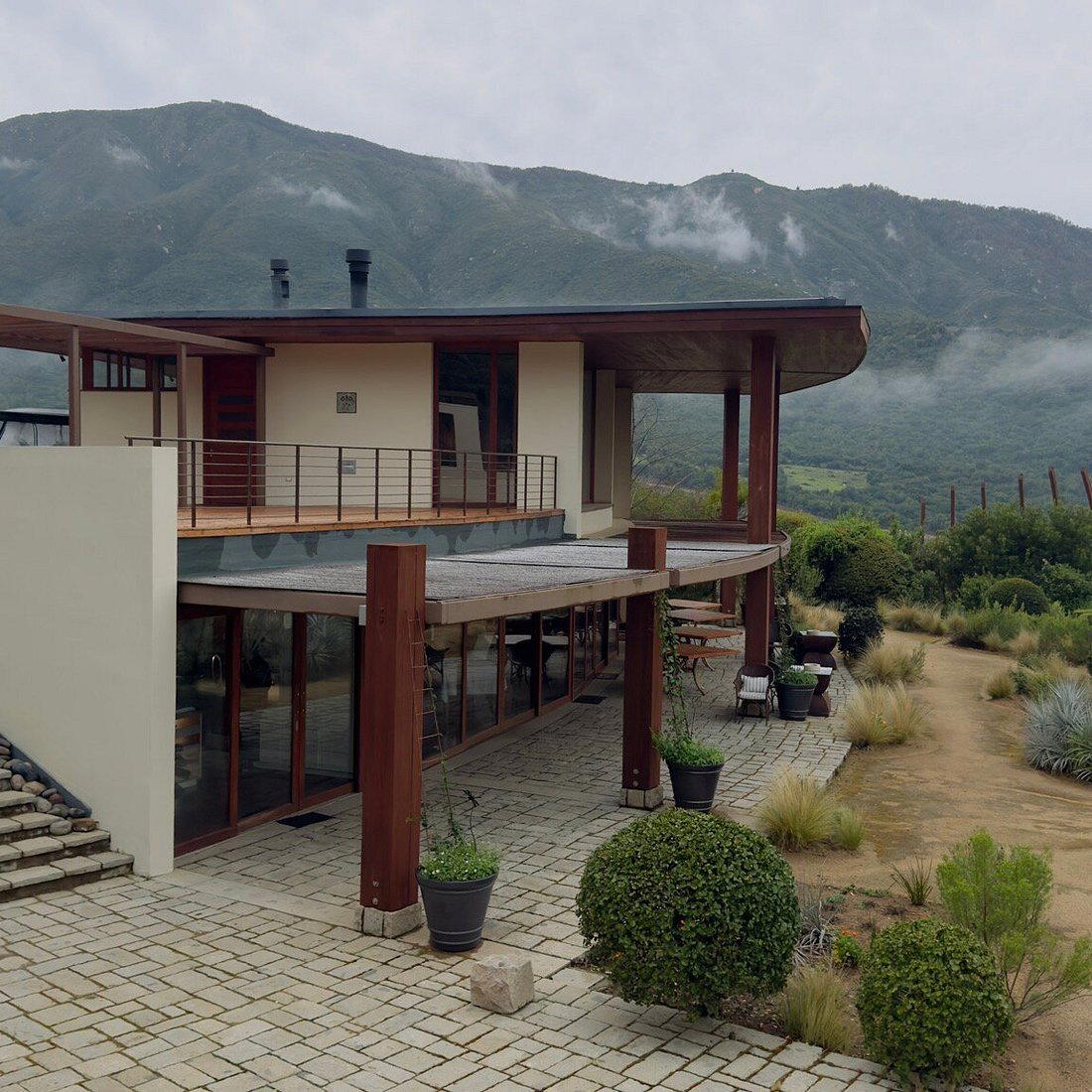
Hotels in Valle de Apalta
Browse all →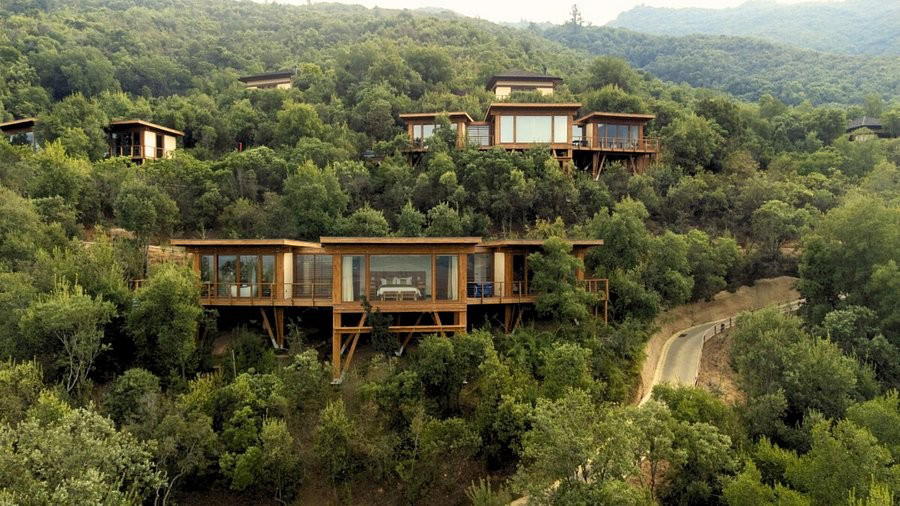

At a Glance
- Romantic
- Elegant
- Scenic
- Sophisticated
- Intimate
- Date Night
- Special Occasion
- Celebration
- Terrace
- Panoramic View
- Hotel Restaurant
- Wine Cellar
- Extensive Wine List
- Sommelier Led
- Farm To Table
- Local Sourcing
- Vineyard
- Mountain
Current opening hours
- Monday
- 1–2:30 PM, 7–8:30 PM
- Tuesday
- 1–2:30 PM, 7–8:30 PM
- Wednesday
- 1–2:30 PM, 7–8:30 PM
- Thursday
- 1–2:30 PM, 7–8:30 PM
- Friday
- 1–2:30 PM, 7–8:30 PM
- Saturday
- 1–2:30 PM, 7–8:30 PM
- Sunday
- 1–2:30 PM, 7–8:30 PM
Hours can change for holidays and private events. Last verified .
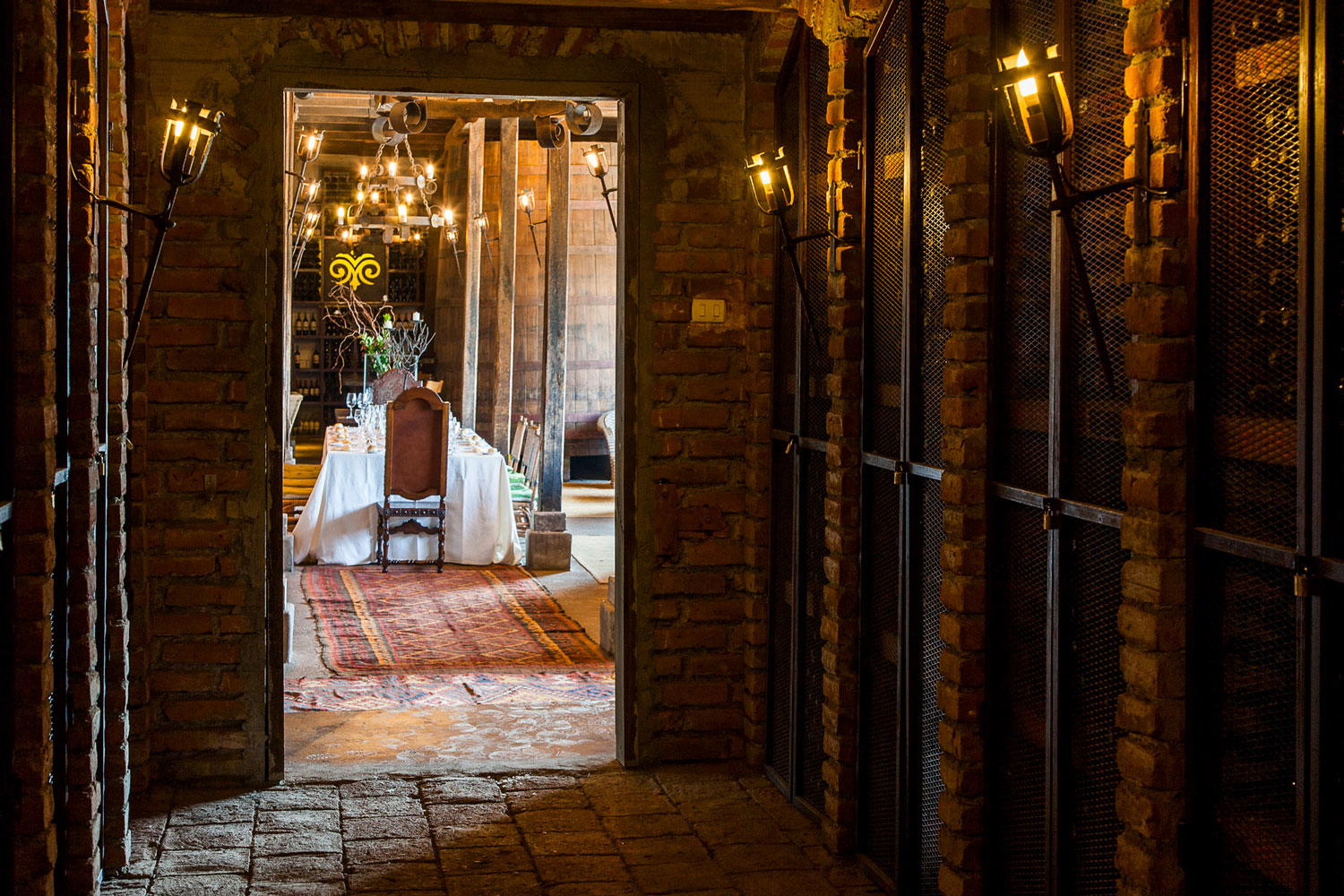
Elegant and serene atmosphere with terrace dining overlooking vineyards and mountains, featuring precise table settings and a sense of exclusivity.