Chinook's At Salmon Bay
Chinook's At Salmon Bay occupies the working waterfront of Fishermen's Terminal in Seattle's Magnolia neighborhood, where the Pacific Northwest fishing fleet docks year-round. The restaurant's proximity to the source defines its menu, this is a place where the distance between ocean and plate is measured in footsteps rather than supply chain stops. For seafood cooked close to where it was caught, few Seattle addresses are better positioned.
Pearl is the En Primeur Club membership app — saves, bookings, and concierge access live there. Same editors, same standards.
- Address
- 1900 W Nickerson St #103, Seattle, WA 98119
- Phone
- +12062834665
- Website
- anthonys.com
- Directions
- Get directions
 Saves & bookings on Pearl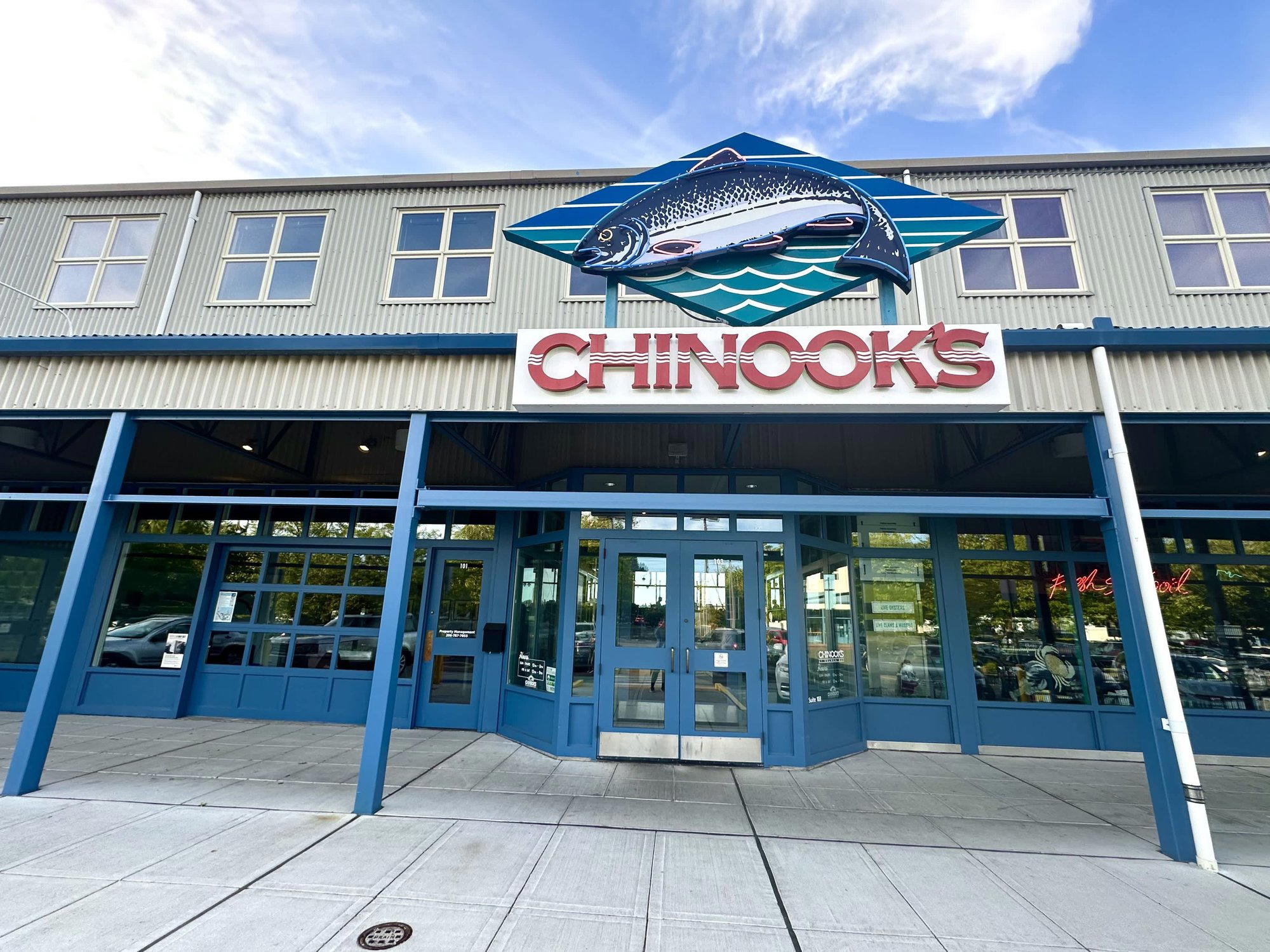
Where the Fleet Docks and the Menu Begins
At Fishermen's Terminal on Salmon Bay, the commercial fishing vessels moored outside are not decoration. They are the supply chain. Chinook's At Salmon Bay sits at 1900 W Nickerson Street inside a working port facility that has anchored Seattle's fishing industry for over a century, and that geography shapes everything about what ends up on the plate. In a city where Pacific Northwest seafood defines the upper tier of restaurant menus, from the white-tablecloth rooms at Canlis to the technique-forward kitchens at Joule, Chinook's occupies a different position: proximity over pretension, with the terminal itself as provenance.
The waterfront approach to ingredient sourcing has become a meaningful differentiator in American seafood dining. Restaurants like Le Bernardin in New York City and Providence in Los Angeles have built their reputations on knowing exactly where their fish comes from and treating that sourcing as a culinary argument. Chinook's makes a simpler, more direct version of that argument: the boats are outside. The Magnolia neighborhood location, away from the tourist-facing piers of downtown Seattle, means the clientele skews local and the atmosphere reads more working waterfront than curated dining destination.
The Sourcing Logic of Salmon Bay
Fishermen's Terminal is the home port of the North Pacific fishing fleet, among the more productive commercial fishing operations in the world. Alaskan salmon, halibut, Dungeness crab, and Pacific shellfish move through this facility in volumes that dwarf what any single restaurant could absorb, but proximity to that supply gives Chinook's a structural advantage in freshness and seasonal responsiveness that restaurants buying through conventional distribution channels cannot easily replicate.
The Pacific Northwest seafood calendar is specific and unforgiving. Chinook salmon runs have defined window periods. Dungeness crab season brings sharp demand spikes. Halibut availability shifts with federal quota decisions. Restaurants that source close to the catch point can respond to these cycles in real time rather than working around them. That calendar logic is precisely what the farm-to-table movement formalized for produce, and what terminal-adjacent seafood restaurants like Chinook's have practiced by geographic default for decades. The approach draws comparison to sourcing-first operations like Single Thread Farm in Healdsburg and Blue Hill at Stone Barns in Tarrytown, where controlling or shortening the supply chain is the central editorial argument of the menu.
For the diner, this translates into a menu that shifts with what the fleet brings in rather than maintaining a static list engineered for consistency. That is a trade-off: less predictability in what you'll find, more confidence in the condition of what arrives at the table.
Chinook's in Seattle's Seafood Spectrum
Seattle's seafood dining options span a wide range of formats and price points. At the higher end, restaurants like 1415 1st Ave and the shellfish-focused counter at 1744 NW Market St operate with the kind of tasting menu discipline and reservation calendars that define the city's premium tier. Walrus and Carpenter, the oyster bar in Ballard, has built a following around a short, precise format that treats Pacific shellfish as the entire argument. Chinook's occupies a more casual register than those rooms, with a family-friendly waterfront setting that prioritizes access and atmosphere alongside sourcing.
That positioning makes it a different choice than the precision-focused seafood operations elsewhere in the city. It is less useful as a direct comparison to Smyth in Chicago or Addison in San Diego in terms of culinary ambition, and more useful as evidence of Seattle's broader seafood culture, a city where fresh Pacific fish is not a luxury category but an expectation built into the dining baseline.
For visitors building a broader picture of how American restaurants handle proximity sourcing, Chinook's fits within a conversation that includes Emeril's in New Orleans for Gulf-adjacent ingredient logic and Lazy Bear in San Francisco for West Coast seasonal discipline. The ambition levels differ considerably, but the underlying argument, that geography should inform the menu, connects them.
The Magnolia Setting
Fishermen's Terminal sits in the Magnolia neighborhood, separated from Capitol Hill's restaurant density and Pike Place Market's tourist concentration by enough distance to feel genuinely local. The address at Suite 103, 1900 W Nickerson Street, is inside the terminal complex itself, which means arriving by foot involves walking past moorings and maritime equipment rather than through a commercial street. That approach is unusual in Seattle dining and sets an expectation for what follows.
The physical context matters because it is one legible trust signal the restaurant has. The credential here is geographic and operational: the restaurant's location within the working port is the argument for why the seafood is worth ordering. That is a narrower claim than a Michelin star, but it is a verifiable one.
For Seattle visitors working through the city's full range, the broader Seattle dining landscape spans destination rooms and neighborhood anchors. Chinook's fits the latter category, with a location and ethos that places it in the same conversation as 2963 4th Ave S rather than the white-tablecloth end of the city's dining range. The commitment to source-adjacent seafood connects it philosophically to operations like Atelier Moessmer Norbert Niederkofler in Brunico, where the surrounding geography determines what appears on the menu, even if the execution register is entirely different.
Planning Your Visit
| Venue | Format | Booking Lead Time | Price Tier | Setting |
|---|---|---|---|---|
| Chinook's At Salmon Bay | Casual waterfront seafood | Walk-in friendly / short notice | Mid-range (estimated) | Working fishing terminal, Magnolia |
| Walrus & Carpenter | Oyster bar counter | Walk-in or short advance | Mid-range | Ballard neighborhood |
| Canlis | Fine dining, New American | Weeks to months ahead | High | Lake Union views, Queen Anne |
| Joule | New Asian, à la carte | Several days to a week | Mid to high | Wallingford |
Fast Comparison
Comparable venues nearby, for context on price, style, and recognition.
| Venue | Cuisine | Price | Notes |
|---|---|---|---|
| Chinook's At Salmon BayThis venue — the venue you are viewing | Pacific Northwest Seafood | $$ | Not listed |
| Broad Street Oyster Company | Seafood & Raw Bar | Not listed | Seattle |
| Navy Strength | Modern Tropical Seafood Bar | $$ | Belltown |
| Coastal Kitchen | Global Coastal Seafood | $$ | Broadway |
| Westward | Mediterranean-Inspired Northwest Seafood | $$$ | Wallingford |
| Ivar's Acres of Clams | Classic Seattle Seafood | $$ | Seattle Waterfront |
Continue exploring
More in Seattle
Restaurants in Seattle
Browse all →
Bars in Seattle
Browse all →
Hotels in Seattle
Browse all →

At a Glance
- Lively
- Scenic
- Rustic
- Energetic
- Casual Hangout
- Family
- Group Dining
- Brunch
- Waterfront
- Open Kitchen
- Standalone
- Beer Program
- Local Sourcing
- Sustainable Seafood
- Waterfront
Current opening hours
- Monday
- 11:30 AM–8 PM
- Tuesday
- 11:30 AM–8 PM
- Wednesday
- 11:30 AM–8 PM
- Thursday
- 11:30 AM–8 PM
- Friday
- 11:30 AM–9 PM
- Saturday
- 9 AM–9 PM
- Sunday
- 9 AM–8 PM
Hours can change for holidays and private events. Last verified .
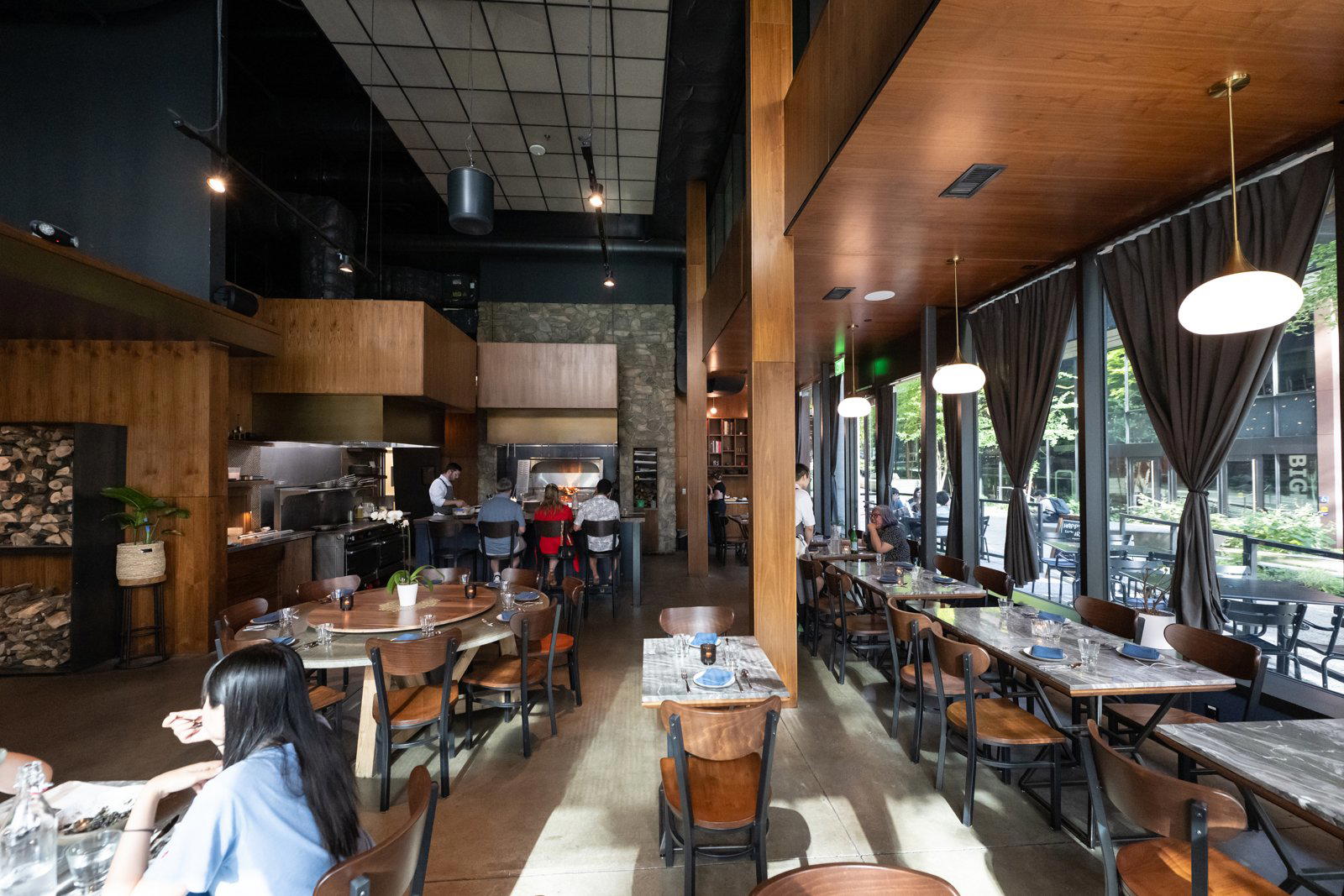
Large industrial-style dining room with big windows overlooking the harbor and boats; casual, high-energy atmosphere with natural light and a working maritime setting.