Hainan chicken rice occupies a specific and disciplined position in Taipei's hawker-style dining scene, and Ching Cheng Hainan Chicken Rice represents that tradition at street level. Where Taipei's fine-dining tier runs toward tasting menus and European technique, this is a kitchen built around a single dish and the rigour required to do it well. A reference point for understanding how the city eats outside its Michelin-starred rooms.
Pearl is the En Primeur Club membership app — saves, bookings, and concierge access live there. Same editors, same standards.
- Address
- 慶城街16巷8號, 松山區, 臺北市 105
- Directions
- Get directions
 Saves & bookings on Pearl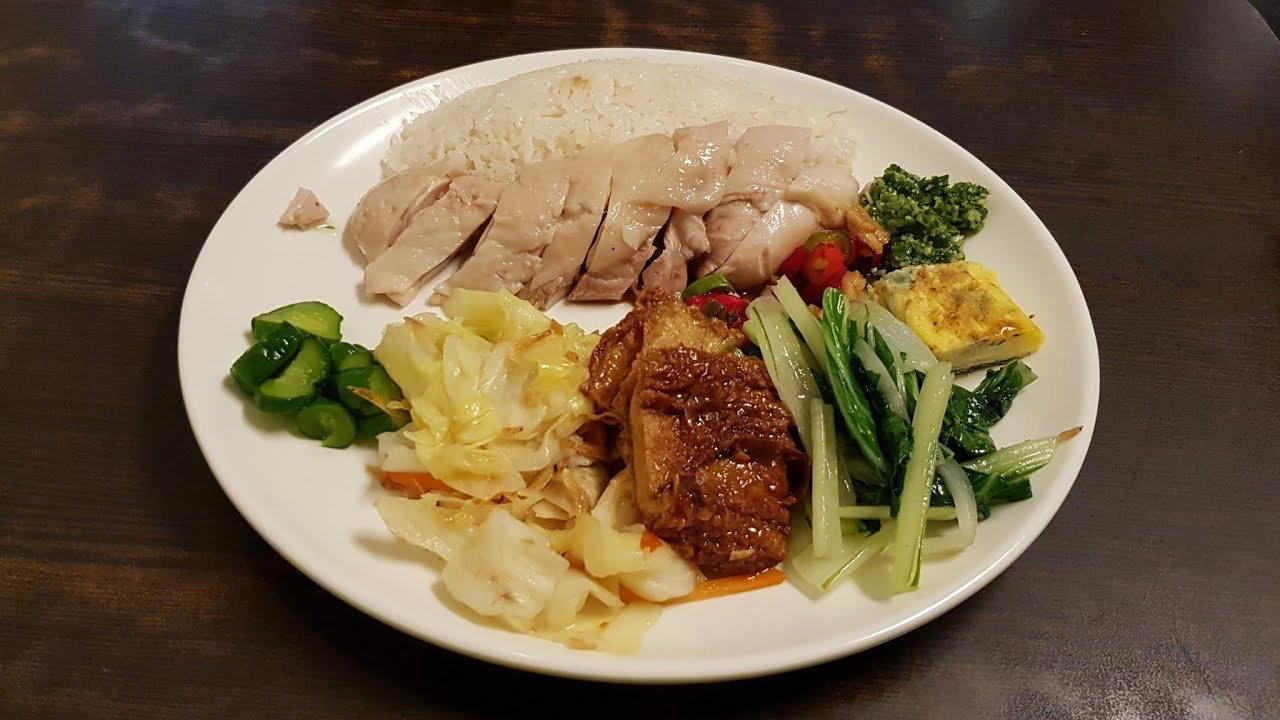
One Dish, One Standard: Hainan Chicken Rice in Taipei
Taipei's dining conversation tends to centre on its tasting-menu rooms: the modernist omakase counters, the Michelin-decorated Cantonese palaces, the French-Taiwanese hybrids that have earned the city a serious international reputation. But the city's most instructive meals are often the ones built around a single technique executed without variation for decades. Hainan chicken rice belongs to that category. It is a dish with a clear architecture, poached or roasted chicken, seasoned rice cooked in stock, a set of condiments that do specific structural work, and in Taipei's hawker and casual dining tier, the distance between a version that works and one that doesn't comes down to discipline with those fundamentals. Ching Cheng Hainan Chicken Rice sits in that tradition.
The Menu Architecture of a Single-Dish Kitchen
The editorial angle that matters most when considering a restaurant built around Hainan chicken rice is not ambition or creativity. It is rigour. A menu structured around one primary dish communicates something specific about a kitchen's priorities: sourcing consistency, repetition as craft, and the rejection of distraction. In Southeast Asian hawker culture, from which Hainan chicken rice originates via the Hainanese diaspora, the single-dish specialist is understood to have made a deliberate choice. Breadth is easy. Depth over one preparation is harder.
Hainan chicken rice, in its classic form, divides into two textural camps: white-poached, where the bird is cooked at a low simmer to preserve the gelatin layer between skin and flesh, and roasted, where the skin is crisped and the flavour profile shifts toward caramelised fat. Most serious practitioners offer both. The rice is not incidental: cooked in the poaching stock and often finished with chicken fat and aromatics, it carries as much information about a kitchen's technique as the protein itself. The condiment set, typically a ginger-scallion sauce, a dark soy, and a chilli sauce, functions as a precision instrument. Each element addresses a different dimension of the dish, and the balance across all three is where individual kitchens make their case.
At Ching Cheng Hainan Chicken Rice, the structure of that offer is the menu. This is not a kitchen trying to expand into adjacent dishes or build a broader format. The specificity of focus places it in a peer group of Taipei restaurants that compete on execution within a defined lane, rather than on variety or spectacle.
Where This Fits in Taipei's Dining Spectrum
Taipei's restaurant scene operates across a wide register. At one end, properties like logy and Taïrroir represent the city's modernist fine-dining output, drawing on European technique and local ingredients to produce tasting menus that place Taipei alongside regional peers. Le Palais holds the Cantonese fine-dining position, and European imports like L'Atelier de Joël Robuchon and Molino de Urdániz have established footholds in the city's upper tier. These are rooms where the format itself, the progression, the service, the room, is part of the proposition.
Ching Cheng Hainan Chicken Rice operates in a different register entirely. It belongs to the part of Taipei's food culture that does not require a reservation infrastructure, a designed interior, or a tasting format to justify its reputation. In that bracket, the currency is consistency and word of mouth over time. The comparison set is not other tasting-menu restaurants; it is other Hainan chicken rice specialists in Taipei and across the region, including practitioners in Singapore and Malaysia, where the dish has its most developed competitive field.
Across Taiwan, strong hawker-adjacent dining exists well beyond Taipei. JL Studio in Taichung works at the modernist end of Southeast Asian cooking, while destinations like GEN in Kaohsiung and A Xia in Tainan reflect the regional diversity of Taiwan's food culture. Within the Greater Taipei area, the casual dining tier has its own geography: spots like this Sanchong District restaurant and GARDENh in Yonghe show how neighbourhood dining anchors communities outside the central city. For a full picture of where Ching Cheng sits within Taipei's broader offer, the EP Club Taipei restaurants guide maps the city's dining across price tiers and formats.
Understanding the Dish Before You Order
For visitors arriving from markets where Hainan chicken rice is less familiar, the dish rewards a brief orientation. The choice between white poached and roasted chicken is not a casual one: poached versions prioritise the texture of the meat and the clarity of the stock flavour, while roasted versions shift the balance toward skin and fat. Neither is superior; they are different arguments about the same dish. The rice should be fragrant but not oily, each grain separate, the stock flavour present but not dominant. The condiments are applied progressively, not all at once: ginger sauce on the chicken, chilli alongside, soy used as an accent rather than a base.
In Singapore and Malaysia, where the dish has its longest competitive history, serious practitioners are assessed on the silkiness of the skin-to-meat junction, the aroma of the rice, and the brightness of the ginger sauce. These are the metrics that matter in the single-dish specialist context, and they apply equally to Taipei practitioners like Ching Cheng.
Planning a Visit
Hainan chicken rice restaurants in Taipei's casual tier typically operate on a lunch-through-afternoon model, selling through their daily preparation and closing once the chicken is finished, a supply-determined close rather than a scheduled one. This is a common feature of the single-dish specialist format across the region. Arriving earlier in the service is the practical approach; late afternoon visits carry the risk of reduced selection or early closure. Walk-in is the standard format for this restaurant in Taipei.
The Minimal Set
Comparable venues nearby, for context on price, style, and recognition.
| Venue | Cuisine | Price | Notes |
|---|---|---|---|
| Ching Cheng Hainan Chicken RiceThis venue — the venue you are viewing | Not listed | $ | Not listed |
| Jin Feng Braised Pork Rice | Not listed | $ | Zhongzheng District, Taiwanese Braised Pork Rice |
| 小李子清粥小菜 | Da'an, Taiwanese Congee and Small Dishes | $$ | Not listed |
| 站食可以 stand & eat | Gongguan, Hainanese Chicken Rice | $ | Not listed |
| 五福豆漿店 | Fujin, Taiwanese Soy Milk Breakfast | $ | Not listed |
| 施家鮮肉湯圓 | Guoshun, Chinese Dim Sum | $$ | Not listed |
Continue exploring
More in Taipei
Restaurants in Taipei
Browse all →
Bars in Taipei
Browse all →
Hotels in Taipei
Browse all →
Wineries in Taipei
Browse all →
At a Glance
- Casual
- Well Known
- Casual Hangout
- Solo
- Group Dining
- Standalone
Current opening hours
- Monday
- 11 AM–3 PM, 4–8:30 PM
- Tuesday
- 11 AM–3 PM, 4–8:30 PM
- Wednesday
- 11 AM–3 PM, 4–8:30 PM
- Thursday
- 11 AM–3 PM, 4–8:30 PM
- Friday
- 11 AM–3 PM, 4–8:30 PM
- Saturday
- Closed
- Sunday
- Closed
Hours can change for holidays and private events. Last verified .
Simple, no-frills casual dining environment focused entirely on the quality of the chicken and rice dish.