Chez Pujol
On the working quayside of Port-Vendres, a small Catalan fishing port where trawlers still unload before noon, Chez Pujol draws on among the more direct farm-to-table supply chains on the French Mediterranean coast. The address puts it within reach of both the Pyrenean hinterland and the anchovy-rich waters of the Gulf of Lion, a geography that shapes everything on the plate.
Pearl is the En Primeur Club membership app — saves, bookings, and concierge access live there. Same editors, same standards.
- Address
- 17 Quai Pierre Forgas, 66660 Port-Vendres, France
- Phone
- +33468820139
- Website
- chezpujol.com
- Directions
- Get directions
 Saves & bookings on Pearl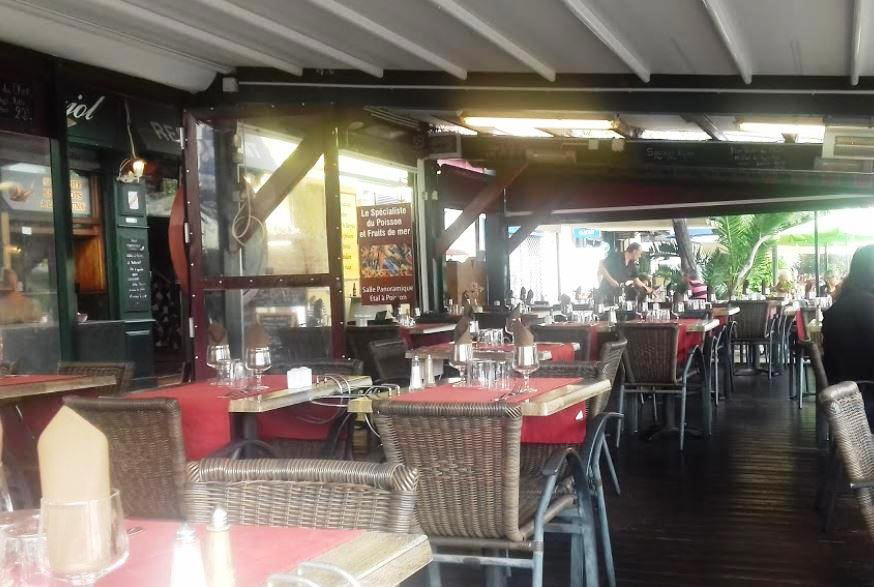
Where the Catch Comes Ashore
Port-Vendres occupies a peculiar position in French dining geography. It sits just north of the Spanish border at Cerbère, far enough from Collioure's tourist circuit to retain the functional character of a working port, yet close enough to the Roussillon wine country and the Pyrenean foothills that its kitchens have access to a supply chain most coastal restaurants would envy. The quai Pierre Forgas, where Chez Pujol keeps its address at number 17, faces directly onto the harbour. Chez Pujol is a French seafood restaurant in Port-Vendres, known for a smart-casual dining room and a recommended reservation policy. On most mornings, the boats that supply the day's menu are visible from the dining room window, an arrangement that is less romantic convention and more logistical fact.
This matters because the southern French coast has split, over the past decade, between two distinct restaurant modes: destination fine dining that sources from a broad national network (often justified by a Michelin rationale), and smaller, place-specific rooms that live or die by proximity to a single fishing harbour or a cluster of local producers. Chez Pujol belongs firmly to the second category. Its competitive set is not Mirazur in Menton or Alléno Paris au Pavillon Ledoyen in Paris, where the machinery of international recognition operates on a different scale entirely. Its peer group is the tight ring of quayside and village restaurants across the Languedoc-Roussillon that have turned geographic specificity into their primary credential.
The Roussillon Larder
The Roussillon is an underappreciated ingredient region. Its position at the confluence of Mediterranean and Pyrenean influences produces a larder that ranges from the anchovies of Collioure, cured in salt by a tradition that dates back to the Catalan fishing guilds, to the stone-fruit orchards of the Vallespir valley, to the sheep cheeses that descend from the high pastures around Cerdagne. Port-Vendres itself has historically been one of the principal entry points for North African spice trade, a legacy that surfaces in the cooking of the broader region in ways that distinguish it from Provençal cuisine to the east.
Restaurants that work seriously with this larder tend to organise their menus around what is available from week to week rather than what reads well on a printed card. The anchovy, in particular, is central to any honest account of what Catalan-influenced coastal cooking actually tastes like in this corner of France: not the mild, oil-packed fillets that appear on antipasti boards across Europe, but the salt-cured version with a deep, fermented intensity that functions more like a seasoning agent than a standalone ingredient. A kitchen on the quai Pierre Forgas, metres from where the Port-Vendres fleet lands, is geographically positioned to work with that ingredient at its source.
For context on how this kind of regionally-anchored approach compares to French restaurants with more formal credentials, Bras in Laguiole offers the clearest parallel: a restaurant whose identity is inseparable from a specific patch of the Aubrac plateau. Similarly, Auberge du Vieux Puits in Fontjoncouse has built its entire reputation on the produce of a single Corbières village. Chez Pujol operates in the same philosophical territory, even if it does so at a different scale and without the same level of formal recognition.
The Scene on the Quayside
Arriving at the restaurant means arriving at the working edge of Port-Vendres. The quai Pierre Forgas is not a promenade designed for restaurant-goers; it is a functional harbour frontage where fishing gear, nets, and crates move with the rhythm of tides and market schedules. The dining room sits in that context, which gives the experience a grounded quality that the more polished restaurants of the Côte Vermeille further along the coast do not replicate. The light across the harbour in the late afternoon shifts from the hard white glare of midday to something considerably softer, and the timing of a long lunch takes on a practical logic that the setting encourages.
Port-Vendres as a dining destination is smaller and less developed than its neighbours Collioure and Banyuls-sur-Mer, which gives restaurants here a degree of breathing room from the peak-season tourist pressure that shapes menus elsewhere on the coast. For those building an itinerary across the area, Le Poisson Rouge and Les Jardins du Cèdre offer different registers of the same local sourcing tradition, and our full Port Vendres restaurants guide maps the broader options across the town.
French Coastal Cooking in Its Regional Form
The broader category of French coastal restaurant that restaurant belongs to has its own internal hierarchy, and it is worth placing that hierarchy in context. At the formal apex sit rooms like Paul Bocuse - L'Auberge du Pont de Collonges in Collonges-au-Mont-d'Or and Auberge de l'Ill in Illhaeusern, where the French classical tradition operates with generational continuity and institutional weight. Farther down the register, but no less serious in their own terms, are the regionally-rooted restaurants that derive their authority from terrain rather than from a culinary canon. Institutions like Les Prés d'Eugénie in Eugénie-les-Bains and L'Oustau de Baumanière in Les Baux demonstrate that provincial anchoring, when executed with discipline, generates its own form of credibility.
The Roussillon variant of this tradition is less formally documented than Provence or the Basque Country, partly because the region sits in a linguistic and cultural border zone that French culinary writing has not always addressed with precision. The Catalan influence on recipes, the use of picada-style nut and herb pastes, the integration of anchovy as a background note rather than a garnish: these are elements of a cooking tradition that regional restaurants in Port-Vendres preserve more faithfully than any fine dining room in Perpignan or Barcelona would acknowledge.
For comparison outside France, Le Bernardin in New York City represents the highest formal expression of French seafood cooking transplanted to an urban environment, while Lazy Bear in San Francisco illustrates how sourcing transparency has become a primary credential in a different market. Both demonstrate that the question of where ingredients come from has moved from background assumption to front-of-house argument across the full spectrum of serious restaurants.
Planning a Visit
Port-Vendres is accessible by train from Perpignan on the line that continues to Cerbère and crosses into Spain at Portbou; the journey takes approximately one hour. By car, the D914 coastal road from Collioure to Port-Vendres takes around ten minutes and offers a useful orientation to the geography of the Côte Vermeille before arrival. The port town has limited accommodation relative to Collioure, so most visitors staying in the area use Collioure or Banyuls-sur-Mer as a base. Given the volume of day-trippers the coast absorbs in July and August, visiting in May, June, or September gives a more accurate reading of what the local restaurants are actually doing when they are not stretched by seasonal demand.
Comparable Spots, Quickly
Comparable venues nearby, for context on price, style, and recognition.
| Venue | Cuisine | Price | Awards | Notes |
|---|---|---|---|---|
| Chez PujolThis venue — the venue you are viewing | French Seafood | $$$ | Not listed | Not listed |
| La Côte Vermeille | Mediterranean Seafood Fine Dining | $$$ | Michelin Plate | Port |
| Les Jardins du Cèdre | Mediterranean Fine Dining with Catalan Influences | $$$ | Not listed | Port-Vendres |
| Le Poisson Rouge | Mediterranean Seafood | $$$$ | Not listed | Port Vendres |
| Les Clos de Paulilles | Refined Mediterranean Catalan | $$$ | Michelin Plate | Baie de Paulilles |
| Le Cèdre | Mediterranean Fine Dining with Catalan Terroir | $$$$ | Michelin Plate | Port-Vendres |
Continue exploring
More in Port-Vendres
Restaurants in Port-Vendres
Browse all →
Bars in Port-Vendres
Browse all →
Hotels in Port-Vendres
Browse all →
Wineries in Port-Vendres
Browse all →
At a Glance
- Classic
- Scenic
- Cozy
- Date Night
- Family
- Casual Hangout
- Terrace
- Waterfront
- Local Sourcing
- Waterfront
Current opening hours
- Monday
- 11:45 AM–2:30 PM, 7–9:30 PM
- Tuesday
- 11:45 AM–2:30 PM, 7–9:30 PM
- Wednesday
- 11:45 AM–2:30 PM, 7–9:30 PM
- Thursday
- 11:45 AM–2:30 PM, 7–9:30 PM
- Friday
- 11:45 AM–2:30 PM, 7–9:30 PM
- Saturday
- 11:45 AM–2:30 PM, 7–9:30 PM
- Sunday
- 11:45 AM–2:30 PM, 7–9:30 PM
Hours can change for holidays and private events. Last verified .
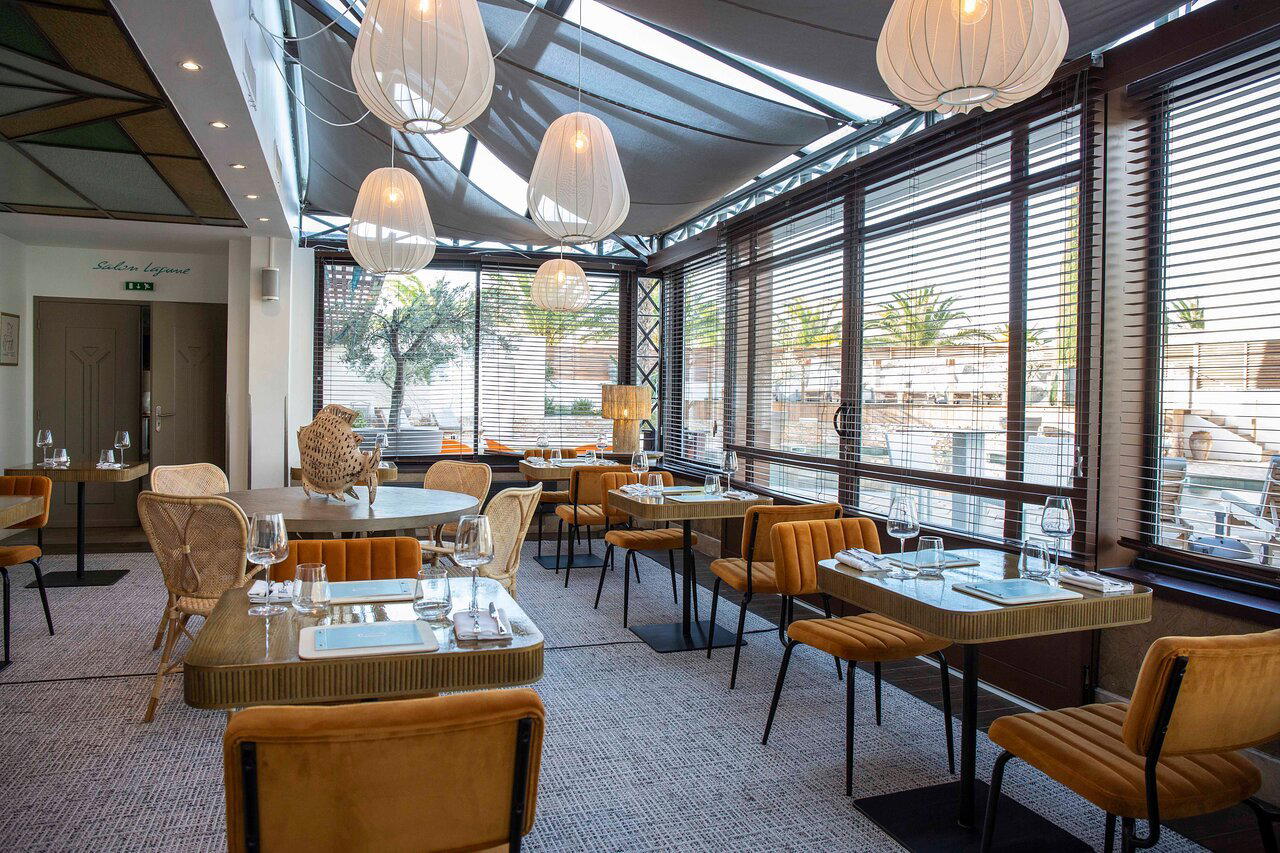
Warm and calm setting with two rooms offering far-reaching sea views.