La Cave
Our verdict
La Cave sits on Place Pascal Paoli in the heart of L'Île-Rousse, one of Corsica's most characterful northern port towns. The address places it squarely within a dining culture shaped by island tradition, Mediterranean produce, and the particular rhythms of a town that lives at the meeting point of mountain and sea. Visitors looking for a sense of place alongside a meal will find the location alone worth noting.

Pearl is the En Primeur Club membership app, where members save venues, book tables and use the concierge.
The menu
What to order
- Corsloff filet mignon
- Charolais prime rib
Stone, Salt Air, and the Corsican Table
Place Pascal Paoli is the kind of square that European port towns have been organising themselves around for centuries: shaded by plane trees, edged by low buildings in warm ochre and terracotta, and oriented toward a sea that is never quite out of earshot. La Cave occupies a position on this square at 1 Rue Louis Philippe, which in L'Île-Rousse means you are sitting at the social and geographical centre of a town that has remained relatively small and self-possessed despite its popularity with summer visitors. The setting is not incidental. In Corsica, where the relationship between place and table is taken seriously, an address like this carries weight.
L'Île-Rousse itself sits on Corsica's northern Balagne coast, a stretch of territory where the hinterland shifts quickly from red-rocked coastline to olive groves and chestnut forest. That geography has historically shaped what people eat here: fish pulled from water that runs clear and cold, pork products from pigs raised on forest mast, cheeses that carry the flavour of maquis-fed flocks. The Corsican table is not a simplified Mediterranean diet. It is something more specific, more rooted in isolation and self-sufficiency, and it has resisted the standardisation that has flattened coastal dining culture elsewhere on the French Riviera. For context on how France's most celebrated fine dining addresses approach the question of regional identity from the other side of the spectrum, properties like Mirazur in Menton and Flocons de Sel in Megève have built international reputations by doing precisely that: anchoring ambition in a specific landscape.
What the Corsican Wine Tradition Brings to the Table
The name La Cave points toward wine, and in this part of France that framing matters. Corsica's wine identity has undergone a serious reassessment over the past two decades. The island's native varieties, Nielluccio in the north and Sciaccarellu in the south, along with Vermentino for whites, have moved from regional curiosity to genuine critical interest. Patrimonio, the appellation closest to L'Île-Rousse, produces Nielluccio-based reds of real concentration and Muscat de Cap Corse from the northern cape that belongs to a very different register from the fortified Muscats of the French mainland. A venue operating under the La Cave designation in this town is positioned, implicitly, at the intersection of that wine culture and the local table. That said, the geography of the address makes Patrimonio the obvious gravitational centre.
France's most awarded dining addresses, from Alléno Paris au Pavillon Ledoyen to Paul Bocuse's Auberge du Pont de Collonges and Troisgros in Ouches, have all built their wine programs around the idea that a list should reflect the kitchen's point of view. At a town-square address in L'Île-Rousse, that point of view almost certainly runs through the Corsican appellations first.
The Town as Context
L'Île-Rousse was founded in 1758 by Pascal Paoli, the Corsican nationalist whose name the square bears, as a commercial rival to the Genoese-controlled port of Calvi further south. The town's short history by European standards has produced a grid of streets that is unusually legible for a Corsican settlement, with the covered market hall, Marché Couvert, sitting close to the waterfront and supplying the local table with the kind of seasonal produce that makes Corsican cooking so difficult to replicate away from the island. Brocciu, the fresh whey cheese that appears in everything from pasta to pastries, is at its finest between November and June when flocks are producing. Lonzu, coppa, and figatellu are year-round presences in any serious local charcuterie selection. For visitors planning around produce availability, timing a trip to the shoulder seasons, April to June or September to October, gives access to the best of both the cheese calendar and the Mediterranean fish runs without the full compression of August crowds.
Diners interested in coastal French cooking at the institutional level will find points of comparison in Christopher Coutanceau in La Rochelle or, further south along France's Mediterranean edge, AM par Alexandre Mazzia in Marseille. What L'Île-Rousse offers is something less mediated: a port-town dining culture where the supply chain between boat and plate is short and the format has not been refined into a performance.
How La Cave Fits the Local Pattern
In Corsican towns of this size, the most reliable dining addresses tend to occupy a middle register: not the tourist-facing brasserie pitching at the ferry crowd, and not the destination-restaurant format that requires advance booking months out. The cave-and-table format, wine-focused with a kitchen that treats the list as the organising principle, is well-established in French provincial dining and suits a square like Place Pascal Paoli, where the pace of a meal expands to match the afternoon light. Comparable addresses in the broader French provincial category, places like Auberge de l'Ill in Illhaeusern, Bras in Laguiole, or L'Oustau de Baumanière in Les Baux, have built their identities on precisely this idea of place-anchored hospitality. La Cave's scale and position suggest a more everyday version of that proposition, which in a town this size is often what you actually want.
For a broader orientation to eating and drinking in L'Île-Rousse, including how La Cave sits relative to other addresses in the town, see our full L'Île-Rousse restaurants guide. A Siesta, another address in the town, is covered separately at A Siesta.
Planning a Visit
La Cave's address on Place Pascal Paoli puts it within walking distance of the town's ferry terminal and the central beach, making it accessible from the main points of arrival in L'Île-Rousse without requiring a car. Corsica operates on a pace that is visibly different from the mainland: service runs later, kitchens take longer breaks in the afternoon, and the assumption is that a meal is not something to rush. Visitors arriving from Paris or from international airports via Bastia or Calvi should account for that rhythm. For high-demand reference points in French dining that require significant forward planning, addresses like Assiette Champenoise in Reims or Auberge du Vieux Puits in Fontjoncouse illustrate how regional French addresses can carry serious wait times. La Cave operates at a different scale, but the logic of early contact holds.
Frequently asked questions
Is La Cave okay with children?
La Cave sits on Place Pascal Paoli, a traditional town square in L'Île-Rousse, which tends to attract a relaxed, mixed-age crowd rather than a strictly adult dining scene. The square setting offers open space, which generally suits families better than a tight interior room.
What's the overall feel of La Cave?
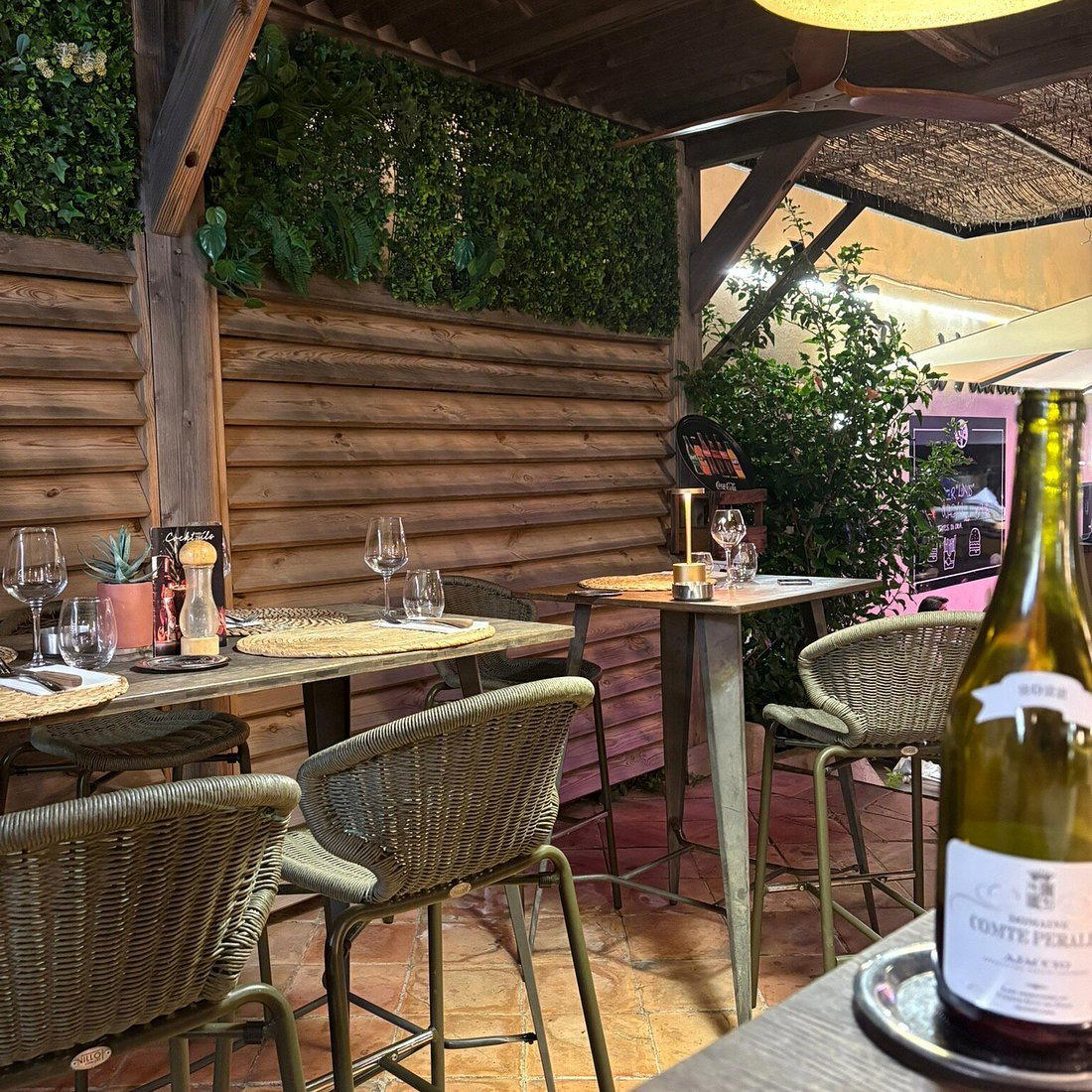
The address on Place Pascal Paoli places La Cave squarely in the social heart of L'Île-Rousse, a plane-tree-shaded square with the rhythm of a working Corsican port town rather than a resort strip. The name signals a wine-led identity, which in this context means a room oriented around the glass as much as the plate. Expect the register typical of the better Corsican town addresses: neither tourist-facing brasserie nor formal gastronomic room.
Does La Cave focus on Corsican wines specifically, or does it stock a broader French list?
The venue's name and its location in L'Île-Rousse, a town with direct proximity to the Patrimonio and Calvi appellations, suggest a programme anchored in Corsican viticulture rather than a generalist French cellar. Corsica's wine identity has been reassessed significantly over the past two decades, with Nielluccio and Vermentino gaining recognition beyond the island, and a wine-named address in this town would be well-positioned to reflect that.
What do regulars order at La Cave?
In establishments of this type on the island, local charcuterie and cheese boards are standard anchors alongside the wine programme. Confirm current offerings directly with the venue.
How do I find La Cave?
La Cave is located at 1 Rue Louis Philippe, Pl. Pascal Paoli, 20220 L'Île-Rousse, France, L Ile Rousse.
Should I book La Cave in advance?
La Cave's position on Place Pascal Paoli, within walking distance of both the L'Île-Rousse ferry terminal and the central beach, means foot traffic peaks sharply in the summer months when ferry arrivals and beach visitors converge on the town centre. Booking ahead is advisable from June through August; outside high season the square quietens considerably and walk-ins are more likely to be accommodated.
Price and Positioning
Comparable venues nearby, for context on price, style, and recognition.
| Venue | Cuisine | Price | Notes |
|---|---|---|---|
| La CaveThis venue (the venue you are viewing) | Modern French Meat & Wine Bar | $20–30 | Not listed |
| A Siesta | Mediterranean Seafood | Not listed | L'Ile-Rousse, Mediterranean Seafood |
| La Voute | Traditional Corsican French | $20–30 | Sant'Antonino, Traditional Corsican French |
| L’aventure | French Mountain Grill | $30–50 | Oz en Oisans, French Mountain Grill |
| Le Signal 2108 | Bistronomic French with Regional Alpine Specialties | $30–50 | Signal Mountain, Bistronomic French with Regional Specialties |
| Chez Léon | Traditional Corsican Gastropub | $30–50 | Cateri, Traditional Corsican Gastropub |
Continue exploring
More in L Ile Rousse
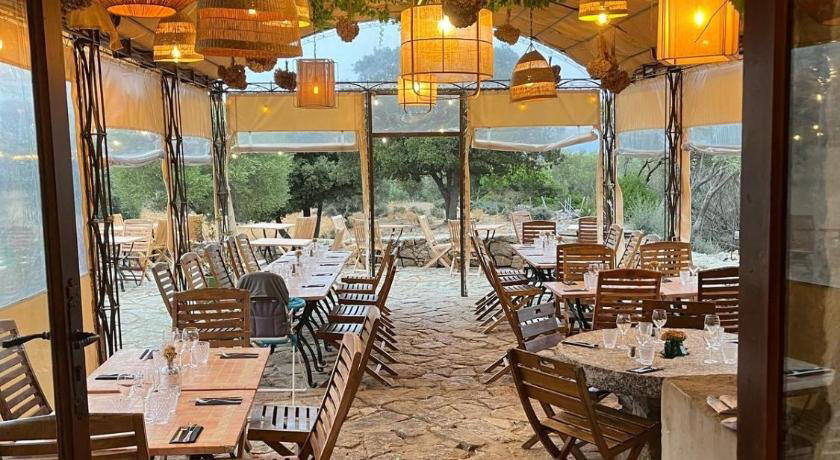
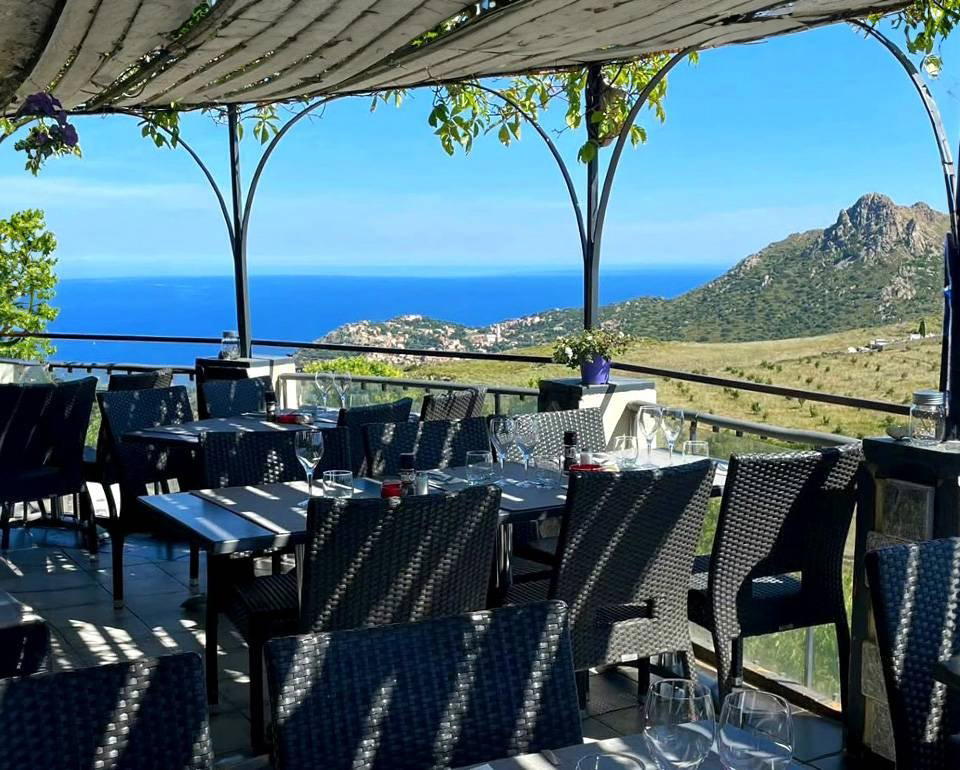
Restaurants in L Ile Rousse
All restaurants in L Ile Rousse →
Hotels in L Ile Rousse
Browse all →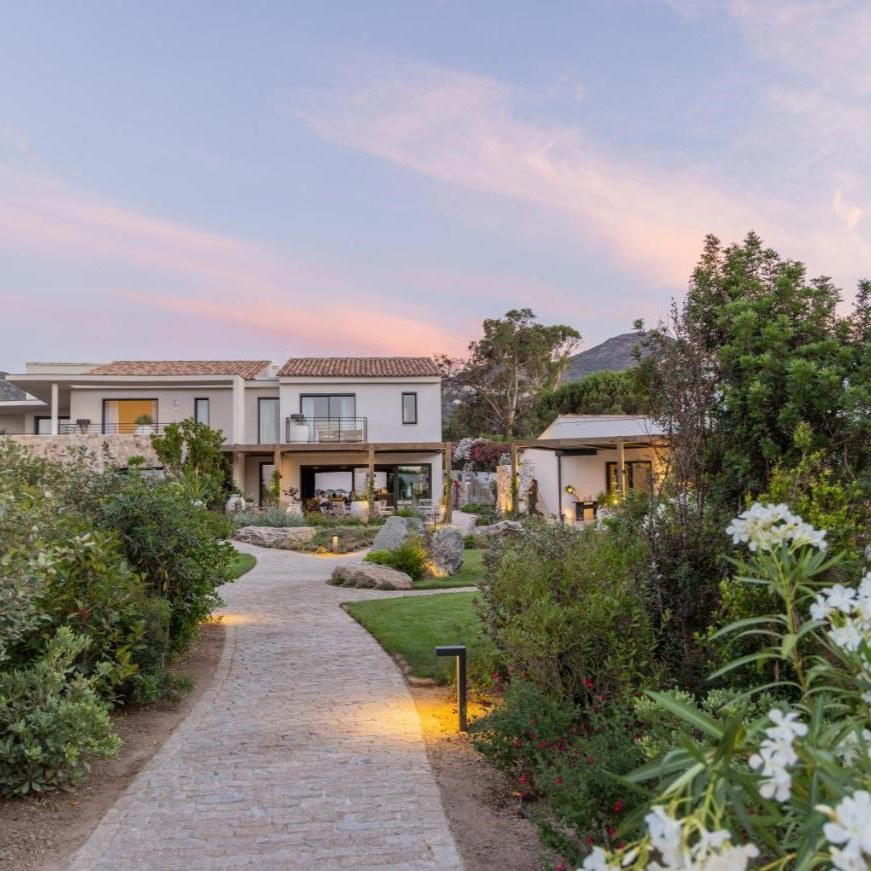
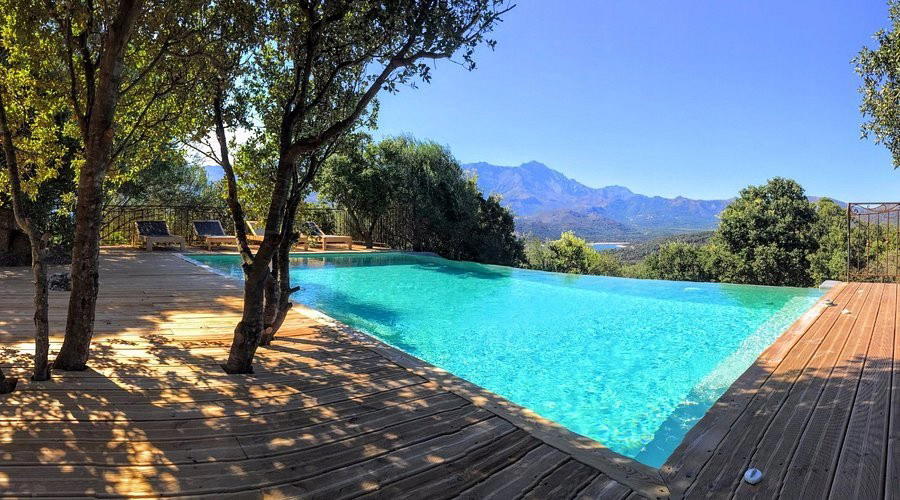
Wineries in L Ile Rousse
Browse all →
Details
- Cozy
- Modern
- Casual Hangout
- Terrace
- Extensive Wine List
- Local Sourcing
- Street Scene
- A La Carte
- Gluten Free Options
Current opening hours
- Monday
- 6 PM–12 AM
- Tuesday
- 6 PM–12 AM
- Wednesday
- 10 AM–3:30 PM, 6 PM–12 AM
- Thursday
- 10 AM–3:30 PM, 6 PM–12 AM
- Friday
- 10 AM–3:30 PM, 6 PM–12 AM
- Saturday
- 10 AM–3:30 PM, 6 PM–12 AM
- Sunday
- 10 AM–12 AM
Hours can change for holidays and private events. Hours as of .
Sober contemporary setting with inviting warm atmosphere and pleasant terrace.