Chapulín

Chapulín occupies a prominent position among Polanco's Mexican dining rooms, drawing guests with technique-driven cooking rooted in Mexican culinary history. Located on Campos Elíseos 218, the restaurant has built a following on the strength of its kitchen's relationship to tradition and flavour rather than novelty. For a neighbourhood defined by international competition, Chapulín's sustained relevance speaks to consistent execution over time.
 Discover on Pearl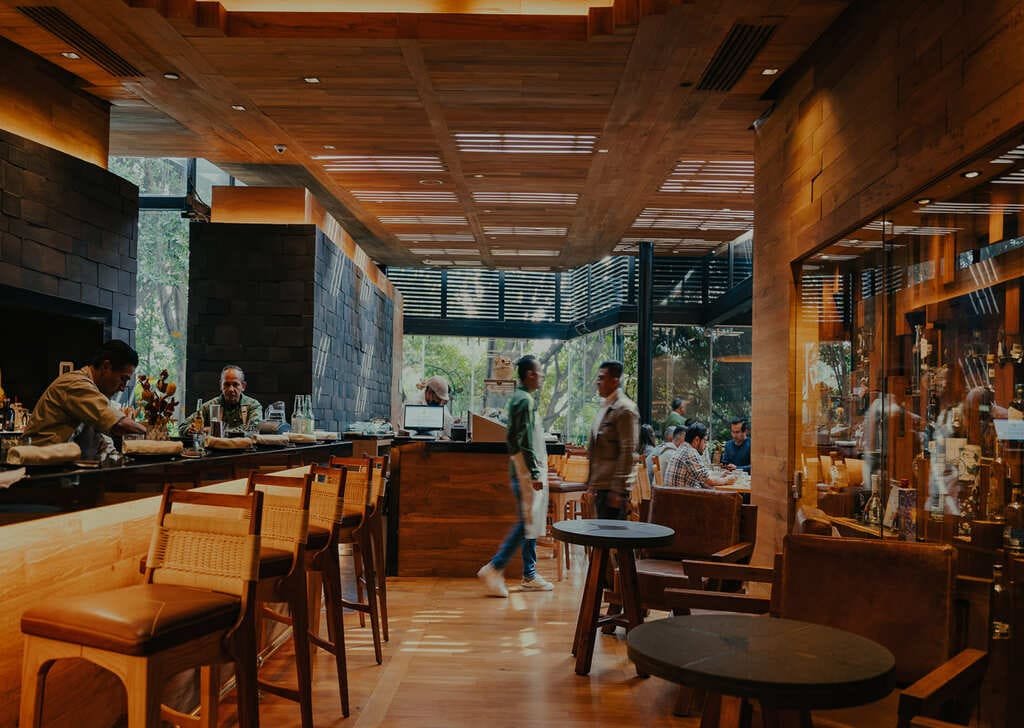
How Polanco Shapes a Mexican Dining Room
Polanco is Mexico City's most internationally benchmarked neighbourhood for fine dining. The avenues running off Parque Lincoln and toward the Bosque de Chapultepec are home to restaurants that compete not just with each other but with a guest who has likely eaten at comparable rooms in Madrid, New York, or Tokyo. Within that frame, a Mexican restaurant in Polanco must answer a harder question than most: why come here, specifically, for Mexican food, when the city's more adventurous kitchens — Pujol and Quintonil among them — are reframing the entire category a few minutes away?
Chapulín, on Campos Elíseos 218, answers by staying close to the history and technique that define Mexican cooking rather than departing from it. Its reputation in the neighbourhood rests on flavour and craft, on a kitchen willing to take the source material seriously rather than deconstruct it for effect. That positioning makes it a different kind of room from the avant-garde tier , and for many guests, a more comfortable and immediately satisfying one.
The shortlist, unlocked.
Hard-to-book tables, cellar releases, and concierge-planned trips.
Get Exclusive Access →The Physical Register: What You Enter Into
The address places Chapulín squarely within Polanco's most polished corridor, where the street itself sets a certain expectation: wide pavements, international hotel flags, the steady movement of a neighbourhood that takes its restaurants seriously. Arriving at the room on Campos Elíseos, the environment signals a Mexican dining room that operates with the formality of the postcode but without abandoning the warmth that characterises Mexican hospitality at its leading. It is the kind of space where the architecture does not compete with the plate , where attention is directed inward rather than borrowed from the surroundings.
That orientation matters for how a meal here unfolds. Polanco dining rooms at this level tend to attract a mix of local professionals, visiting business guests, and travellers comparing notes against a city-wide shortlist. The room at Chapulín absorbs that demographic without flattening into a generic luxury register. The sense of place , specifically Mexican place , holds.
The Ritual of the Meal: Pacing, Technique, and the Role of Tradition
Mexican restaurant culture has its own internal logic for pacing and progression, one that differs from the European tasting menu format that now dominates much of the city's upper tier. At restaurants like Chapulín, the meal tends to move through courses in a way that reflects the breadth of Mexican regional cooking: appetisers that gesture toward antojito traditions, mains built around technique-heavy preparations of protein and sauce, and a table rhythm that encourages conversation rather than performance-watching.
This is a meaningful distinction from how places like Em or the more experimental rooms approach the same ingredients. Where the avant-garde tier asks the diner to receive a sequence and interpret it, a more tradition-anchored room asks them to participate in a slower, more familiar ritual , one where the flavour logic is legible and the pleasure is cumulative rather than punctuated by moments of surprise. Neither approach is superior; they serve different appetites and occasions.
The flavour reputation Chapulín carries in Polanco points toward cooking that privileges depth over novelty. Mexican sauces , moles, adobos, the long-cooked constructions that take days to build , are the backbone of that kind of depth, and they tend to reward the patience of kitchens that have been executing them long enough to understand how each component behaves. History and technique, as the restaurant's own reputation signals, are the twin coordinates of its kitchen philosophy.
For context across Mexico's broader dining geography, the same commitment to grounded, region-specific technique appears at places like Levadura de Olla Restaurante in Oaxaca and KOLI Cocina de Origen in Monterrey, where the argument is also made through accumulated craft rather than formal innovation. Chapulín sits within that broader national current, making its case from within the tradition rather than against it.
Positioning in a Competitive Neighbourhood
The Polanco restaurant market has split in recent years between two identifiable tiers: destination rooms that attract international attention and bookings months in advance, and neighbourhood anchors that sustain themselves on local loyalty and consistent quality. Chapulín appears to operate closer to the second model, building its standing through repeat custom and word-of-mouth rather than through the award-cycle visibility that drives Pujol or Quintonil onto international lists.
That positioning carries real advantages. Rooms sustained by local loyalty tend to be more consistent evening to evening because the kitchen is not performing for critics or algorithm-chasing. The food that arrives is the food the restaurant actually wants to cook, not a version optimised for a single high-stakes booking. For a traveller who wants to eat well in Polanco without navigating the months-ahead reservation windows of the city's most publicised rooms, Chapulín offers a plausible and rewarding alternative. Compare the competitive range across the city's creative sector , Sud 777 and Rosetta each occupy distinct niches , and it becomes clear that Chapulín's traditional Mexican positioning fills a gap that the more experimental rooms deliberately leave open.
Mexico's dining scene extends well beyond the capital, and travellers building a broader Mexican itinerary should consider Animalón in Valle de Guadalupe, HA' in Playa del Carmen, Le Chique in Puerto Morelos, and Lunario in El Porvenir alongside Chapulín for a more complete map of what Mexican kitchens are doing at this level. For international comparison , particularly on how tradition-anchored restaurants hold their ground against modernist competition , Le Bernardin in New York City and Emeril's in New Orleans offer useful parallel cases from other culinary traditions.
Planning Your Visit
Chapulín is located at Campos Elíseos 218 in Polanco IV Secc, Miguel Hidalgo, making it direct to reach from the neighbourhood's main hotel corridor or from the Auditorio metro station. Polanco restaurants at this level generally accept reservations, and given the neighbourhood's density of demand on Thursday through Saturday evenings, booking ahead is advisable , though Chapulín does not appear to operate on the same extended forward booking window as the city's most sought-after destination rooms. The restaurant has no confirmed dress code in available records, but Polanco's ambient standard skews smart-casual to formal, and the room's character warrants dressing accordingly. Phone and booking platform details are not confirmed in current records; checking the restaurant directly or through a hotel concierge in the neighbourhood is the most reliable approach for current availability.
For a fuller picture of what Mexico City offers across food, drink, and accommodation, EP Club's guides cover the city comprehensively: our full Mexico City restaurants guide, our full Mexico City hotels guide, our full Mexico City bars guide, our full Mexico City wineries guide, and our full Mexico City experiences guide.
Frequently Asked Questions
- What should I eat at Chapulín?
- Chapulín's reputation in Polanco centres on flavour-driven Mexican cooking grounded in technique and culinary history. Specific menu items are not confirmed in current records, but the kitchen's standing points toward preparations rooted in the depth-building traditions of Mexican sauce and protein cookery , the kind of dishes that reward a slower, full-table approach rather than a quick order. For the broadest experience, a multi-course meal rather than a single dish is the more instructive way to read the kitchen's range. See also: Pujol and Quintonil for contrasting approaches to Mexican ingredients at the same tier.
- Is Chapulín reservation-only?
- Chapulín operates within Polanco's competitive dining market, where demand on peak evenings routinely exceeds walk-in capacity. While formal reservation policy is not confirmed in current data, the neighbourhood context and the restaurant's sustained following make advance booking the sensible approach, particularly on weekend evenings. A Polanco hotel concierge or direct contact with the restaurant is the most reliable route to securing a table. For broader context on Mexico City dining access and price tiers, Chapulín sits within a neighbourhood that spans from mid-range to the very leading of the city's range.
- What has Chapulín built its reputation on?
- According to available records, Chapulín is recognised among Polanco's Mexican restaurants for three things: flavour, history, and technique. That framing positions it as a kitchen making the argument for Mexican cooking through depth and craft rather than through formal innovation. In a neighbourhood where the most-talked-about rooms tend to push the cuisine forward experimentally, Chapulín occupies the complementary position of a restaurant that makes the case for what Mexican cooking already knows how to do.
- Is Chapulín good for vegetarians?
- Specific menu composition and dietary accommodation details are not confirmed in current records. If vegetarian suitability is a priority, contacting the restaurant directly before booking is advisable , current phone and website details are not available in confirmed records. Mexico City's dining scene broadly offers strong vegetable-forward cooking across many price points; if Chapulín cannot confirm suitable options, our full Mexico City restaurants guide covers the wider field.
Cuisine and Recognition
A quick peer reference to anchor this venue in its category.
| Venue | Cuisine | Awards | Notes |
|---|---|---|---|
| Chapulín | Chapulin is, without a doubt, one of the best Mexican restaurants in the Polanco… | This venue | |
| Pujol | Mexican | Michelin 2 Star | Mexican, $$$$ |
| Quintonil | Modern Mexican, Contemporary | Michelin 2 Star | Modern Mexican, Contemporary, $$$$ |
| Rosetta | Italian, Creative | Michelin 1 Star | Italian, Creative, $$ |
| Em | Mexican | Michelin 1 Star | Mexican, $$$ |
| Comedor Jacinta | Mexico, Mexican | Mexico, Mexican, $$ |
Need a table?
Our members enjoy priority alerts and concierge-led booking support for the world's most difficult tables.
Get Exclusive AccessThe shortlist, unlocked.
Hard-to-book tables, cellar releases, and concierge-planned trips.
Get Exclusive Access →