Dancing House - Tančící dům hotel
The Dancing House hotel occupies one of Prague's most architecturally discussed addresses, a Frank Gehry and Vlado Milunič deconstructivist building on the Vltava riverfront in Nové Město. Staying here means sleeping inside a structure that doubles as a civic landmark, with the building's curved glass tower and rooftop bar framing views across the river toward Prague Castle and the National Theatre.
 Discover on Pearl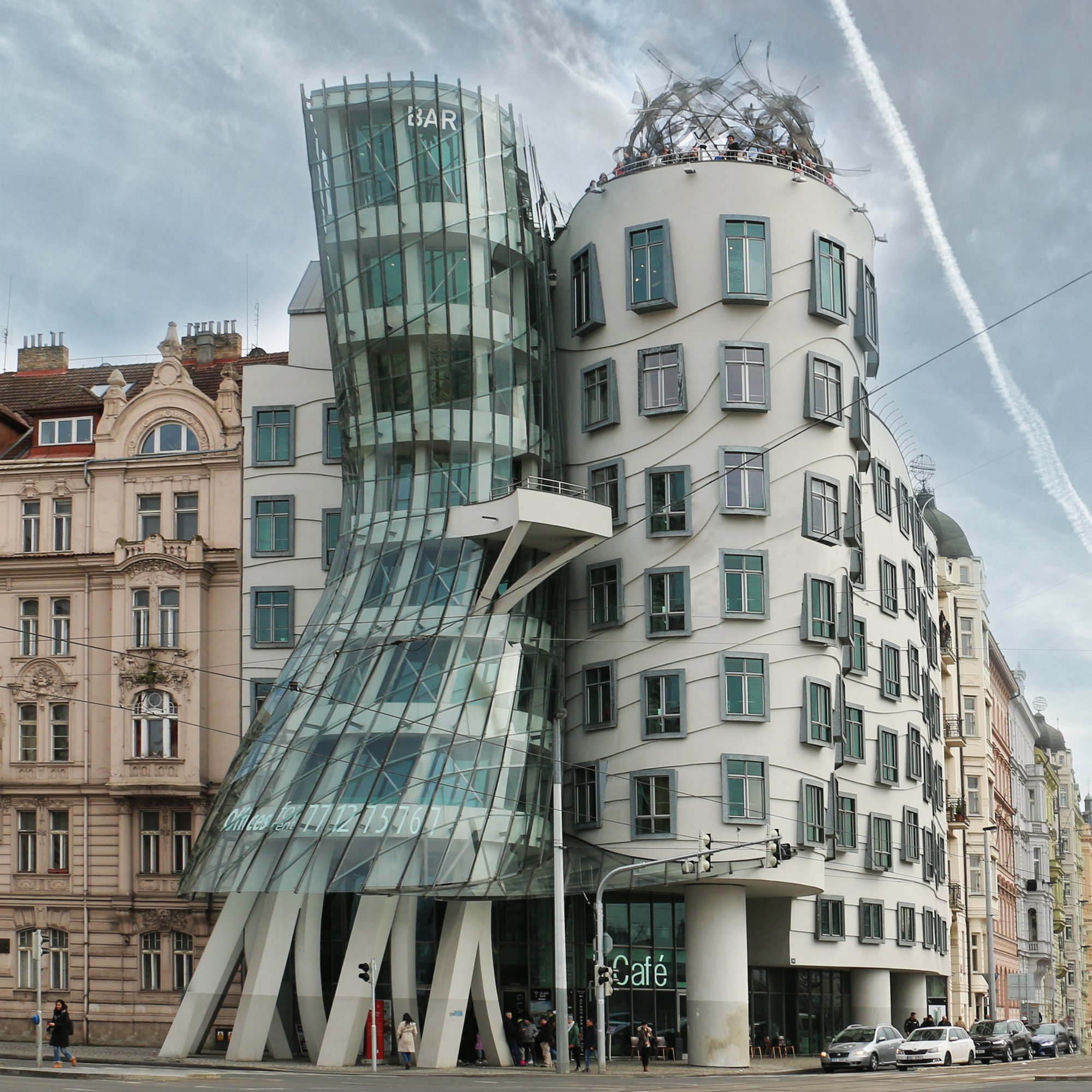
Architecture as Address: Prague's Vltava Riverfront and the Buildings That Define It
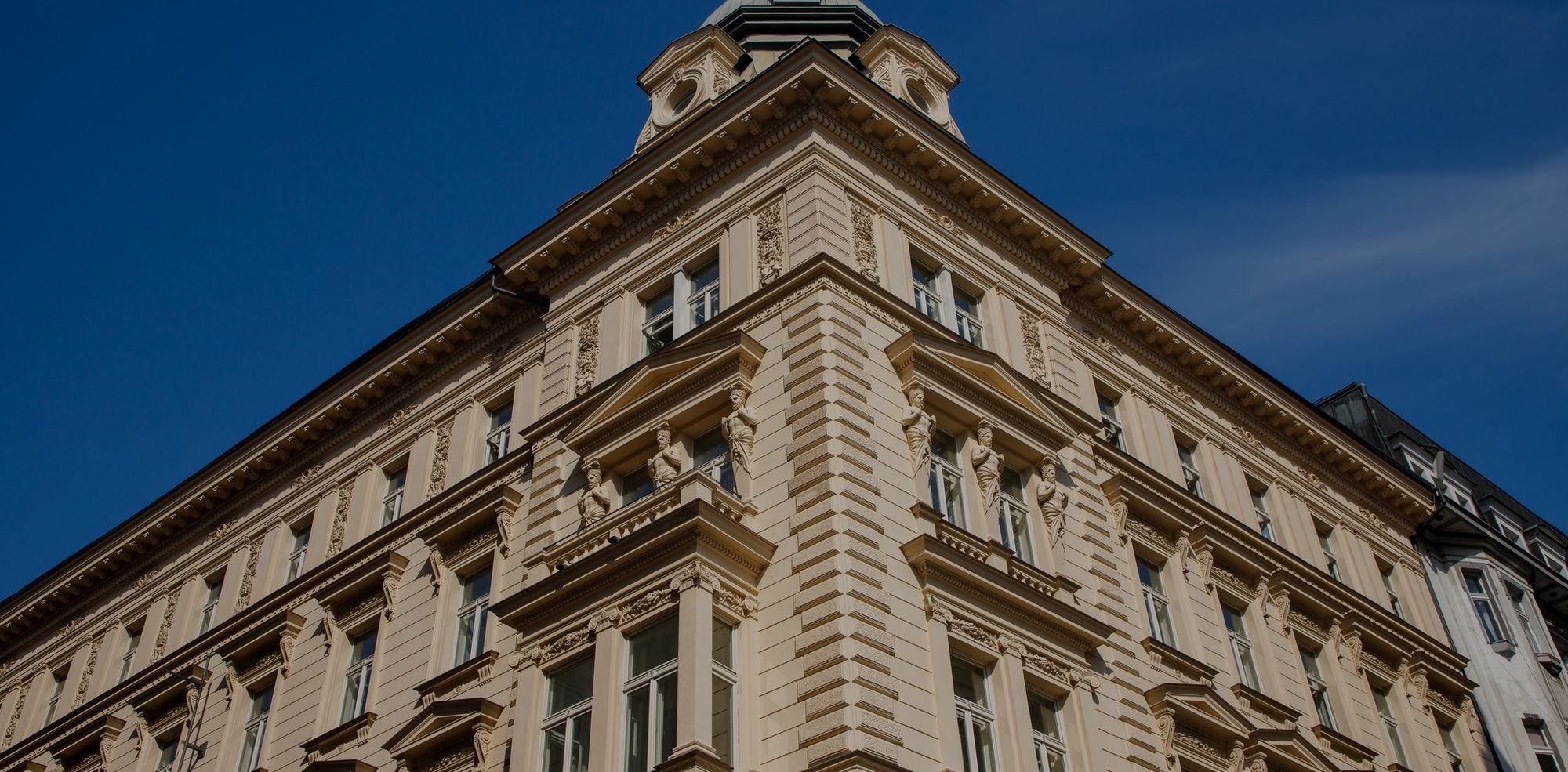
Prague's relationship with its riverfront has always been architectural. The stretch of Nové Město facing the Vltava carries embankment buildings from multiple centuries of Czech urban ambition, from the neo-Gothic symmetry of the National Theatre a few hundred metres south to the functionalist apartment blocks that replaced earlier structures after the mid-twentieth century. It is on this embankment, at Jiráskovo náměstí 1981, that the building known in Czech as Tančící dům — the Dancing House — interrupts the rhythm of the street in a way that has generated sustained critical attention since its completion in 1996.
Designed by Frank Gehry and the Czech architect Vlado Milunič, the building was conceived during the period immediately following the Velvet Revolution, when Prague was reasserting its position as a Central European capital open to international architectural ambition. The deconstructivist form, often described as two figures in mid-dance (the origin of the name), placed a deliberately conspicuous structure in a city that had, under communism, been largely sealed from the architectural movements reshaping Western European cities. That context matters when reading the building today: the Dancing House is not simply an eccentric hotel but a document of a particular civic and political moment, built into one of the most legible urban sites in the country.
What the Space Feels Like: Design, Light, and the Logic of the Interior
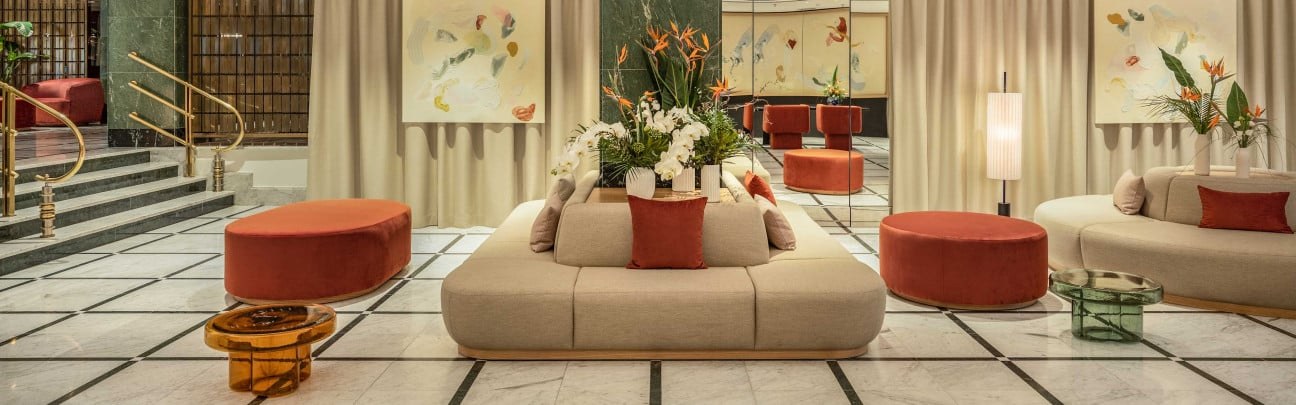
Hotels that occupy landmark buildings face a structural problem that standard properties do not: the architecture is the draw, but the interior must also function. The Dancing House resolves this in a manner consistent with properties in this category across Europe, where the building's bones are preserved and the hospitality layer is inserted around them rather than imposed over them. The curved geometry of the Gehry-Milunič structure means that standard rectangular room plans are, in parts of the building, simply not possible. Guests encounter walls that angle, windows that frame the river at unexpected orientations, and ceiling heights that shift between floors.
This creates a sensory environment quite different from a purpose-built luxury hotel. The deconstructivist logic that reads from the street as playful or provocative translates indoors into spaces where the view out of a window is never incidental. The Vltava-facing rooms position guests with direct sightlines to the river, with Prague Castle visible across the water to the northwest. In Central European hotel terms, this is a geography that properties on the Old Town side of the river at higher price points actively market as premium. At the Dancing House, it is a function of the building's placement rather than any calculated amenity decision.
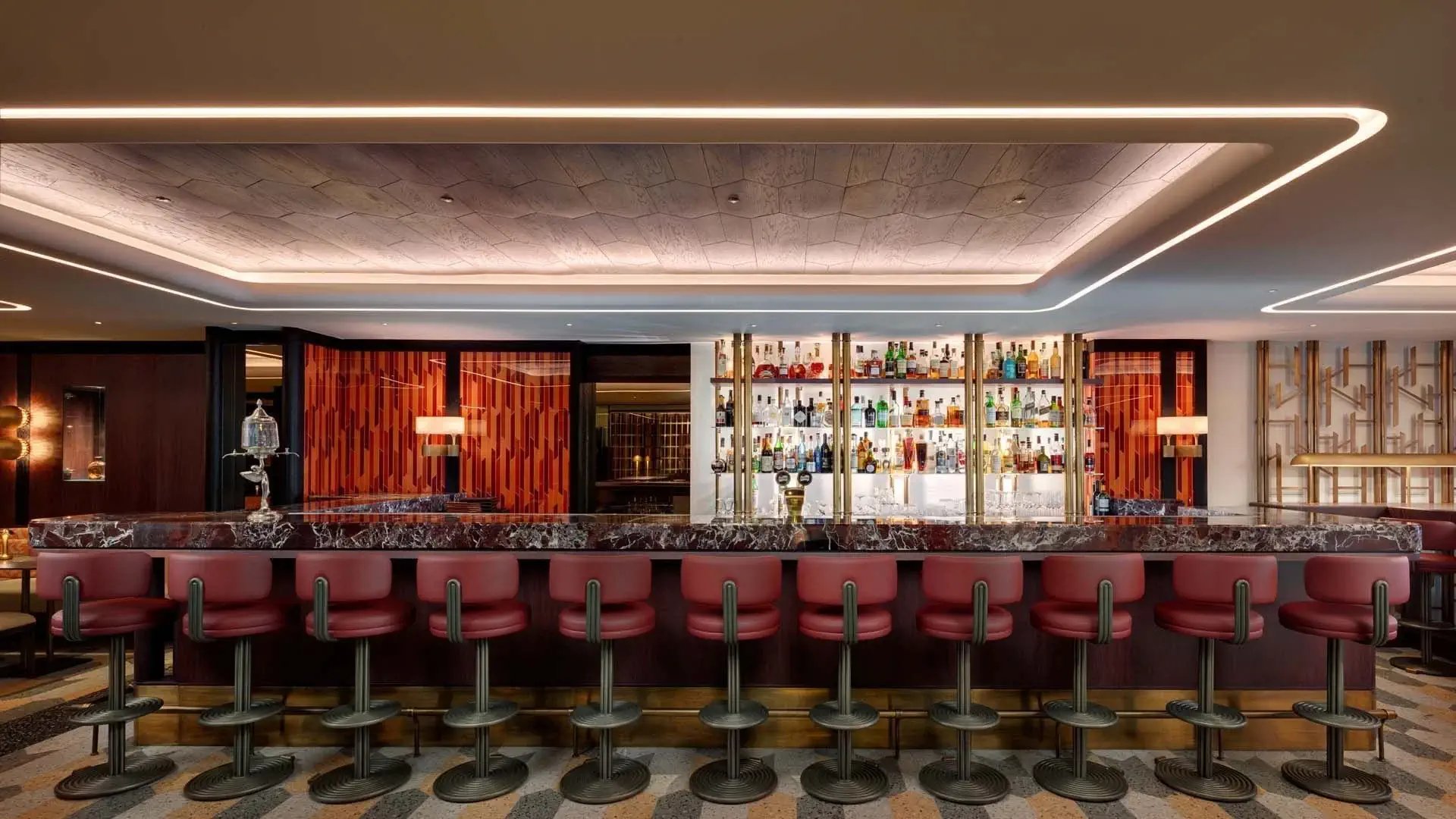
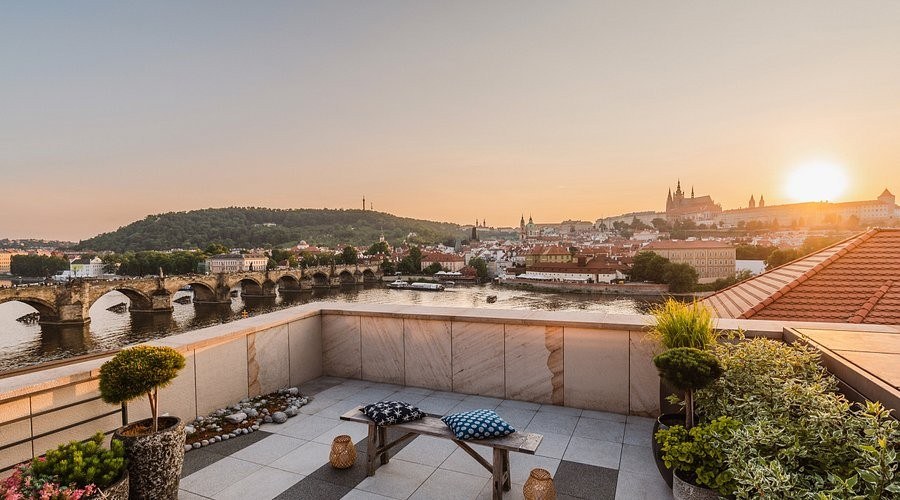
The rooftop is the building's most discussed interior space. The glazed structure at the leading of the tower, which from street level reads as the curved glass head of the dancing figure, functions as a bar and viewing platform. In a city where rooftop access is genuinely competitive , Prague's old town density means that very few buildings offer unobstructed panoramic views without significant height , the Dancing House rooftop delivers a sight line that few other central addresses can replicate. The National Theatre, the Vltava bridges, the castle and cathedral silhouette to the north: the geometry of the city is laid out at this elevation in a way that rewards time spent looking rather than simply passing through.
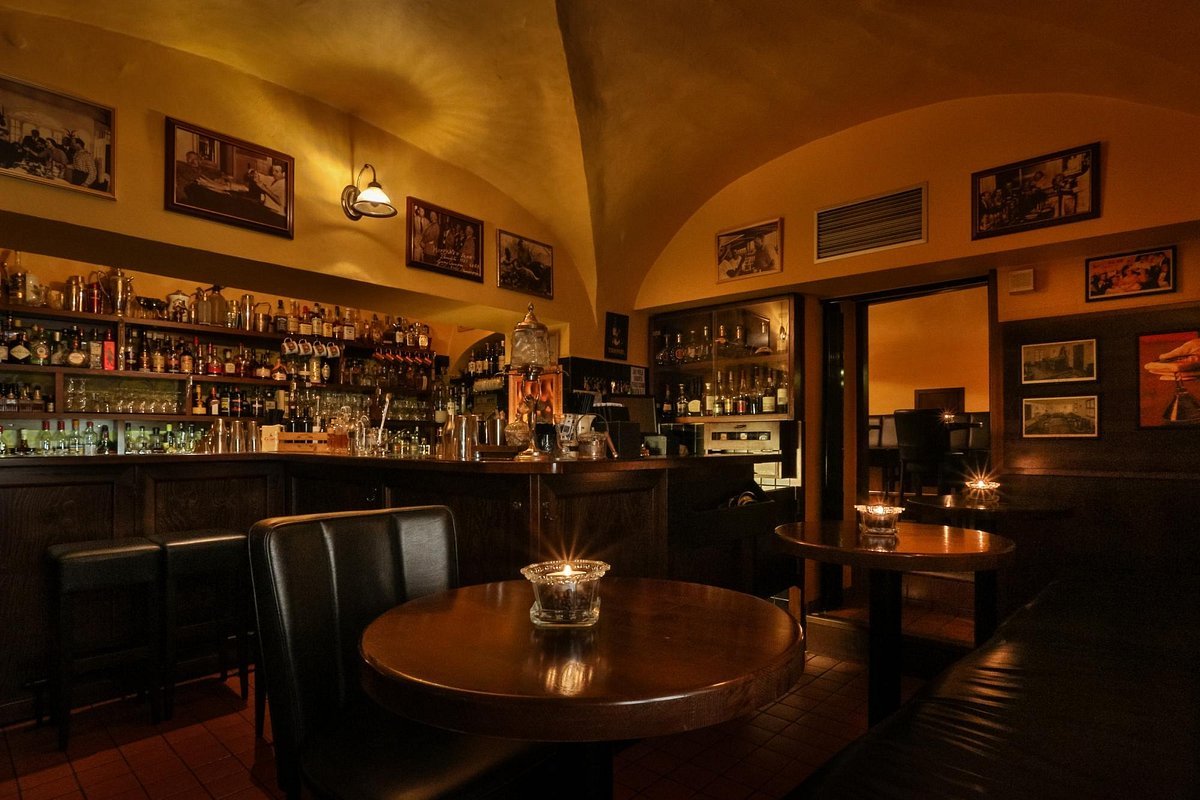
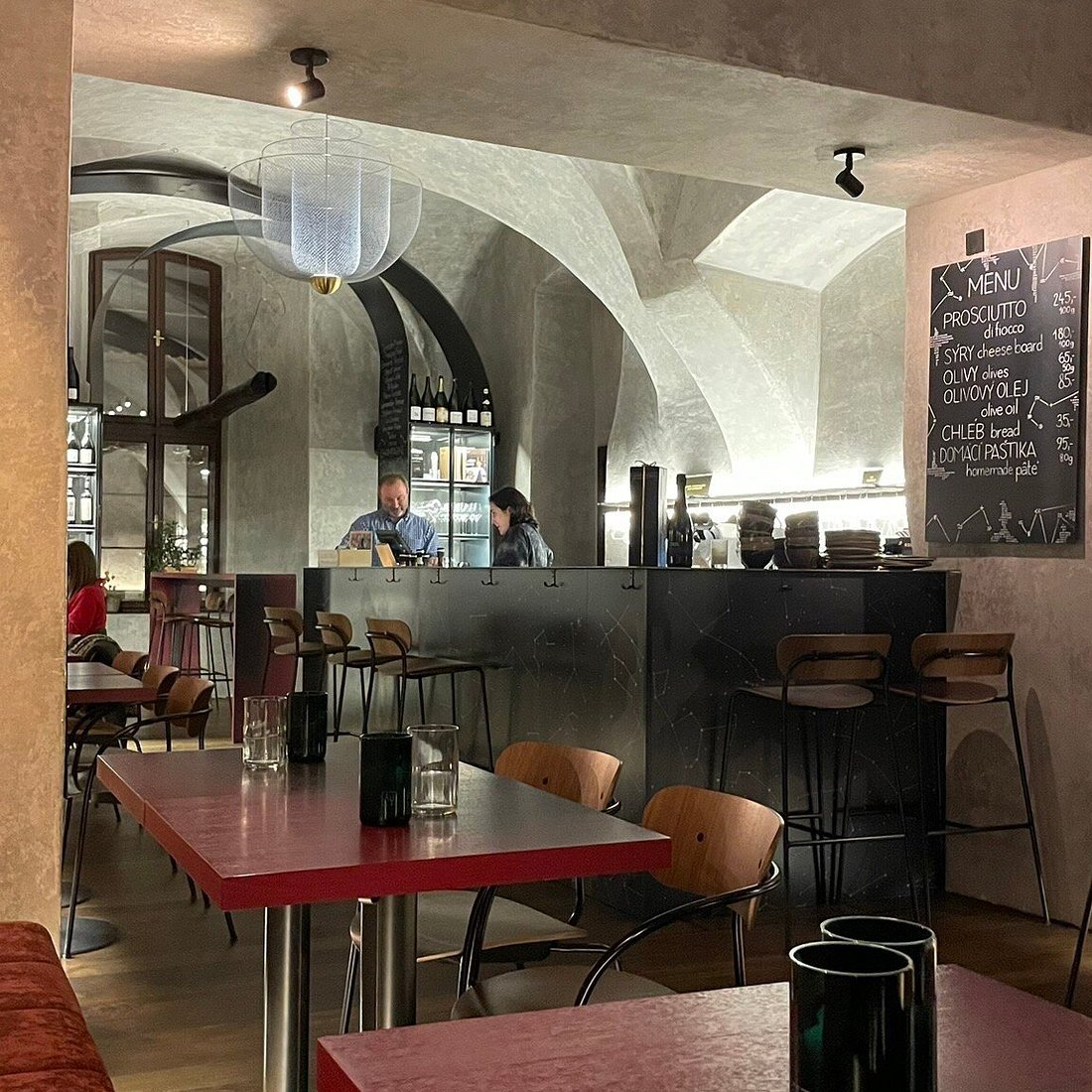
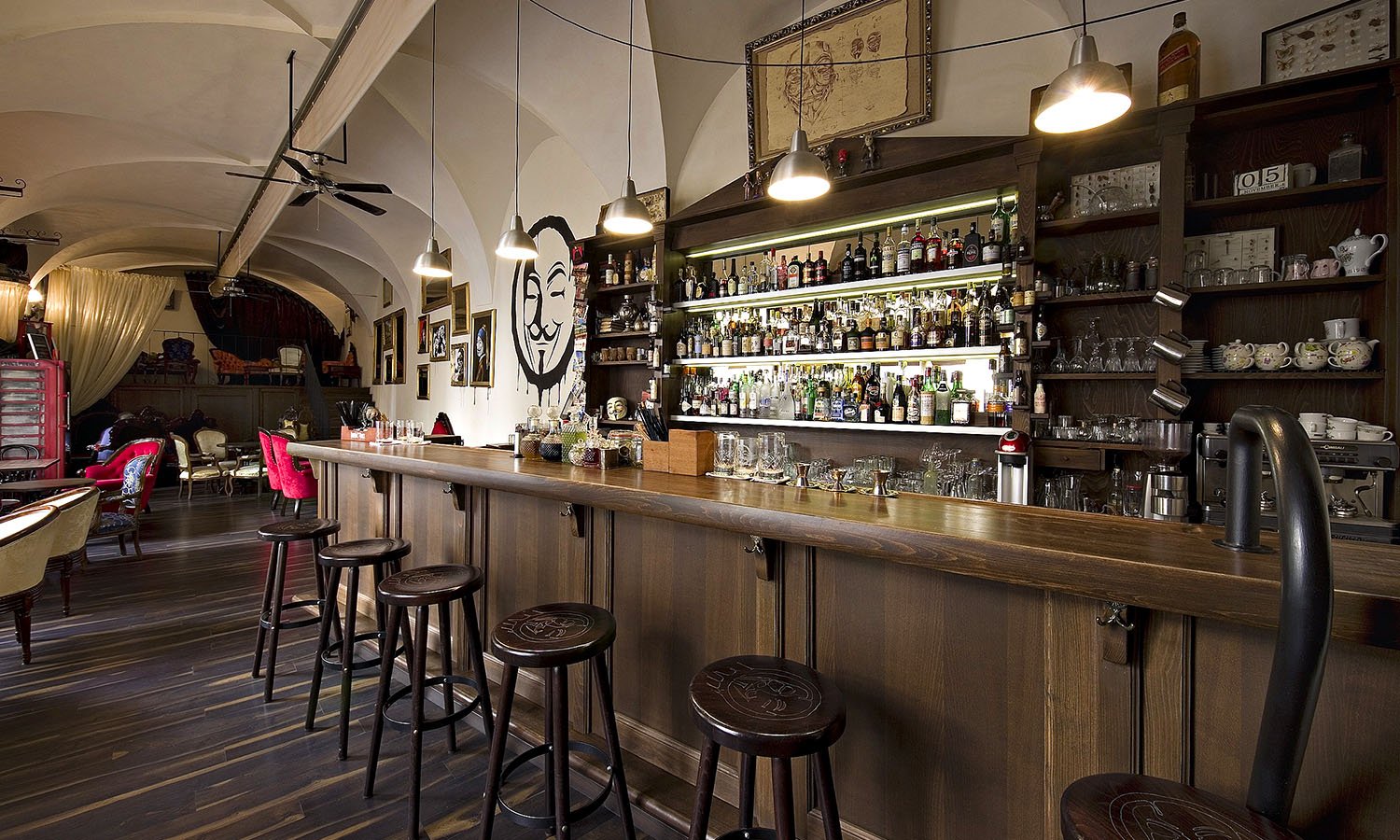
Prague's broader bar scene offers strong competition at street level. Properties such as Black Angel's Bar and AnonymouS Bar have built sustained reputations for technically serious cocktail programs, while Almanac X Alcron Prague and Autentista wine & champagne bar cover the wine and hotel bar categories respectively. The Dancing House rooftop operates in a different register from these: its draw is view and setting rather than program depth, which places it in a peer set defined more by the hotel rooftop category than by cocktail bar culture.
Nové Město and the Embankment's Understated Position
The Dancing House sits in Nové Město, the New Town district, which despite its name dates from a fourteenth-century expansion of the city under Charles IV. By the standards of Prague's tourist geography, Nové Město receives less foot traffic than the Old Town or Malá Strana, which means the embankment around Jiráskovo náměstí retains something of a working-city texture: trams running along the riverfront, local café activity, a neighbourhood density that the historic centre increasingly lacks during peak season.
For travellers looking to understand Prague outside the compressed tourist circuit, this positioning is an advantage. The walk north along the embankment toward the Old Town takes roughly twenty minutes on foot and passes through some of the city's better-preserved nineteenth-century street fabric. South toward Vyšehrad, the river bends and the embankment quietens further. The broader Bohemian wine and drinks culture, well documented at venues such as Vrbice 345 in Vrbice, is accessible from Prague with relative ease for those interested in extending beyond the city.
For international context, the Dancing House occupies a category of design-forward city hotels that has expanded significantly in the past decade: properties where the building's own identity is the primary offering. Comparisons to this format appear in cities as different as Honolulu (see Bar Leather Apron for the broader hospitality context), Chicago (where Kumiko demonstrates a different design-led approach to hospitality), and New York (where Superbueno shows how a strong design concept anchors a venue identity). The thread across these is the primacy of physical environment as editorial position.
Planning a Stay: What to Know Before Booking
The Dancing House is located at Jiráskovo náměstí 1981, Nové Město, 120 00 Praha 2, directly on the Vltava embankment. Tram access is direct from this address, with connections to the Old Town and other central districts running along the riverside route. The building's public profile means it appears on most Prague city maps and is identifiable by sight well before arrival.
Specific pricing, current room availability, and booking formats are leading confirmed directly with the property, as this information changes with season and demand. Prague's peak travel periods tend to cluster around late spring and early autumn, when riverfront properties generally see higher occupancy. Travellers combining a stay here with broader Prague dining and bar exploration will find our full Prague restaurants guide a useful reference for the wider scene. For those interested in the global bar format comparisons referenced above, additional context is available at Jewel of the South in New Orleans, Julep in Houston, and The Parlour in Frankfurt on the Main.
Category Peers
A quick look at comparable venues, using the data we have on file.
| Venue | Cuisine | Awards | Notes |
|---|---|---|---|
| Dancing House - Tančící dům hotel | This venue | ||
| Autentista wine & champagne bar | |||
| Black Angel's Bar | |||
| Bokovka Wine Bar | |||
| Hemingway Bar | |||
| Le Terroir |
Continue exploring