

France's only restaurant devoted to the traditional Japanese tea ceremony, Chakaiseki Akiyoshi holds a Michelin star and seats just 16 guests at its omakase counter on Rue Letellier in the 15th arrondissement. The cha-kaiseki format, historically served alongside matcha in formal tea ceremony settings, frames each course around seasonal ingredients prepared live before the table. Scored 77 points in the 2026 La Liste rankings.
Pearl is the En Primeur Club membership app — saves, bookings, and concierge access live there. Same editors, same standards.
- Address
- 59 Rue Letellier, 75015 Paris, France
- Website
- chakaiseki-akiyoshi.fr
- Directions
- Get directions
 Saves & bookings on Pearl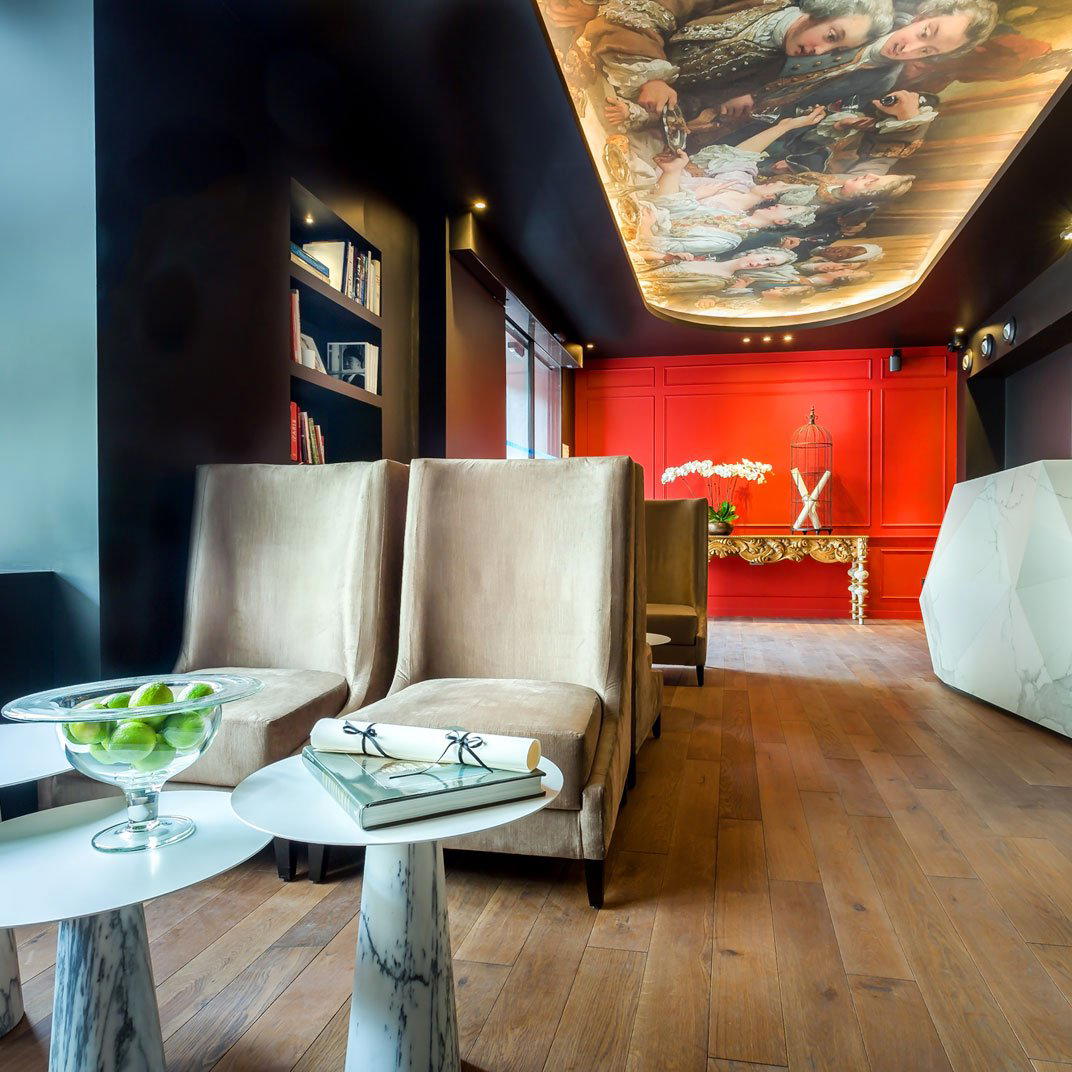
A Format Built Around the Tea Ceremony, Not the Counter
Paris has accumulated a dense tier of Japanese omakase counters over the past decade, from the raw-fish precision of Sushi Yoshinaga to the refined kaiseki progression at Aida. Most of these rooms organize their logic around the itamae, the counter, and the sequence of fish. Chakaiseki Akiyoshi organizes its logic around something older and more specific: the cha-kaiseki meal, the food tradition that evolved in Japan to accompany the formal tea ceremony. That distinction matters. Where conventional kaiseki draws from court cooking and the kaiseki ryori tradition of Kyoto banquets, cha-kaiseki is deliberately restrained, calibrated to prepare the palate for bitter matcha rather than to showcase the chef's range. In Paris, no other restaurant works within that framework, which places Akiyoshi in an effectively singular competitive position within the city's Japanese dining tier.
The room at 59 Rue Letellier announces nothing from the street. A low-profile wooden façade on a quiet stretch of the 15th arrondissement gives little away, which is consistent with the tea ceremony's own aesthetic of understatement. Inside, the interior takes its reference from authentic Japanese teahouses, with the material restraint and spatial calm that format demands. The 16-seat capacity keeps sightlines short and the atmosphere contained.
The Communal Logic of Cha-Kaiseki
Cha-kaiseki disrupts that dynamic in a useful way. Its origins in chanoyu, the Japanese tea ceremony, are fundamentally communal and ritualistic. The meal existed to bind a group of guests through shared preparation, shared eating, and shared attention to the tea that followed. The social register is different from the solo-virtuoso omakase. Guests at Akiyoshi are participating in a form with a collective logic, even in a Parisian restaurant setting stripped of the full ceremonial context.
That communal dimension shows up in the format. The meal is prepared in front of guests, with the chef assisted by his kimono-clad spouse, a detail that preserves something of the household-ritual quality of the original tradition. The sequence moves through dishes that are designed to work together, not to accumulate in individual set pieces. Dishes include amberjack with ponzu jelly, tempura with grey shrimp bouillon, seabream marinated in sake, mirin and soy sauce then grilled over charcoal, mackerel sushi, grilled salmon rice, and miso soup with artichoke. The list reads less like a greatest-hits sequence than a progression calibrated for internal coherence, each element clearing space for the next.
The inclusion of artichoke in the miso soup is a small signal worth noting. Cha-kaiseki in its Japanese context is deeply seasonal and locally sourced by design, adapting to what the land offers. Transplanted to Paris, that principle bends to accommodate French produce, which is itself a meaningful editorial point about how traditional formats travel. It is not fusion in the casual sense; it is the logic of the tradition applied to a different ingredient geography.
Where Akiyoshi Sits in Paris's Japanese Tier
Paris's Japanese restaurant scene in the leading price bracket now spans several distinct formats. At one end, high-technique sushi counters like L'Abysse au Pavillon Ledoyen operate within grand French institutional settings. At another, more austere counters like Hakuba maintain a stricter Japanese spatial discipline. Soba-focused rooms such as Abri Soba occupy a more casual register within the broader Japanese dining map. Akiyoshi's cha-kaiseki positioning sits apart from all of these: it is not primarily about a single ingredient category, a technique lineage, or a chef's creative identity. It is about a ritual structure.
That positioning has been recognized by Michelin, which awarded a single star in 2024. For reference, Paris's current three-Michelin-star cohort includes French-focused kitchens like Alléno Paris au Pavillon Ledoyen, L'Ambroisie, Le Cinq, and Pierre Gagnaire, as well as Kei, which represents contemporary French-Japanese intersection at the three-star level. Akiyoshi operates at the one-star level but within a format category where peer comparison is difficult to construct, because the format itself is not widely replicated. La Liste scored the restaurant at 78 points in 2025 and 77 points in 2026, keeping it within the aggregator's tracked top tier across consecutive years.
For a comparative reference point in the cha-kaiseki tradition more broadly, the format at its most formal exists at the intersection of cooking and ceremony in Kyoto and Nara, where restaurants like Myojaku and Azabu Kadowaki in Tokyo sustain the kaiseki tradition at its most technically demanding. Akiyoshi is not making the same claim as those rooms, but it is drawing on the same ritual genealogy within a European context where that genealogy has no other current interpreter.
The 15th Arrondissement as Setting
The 15th is not where Paris's restaurant publicity concentrates. The arrondissement sits south and west of the more heavily edited dining quarters of the 6th, 8th, and 1st, and lacks the density of internationally tracked addresses that those areas carry. That relative obscurity is partly structural: the 15th is a large, residential arrondissement without the tourist infrastructure that tends to generate international coverage. For a restaurant whose format prizes quiet and deliberate attention, the neighbourhood logic is coherent. The low-profile wooden façade on Rue Letellier reads differently in the 15th than it would in, say, the 8th, where understatement can function as a branding gesture. Here it reads as genuinely unassuming.
Guests approaching from elsewhere in Paris will most likely arrive by metro. The address on Rue Letellier places it within reach of the Émile Zola or Commerce stations on line 8 and 10 respectively. The 15th also sits at reasonable distance from the broader Paris hotel tier; for reference on where to stay, our full Paris hotels guide covers the city's accommodation range by neighbourhood and price tier.
France's Wider Starred Restaurant Context
France's Michelin-starred landscape outside Paris includes rooms that have defined the country's culinary reputation at the international level for decades. Troisgros in Ouches, Mirazur in Menton, Flocons de Sel in Megève, Auberge de l'Ill in Illhaeusern, Bras in Laguiole, and Paul Bocuse in Collonges-au-Mont-d'Or all represent different chapters of the French fine dining tradition. Within Paris specifically, the one-star tier encompasses a wide range of formats and cuisine types. Akiyoshi's position within that tier is notable for the degree to which its format has no French precedent and no direct Parisian peer.
For more on Paris's dining range across price points and cuisine types, our full Paris restaurants guide covers the city's current tier structure. For context on the city's bar and drinks scene, our full Paris bars guide and our full Paris wineries guide offer further orientation. The Paris experiences guide includes cultural and specialist formats that sit outside conventional restaurant categories.
Know Before You Go
- Address: 59 Rue Letellier, 75015 Paris, France
- Price range: €€€€
- Michelin stars: 1 Star (awarded 2024)
- La Liste score: 77 points (2026), 78 points (2025)
- Covers: 16 seats
- Format: Omakase, cha-kaiseki sequence 8 from 833 reviews
- Nearest metro: Émile Zola (line 8) or Commerce (line 10)
- Note: Given the 16-seat capacity and Michelin recognition, advance booking is strongly advised; walk-in availability is unlikely
A Pricing-First Comparison
Comparable venues nearby, for context on price, style, and recognition.
| Venue | Cuisine | Price | Awards | Notes |
|---|---|---|---|---|
| Chakaiseki AkiyoshiThis venue — the venue you are viewing | Japanese | $$$$ | Michelin 1 Star | Not listed |
| Sushi Shunei | Montmartre, Modern Japanese Omakase | $$$$ | Michelin 1 Star | Not listed |
| Sushi B | Not listed | $$$$ | Michelin 1 Star | Louvois Square, Michelin-Starred Omakase Sushi |
| Helen | Not listed | $$$$ | Michelin 1 Star | 8th arrondissement (Champs-Élysées area), Fine Dining Seafood |
| Onor | Not listed | $$$$ | Michelin 1 Star | 8th arrondissement, Modern French Gastronomic |
| L'Arôme | Not listed | $$$$ | Michelin 1 Star | 8th arrondissement, Contemporary French Fine Dining |
Recognition history
Dated appearances from independent guides and award organizations, with the underlying list record or original source where available.
La Liste Top Restaurants
La Liste
Michelin 1 Star
Michelin
La Liste Top Restaurants
La Liste
Michelin 1 Star
Michelin
Michelin 1 Star
Michelin
Continue exploring
More in Paris
Restaurants in Paris
Browse all →
Bars in Paris
Browse all →
Hotels in Paris
Browse all →



At a Glance
- Quiet
- Elegant
- Intimate
- Sophisticated
- Classic
- Date Night
- Special Occasion
- Chefs Counter
- Sake Program
- Local Sourcing
Current opening hours
- Monday
- Closed
- Tuesday
- Closed
- Wednesday
- 8–11 PM
- Thursday
- 12–2:30 PM, 8–11 PM
- Friday
- 12–2:30 PM, 8–11 PM
- Saturday
- 12–2:30 PM, 8–11 PM
- Sunday
- 12–2:30 PM, 8–11 PM
Hours can change for holidays and private events. Last verified .
Serene and meditative atmosphere with soft lighting, minimal conversation, and a reverent quietness that emphasizes tranquility and immersion in the menu progression.