
1 Michelin Star
Our verdict
At a nine-seat counter on a quiet 7th arrondissement lane, Aida delivers a single tasting menu that draws direct lines between Japanese technique and French produce. Teppanyaki-cooked Brittany lobster and chateaubriand, paired with Burgundy wines, define a format that sits apart from Paris's broader Japanese dining scene. Open Tuesday through Sunday for dinner only, with a whitewashed facade that gives little away from the street.

Pearl is the En Primeur Club membership app — saves, bookings, and concierge access live there. Same editors, same standards.
- Address
- 1 Rue Pierre Leroux, 75007 Paris, France
- Phone
- +33 1 43 06 14 18
- Hours
- Mon ClosedTue–Sun 7–9 PM
- Directions
- Get directions
The menu
What to order
- Sashimi
- Teppanyaki wagyu
- Chateaubriand
A Quiet Lane, a Closed Door, and Nine Seats
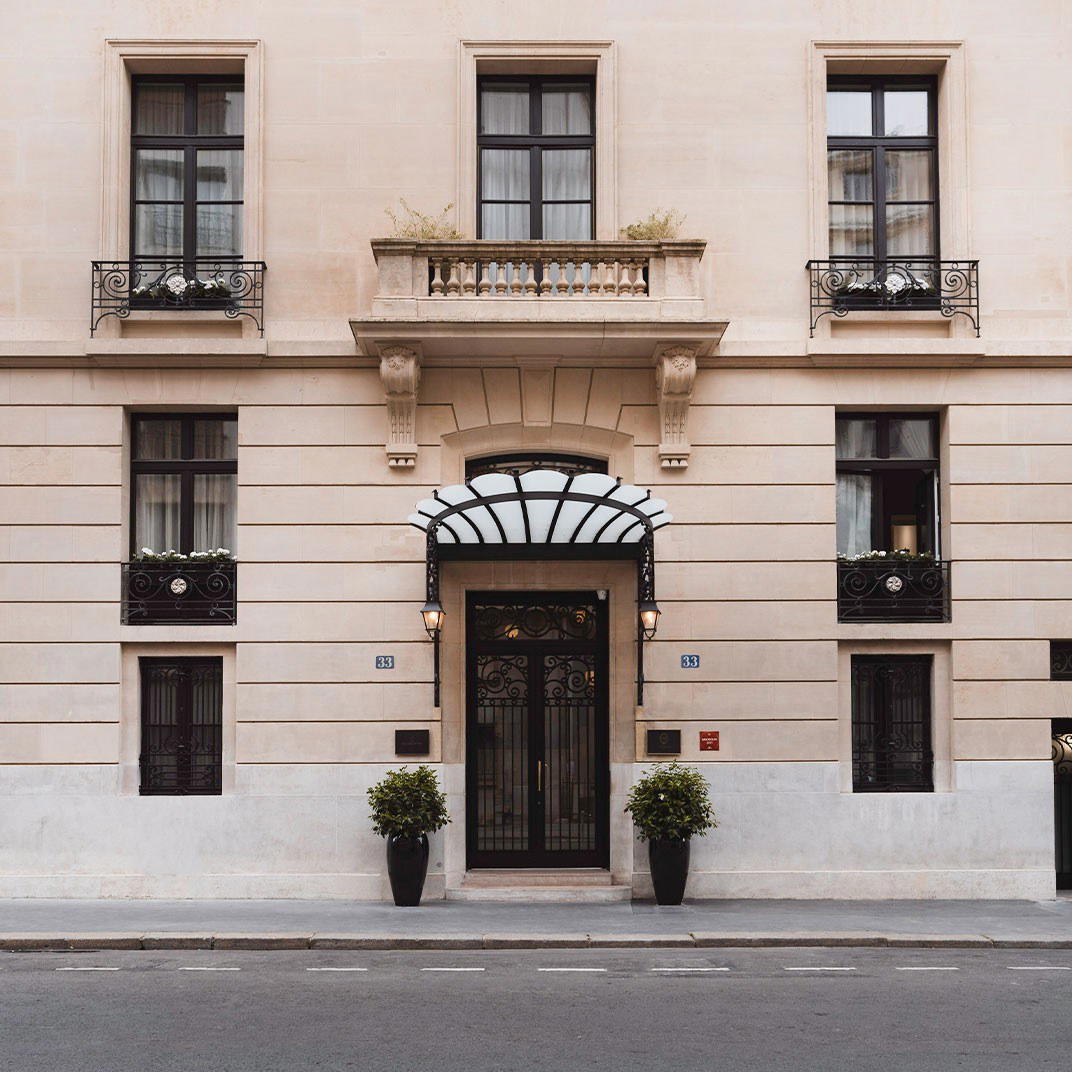
The 7th arrondissement is not Paris's most obvious address for Japanese cuisine. Its streets run long and residential, the kind of neighbourhood where restaurants serve the local population rather than destination diners. Which makes the format at Aida, on Rue Pierre Leroux, all the more deliberate. The whitewashed facade blends so completely into the surrounding stonework that first-time visitors regularly walk past it. That invisibility is not accidental. It sets the register before you've sat down.
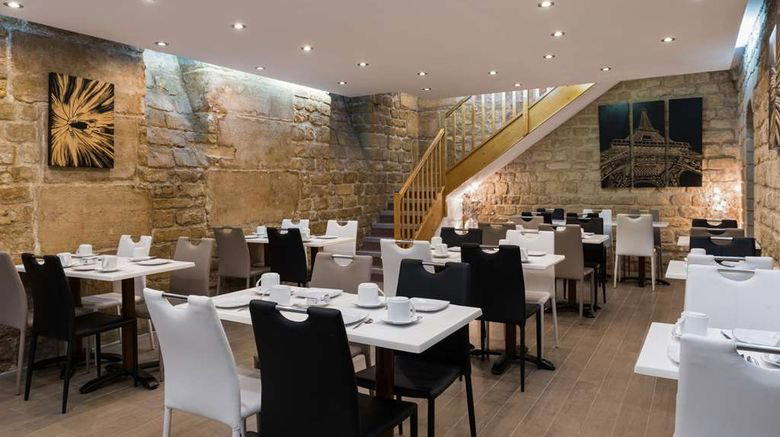
Inside, the design logic is spare: a white interior, clean lines, and a counter of nine seats arranged around teppanyaki griddles. A small private dining room with tatami provides an alternative for those who prefer separation from the cooking theatre. Neither space asks for attention. The room's job is to frame the food, not to compete with it.
How the Menu Is Built
Aida operates on a single tasting menu, with no à la carte option. In a city where many Japanese-influenced restaurants allow guests to construct their own path through a meal, the fixed format here signals something specific: the kitchen is presenting an argument, not a selection. Every course arrives in a sequence determined by the chef, and the structure of that sequence is where Aida's editorial point becomes clear.
The menu draws from both Japanese and French culinary traditions without treating either as a garnish for the other. Sashimi appears alongside Brittany lobster. Chateaubriand and sweetbread move through the teppanyaki griddle. The French produce is handled with Japanese technical precision: the emphasis on ingredient quality, the restraint in seasoning, the attention to knife work in the cutting and slicing. This is not fusion in the casual sense. It is a cooking philosophy in which two culinary systems are applied to the same raw material simultaneously, each informing how the other is expressed.
Burgundy wines, selected to accompany the menu, extend the France-Japan dialogue into the glass. The pairing choice is not arbitrary. Burgundy's emphasis on terroir expression and restraint in winemaking matches the cooking register more closely than, say, a heavier Bordeaux would. It reflects the same preference for precision over impact that defines the teppanyaki work. For context on how Japanese cuisine is expressing itself across Paris at the €€€€ tier, the work at L'Abysse au Pavillon Ledoyen offers an instructive comparison, where a similarly focused format takes sushi as its single subject.
The Teppanyaki Counter as a Design Decision
Teppanyaki as a counter format carries a different set of expectations than omakase sushi or a kaiseki progression. The griddle is visible, the cooking is immediate, and the guest watches technique in real time. At nine seats, the counter at Aida operates closer to the intimate omakase model than to the large teppanyaki halls associated with the format elsewhere. Capacity this small means each service is its own closed event, with no rotation of covers mid-evening.
Paris has developed a concentrated tier of Japanese restaurants operating at high price points with counter-led formats. Sushi Yoshinaga, Chakaiseki Akiyoshi, and Hakuba each represent different expressions of Japanese culinary tradition within the city. Aida's distinction within that peer group lies in its direct engagement with French classical produce — the Brittany lobster, the chateaubriand — cooked through Japanese methods rather than French ones. It is not a Japanese restaurant that uses French ingredients for decorative effect. The French produce is the vehicle through which the Japanese approach becomes legible.
Abri Soba represents the more accessible end of the same culinary conversation. The distance between the two in terms of price, format, and ambition is a useful measure of how wide that conversation has become.
Aida in the Context of Paris Dining at €€€€
The €€€€ tier in Paris carries significant competition from the French classical tradition. Michelin three-star rooms like the kitchens at Mirazur in Menton and long-established houses such as Auberge de l'Ill in Illhaeusern and Bras in Laguiole define what premium French dining looks like across the country. Within Paris itself, three-star addresses including Troisgros and Paul Bocuse represent the established canon. The fact that Flocons de Sel in Megève operates in an Alpine register at the same price tier illustrates how broadly the category now stretches geographically.
Aida does not occupy the same competitive space as any of those addresses. Within that set, it is the intersection of teppanyaki, French produce, and fixed-menu discipline that distinguishes it. Japanese kitchens in Tokyo operating in comparable registers, such as Myojaku and Azabu Kadowaki, provide a useful reference for what the underlying culinary tradition looks like at source, before the French-produce dimension is added.
For a counter of this capacity, consistency is a more meaningful signal than a higher score on a smaller sample.
Planning Your Visit
Aida is closed on Mondays. Tuesday through Sunday, service runs from 7 PM to 9 PM only, with no lunch service. The address is 1 Rue Pierre Leroux, 75007 Paris. The single evening service window means planning ahead is necessary. With nine counter seats and a small private dining room, availability is genuinely limited, and the format does not accommodate late arrivals into a flexible service. Arriving on time is not optional.
The 7th arrondissement is well connected by Metro, with Vaneau on line 10 being the most direct approach. For those building a wider Paris itinerary, our full Paris restaurants guide maps the city's dining scene across all formats and price points. Our Paris hotels guide, bars guide, wineries guide, and experiences guide cover the broader city in the same depth.
Frequently asked questions
What's Aida known for in terms of accolades?
Aida has received recognition including: The whitewashed facade of this small bolthole tucked away in a lane blends in so perfectly with its surroundings that you may even miss it entirely! Behind its spruce façade lies a jealously kept secret, namely exquisite Japanese cuisine. T….
What's Aida's location?
Aida is located at 1 Rue Pierre Leroux, 75007 Paris, France, Paris.
What's the best thing to order at Aida?
Aida operates on a single fixed tasting menu with no à la carte option, so ordering choices do not apply in the conventional sense. The menu draws on French produce — Brittany lobster, chateaubriand, sweetbread — prepared on the teppanyaki griddle alongside sashimi, with Burgundy wines selected by the chef. At the €€€€ price point, the full progression is the only format on offer. Guests at the nine-seat counter see the cooking directly, which shapes how the meal is experienced from start to finish.
Is Aida expensive?
Pricing at Aida is listed as €€€€.
The Short List
A quick peer list to put this venue’s basics in context.
| Venue | Cuisine | Price | Awards | Notes |
|---|---|---|---|---|
| AidaThis venue — the venue you are viewing | Teppanyaki Omakase | $200–300 | 1 Michelin Star | Not listed |
| Alléno Paris au Pavillon Ledoyen | Modern French Fine Dining | $150–200 | 3 Michelin Stars · World's 50 Best #79 | Creative |
| Kei | Modern French with Japanese Influences | $300–500 | 3 Michelin Stars · World's 50 Best #93 | Contemporary French, Modern Cuisine |
| L'Ambroisie | Classic French Haute Cuisine | $300–500 | 2 Michelin Stars · World's 50 Best #23 | French, Classic Cuisine |
| Le Cinq - Four Seasons Hôtel George V | French, Modern Cuisine | Not listed | Not listed | Not listed |
| Plénitude | Modern French Sauce-Led Fine Dining | $300–500 | 3 Michelin Stars · World's 50 Best #14 | Contemporary French |
Recognition history
Dated appearances from independent guides and award organizations, with the underlying list record or original source where available.
Michelin 1 Star
Michelin
Full recognition history (3 entries)
Michelin 1 Star
Michelin
Michelin 1 Star
Michelin
Continue exploring
More in Paris
Restaurants in Paris
Browse all →
Bars in Paris
Browse all →
Hotels in Paris
Browse all →
Details
- Intimate
- Elegant
- Minimalist
- Sophisticated
- Special Occasion
- Date Night
- Business Dinner
- Chefs Counter
- Open Kitchen
- Private Dining
- Extensive Wine List
- Omakase
- Tasting Menu
- Counter Dining
- Burgundy Wines
Current opening hours
- Monday
- Closed
- Tuesday
- 7–9 PM
- Wednesday
- 7–9 PM
- Thursday
- 7–9 PM
- Friday
- 7–9 PM
- Saturday
- 7–9 PM
- Sunday
- 7–9 PM
Hours can change for holidays and private events. Last verified .
Minimalist and elegant with pristine white interior, austere counter space, tatami private room, and focused professional service evoking a Tokyo experience.