
Tabelog 100 #92
Our verdict
Celery brings Chinese cooking into Zushi’s compact coastal dining circuit, with vegetable-conscious cooking, wine and sake compatibility, and recognition in the Tabelog 100 Chinese EAST 2026 selection. Its scale and house-restaurant format place it closer to a neighbourhood specialist than a metropolitan dining room, useful for travellers reading Zushi beyond seafood and beach-town shorthand.

Pearl is the En Primeur Club membership app, where members save venues, book tables and use the concierge.
The menu
What to order
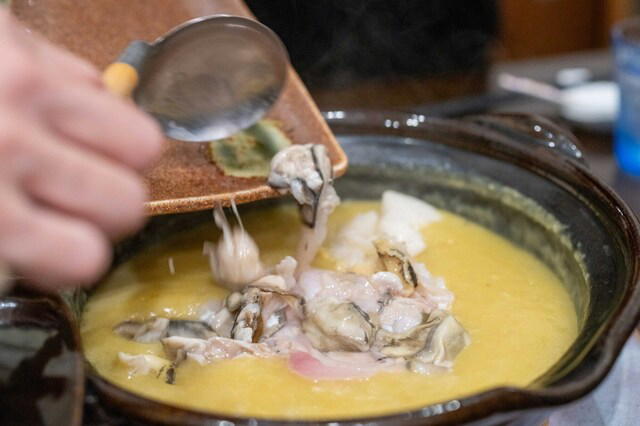
- Yodare-dori (spicy poached chicken)
- Seasonal vegetable Chinese dishes
Approaching Zushi’s station-side streets, the city feels less like a dining capital than a place where daily life presses close to the table: bakeries, curry rooms, sushi counters, and small restaurants folded into residential blocks. In that setting, Chinese cooking has a different role than it does in Yokohama’s larger Cantonese orbit or Tokyo’s expense-account rooms. It becomes local, useful, and highly personal in scale. Celery belongs to that smaller grammar: a house restaurant rather than a grand room, a Chinese kitchen noted for vegetables and vegetarian options, and a 2026 selection in Tabelog’s Chinese EAST Tabelog 100.
Zushi is often read through the coast, Kamakura day trips, and the pull of seafood, but the city’s stronger dining pattern is actually compact variety. A traveller can move from bread at BOULANGERIE E.S. or Panya Cotto to casual sweets at moomoo's, then into spice-led cooking at spice tree or a higher-ticket sushi meal at Sushi Nara. Against that spread, Celery gives the city a Chinese address with national-list visibility, without shifting into the formality associated with luxury hotel Chinese dining or major-city tasting menus.
Chinese cooking in Zushi, read through vegetables rather than banquet scale
Chinese restaurants in Japan cover a wide field, from ramen-adjacent everyday kitchens to polished regional dining rooms. The interesting part of Celery’s positioning is not theatrical rarity but proportion. The room is small, the format is local, and the cooking is flagged for vegetable focus and vegetarian options. That matters in a country where Chinese dining can be associated with oil, heat, generous sharing plates, and meat-forward classics; a vegetable-conscious Chinese kitchen in a 25-seat setting gives Zushi a different register.
The award context sharpens that point. Tabelog’s Chinese EAST Tabelog 100 is a regional selection, not a generic popularity badge, and the 2026 inclusion places the restaurant inside a competitive eastern Japan category that reaches far beyond Zushi. The listed Tabelog score of 3.69 is also useful context: on that platform, high scores tend to move slowly and reward sustained diner consensus rather than short bursts of attention. For a small coastal city, that combination of category recognition and local scale is the signal.
Wine, sake, and shochu are all part of the listed drinks frame, which says something about how Chinese dining has adapted in Japan. The old division between Chinese food and grape wine has thinned, particularly in restaurants that work with vegetables, controlled seasoning, and smaller portions rather than banquet volume. Here the cultural interest is in translation: Chinese technique meeting Japanese expectations around seasonality, drink pairing, and a quieter room.
A small-room alternative to Zushi's seafood default
Zushi’s restaurant map rewards short distances and quick decisions, but price and format vary sharply. Sushi Nara sits in a much higher spend bracket, while spice tree occupies the city’s curry-and-spice lane. The bread shops, including BOULANGERIE E.S. and Panya Cotto, speak to Zushi’s daytime rhythm. Celery is the useful middle answer: not a sushi pilgrimage, not a snack stop, not a Tokyo-style special-occasion machine.
That middle position is where many stronger suburban and coastal Japanese restaurants operate. They need enough ambition to pull diners beyond pure convenience, but they cannot rely on spectacle. The house-restaurant format helps: it implies a domestic scale, tables rather than a large dining hall, and a meal that works for friends, dates, and family groups. Children are welcome, and the restaurant lists a kids menu and stroller access, which is not a minor detail in a town where weekend dining often includes multigenerational parties returning from the beach or Kamakura.
The no-smoking policy also suits contemporary Japanese small-room dining, where comfort is now part of the quality argument rather than a luxury add-on. Private rooms are not part of the offer, so the appeal is not seclusion. It is a compact public room with enough recognition to justify planning around it, especially for travellers who want Zushi to read as a working food town rather than a transit point between Tokyo and the Shonan coast.
How to place it within a wider Zushi and Kanagawa itinerary
The smart use of Celery is as a counterweight. Build a Zushi day around bread, curry, sushi, and Chinese cooking, and the city starts to look less narrow. For broader local planning, Our full Zushi restaurants guide gives the restaurant layer, while Our full Zushi hotels guide, Our full Zushi bars guide, Our full Zushi wineries guide, and Our full Zushi experiences guide fill in the rest of the trip.
It also belongs in a Kanagawa conversation that includes nearby Kamakura, where a meal such as -Grilled beef Sukiyaki- KAMAKURA TANUKIAN 鎌倉 たぬき庵 in Kamakura pulls the itinerary toward beef and set-piece dining. By contrast, Celery keeps the decision lighter and more local, with Chinese cooking as the main cultural lens. Travellers extending beyond Kanagawa can compare that kind of category specificity with (Shoku) Vietnam in Kawasaki. 鮪と炭火焼き うお炭 秋葉原店 in Tokyo.cafe in Osaka.know in Kumamoto, and [Curry Senmon Ten] Maruyama Kyoju. in Sapporo.
For overseas readers, there is another useful comparison. Japanese small restaurants with a focused drinks program often feel closer in spirit to compact sake bars and specialist casual rooms than to western fine-dining templates. That is why references such as Jōdo Saké Bar in Los Angeles or Onigiri Time in Pasadena can help frame the appeal: the point is not scale, but clarity of category, repeatable comfort, and a menu identity strong enough to travel by word of mouth.
The critical takeaway is simple. In Zushi, Chinese cuisine is not the obvious headline, which is precisely why this address matters. The Tabelog 100 Chinese EAST 2026 recognition gives it external validation; the vegetable focus, small capacity, family-friendly structure, and drinks range explain why it works locally. For travellers, it is a way to eat Zushi without defaulting to seafood, and to see how Chinese cooking in Japan can become intimate, seasonal in feeling, and town-specific without losing its broader culinary roots.
Frequently asked questions
How do I find Celery?
Celery is located in Zushi.
What's the pricing like at Celery?
Pricing at Celery is listed as JPY 4,000 - JPY 4,999 JPY 1,000 - JPY 1,999.
Is Celery open every day?
Hours at Celery: Mon: 11:30 AM–2:30 PM, 5:30–9:30 PM; Tue: 11:30 AM–2:30 PM, 5:30–9:30 PM; Wed: 11:30 AM–2:30 PM, 5:30–9:30 PM; Thu: Closed; Fri: 11:30 AM–2:30 PM, 5:30–9:30 PM; Sat: 11:30 AM–2:30 PM, 5:30–9:30 PM; Sun: 11:30 AM–2:30 PM, 5:30–9:30 PM.
What do critics highlight about Celery?
Critics point to Celery’s Tabelog Chinese EAST "Tabelog 100" 2026 selection, along with its vegetable focus and vegetarian options. The 25-seat house restaurant in Zushi sits in an approachable price band, with lunch at JPY 1,000–JPY 1,999 and dinner at JPY 4,000–JPY 4,999.
Cost Snapshot
Comparable venues by cuisine and price in the same metro.
| Venue | Cuisine | Price | Awards | Notes |
|---|---|---|---|---|
| CeleryThis venue (the venue you are viewing) | Vegetable-focused Chinese | Not listed | Tabelog 100 #92 | Not listed |
| moomoo's | Soft serve ice cream shop | $1–10 | Tabelog 100 #68 | Zushi, Soft serve ice cream shop |
| Panya Cotto | Dining | Not listed | Tabelog 100 #48 | Not listed |
| spice tree | Indian-style Curry House | $10–20 | Tabelog 100 #68 | Zushi, Indian-style Curry House |
| Sushi Nara | Edomae Omakase Sushi | $150–200 | Tabelog 100 #10 | Zushi, Edomae Omakase Sushi |
| BOULANGERIE E.S. | Not listed | $1–10 | Tabelog 100 #30 | . Zushi, French-style bakery |
Recognition history
Dated appearances from independent guides and award organizations, with the underlying list record or original source where available.
Tabelog 100 #92 · No. 92
Tabelog · Tabelog 100 - Chinese cuisine - EAST - 2026
Continue exploring
More in Zushi
Restaurants in Zushi
All restaurants in Zushi →

Bars in Zushi
Browse all →






Details
- Cozy
- Intimate
- Casual Hangout
- Group Dining
- After Work
- Family
- Solo
- Standalone
- Local Sourcing
- A La Carte
- Beer
- Wine
- Sake
- Tea
- Vegetarian Friendly
- Pescatarian Friendly
Current opening hours
- Monday
- 11:30 AM–2:30 PM, 5:30–9:30 PM
- Tuesday
- 11:30 AM–2:30 PM, 5:30–9:30 PM
- Wednesday
- 11:30 AM–2:30 PM, 5:30–9:30 PM
- Thursday
- Closed
- Friday
- 11:30 AM–2:30 PM, 5:30–9:30 PM
- Saturday
- 11:30 AM–2:30 PM, 5:30–9:30 PM
- Sunday
- 11:30 AM–2:30 PM, 5:30–9:30 PM
Hours can change for holidays and private events. Hours as of .
Warm, low-key neighborhood Chinese restaurant on Nagisa Street with a simple interior and a spacious second-floor table area suited to small gatherings and casual drinking.