Google: 4.4 · 202 reviews
.png)
Occupying a historic storehouse beside Cuenca's celebrated hanging houses, Casa de La Sirena holds consecutive Michelin Plate recognition (2024 and 2025) for contemporary cooking that reworks Castilian ingredients through a modern lens. Two tasting menus and an à la carte format give the kitchen room to move, with wine pairing available on both. At the €€ price point, it is one of the more substantive addresses on Cuenca's serious dining circuit.
 Discover on Pearl
Pearl is the En Primeur Club membership app — saves, bookings, and concierge access live there. Same editors, same standards.
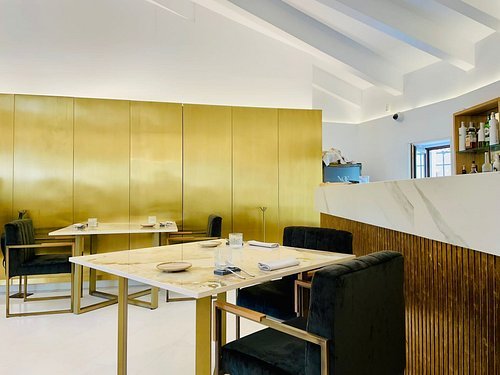
Stone Walls, Modern Plate: Dining in the Shadow of the Hanging Houses
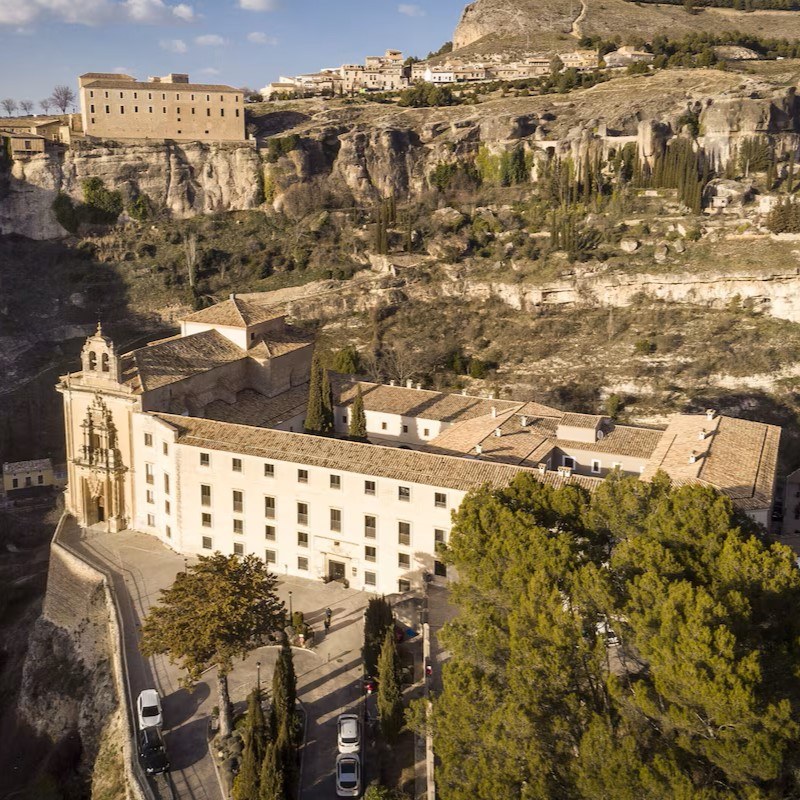
Cuenca's old city is a place where medieval engineering and vertiginous geology press against each other at every corner. The street of Obispo Valero runs close to the gorge edge, and the building housing Casa de La Sirena was originally a storehouse, its thick stone walls and heavy structure built for function rather than atmosphere. What the interior does now is use that history as contrast: minimalist furnishings and a clean contemporary fit-out sit inside a space that carries genuine age in its bones. The effect is less renovation-by-committee and more deliberate tension between what was here and what is being served today.
That tension is the editorial point worth making about Cuenca's contemporary dining scene at large. The city is not a natural candidate for modern Spanish cooking. Its identity is architectural and geological, its tourism centred on the hanging houses and the Abstract Art Museum. Serious restaurants here work against a backdrop of visitor expectations calibrated to traditional Castilian fare, which makes the handful of kitchens choosing a contemporary direction more interesting to track. Casa de La Sirena sits inside that smaller, more ambitious cohort, positioned at the €€ price tier, which puts it below the three-star ambitions of its neighbour Casas Colgadas Restaurante but clearly above the entry-level modern cooking at places like Olea Comedor.
What the Kitchen Is Actually Doing with Castilian Ingredients
Contemporary Spanish cooking in smaller provincial cities tends to work one of two ways: it either grafts Basque or Catalan technique onto local produce without much conviction, or it uses technique as a genuine tool for rethinking what the region actually grows, raises, and forages. The Michelin Plate recognition Casa de La Sirena has held in both 2024 and 2025 suggests the kitchen sits in the second category. A Michelin Plate, often underread by visitors focused on stars, signals food that is good enough to deserve attention at its price point. It is not a courtesy acknowledgment. For a restaurant at €€ in a secondary Spanish city, two consecutive Plates represent a consistent standard rather than a lucky year.
Cuenca sits in the interior of Castilla-La Mancha, a plateau region where the larder is defined by wild game, freshwater fish from rivers like the Júcar and Huécar, mountain herbs, and the region's own Denominación de Origen Manchuela wines. The terroir in the broadest sense is more austere than the coasts and more mineral than Andalusia. A kitchen genuinely reinterpreting local dishes, as the venue's format describes, is working with those materials: the pisto manchego tradition, the morteruelo game pâté that is essentially Cuenca's signature dish, cured meats from the surrounding sierra, and the specific quality of lamb raised on dry highland pasture. How those ingredients are handled is what separates the contemporary restaurants from the merely modern-looking ones. The fact that the menu is framed around reinterpretation of well-known local dishes rather than a generic European modernism signals a degree of regional rootedness worth noting.
Spain's leading contemporary kitchens — from El Celler de Can Roca in Girona to Arzak in San Sebastián and Quique Dacosta in Dénia — have spent decades building the case that regional identity and technical ambition are not in opposition. The same argument operates at a smaller scale in Cuenca. Azurmendi in Larrabetzu, Martin Berasategui in Lasarte-Oria, and Aponiente in El Puerto de Santa María all demonstrate that serious technique applied to specific regional ingredients is what gives Spanish contemporary cooking its most defensible identity. Casa de La Sirena operates several tiers below those addresses in scale and ambition, but the underlying logic connects.
Format and How to Use It
The kitchen runs both à la carte service and two tasting menus, giving diners a genuine choice about how much of the program they want to commit to. The shorter four-course menu is available Wednesday through Friday only, which is a logistical detail worth building a visit around. The six-course version runs across the full service calendar. Both menus carry a wine-pairing option. For a restaurant operating in a wine region with growing recognition , Manchuela D.O. is producing increasingly interesting Bobal-based reds, and the broader La Mancha appellation covers considerable ground , the pairing option is worth considering rather than defaulting to a bottle order.
For those comparing formats across Cuenca's dining options, the à la carte route at Casa de La Sirena occupies a different register than the traditional Castilian cooking available at Raff San Pedro, which serves as a reliable anchor for regional classics without the contemporary reinterpretation. Both approaches are valid; they are answering different questions about what Cuenca's food culture is and can be.
The contemporary cooking movements shaping restaurants far from Spain , César in New York City and Jungsik in Seoul operate in the same broad register of ingredient-led contemporary menus , reflect a global shift toward place-specific sourcing as the organising principle for serious restaurants. What makes Cuenca an interesting case study is that the ingredients available here are genuinely distinct: the altitude, the river systems, the game-heavy sierra. A kitchen using those materials well is making an argument for the region that a tourist-facing traditional menu often fails to make.
Planning a Visit
Casa de La Sirena is located on Calle Obispo Valero in Cuenca's upper old city, close enough to the hanging houses that the approach on foot from the Plaza Mayor takes only a few minutes. The address places it in the heart of the monumental zone, which means parking is the concern of the lower city and cable car, not something to sort at the restaurant door. Booking ahead is advisable, particularly for the four-course midweek menu, which has a narrower service window than the six-course option. At the €€ price point, the tasting menu with wine pairing remains accessible by the standards of equivalent contemporary programs in Madrid or Barcelona. For a full picture of what to eat, drink, and do in the city, see our full Cuenca restaurants guide, our full Cuenca bars guide, our full Cuenca hotels guide, our full Cuenca wineries guide, and our full Cuenca experiences guide. For those comparing contemporary Spanish programs elsewhere, DiverXO in Madrid and Cocina Hermanos Torres in Barcelona mark the upper end of the country's contemporary tier for context.
Side-by-Side Snapshot
These are the closest comparables we have in our database for quick context.
| Venue | Cuisine | Price | Awards | Notes |
|---|---|---|---|---|
| Casa de La Sirena | Contemporary | €€ | This restaurant has plenty of history behind it, given that it occupies a buildi… | This venue |
| Casas Colgadas Restaurante | Contemporary | €€€ | Michelin 1 Star | Contemporary, €€€ |
| Olea Comedor | Modern Cuisine | € | Modern Cuisine, € | |
| Raff San Pedro | Traditional Cuisine | €€ | Traditional Cuisine, €€ |
At a Glance
- Modern
- Elegant
- Intimate
- Sophisticated
- Date Night
- Special Occasion
- Historic Building
- Extensive Wine List
- Street Scene
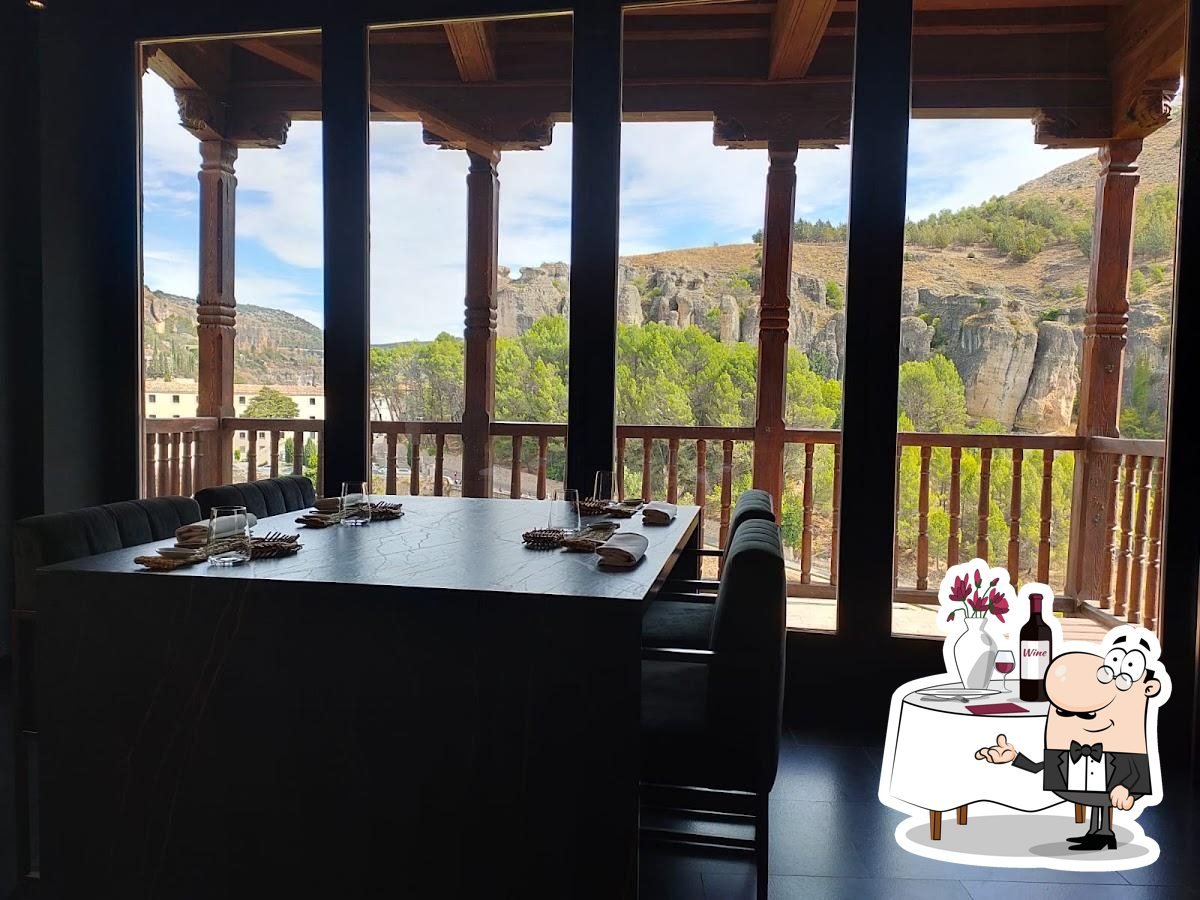
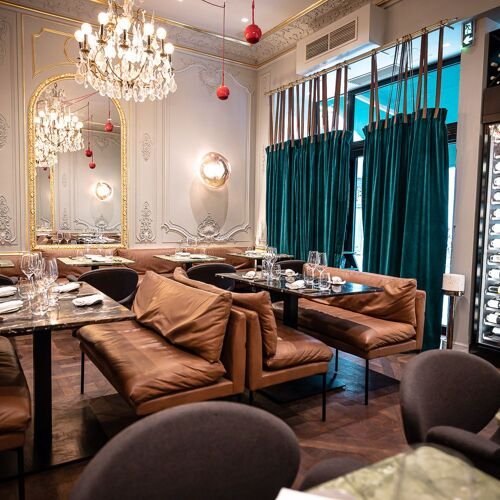
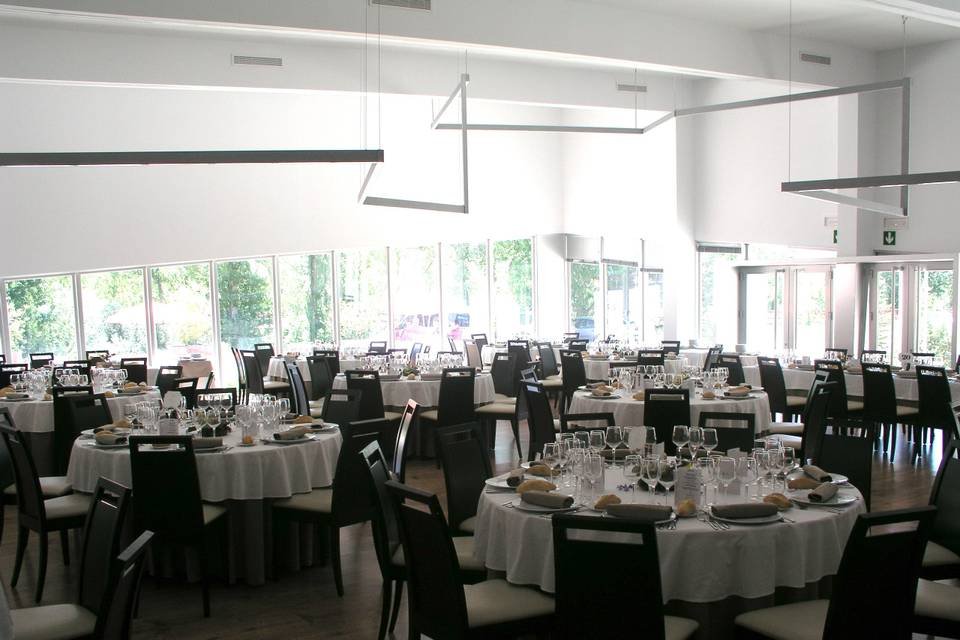
Bright, light-filled space with modern marble and bronze tables, comfortable 70’s style chairs, mood lighting, gilded walls, and well-spaced tables creating an elegant and pleasant atmosphere.