
Michelin Selected
A 16th-century Dominican convent converted into one of Spain's most architecturally distinctive Paradores, Parador de Cuenca occupies a cliff-edge position above the Huécar gorge. Selected by the Michelin Guide Hotels 2025, it offers direct sightlines to Cuenca's hanging houses and access to a UNESCO World Heritage city centre that remains one of the most spatially dramatic in Castile-La Mancha.

Pearl is the En Primeur Club membership app, where members save venues, book tables and use the concierge.
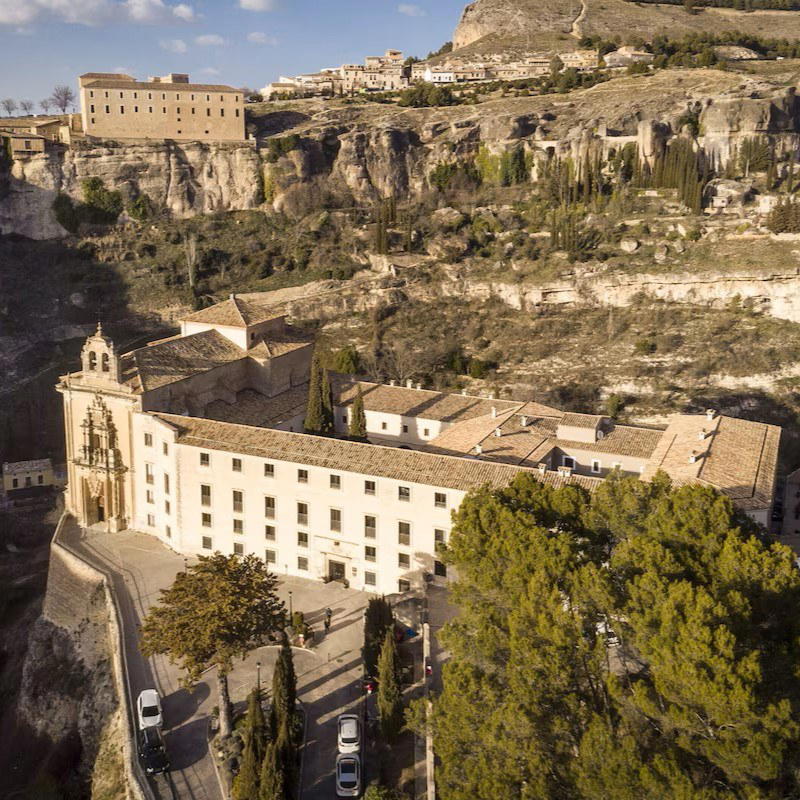
Stone, Gorge, and Six Centuries of Structural Ambition
Arriving at Parador de Cuenca requires crossing the Puente de San Pablo, a narrow pedestrian bridge suspended above the Huécar gorge. That approach is not incidental to the experience, it is the experience. Before a single room key changes hands, the building announces itself through stone walls, vertiginous drop, and a view of Cuenca's casas colgadas (hanging houses) directly opposite. Few hotels in Spain front-load their architectural argument so aggressively, and fewer still make good on it once you're inside.
The property was originally constructed as the Convento de San Pablo in the 16th century, and the Parador network's conversion preserved the cloister arcades, vaulted ceilings, and the kind of proportional logic that Renaissance ecclesiastical architects used to make spaces feel simultaneously weighty and calm. Spain's Paradores brand has spent decades converting historic buildings into state-managed hotels, and Cuenca is among the more demanding cases in that portfolio: the cliff-edge site left almost no room to expand or modernise without compromising the structure's relationship to its setting. The decision to work within those constraints rather than against them is what gives the property its particular character among Michelin-selected accommodation in Castile-La Mancha.
Where the Conversion Sits in the Paradores Network
The Paradores chain operates roughly 100 properties across Spain, ranging from coastal fortresses to city palaces. Within that network, a recognisable split has emerged between properties that use historical architecture as backdrop (comfortable rooms, conventional amenities, heritage branding) and those where the physical structure actively shapes how a guest moves through and reads the building. Parador de Cuenca falls into the second group, alongside conversions like the Parador de Cáceres, which shares a similar logic of dense medieval stonework repurposed for contemporary hospitality, Atrio Restaurante Hotel in Cáceres sits nearby in Cáceres as a counterpoint from outside the Paradores system.
Michelin Guide's 2025 selection of Parador de Cuenca places it in company with properties that have earned recognition for coherent hospitality rather than marketing volume. Michelin's hotel selection criteria weight physical quality, service consistency, and a sense of place, the last of which this building delivers with structural certainty. For Spanish properties carrying that designation in comparable settings, see also Abadía Retuerta LeDomaine in Teruel and Terra Dominicata in Escaladei, both conversions of historic religious or agricultural complexes that have followed a similar preservation-first logic.
The Architecture in Detail
Cloister is the spatial core of the conversion. Two-storey arcaded galleries surround a central courtyard that functions as the property's primary circulation spine, and the Parador's public areas, dining room, lounge, connecting corridors, radiate outward from it. The vaulted stonework in the lower gallery is intact original fabric, and the decision to keep it exposed rather than plastered or subdivided means the building reads as a 16th-century structure that has been inhabited carefully, rather than a hotel that has been dressed in heritage costume.
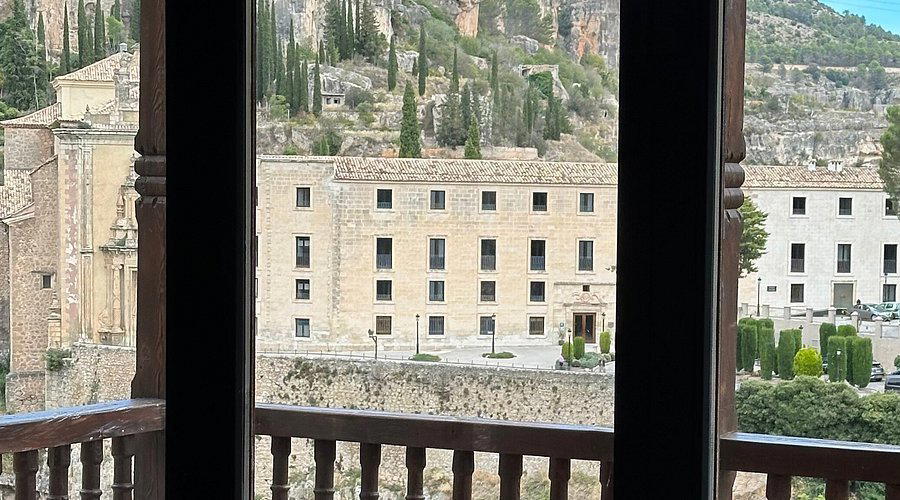
Guest rooms along the gorge-facing elevation are the most architecturally loaded spaces in the building. Window placement here reflects original convent fenestration rather than a hotel designer's instinct for view maximisation, which produces frames that feel proportioned to the stone rather than optimised for panorama. The result is something that other cliff-edge hotels in Spain, even those with equally dramatic settings, rarely replicate: a sense that the building was here first and the view was always secondary to the structure's internal logic.
Rooms on the courtyard side offer the convent's quieter, more inward-facing character. Neither orientation is a compromise; they're different readings of the same building. Travellers who have stayed at properties like Cap Rocat in Cala Blava, another military-to-hotel conversion with strong structural identity, will recognise the dynamic of choosing between the building's public face and its interior calm.
Cuenca as Context
Cuenca sits roughly two and a half hours southeast of Madrid by road, and around an hour and forty minutes by high-speed rail from Madrid's Atocha station. The city's UNESCO World Heritage designation covers the old town on the rock above the gorges, a dense medieval grid of palazzi, churches, and the hanging houses that form one of the most photographed architectural ensembles in Castile-La Mancha. The Parador's address on the Subida a San Pablo places it at the edge of that zone, on the San Pablo side of the gorge rather than within the old town proper, which gives it separation from the daytime tourist circuit while maintaining walking-distance access across the bridge.
Cuenca's restaurant scene is thinner than its architectural reputation might suggest, but the old town contains a concentration of Castilian-focused kitchens built around morteruelo (a game-meat pâté), ajoarriero (salt cod with garlic and olive oil), and Manchego-adjacent cheese production. For a broader orientation to what the city offers across dining and accommodation, the EP Club full Cuenca guide maps the options with the same editorial rigour applied here. The nearby Hotel Cruz del Vado offers an alternative base in the lower city for those who prefer a less vertical approach to the town.
For travellers building a longer Spanish route around architecturally-driven accommodation, the Parador slots logically between Madrid-based properties, Mandarin Oriental Ritz, Madrid for urban grandeur at a different price register, and the converted wine estates and rural properties further east and south. Torre del Marqués Hotel Spa & Winery in Sardoncillo and Caro Hotel in València both sit within reasonable driving distance and operate in the same broad category of historically-anchored Spanish hospitality, albeit with different ownership structures and price points.
Planning a Stay
Parador de Cuenca is bookable directly through the Paradores central reservations system, which operates both online and by telephone. As a state-run chain with standardised pricing architecture, the Parador uses seasonal rate structures with higher rates during Semana Santa, summer weekends, and the city's September festivals. Booking three to four weeks in advance is sufficient for mid-week stays in lower season; gorge-view rooms during peak weekends require earlier lead time. The property's bridge-accessed location means it is pedestrian-only from the San Pablo side, guests arriving by car follow road signage to the hotel's vehicle access point rather than attempting the bridge approach on foot with luggage.
The Michelin Selected designation signals a level of quality assurance that applies across the physical plant, dining, and service, useful context for those comparing the Parador against privately-operated alternatives at similar or higher price points in other Spanish cities, from Hotel Mercer Sevilla in Seville to Hotel Mas Lazuli in Girona in Catalonia. The Parador's value proposition is structural and situational: the building and its gorge position are genuinely non-replicable, and that scarcity has a price floor that the Paradores network sets independently of commercial market pressures.
Comparable Venues
Comparable venues nearby, for context on price, style, and recognition.
| Venue | Cuisine | Price | Awards | Notes |
|---|---|---|---|---|
| Parador de CuencaThis venue (the venue you are viewing) | Converted 16th-century monastery in Late Gothic Plateresque style | Not listed | Michelin Selected | Not listed |
| Eurostars Bilbao | Premium urban four-star hotel in a restored landmark riverside building, positioned for comfort-focused city stays. | Not listed | Not listed | Deusto |
| Parador de Baiona | Historic fortress-palace hybrid combining medieval fortification with 19th-century Neo-Gothic architecture, operated by Spain's prestigious Paradores chain. | $100–200 | Michelin Selected | Monterreal Peninsula |
| ARTIEM Madrid | Modern wellness-oriented urban hotel | $1–100 | Preferred Hotels Member | Concepcion |
| Eurostars Pamplona | contemporary urban retreat with spa facilities | $100–200 | Michelin Selected | Segundo Ensanche |
| Parador de Alarcón | Medieval castle parador blending authentic history with modern hospitality. | Not listed | Michelin Selected | Alarcon |
Recognition history
Dated appearances from independent guides and award organizations, with the underlying list record or original source where available.
Michelin Selected
Michelin
Continue exploring
More in Cuenca
Details
- Scenic
- Historic
- Elegant
- Quiet
- Romantic Getaway
- Weekend Escape
- Historic Building
- Panoramic View
- Terrace
- Wi Fi
- Pool
- Sauna
- Fitness Center
- Tennis Court
- Garden
- Room Service
- Mountain
- Step Free Entrance
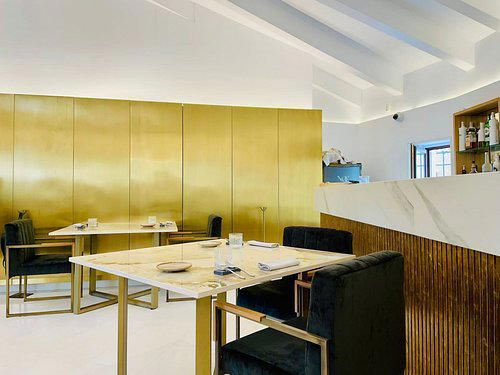
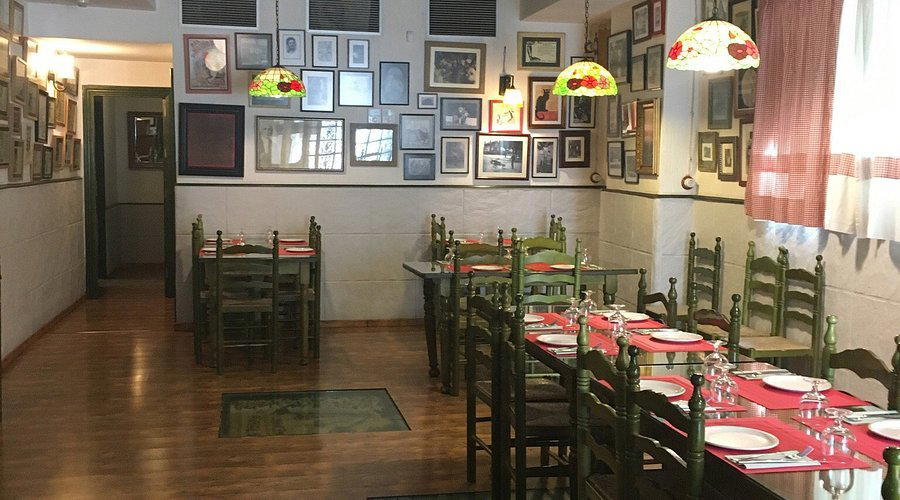
Serene and elegant atmosphere blending historic stone architecture with modern renovations, featuring a glass-enclosed cloister and cozy lighting.