Carnegie Diner & Cafe
Carnegie Diner & Cafe at 828 8th Ave sits in Midtown West, a stretch of Manhattan where old-school American diners have held ground against decades of dining trend cycles. The diner format here trades on familiarity and volume rather than tasting menus or chef pedigree, making it a useful counterpoint to the city's upper-bracket restaurant scene.
Pearl is the En Primeur Club membership app — saves, bookings, and concierge access live there. Same editors, same standards.
- Address
- 828 8th Ave, New York, NY 10019
- Phone
- +12123994444
- Website
- carnegiediner.com
- Directions
- Get directions
 Saves & bookings on Pearl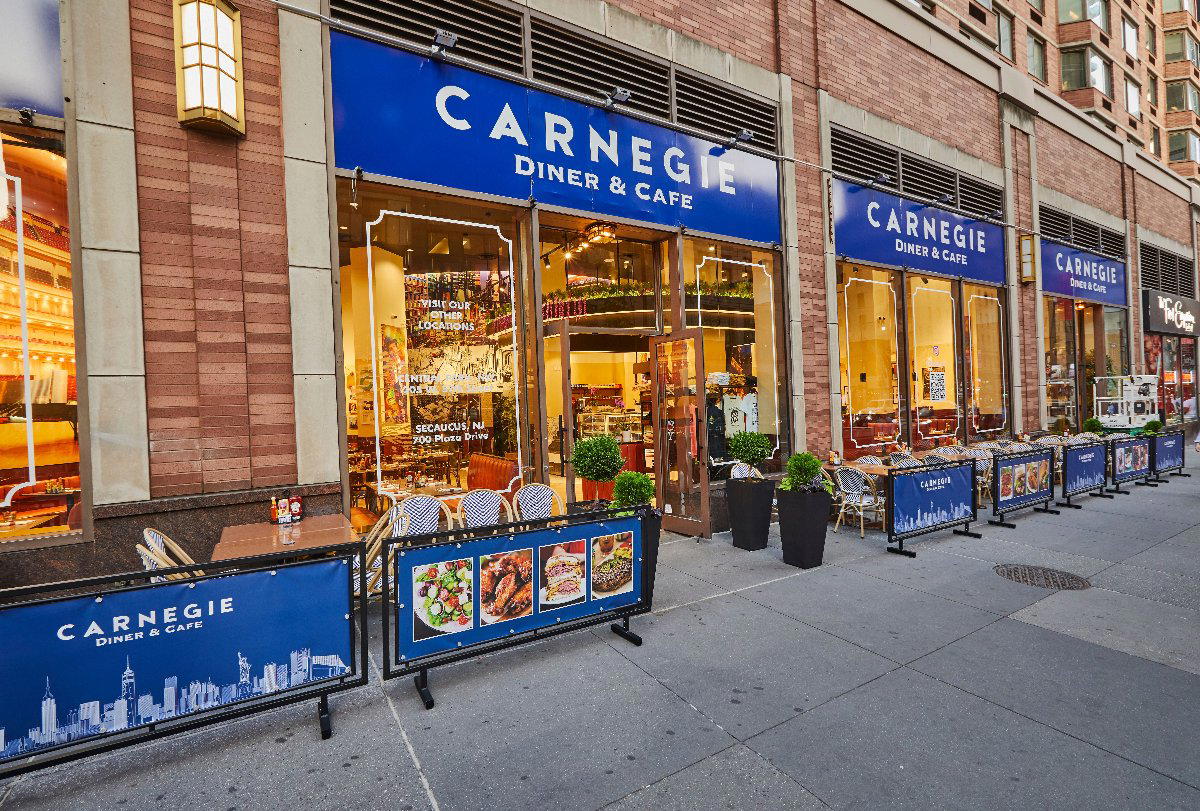
Midtown's Diner Tradition and Where Carnegie Diner Fits
New York's diner culture occupies a specific and increasingly pressured place in the city's food system. The format, built around long menus, extended hours, and booths that seat two or ten with equal indifference, flourished across Manhattan through the mid-twentieth century and has been quietly contracting ever since. Midtown West, the stretch running along 8th Avenue toward Hell's Kitchen, retains more of that old diner density than most Manhattan neighbourhoods, partly because the area's mix of theatre workers, hotel guests, and shift-change foot traffic still rewards formats that operate outside the reservation-and-tasting-menu economy. Carnegie Diner & Cafe is a Classic American Diner at 828 8th Ave, New York, NY 10019, with. It sits inside that tradition.
The address places it within a few blocks of the Theatre District, a location that has historically supported exactly this kind of operation: somewhere a cast can land after a late curtain, somewhere tourists can order eggs at noon without being redirected by a QR code. That kind of operational flexibility is not incidental to the diner format; it is structurally central to why diners survive where higher-concept restaurants often do not.
The American Diner Counter: Format as Editorial Argument
What the diner format argues, implicitly, is that the front-of-house and kitchen do not need to be hidden from each other to function at pace. Unlike the brigade-and-sommelier model that defines New York's upper-tier rooms, where Le Bernardin and Per Se run highly choreographed service hierarchies, the diner counter collapses those distinctions. The person who takes your order at a diner counter is often also the person who calls it back to the kitchen, who refills the coffee, and who knows by memory that the table in the corner always wants extra napkins. That compression of roles is not a deficit; it is a different editorial answer to the question of what hospitality is for.
At the city's high-end end, collaboration between kitchen, floor, and beverage teams is managed through formalized handoffs and communication protocols. At Atomix, the service architecture is as considered as the plating. At Eleven Madison Park, the sommelier-to-cover ratio is built into the room's DNA. The diner operates on the opposite logic: the team dynamic is visible, slightly informal, and oriented around throughput rather than theatre. Whether that suits a reader's preference on a given night is the only question worth asking.
Midtown West's Competitive Context
The 8th Avenue corridor does not compete in the same tier as the city's destination dining rooms. Masa in the Time Warner Center sets a different kind of benchmark, where a counter seat is among the more expensive in the country and the team dynamic is defined by years of shared craft and minimal verbal communication. Carnegie Diner's competitive set is not that room, or any Michelin-tracked table. Its relevant peers are the other Midtown diners, coffee shops, and fast-casual formats that serve the same population of commuters, visitors, and neighbourhood regulars.
That comparable set matters for calibrating expectations. Diners in this part of Manhattan are not making arguments about sourcing provenance or fermentation technique. They are making arguments about consistency, speed, and the particular comfort of a menu where nothing requires explanation. In a city where the dining conversation is increasingly dominated by tasting formats, reservation queues, and per-head minimums, the diner format functions as a structural counterweight.
How the Diner Season Works in Midtown
Midtown's diner trade is seasonal in a specific way. The Theatre District generates consistent late-night foot traffic from September through January, when Broadway programming is at its densest and tourist volumes in the area are highest. Summer in this corridor is driven more by tourist traffic than by local repeat custom, which shifts the diner's operational rhythm toward higher table turnover and broader menu demand. Spring, when the neighbourhood settles between peaks, tends to be when regulars return and the room operates with a quieter, more predictable cadence.
For visitors planning around New York's dining calendar, the practical implication is that Midtown diners are most characterful in the off-peak windows: late-morning on a Tuesday, or mid-afternoon on a weekday when the tourist-to-local ratio shifts. That is when the counter dynamic, the clipped shorthand between floor and kitchen, the practised indifference of a server who has seen every possible order permutation, reads most clearly as a New York institution rather than a transit point.
Planning a Visit
Carnegie Diner and Cafe is located at 828 8th Ave in Midtown West, walkable from the 50th Street subway stop on the C and E lines and a short distance from the Theatre District's main cluster of venues. The diner format typically does not require advance reservations, which makes it a practical option for unplanned meals around theatre schedules or after arriving by transit. For readers building a broader New York itinerary, the contrast between this format and the city's destination rooms, like Blue Hill at Stone Barns outside the city or the tightly booked counters of the upper Manhattan market, is itself instructive about how the city's food system is layered.
Nearby-ish Comparables
Comparable venues nearby, for context on price, style, and recognition.
| Venue | Cuisine | Price | Notes |
|---|---|---|---|
| Carnegie Diner & CafeThis venue — the venue you are viewing | Classic American Diner | $$ | Not listed |
| Mr. Broadway | Eclectic Kosher Diner | $$ | Midtown-Times Square |
| Good Time Country Buffet | Southern Country Buffet | $$ | East Village |
| Citizens Of Bleecker | Australian-Style Cafe | $$ | Greenwich Village |
| Bistro Verde | Modern American Bistro | $$ | Midtown-Times Square |
| Whitmans | American Comfort Food & Craft Burgers | $$ | East Village |
Continue exploring
More in New York City
Restaurants in New York City
Browse all →
Bars in New York City
Browse all →
Hotels in New York City
Browse all →





At a Glance
- Classic
- Lively
- Well Known
- Brunch
- Casual Hangout
- After Work
- Standalone
- Craft Cocktails
- Farm To Table
Current opening hours
- Monday
- 7 AM–1 AM
- Tuesday
- 7 AM–1 AM
- Wednesday
- 7 AM–1 AM
- Thursday
- 7 AM–1 AM
- Friday
- 7 AM–1 AM
- Saturday
- 7 AM–1 AM
- Sunday
- 7 AM–1 AM
Hours can change for holidays and private events. Last verified .
Bright and bustling classic diner atmosphere with a modern twist, serving hearty comfort food amid the energy of Times Square.