Our verdict
Caramba Restaurant occupies a Town Plaza address in the heart of Whistler Village, positioning it squarely in the resort's casual-to-mid-range dining corridor where après-ski energy meets everyday eating. The format suits those who want something more relaxed than Whistler's destination-dining tier but more considered than a mountain canteen. It's a practical anchor in a dining scene that skews heavily toward occasion spending.

Pearl is the En Primeur Club membership app — saves, bookings, and concierge access live there. Same editors, same standards.
- Address
- Town Plaza, 4314 Main St #12, Whistler, BC V8E 1A8, Canada
- Phone
- (604) 938-1879
- Hours
- Mon–Fri 4–9 PMSat–Sun 12–9 PM
- Website
- carambarestaurant.com
- Directions
- Get directions
- Booking
- Book on Tock
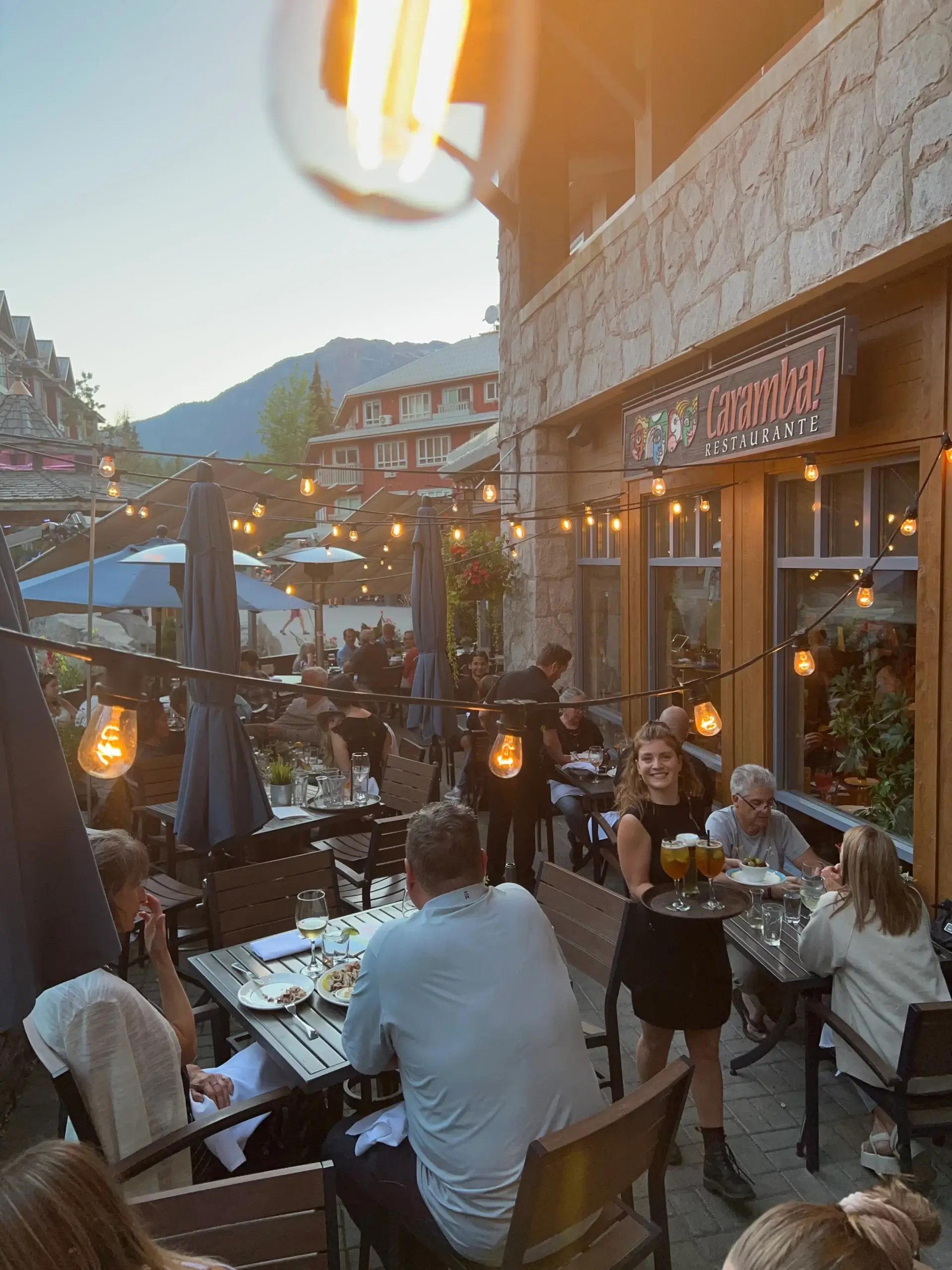
The menu
What to order
- Calamari la plancha
- Caramba Burger
Where Whistler Village Eats on Its Own Terms
Whistler's dining scene has always carried an unusual tension. On one side sits a cluster of destination restaurants, the kind that require advance planning and draw visitors who treat the meal as a reason to travel in itself. On the other, the resort's sheer volume of foot traffic creates steady demand for something more immediate: a table you can actually get to after a day on the mountain without a reservation made weeks prior. Caramba Restaurant, at Town Plaza on Main Street, operates in that second register. It's part of a middle tier that Whistler needs but doesn't always celebrate.
That Town Plaza address is worth understanding on its own terms. The Village's commercial core channels pedestrian traffic through a sequence of squares and walkways, and Main Street sits at the functional heart of it. On a busy weekend in January or March, when the mountain is running and the village is at capacity, the surrounding blocks fill quickly. Restaurants at this level of the food chain serve a real purpose: they absorb the crowd that couldn't or didn't book at Araxi or Alta Bistro, and they do it without the formality that defines those rooms.
Planning Your Visit: What the Booking Experience Actually Looks Like
For a venue in Whistler's mid-range corridor, the logistics of arrival matter more than most visitors expect. The resort operates on two distinct rhythms: the compressed high season of ski winter, when the village functions at near-maximum density from December through March, and the quieter shoulder periods of late spring and early autumn, when the pace drops sharply and walk-in availability opens considerably. The difference between those two windows can determine whether you're waiting on the pavement or seated within minutes.
Caramba's Town Plaza location means it sits within easy walking distance of most Village accommodations, which is relevant when you're factoring in après-ski logistics. Getting back to a hotel to change, assess the snow report, and then head out for dinner is a different calculation at this address than it would be at a restaurant requiring a car or shuttle. That convenience carries weight for the ski-trip majority who are making meal decisions on the fly rather than from a spreadsheet built months earlier.
For planning purposes, visiting outside the core ski-season weekends gives the most flexibility. The periods immediately before and after Christmas, the weeks either side of February school holidays, and the spring-break window in March represent the tightest access points in Whistler dining broadly. If your dates fall in those windows and you have a strong preference for a specific night, contact ahead rather than assuming availability. Whistler's restaurant capacity as a whole tightens faster than most visitors from larger cities anticipate, simply because the permanent residential population is small and most seats are chasing the same transient visitor pool.
It's also useful to frame Caramba within the wider spectrum of what Whistler's dining tier structure looks like in practice. At the leading end, restaurants like Bearfoot Bistro are structured around the occasion-dining experience, with tasting formats and wine programs that require the kind of pre-commitment most ski-trip itineraries can't absorb. Caramba operates below that threshold in terms of formality and likely in terms of price point, which makes it more compatible with the spontaneous decisions that mountain travel produces. That positioning is a feature, not a limitation.
Whistler's Mid-Tier and Where It Fits Nationally
To understand what Caramba represents in the Canadian context, it helps to sketch what the broader dining hierarchy looks like in resort towns versus metropolitan centres. Canada's benchmark fine-dining addresses, among them Alo in Toronto, Tanière³ in Quebec City, and Restaurant Pearl Morissette in Lincoln, operate in a register defined by sourcing discipline, technical ambition, and reservation scarcity. AnnaLena in Vancouver, a two-hour drive from Whistler, represents the serious neighbourhood-restaurant tier that ski destinations rarely sustain because the customer base turns over too quickly to support it.
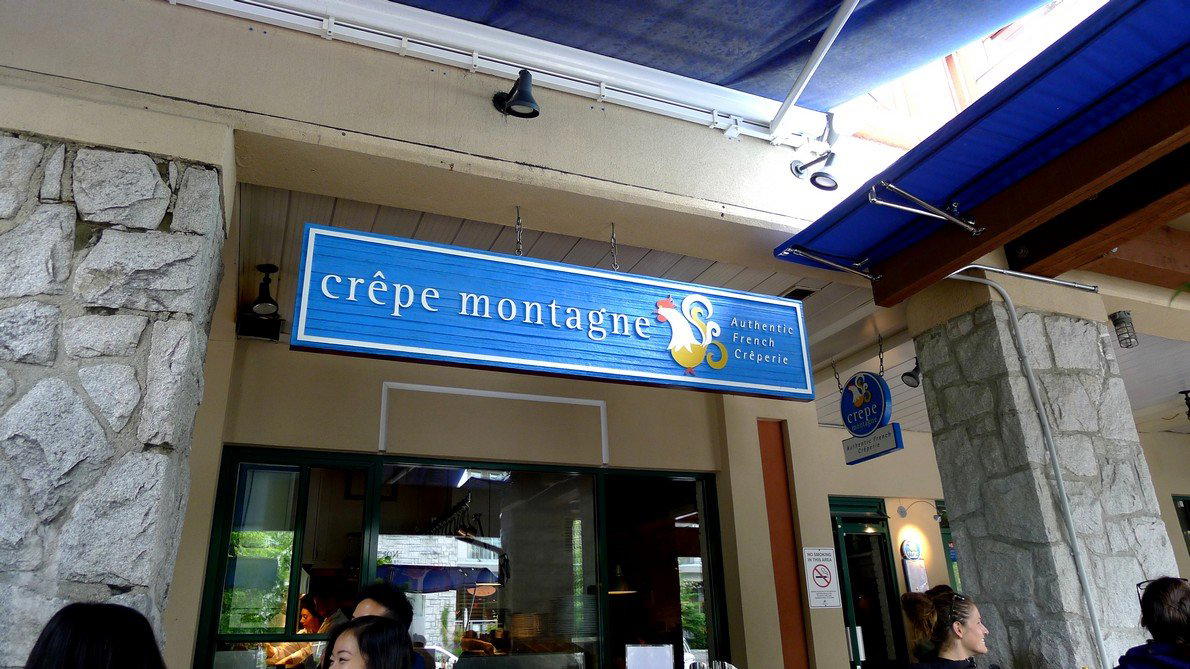
What resort towns like Whistler tend to develop instead is a two-speed structure: a handful of destination-level spots that punch at national level, and a broader mid-range that serves the volume. Buffalo Bill's and Crêpe Montagne occupy different parts of that mid-range, as does Caramba. The critical thing for a visitor to understand is that value and convenience in this tier are doing real work. You're not making a compromise so much as a different calculation about what matters when your legs are tired and the priority is sitting down with reasonable food and a drink.
For those who want to explore further afield within Canada's dining scene, the contrast is instructive. Eigensinn Farm in Singhampton and Fogo Island Inn Dining Room in Joe Batt's Arm represent the remote, destination-driven model where the journey is inseparable from the experience. Jérôme Ferrer's Europea in Montreal and Narval in Rimouski anchor urban and regional scenes respectively. Caramba's context is neither of those: it's a resort-town restaurant serving a genuine local function.
For visitors who want to benchmark further internationally, Le Bernardin in New York City and Lazy Bear in San Francisco represent what the occasion-dining ceiling looks like in North American terms. The gap between that tier and Caramba's is significant, but the two modes of dining aren't really in competition. They serve different decisions.
For a comprehensive view of where Caramba sits relative to the full range of Whistler options, our full Whistler restaurants guide maps the scene across price tiers, cuisines, and booking difficulty. The Pine in Creemore and Busters Barbeque in Kenora offer useful comparison points for understanding how Canadian restaurants outside major metros position themselves in terms of format and ambition.
Frequently asked questions
Where is Caramba Restaurant in Whistler?
Caramba Restaurant is located at Town Plaza, 4314 Main St #12, Whistler, BC V8E 1A8, Canada, Whistler.
Is Caramba Restaurant a good option for dining in Whistler Village after skiing?
Caramba's position at Town Plaza on Main Street puts it within easy walking distance of both the Whistler and Blackcomb gondola bases, making it a practical stop for the post-slope window between 4pm and 7pm. In a village where après options compete hard for the same crowd, its sit-down format distinguishes it from the bar-first venues nearby. The restaurant has maintained a presence in the Whistler dining scene long enough to be a known quantity among returning visitors to the resort.
What should I eat at Caramba Restaurant?
Caramba sits in Whistler Village's Town Plaza on Main Street, where the kitchen has built its reputation on crowd-tested, resort-friendly plates rather than a single signature dish. The menu spans enough ground to suit a table split between skiers refuelling and diners in for the evening. For specifics on current menu items and seasonal offerings, checking directly with the restaurant on arrival is advisable, as resort menus rotate with the season.
Can I walk in to Caramba Restaurant?
Caramba is located at Town Plaza, 4314 Main St in Whistler Village, which puts it squarely in the foot-traffic corridor between the gondola base and the village square. Walk-in availability follows Whistler's two-speed rhythm: shoulder season and mid-week slots are generally more accessible, while peak ski weekends and summer festival periods see the dining room fill early. Arriving before 6pm on busy nights improves your odds considerably.
What's Caramba Restaurant best at?
Caramba holds a consistent position in Whistler's mid-tier, occupying the gap between the resort's destination fine dining and its fast-casual outlets. Its Town Plaza address on Main Street keeps it central without the premium pricing of the ski-in properties. The kitchen's strength is reliable execution for a high-volume resort crowd, a harder task than it sounds in a market where turnover is relentless and diner expectations span a wide range.
How does Caramba Restaurant handle allergies?
Caramba's Town Plaza location in Whistler BC serves a diverse international resort clientele, which means allergy awareness is a practical necessity rather than an afterthought. Staff at the Main Street address should be able to walk through current menu options for common dietary requirements. For complex or severe allergies, contacting the restaurant in advance of your visit is the most reliable approach.
Quick Comparison
| Venue | Cuisine | Price | Awards |
|---|---|---|---|
| Caramba RestaurantThis venue — the venue you are viewing | Italian-Mediterranean Comfort | $30–50 | Not listed |
| Bearfoot Bistro | Modern Canadian Bistro | $100–150 | Not listed |
| Rim Rock Cafe | Seafood & Game Fine Dining | $50–100 | Not listed |
| Sidecut Steakhouse | Modern Steakhouse and Pacific Seafood | Not listed | Wine Spectator Award of Excellence · Forbes Recommended |
| Araxi | Pacific Northwest Farm-to-Table Seafood | $50–100 | Star Wine List · Wine Spectator Best of Award of Excellence |
| Il Caminetto | Contemporary Italian with Regional Influences | $100–150 | Star Wine List · Wine Spectator Best of Award of Excellence |

Details
- Lively
- Cozy
- Group Dining
- Casual Hangout
- Family
- Open Kitchen
- Terrace
- Craft Cocktails
- Local Sourcing
- A La Carte
- Craft Cocktails
- Vegetarian Friendly
- Vegan Options
- Gluten Free Options
Current opening hours
- Monday
- 4–9 PM
- Tuesday
- 4–9 PM
- Wednesday
- 4–9 PM
- Thursday
- 4–9 PM
- Friday
- 4–9 PM
- Saturday
- 12–9 PM
- Sunday
- 12–9 PM
Hours can change for holidays and private events. Last verified .
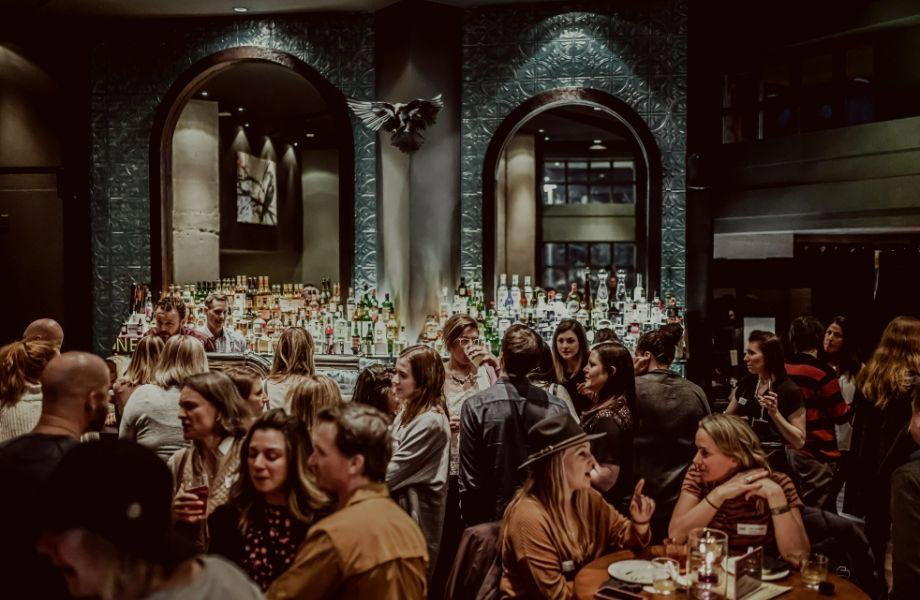
Warm, lively atmosphere with high energy service and an open kitchen.