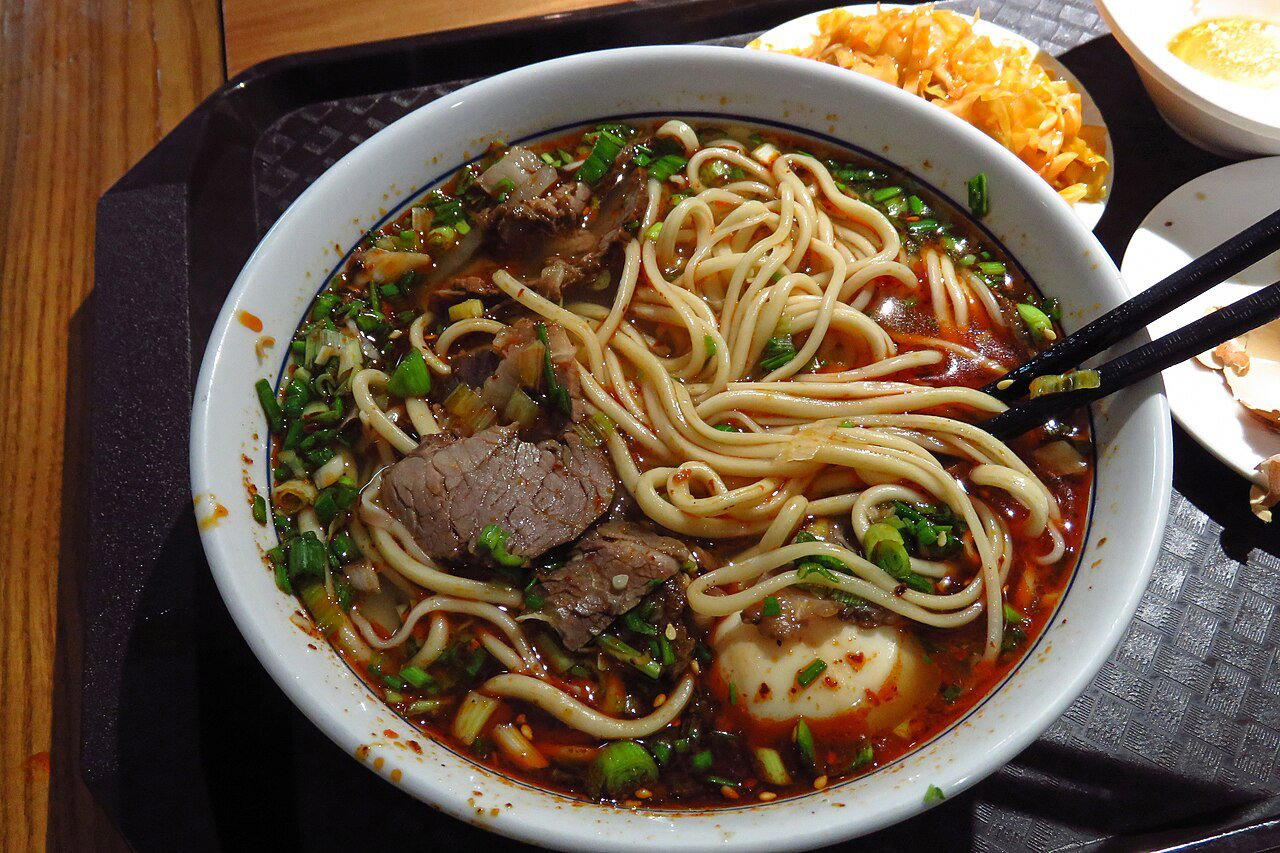
In Linxia, a city shaped by centuries of Hui Muslim trading culture, beef noodle soup is not a regional curiosity but a daily discipline. Captain Ma Beef Noodle Soup operates within that tradition, where sourcing Gansu highland beef and maintaining broth clarity matter more than any formal recognition. No awards infrastructure reaches this corner of Gansu, but the local patronage standard is exacting.

Pearl is the En Primeur Club membership app — saves, bookings, and concierge access live there. Same editors, same standards.
Where the Silk Road Still Feeds Itself
Linxia sits at an elevation where the Loess Plateau begins its long descent toward the Tibetan borderlands, and the air carries the particular dryness of a city that has been a trading crossroads for more than a millennium. The streets around the old quarter move at a pace that has little to do with modern China's coastal urgency: spice merchants, halal butchers, and noodle houses occupying the same commercial corridors they have for generations. It is in this context that beef noodle soup in Linxia needs to be understood. This is not a regional curiosity or a heritage tourism product. It is the functional, daily food of a predominantly Hui Muslim population that has been refining this form for centuries, with sourcing standards and technique discipline that most diners outside Gansu province never encounter.
Captain Ma Beef Noodle Soup operates inside that tradition. The name alone signals something about the local register: in Linxia's dining culture, establishments built around a surname and a specific protein format are not branding exercises. They are declarations of specialisation, and they are judged by regulars who eat this format multiple times a week and have strong opinions about broth clarity, noodle pull, and the quality of the beef from which the stock is drawn.
The Sourcing Logic Behind a Bowl This Simple
Lanzhou-style beef noodle soup, the broader tradition from which Linxia's version draws and occasionally departs, depends almost entirely on ingredient quality rather than technique complexity. The broth requires a long extraction from beef bones and offal cuts, seasoned with a spice blend that typically includes Sichuan pepper, white pepper, coriander seed, and dried ginger, then clarified to a colour that regional practitioners describe as amber rather than brown. The quality of that extraction is inseparable from the quality of the cattle.
Gansu province has historically supplied beef from cattle raised on high-altitude grasslands in the surrounding prefectures, an environment that produces leaner, more mineral-forward meat than lowland farming. In a dish where the broth is the primary structure and beef slices are a finishing element rather than the bulk, this sourcing distinction matters at the level of flavour, not just provenance storytelling. A bowl made from highland-grazed Gansu beef tastes structurally different from one made with commodity beef, in the same way that a Burgundy made from old vines on limestone produces a wine that no technical intervention fully replicates. The ingredient carries information the process cannot manufacture.
This ingredient-first logic separates the serious Linxia operators from the casual ones. In a city where this format is served hundreds of times a day across dozens of establishments, the differentiating variable is almost always sourcing. Diners here read a bowl the way a sommelier reads a wine, and the conversation around which house is currently getting the better beef is ongoing and specific. That is the competitive environment Captain Ma Beef Noodle Soup occupies.
The Experience at the Counter
Beef noodle soup houses in Linxia operate on a format that has more in common with a Japanese ramen counter than a sit-down restaurant: high turnover, direct service, and a menu that offers variations on a single theme rather than multiple unrelated dishes. The variables are the noodle width, the cut of beef, and the chilli oil quantity. This narrowness is not a limitation. It is the format's argument that depth beats breadth, and that a kitchen doing one thing at high volume and consistent standard will outperform a kitchen dividing its attention across a larger menu.
Approaching a bowl in this setting, the sensory sequence is predictable in the leading sense: the broth arrives first as heat and steam, followed by the spice register, followed by the structural texture of the noodle. The beef slices, typically cut thin and placed across the surface, carry the concentrated flavour of the stock from which they were briefly finished. The chilli oil, if ordered, adds fat and slow heat rather than sharp spike. For context on what serious Chinese regional cooking looks like at different price tiers, Xin Rong Ji in Chengdu and Ru Yuan in Hangzhou represent what happens when this ingredient discipline is applied to fine-dining formats. Captain Ma operates at the opposite end of that spectrum in terms of price and formality, but the underlying sourcing logic is the same.
Linxia's Place in China's Broader Dining Geography
China's most discussed restaurant destinations cluster around coastal and tier-one cities. Venues such as 102 House in Shanghai, Chef Tam's Seasons in Macau, and Imperial Treasure Fine Chinese Cuisine in Guangzhou attract international attention and awards infrastructure. The inland, predominantly Muslim cities of Gansu and Qinghai operate almost entirely outside that recognition system, not because the food is less serious, but because the category does not intersect with the metrics by which fine dining is measured.
This creates a particular dynamic for the informed traveller. The absence of formal awards is not a signal of quality deficiency. It is a signal of category. In the same way that Local Old Town Home in Kashgar represents a cuisine tradition that exists almost entirely outside international critical frameworks, Linxia's beef noodle culture operates on its own terms and by its own standards. The relevant trust signal here is the regularity and specificity of local patronage, not external certification. A noodle house that has sustained a loyal Hui Muslim clientele, a community with high internal standards for this format, has passed a meaningful quality test by any measure.
Comparisons to high-end Chinese dining elsewhere, such as Dai Yuet Heen in Nanjing or Dingshan Jiangyan in Suzhou, are useful for framing the overall Chinese dining spectrum but are not peer references for a Linxia noodle house.
Planning a Visit
Linxia is accessible by road from Lanzhou, the Gansu provincial capital, roughly two hours by highway bus or private vehicle. Visitors travelling from further afield will typically fly into Lanzhou Zhongchuan Airport before making the overland connection. The city has limited international tourism infrastructure, which means that arrival, accommodation, and navigation require a higher degree of self-sufficiency than a visit to a tier-one Chinese city. Mandarin language capability is useful; Linxia's Hui community also uses a local dialect, and English is not widely spoken in food-service contexts.
Beef noodle soup in Linxia, as in most northwest Chinese cities, is primarily a breakfast and lunch format. Most serious houses open early and run through midday, with service tapering by mid-afternoon. The price here is about $5 per person.
Comparable Spots, Quickly
Comparable venues nearby, for context on price, style, and recognition.
| Venue | Cuisine | Price | Notes |
|---|---|---|---|
| Captain Ma Beef Noodle SoupThis venue — the venue you are viewing | Hand-Pulled Mutton Noodles | $ | Not listed |
| 十二桥包子店 | Traditional Chinese Steamed Buns | $ | central Chengdu |
| Jian Xin Yuan (建新园) | Traditional Yunnan Guoqiao Mixian | $ | Kunming (multiple locations) |
| Feng Cheng Ba Lu | Traditional Shaanxi Street Food | $ | Weiyang District |
| 吉韵冷面 | Jilin Cold Noodles | $ | Baishan |
| Biangbiang Mian | Xi'an Hand-Pulled Biang Biang Noodles | $ | Baishulin |
At a Glance
- Casual
- Rustic
- Casual Hangout
- Solo
- Family
- Standalone
- Local Sourcing
Casual neighborhood eatery with a focus on traditional preparation and local flavors