Café Wu

Opened in 2024 on the border of Amsterdam's Dapperbuurt, Café Wu pairs Chinese cooking with a wine program serious enough to make sommelier circles take notice. The combination sits at the intersection of two trends reshaping the city's mid-range dining scene: a renewed appetite for East Asian cuisines and a growing insistence that wine need not be a European-food-only conversation.
Pearl is the En Primeur Club membership app — saves, bookings, and concierge access live there. Same editors, same standards.
- Address
- Dapperstraat 1, 1093 RT Amsterdam, Netherlands
- Phone
- +31 20 224 6196
- Website
- cafewu.nl
- Directions
- Get directions
 Saves & bookings on Pearl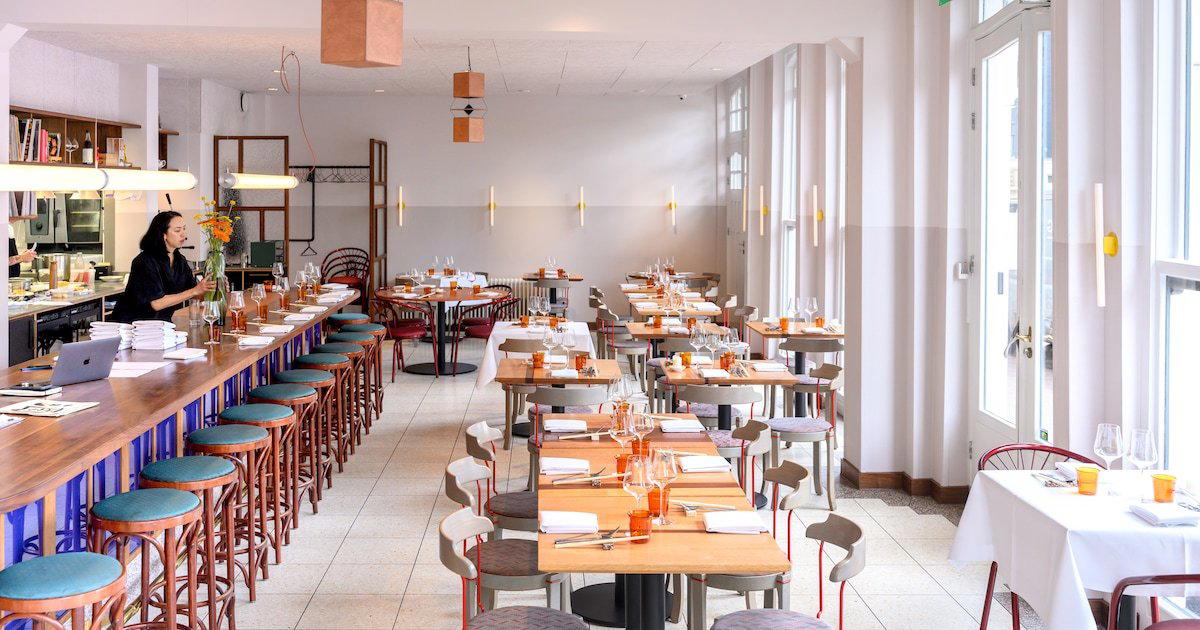
Where Dapperbuurt Meets the Wine List
Dapperstraat arrives before many visitors expect it. The street runs through one of Amsterdam's most ethnically mixed quarters, a neighbourhood where Moroccan spice shops, Surinamese snack bars, and Indonesian lunch counters have coexisted for decades. It is not the canal-belt postcard version of the city, and that is precisely its character. Café Wu is a Modern Chinese Bistro in Amsterdam, with a recommended reservation policy and an average spend of about $58 per person. The address places it at a genuine crossroads, and the restaurant has leaned into that positioning rather than resisted it.
The draw is a combination Amsterdam's dining scene has been circling for some time without fully committing to: Chinese cooking served alongside a wine list chosen with the kind of seriousness more commonly associated with the city's fine-dining tier. At the formal end of Amsterdam's restaurant spectrum, houses like Ciel Bleu, Spectrum, and Vinkeles have long demonstrated that Dutch diners expect wine programs to carry their own editorial weight. Café Wu imports that expectation into an accessible, neighbourhood-scale format.
Chinese Cuisine and the Wine Pairing Question
The premise deserves some unpacking, because the pairing of Chinese food and wine remains genuinely underexplored in European restaurant culture. The conventional wisdom has been that the complexity of fermented black beans, the heat of Sichuan peppercorn, and the layered sweetness of hoisin resist European wine in ways that make sommelier-driven pairings awkward. That orthodoxy has been eroding. Riesling's acidity and residual sugar have long been the pairing community's workaround for spiced dishes, and low-intervention whites from the Loire and Jura have shown surprising range against umami-forward cooking. Café Wu's wine program, positioned as a genuine feature of the experience rather than an afterthought, enters that conversation directly.
For context on how wine-led thinking has taken hold across Dutch restaurants, the broader Dutch scene offers useful reference points. Ambitious programs at restaurants like Bolenius and Bistro de la Mer have helped condition Amsterdam diners to expect more than a perfunctory house white. Café Wu takes that conditioning and applies it to a cuisine category that the city's wine-focused crowd has historically had fewer options to explore. The restaurant's positioning within its neighbourhood also matters: Dapperbuurt is not a destination for expense-account dining, which means the wine program has to justify itself on quality rather than on the symbolic weight of a formal setting.
The Sustainability Frame: Sourcing, Proximity, and What Gets Left Out
Opening in 2024 carries its own set of expectations. Restaurants launching in Amsterdam this decade have faced pressure, often self-imposed, to articulate positions on sourcing, waste, and supply chain ethics. The city's most discussed sustainability-led restaurants, including farm-to-table operations in the De Kas tradition and the vegetable-forward programs at places like Aan de Poel in Amstelveen, have established a local template: short supply chains, seasonal menus with genuine rotation, and visible relationships with named producers.
For a Chinese restaurant operating within that context, the sourcing question takes on specific texture. The pantry of Chinese cooking relies on ingredients, fermented pastes, aged vinegars, dried seafood, and specific varieties of chilli, that do not have European analogues. A kitchen committed to ethical sourcing in this cuisine has to make considered decisions about which imported ingredients are non-negotiable, which can be substituted with regional European produce, and where the tradeoffs sit between authenticity and supply-chain accountability. The wine program is one place where those decisions become visible: a list that favours organic or biodynamic producers, or that draws from nearby European wine regions rather than sourcing globally for brand recognition, would signal a coherent sourcing philosophy across the menu.
The Netherlands has a small but increasingly serious natural wine community, and Amsterdam's bar and restaurant scene has absorbed that sensibility across several price points. A wine list at a neighbourhood Chinese restaurant that engages with grower Champagne, skin-contact whites, or low-sulphur Burgundian producers would place the restaurant in a specific and growing comparable set, one that takes the ecological accountability of wine production as seriously as the culinary credentials of what it accompanies.
Where It Sits in the City
Amsterdam's restaurant scene in 2024 has a notable structural split at the mid-range level. The city's most discussed tables remain concentrated in the canal belt and the museum quarter, where tasting-menu formats and premium price points dominate. Neighbourhood restaurants offering genuine cooking at accessible prices have found audiences in the Pijp, Jordaan, and increasingly the east of the city, where Dapperbuurt sits. The restaurant's location on Dapperstraat positions it among that eastward shift. The street itself hosts a weekly market, one of Amsterdam's most culturally diverse, which runs Tuesday through Saturday and brings foot traffic from across the city.
For visitors building an Amsterdam itinerary with dining as a priority, the eastern neighbourhoods offer a different register from the canal-belt circuit. The concentration of creative and Michelin-level restaurants elsewhere in the city, including De Librije in Zwolle and De Bokkedoorns in Overveen for those willing to travel beyond the city limits, means that Amsterdam rewards planning across multiple days. The restaurant slots into an itinerary as a neighbourhood evening rather than a formal occasion, which is a distinct category from what Brut172 in Reijmerstok, De Groene Lantaarn in Staphorst, or 't Nonnetje in Harderwijk ask of you.
For broader context on eating and drinking across the city, our full Amsterdam restaurants guide, bars guide, hotels guide, wineries guide, and experiences guide cover the city's full range. For comparable wine-serious restaurants operating at a different price point globally, Le Bernardin in New York and Emeril's in New Orleans represent the kind of wine program ambition that, at a neighbourhood scale, the restaurant is reaching toward in its own format.
Planning Your Visit
The restaurant sits at Dapperstraat 1, 1093 RT Amsterdam, close to the Dappermarkt and reachable by tram from the city centre. The restaurant opened in 2024, which means it is still building its operational patterns; visiting earlier in an evening tends to give more flexibility than arriving without a plan on busy market days. Given its wine-forward identity, the experience rewards treating the list as part of the meal rather than a secondary consideration.
Where the Accolades Land
Comparable venues nearby, for context on price, style, and recognition.
| Venue | Cuisine | Price | Notes |
|---|---|---|---|
| Café WuThis venue — the venue you are viewing | Modern Chinese Bistro | $$ | Not listed |
| 湖南常德牛肉粉 | Hunan Changde Beef Noodle Soup | $$ | 市中心/达姆广场 |
| Boon & De Koot | Cozy Amsterdam Bistro | $$ | Zeeheldenbuurt |
| Dynasty | Chinese & Thai Fusion | $$ | Kalverdriehoek |
| Café Pigalle | French-Mediterranean Brasserie | $$ | Amsterdam Zuidoost |
| Greetje | Traditional Dutch Cuisine | $$ | Rapenburg |
Recognition history
Dated appearances from independent guides and award organizations, with the underlying list record or original source where available.
Star Wine List
Star Wine List
Continue exploring
More in Amsterdam
Restaurants in Amsterdam
Browse all →
Bars in Amsterdam
Browse all →
Hotels in Amsterdam
Browse all →
Wineries in Amsterdam
Browse all →
At a Glance
- Modern
- Cozy
- Trendy
- Date Night
- Special Occasion
- Open Kitchen
- Extensive Wine List
Current opening hours
- Monday
- Closed
- Tuesday
- 6 PM–12 AM
- Wednesday
- 6 PM–12 AM
- Thursday
- 6 PM–12 AM
- Friday
- 6 PM–1 AM
- Saturday
- 6 PM–1 AM
- Sunday
- Closed
Hours can change for holidays and private events. Last verified .
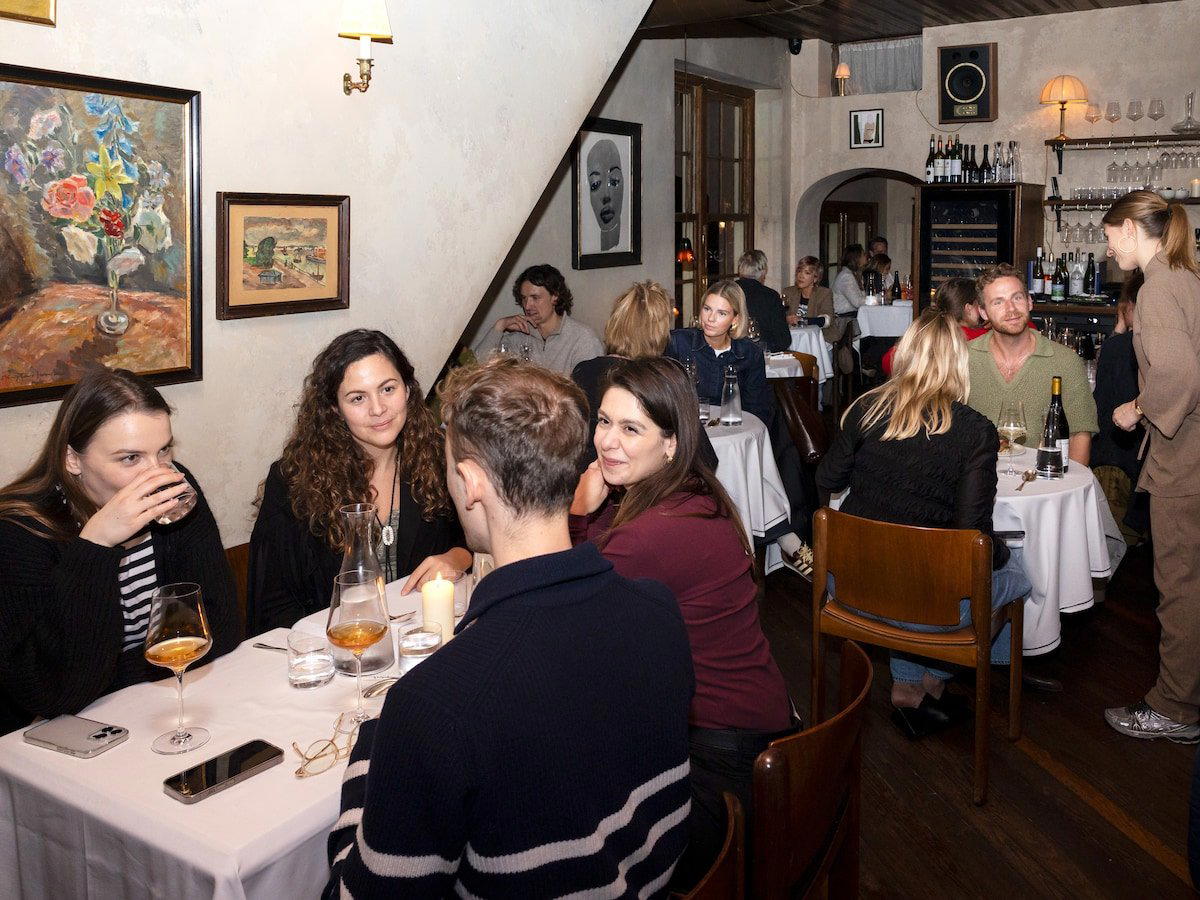
Warm, stylish, and cozy with a lively yet sophisticated atmosphere enhanced by elegant vinyl music in the evening.