On Rua de Passos Manuel, Café Santiago has held its place as one of Porto's most committed francesinha addresses for decades. The crowd is local, the wait is real, and the dish itself remains the point. For visitors trying to understand what Porto actually eats, this is where that conversation begins.
Pearl is the En Primeur Club membership app — saves, bookings, and concierge access live there. Same editors, same standards.
- Address
- R. de Passos Manuel 226, 4000-382 Porto, Portugal
- Phone
- +351 22 205 5797
- Website
- cafesantiago.pt
- Directions
- Get directions
 Saves & bookings on Pearl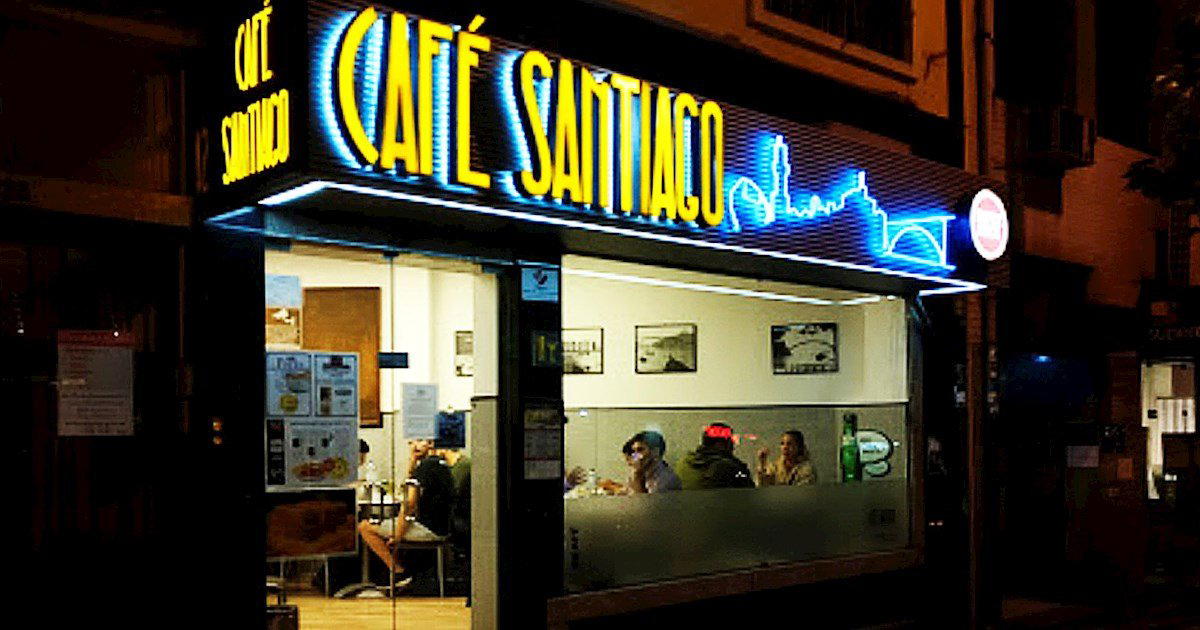
The Queue Outside Says Everything
Café Santiago is a casual Traditional Portuguese Café - Francesinha Specialist in Porto, known for its walk-in-friendly service and prix fixe around $11 per person. Before you reach the counter at Café Santiago on Rua de Passos Manuel 226, you have already understood something about its standing in the city. The people waiting are not tourists cross-referencing a travel app. They are Porto residents, office workers, families, retired couples, who have been making this particular detour for years. That detail matters more than any award or press clipping, because it points to something harder to manufacture: the loyalty of a local clientele that has other options and keeps choosing this one.
Porto's restaurant scene has shifted considerably over the past decade. The city now holds Michelin-starred addresses working at the level of Antiqvvm, Blind, and Euskalduna Studio, all of which have moved Portuguese cooking into a conversation with European fine dining. At Le Monument and Vila Foz, the reference points are contemporary tasting menus and wine programs built to international standards. Café Santiago operates in a different register entirely, one defined not by progression or experimentation but by consistency and ownership of a single dish.
The Francesinha and Why It Belongs Here
The francesinha is Porto's most assertive culinary statement: layers of cured meats and sausage between thick slices of bread, blanketed in melted cheese, then flooded with a beer-and-tomato-based sauce that each kitchen guards with varying degrees of secrecy. The dish arrived in Portugal in the 1960s, reportedly adapted from the French croque-monsieur by a returned emigrant, and Porto claimed it as its own almost immediately. What followed was decades of variation across the city, with neighbourhoods and individual addresses developing their own sauce profiles, meat selections, and cheese approaches.
Within that context, the restaurant has become one of the addresses most closely associated with the dish's canonical form. Its regulars do not come for variation or reinvention. They come because the sauce is calibrated to a specific depth of flavour they have grown accustomed to, and because that calibration has not drifted. For a dish built on accumulated familiarity, that kind of stability is its own form of expertise.
What the Regulars Know That You Don't
The unwritten menu at the restaurant is essentially a set of operational facts that returning visitors learn and first-timers discover by watching. The crowd peaks at lunch, when the city's working population arrives with real appetite and limited patience for long waits. Arriving early or late, well before noon or after 2pm, changes the experience materially. The room itself is modest: tiled, bright, without any attempt to signal ambition through design. The focus is on throughput and repetition, both of which suit the dish.
Regulars also tend to order the francesinha with fries, not as a side consideration but as a structural decision. The fries serve as the platform for the sauce that pools beneath and around the sandwich, and many experienced diners spend as much attention on that pooled sauce as on the sandwich itself. It is the kind of detail that gets passed between people who eat here frequently rather than printed on a menu.
Porto's francesinha circuit rewards comparison. Addresses across Cedofeita, Bonfim, and the lower city each argue for their own version, and committed locals often hold strong opinions about which sauce profile represents the definitive approach. The restaurant sits at the more prominent end of that conversation, partly because of its central location and partly because its consistency over time has attracted enough outside attention to give it reference-point status.
Where This Fits in Portugal's Broader Dining Picture
Understanding the restaurant requires holding two parts of Portugal's food scene in mind at once. At one end, there are the headline fine-dining addresses: Belcanto in Lisbon, Vila Joya in Albufeira, Casa de Chá da Boa Nova in Leça da Palmeira, The Yeatman in Vila Nova de Gaia, Ocean in Porches, Il Gallo d'Oro in Funchal, Fortaleza do Guincho in Cascais, Gusto by Heinz Beck in Almancil, Ó Balcão in Santarém, and Al Sud in Lagos. These are addresses where Portuguese ingredients meet tasting-menu ambition and international critical attention. At the other end, there is the quotidian city, the tascas, the cafés, the lunch counters that feed working Porto without any claim to gastronomic conversation.
The restaurant occupies an interesting middle position. It is not a tasca in the low-key, family-invisible sense. It is well-known enough that visitors from other cities seek it out, and it appears in the kind of food press that covers Portuguese regional specialities rather than fine dining. But its operation is grounded in the rhythms of a neighbourhood lunch counter: fast, consistent, priced for regular use. That positioning makes it a more accurate window into what Porto actually eats than the Michelin addresses that represent what Porto aspires to at its most ambitious.
For readers more accustomed to high-concept dining rooms, places at the level of Le Bernardin in New York or Lazy Bear in San Francisco, the restaurant offers a different kind of intelligence about a city's food culture. The francesinha is not a dish that translates to other contexts or scales upward into tasting-menu territory. It exists here, in this form, for this city's population. The value of eating it at a place like Café Santiago is precisely that it has not been adjusted for an audience that arrived from elsewhere.
Planning Your Visit
The restaurant sits on Rua de Passos Manuel 226 in central Porto, within easy reach of the Bolhão metro station and the shopping streets that cross the lower city. It is walkable from most accommodation in the historic centre. The practical advice that regulars pass along comes down to timing: avoid the 12:30pm to 1:30pm window if you want to be seated without a wait, and treat the visit as a lunch rather than a dinner, since that is the meal rhythm the kitchen was built around.
Style and Standing
Comparable venues nearby, for context on price, style, and recognition.
| Venue | Cuisine | Price | Notes |
|---|---|---|---|
| Café SantiagoThis venue — the venue you are viewing | Traditional Portuguese Café - Francesinha Specialist | $ | Not listed |
| Antunes | Traditional Portuguese | $$ | Santo Ildefonso |
| bbgourmet Boavista | Modern Portuguese | $$ | Lordelo do Ouro |
| A Regaleira | Traditional Portuguese - Home of Original Francesinha | $$ | Santo Ildefonso |
| Café Restaurante O Afonso | Portuguese Francesinha | $$ | Massarelos |
| Gruta | Modern Portuguese-Brazilian Seafood | $$ | Santo Ildefonso |
Continue exploring
More in Porto
Restaurants in Porto
Browse all →
Bars in Porto
Browse all →
Hotels in Porto
Browse all →
At a Glance
- Classic
- Rustic
- Well Known
- Casual Hangout
- Group Dining
- Solo
- Standalone
- Historic Building
- Local Sourcing
Current opening hours
- Monday
- 12–10:45 PM
- Tuesday
- 12–10:45 PM
- Wednesday
- 12–10:45 PM
- Thursday
- 12–10:45 PM
- Friday
- 12–10:45 PM
- Saturday
- 12–10:45 PM
- Sunday
- Closed
Hours can change for holidays and private events. Last verified .