Our verdict
A neighbourhood fixture on Rua da Torrinha in Porto's Bonfim district, Café Restaurante O Afonso operates in the tradition of the Portuguese tasca: unfussy rooms, a tight menu built around daily supply, and a front-of-house cadence shaped by repeat custom rather than passing tourism. It sits at the accessible end of Porto's dining spectrum, where the food's quality is measured against honesty of execution rather than ambition of format.

Pearl is the En Primeur Club membership app — saves, bookings, and concierge access live there. Same editors, same standards.
- Address
- 4050 610, Rua da Torrinha 219, Porto, Portugal
- Phone
- +351 22 200 0395
- Hours
- Mon ClosedTue–Sun 12–3 PM, 7–10 PM
- Website
- facebook.com
- Directions
- Get directions
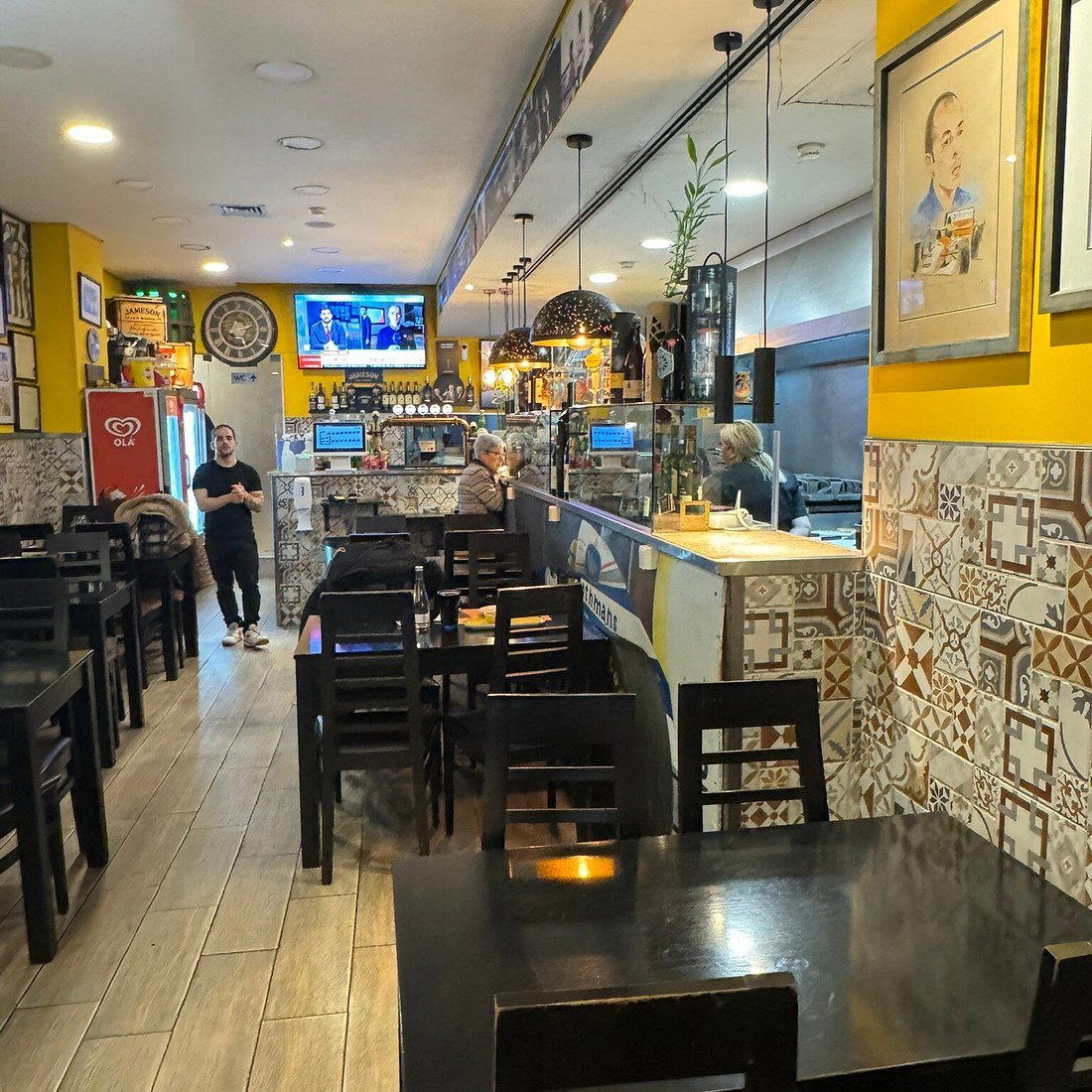
Rua da Torrinha and the Tasca Tradition
Porto's restaurant scene has bifurcated sharply over the past decade. At one end sit the tasting-menu addresses — Euskalduna Studio, Antiqvvm, Blind — where progressive Portuguese cooking commands prices that place them in the same conversation as Belcanto in Lisbon or Vila Joya in Albufeira. At the other end, the tasca holds its ground: a format that predates Michelin interest in Portugal by generations and still accounts for how most Porto residents eat on any given weekday. Café Restaurante O Afonso, on Rua da Torrinha 219 in the Bonfim-adjacent neighbourhood west of the centre, belongs to this second tradition.
The tasca is not a diminished form of restaurant. It is a distinct category with its own standards, proximity to the market, a menu that rotates with supply rather than season, and a room that prioritises throughput and familiarity over occasion-setting. By those measures, addresses like O Afonso carry as much cultural weight as any white-tablecloth room in the Foz district. The street itself, in the dense residential grid north of the Cedofeita axis, generates the kind of foot traffic that sustains neighbourhood dining: workers at lunch, families at dinner, regulars who order without consulting the board.
The Room and What It Signals
Arriving on Rua da Torrinha, the visual grammar is immediately readable. The café-restaurant hybrid format, part counter service, part sit-down dining room, is common across Porto's older residential streets, where the distinction between a café that serves food and a restaurant that serves coffee has never been particularly firm. The format has practical logic: the same space earns revenue across breakfast, lunch, and dinner without requiring a reset of identity between services.
Inside, the layout and density of tables reflect a prioritisation of covers over comfort, which is not a criticism. In the tasca tradition, a full room is evidence of trust, not mismanagement. The regulars who return to addresses like this are voting with their routine, and routine custom in Porto's neighbourhood dining scene is harder to earn and more durable than the approval of any passing reviewer. This is, in effect, the peer-review system that operated in the city long before aggregator platforms existed.
Kitchen, Floor, and the Collaboration That Runs the Room
The editorial angle on any traditional Portuguese café-restaurant is less about a single chef's vision and more about the coordination between kitchen output, front-of-house pacing, and the implicit contract with regular customers. In venues of this type, the kitchen produces a short daily menu, typically a handful of meat and fish mains, a soup, and perhaps a starter or two, and the floor team communicates what's available, what's running low, and what to push before service ends. It is a collaborative system by necessity rather than design philosophy.
This model contrasts with the brigade structure of larger restaurants, where the sommelier programme, the tasting menu architecture, and the front-of-house choreography are formalised and separated. At addresses like Le Monument or Vila Foz, the team dynamic is a product of training, hierarchy, and deliberate design. In the neighbourhood café-restaurant, the same coordination happens informally, driven by proximity and accumulated knowledge of what the room needs on any given day. Neither model is superior; they serve different functions within the city's dining ecosystem.
Portuguese wine service at this level tends to be pragmatic: a house red and white, probably from Douro or Dão, priced to move rather than to impress. The gap between this approach and the cellar depth you find at The Yeatman in Vila Nova de Gaia or Casa de Chá da Boa Nova in Leça da Palmeira is not a failure of ambition, it reflects a different relationship between wine and food in everyday Portuguese dining. The glass exists to accompany the meal, not to anchor a separate conversation.
Porto's Neighbourhood Dining and Where O Afonso Fits
Porto has a documented surplus of destination restaurants relative to its size, partly because the city's compact geography concentrates international visitor spending in a small area, and partly because local chefs trained in Lisbon, Spain, and France have returned in significant numbers since the mid-2010s. The resulting density of serious cooking, from the tasting menus referenced above to the natural wine bars of the Bonfim grid, can obscure how much of the city's daily dining still happens in rooms that pre-date this wave by decades.
O Afonso at Rua da Torrinha 219 sits outside the postcodes that attract food media attention, which is itself a locational signal. Addresses in this tier tend to serve a self-selecting clientele that prioritises value and consistency over novelty. For context within Portugal's broader restaurant spectrum, the gap between neighbourhood tascas and the country's Michelin-starred tier is substantial: sites like Ocean in Porches, Il Gallo d'Oro in Funchal, Fortaleza do Guincho in Cascais, Gusto by Heinz Beck in Almancil, and Ó Balcão in Santarém operate in an entirely different register of investment, format, and expectation. Understanding where O Afonso sits requires holding both ends of this spectrum in view simultaneously.
For travellers oriented toward the collaborative, community-driven model of eating, the kind of casual authority over a daily menu that international visitors sometimes find in comparable neighbourhood venues in Paris or Seville, Porto's tasca tier offers something that the destination-dining circuit does not replicate. The comparison is instructive: a neighbourhood counter in Porto and a neighbourhood counter in San Francisco, like Lazy Bear, or a formal fish room in New York, like Le Bernardin, are not competing for the same diner, but they both answer the question of what a city's food culture actually looks like when you move past the shortlist.
See our full Porto restaurants guide for a wider map of the city's dining, from neighbourhood tascas to its progressive tasting-menu circuit, and Al Sud in Lagos for a point of comparison in Portugal's south.
Planning Your Visit
Café Restaurante O Afonso is located at Rua da Torrinha 219, Porto, 4050-610. The address is walkable from central Porto, in the residential grid north of Cedofeita, and accessible via the city's tram and bus network. As with most venues in this format, lunch is the primary service, and the daily menu moves quickly, arriving early in the service window gives the leading access to the full range of what the kitchen is running.
Frequently asked questions
Where exactly is Café Restaurante O Afonso?
Café Restaurante O Afonso is located at 4050 610, Rua da Torrinha 219, Porto, Portugal, Porto.
Is Café Restaurante O Afonso a good option for a quick lunch in Porto's residential neighbourhoods?
Located at Rua da Torrinha 219 in Porto's residential grid, O Afonso fits the café-restaurant model that Portuguese cities built their midday meal culture around: counter-adjacent seating, a concise daily offer, and a pace calibrated to working locals rather than extended multi-course dining. For visitors positioned north of Porto's central tourist belt, it represents the kind of address that sustains a neighbourhood rather than performs for an outside audience.
What do people recommend at Café Restaurante O Afonso?
O Afonso operates as a café-restaurant hybrid on Rua da Torrinha 219, which means the menu leans toward the kind of Portuguese daily plates that neighbourhood regulars return to rather than a tasting-menu showcase. Checking in person or at the door is the most reliable way to learn what is running that day.
What's the best way to book Café Restaurante O Afonso?
No website or phone number is currently documented for Café Restaurante O Afonso at Rua da Torrinha 219, Porto. For addresses operating in the traditional café-restaurant format, walk-in is often the practical approach, particularly at lunch when Porto's residential tascas tend to turn tables quickly. Arriving at opening time is advisable if seating is limited.
What makes Café Restaurante O Afonso worth seeking out?
Porto has a concentrated restaurant offer skewed toward destination tasting menus, which makes a straightforward neighbourhood café-restaurant on a residential street like Rua da Torrinha increasingly rare as the city's dining culture shifts upmarket. O Afonso operates in the older café-restaurant hybrid format: part counter service, part sit-down dining, with the coordination between kitchen and floor defining the experience rather than a single chef's profile. That model is the draw for visitors who want contact with how Porto actually eats day to day.
Is Café Restaurante O Afonso allergy-friendly?
No allergy or dietary accommodation data is confirmed for Café Restaurante O Afonso. The café-restaurant format on Rua da Torrinha 219 typically means a short, daily menu with limited substitution scope. Anyone with specific requirements should check the venue's official channels before visiting, though phone details are not currently on record.
Is Café Restaurante O Afonso worth it?
The case for O Afonso is contextual: it sits in Porto's residential grid north of the centre, away from the tourist-facing streets, and operates in the tasca tradition that the city's restaurant boom has largely displaced. It is about access to a dining format that Porto's neighbourhood streets still produce but that destination-focused itineraries rarely include.
Cost Snapshot
Comparable venues nearby, for context on price, style, and recognition.
| Venue | Cuisine | Price | Notes |
|---|---|---|---|
| Café Restaurante O AfonsoThis venue — the venue you are viewing | Portuguese Francesinha | $10–20 | Not listed |
| A Cozinha do Martinho | Traditional Portuguese | $20–30 | Paranhos, Traditional Portuguese |
| Cachorrinho Gazela | Portuguese Cachorrinho Hot Dogs | $10–20 | Sé, Portuguese Cachorrinho Hot Dogs |
| A Regaleira | Traditional Portuguese - Home of Original Francesinha | $20–30 | Santo Ildefonso, Traditional Portuguese - Home of Original Francesinha |
| Antunes | Traditional Portuguese | $20–30 | Santo Ildefonso, Traditional Portuguese |
| Restaurante Cantina 32 | Mediterranean Portuguese Petiscos | $20–30 | Sé, Mediterranean Portuguese Petiscos |
Continue exploring
More in Porto
Restaurants in Porto
Browse all →
Bars in Porto
Browse all →
Hotels in Porto
Browse all →
Details
- Cozy
- Classic
- Rustic
- Casual Hangout
- Historic Building
- A La Carte
Current opening hours
- Monday
- Closed
- Tuesday
- 12–3 PM, 7–10 PM
- Wednesday
- 12–3 PM, 7–10 PM
- Thursday
- 12–3 PM, 7–10 PM
- Friday
- 12–3 PM, 7–10 PM
- Saturday
- 12–3 PM, 7–10 PM
- Sunday
- 12–3 PM, 7–10 PM
Hours can change for holidays and private events. Last verified .
Laid-back and cosy atmosphere with a classic, informal feel typical of a traditional neighborhood café.