Our verdict
A Spanish-inflected café on Klostergasse in Leipzig's city centre, Cafe Madrid occupies a stretch of the old town where daytime coffee culture and evening dining operate at noticeably different rhythms. The address places it within walking distance of the Thomaskirche quarter, making it a practical stop across multiple parts of the day for visitors and residents alike.

Pearl is the En Primeur Club membership app — saves, bookings, and concierge access live there. Same editors, same standards.
- Address
- Klostergasse 3-5, 04109 Leipzig, Germany
- Phone
- +493419938813
- Hours
- Daily 12 PM–12 AM
- Website
- cafe-madrid.de
- Directions
- Get directions
- Booking
- Book on the venue's website
The menu
What to order
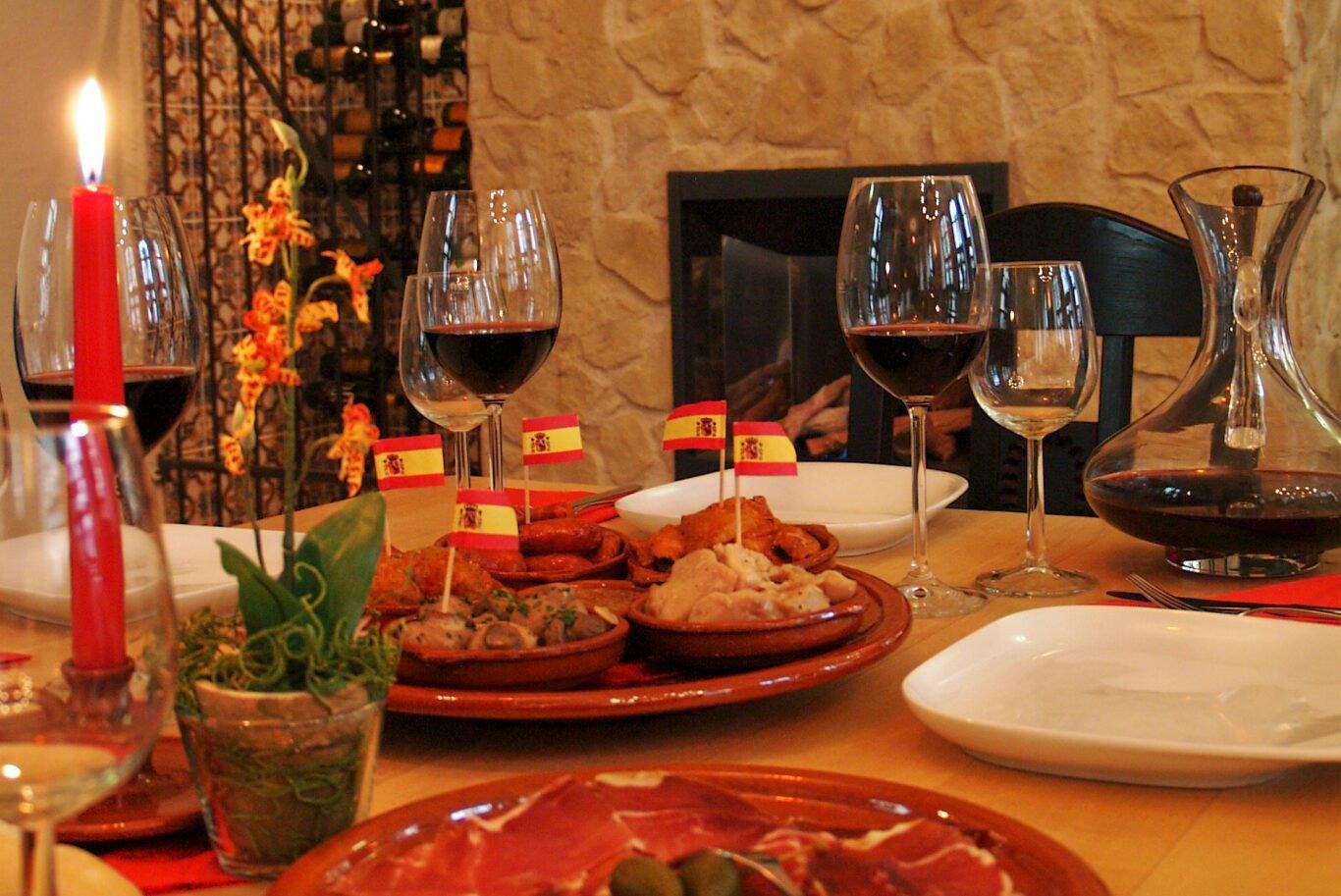
- Chorizo in red wine
- Dates in bacon
- Serrano ham
Klostergasse sits in the older fabric of central Leipzig, a short corridor that connects the city's shopping core to the quieter precincts near the Thomaskirche. Along this stretch, the café format has long held its ground against the push of international chain hospitality — and Cafe Madrid, at numbers 3 to 5, represents the kind of address that belongs to that continuity. The name signals a Spanish orientation, a positioning that in the German café scene typically implies something specific: a warmer room temperature (literally and figuratively), a coffee culture that leans espresso rather than filter, and a menu that stretches from mid-morning into the evening without a hard reset between services.
The Divide Between Day and Night
In Leipzig, as in most mid-sized German cities with an active food scene, the difference between a venue's lunch identity and its dinner character often determines where it actually lands in the local pecking order. Lunch in the city centre tends toward efficiency — a set menu, a blackboard, tables that turn. Dinner asks for a different kind of commitment. At Cafe Madrid, the Klostergasse address works in both directions: accessible enough for a midday stop from the nearby university district, settled enough for an unhurried evening. This dual character is common among European café-restaurants with Spanish or Mediterranean references, where the tradition of a longer, later meal sits alongside the practicality of serving the city's daytime foot traffic.
The daytime service at addresses like this one typically draws a mixed crowd, students and academics from the university, professionals from the surrounding offices, and visitors navigating the old town on foot. The evening shift is a different calculation. Leipzig's dining scene has developed a clearer upper tier in recent years, with places like Stadtpfeiffer (Creative) operating at the €€€€ level and Kuultivo (Modern Cuisine) representing the contemporary end of the city's restaurant ambitions. Cafe Madrid sits in a different register from those venues, the Spanish café tradition is less about tasting menus and more about a sustained, sociable atmosphere that does not depend on formality to signal quality.
Atmosphere and Physical Setting
The city block that houses Cafe Madrid along Klostergasse is characteristic of Leipzig's inner core: older buildings with ground-floor commercial uses and the kind of streetscape that rewards walking rather than driving. A Spanish-named café in this context tends to deliver a particular visual grammar, warm tones, possibly tiled surfaces, a bar counter that functions as the room's anchor rather than a secondary service point. In the tradition of Spanish café culture transplanted to northern Europe, the room is typically designed to hold people across several hours rather than process them through quickly. That structural difference from the German café norm is part of what gives such venues their distinct character in cities like Leipzig.
For comparison with how the broader German dining scene handles atmosphere across price tiers, the contrast is instructive. At the Michelin-starred end, venues like Restaurant Haerlin in Hamburg or Vendôme in Bergisch Gladbach, the room itself becomes part of the formal proposition. A neighbourhood café-restaurant operates on the opposite logic: the room should disappear enough that conversation becomes the main event.
Where It Sits in Leipzig's Dining Map
Leipzig's restaurant scene is worth mapping with some precision. The city has a developed mid-range that includes internationally oriented addresses like Addis Café, European options such as Alfa Restaurant, and the Japanese-focused 997 Sushi Restaurant. This diversity reflects Leipzig's position as a university city with a culturally mobile population, a demographic that tends to sustain varied, independent restaurant formats rather than consolidating around a single cuisine. Cafe Madrid's Spanish orientation places it in the European-casual tier of that map, competing less with the city's fine-dining ambitions and more with the question of where to spend two hours on a weekday evening without the formality of a tasting menu. For the full picture of where different venues land across the city, the EP Club Leipzig restaurants guide maps the full range.
Across Germany more broadly, the café-restaurant with Mediterranean or Iberian references has proven a durable format. It occupies a middle ground that pure coffee shops and pure restaurants both struggle to cover: a place that does not demand a booking at noon but where a reservation on a Friday evening is the sensible approach.
Planning a Visit
Cafe Madrid is at Klostergasse 3-5, 04109 Leipzig, a central address reachable on foot from the main train station (Leipzig Hauptbahnhof) in under fifteen minutes, or via tram along the inner ring. The Klostergasse location puts it within easy reach of the Marktplatz and the Thomaskirche, making it a natural point on any walking itinerary through the historic core. Specific hours and current booking arrangements are best confirmed directly with the venue, as published data on those points is not available here. For visitors building a broader Leipzig itinerary, it is worth noting that the city's most formally ambitious dining, the Stadtpfeiffer level of creative cuisine, requires advance planning well beyond a day ahead, while the mid-range tier that includes Cafe Madrid is generally more accessible on shorter notice outside of weekend evenings.
Those planning a wider German dining trip alongside a Leipzig stop will find relevant reference points at different price levels: JAN in Munich and Schwarzwaldstube in Baiersbronn represent the formally ambitious end of the German scene, while Aqua in Wolfsburg, ES:SENZ in Grassau, and Victor's Fine Dining by Christian Bau in Perl anchor the Michelin end of the country's regional fine dining. For a comparison in the dessert-forward fine dining format, CODA Dessert Dining in Berlin and Waldhotel Sonnora in Dreis illustrate how different the German dining scene looks when you move away from the city-centre café register entirely. For globally-minded diners, Le Bernardin in New York City and Atomix in New York City set a different kind of international benchmark. Schanz in Piesport rounds out the picture of what Germany's serious regional dining looks like outside the major cities.
Frequently asked questions
Is Cafe Madrid a family-friendly restaurant?
Cafe Madrid's central Leipzig address on Klostergasse 3-5 and its daytime cafe format suggest it accommodates a broad range of guests, including families visiting the inner city. Evening hours may shift toward a more adult-oriented dining and bar atmosphere, which is typical of venues in Leipzig's old town core.
What should I expect atmosphere-wise at Cafe Madrid?
Cafe Madrid occupies a ground-floor space in one of Leipzig's older inner-city blocks on Klostergasse, a street characteristic of the city's historic commercial core. The atmosphere shifts noticeably between daytime cafe use and the evening, when the venue takes on a more distinct dining and social character. Leipzig's mid-range scene runs toward international-oriented addresses, and Cafe Madrid sits within that register.
How does Cafe Madrid compare to other Spanish or internationally themed venues in Leipzig?
Leipzig has developed a mid-range dining tier that includes several internationally oriented addresses, and Cafe Madrid on Klostergasse 3-5 sits within that group with its Spanish-referencing identity. What distinguishes it from purely restaurant-format competitors is its day-to-night dual character, functioning as a cafe during daytime hours before shifting register in the evening.
What do regulars order at Cafe Madrid?
Given the venue's Spanish-inflected identity within Leipzig's internationally oriented dining mid-range, regulars likely gravitate toward cafe staples during the day and more substantial dishes in the evening. Contacting the venue directly will give you the clearest picture of current offerings.
Where exactly is Cafe Madrid?
Cafe Madrid is located at Klostergasse 3-5, 04109 Leipzig, Germany, Leipzig.
Is Cafe Madrid reservation-only?
No reservation policy is confirmed for Cafe Madrid at Klostergasse 3-5, Leipzig. As a cafe-format venue in the city's walkable inner core — roughly fifteen minutes on foot from Leipzig Hauptbahnhof — it likely accommodates walk-ins during quieter daytime hours. Evening demand may differ, so reaching out in advance for dinner visits is advisable.
Cuisine and Credentials
Comparable venues nearby, for context on price, style, and recognition.
| Venue | Cuisine | Price | Notes |
|---|---|---|---|
| Cafe MadridThis venue — the venue you are viewing | Spanish Tapas | $20–30 | Not listed |
| Caracan | Spanish-Mediterranean Tapas | $20–30 | Connewitz |
| HUWA – 100 Wasser | Modern Fusion International | Not listed | Zentrum |
| Zhang | Authentic Sichuan Chinese | $10–20 | Zentrum-Südost |
| CÀ PHÁO – Sushi & Vietnamese Food | Vietnamese & Sushi | Not listed | Südvorstadt |
| Don Kichot | Turkish Street Food - Kumpir Specialists | $10–20 | Lindenau |
Continue exploring
More in Leipzig
Restaurants in Leipzig
Browse all →
Bars in Leipzig
Browse all →
Hotels in Leipzig
Browse all →
Wineries in Leipzig
Browse all →
Details
- Lively
- Cozy
- Casual Hangout
- Group Dining
- Date Night
- Terrace
- Extensive Wine List
- Small Plates
- A La Carte
- Wine
- Beer
- Vegetarian Friendly
- Vegan Options
- Gluten Free Options
Current opening hours
- Monday
- 12 PM–12 AM
- Tuesday
- 12 PM–12 AM
- Wednesday
- 12 PM–12 AM
- Thursday
- 12 PM–12 AM
- Friday
- 12 PM–12 AM
- Saturday
- 12 PM–12 AM
- Sunday
- 12 PM–12 AM
Hours can change for holidays and private events. Last verified .
Light-flooded room with pleasant, warm atmosphere, comfortable chairs, and surprisingly quiet acoustics despite crowds.