Our verdict
Zhang occupies a straightforward address on Windmühlenstraße in Leipzig's Südvorstadt district, placing it inside one of the city's most active dining corridors.

Pearl is the En Primeur Club membership app — saves, bookings, and concierge access live there. Same editors, same standards.
- Address
- Windmühlenstraße 22, 04107 Leipzig, Germany
- Phone
- +493419627820
- Hours
- Mon 5–10 PMTue–Sun 11 AM–3 PM, 5–10 PM
- Website
- chinarestaurant-zhang.de
- Directions
- Get directions
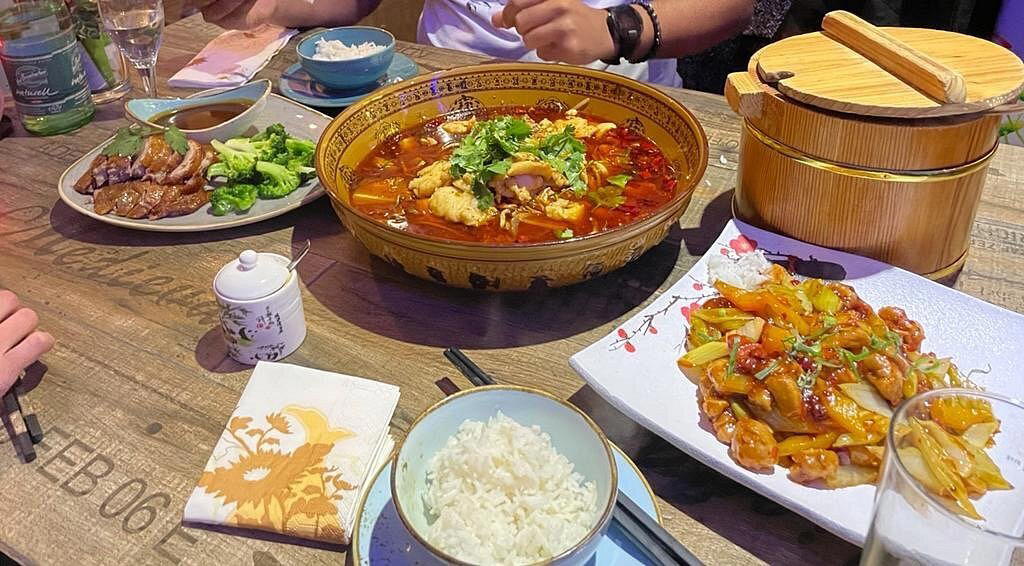
The menu
What to order
- Kung Pao Chicken
- Mapo Tofu
- Beef with Coriander
- Lamb with Leeks and Cumin
- Squid on Hot Plate
- Cucumber Salad
- Fried Mushrooms
- Steamed Red Snapper
Windmühlenstraße and the Südvorstadt Dining Shift
Leipzig's Südvorstadt has been the clearest site of the city's post-reunification dining transformation. The neighbourhood runs along a corridor of Gründerzeit facades and repurposed ground-floor retail, and over the past decade it has accumulated a density of independently operated restaurants that now rival the city centre in range and ambition. Windmühlenstraße 22, where Zhang is located, sits inside that corridor — a stretch where the immediate surroundings include everything from East African cooking at Addis Café to the Mediterranean-inflected menu at Alfa Restaurant. The street-level character here is less curated than the Innenstadt and more genuinely pluralist, which makes it a reasonable place to read where Leipzig's independent restaurant culture is heading.
That pluralism matters for context. German cities of Leipzig's size — roughly 620,000 residents, with a large student population anchored by the university, tend to produce dining scenes that sit between the institutional conservatism of old-guard restaurants and the transient experimentalism of student-economy kitchens. The Südvorstadt threads that line more successfully than most neighbourhoods in Saxony. Restaurants here tend to operate with lower overhead than their equivalents in Munich or Hamburg, which historically allowed smaller operators to take sourcing decisions that larger, higher-cost establishments might defer. That structural fact is worth noting when assessing any independently run kitchen in this postcode.
Where Zhang Sits in Leipzig's Current Restaurant Picture
Leipzig's dining scene in the mid-tier and above is anchored by a small number of well-established operators. Stadtpfeiffer occupies the creative fine-dining tier at €€€€ pricing, while Kuultivo represents the modern cuisine category at €€€. Below those, the city has a working layer of neighbourhood restaurants, often single-cuisine specialists or family-operated kitchens, that handle the bulk of Leipzig's mid-market dining.
What the address signals is a restaurant operating in a neighbourhood with enough dining density to be selective. Visitors choosing between Zhang and peers in the Südvorstadt are making decisions based on cuisine type, sourcing ethos, and atmosphere rather than proximity alone. That competitive pressure, quiet as it is compared to Berlin or Frankfurt, tends to push operators in this district toward differentiation through product quality and kitchen philosophy rather than through scale or spectacle. Germany's broader fine-dining circuit, represented nationally by kitchens like Aqua in Wolfsburg or JAN in Munich, operates at a different register entirely, but the same underlying logic applies at smaller scale: in a market with options, identity matters.
The Sustainability Angle in Leipzig's Restaurant Scene
Across German cities, independently operated restaurants have increasingly used environmental sourcing as a differentiator, not through formal certification programmes but through supplier relationships, menu brevity, and waste-reduction practice. In Leipzig specifically, the proximity to Saxony's agricultural hinterland gives smaller kitchens access to regional producers that larger urban restaurants in western Germany often cannot match on cost or logistics. A kitchen drawing from the Saxon lowlands and the agricultural belt between Leipzig and Dresden operates with a natural seasonal discipline that is less available to its equivalents in Hamburg or Cologne, where supply chains are longer and more anonymised.
This matters for any restaurant on Windmühlenstraße claiming or implying a regionally grounded identity. The sourcing story in Saxony is not theoretical, the region produces root vegetables, game, freshwater fish, and heritage grain that can support a genuinely short-chain kitchen. For comparison, kitchens in Germany that have made environmental sourcing a formal part of their identity, from ES:SENZ in Grassau to Schanz in Piesport, have typically paired that commitment with menu structures that change frequently and portion discipline that reduces kitchen waste. A smaller Leipzig kitchen in a high-rental-pressure neighbourhood has both the incentive and the supply geography to follow a comparable model at a different price point.
Leipzig's 997 Sushi Restaurant illustrates a parallel pattern in the city's specialist segment: single-cuisine operations that thrive by committing to a narrow sourcing brief and executing it with consistency. The broader national context, from Schwarzwaldstube in Baiersbronn to Vendôme in Bergisch Gladbach, shows that Germany's most recognised kitchens across multiple tiers have made supplier transparency a baseline expectation rather than a premium signal.
Planning a Visit: What to Know Before You Go
Zhang is located at Windmühlenstraße 22, 04107 Leipzig, in the Südvorstadt district. The address is well-served by Leipzig's tram network, with connections running along Karl-Liebknecht-Straße and Connewitzer Straße within a few minutes' walk. Parking in this part of the city is limited and street-side, so public transport is the more reliable arrival method, particularly on weekend evenings when the neighbourhood is at its busiest.
Given that independently operated restaurants at this address level in Leipzig can have limited covers and irregular trading patterns, particularly if they operate shorter service weeks, arriving without a reservation carries more risk than in larger or more institutionalised operations. The full range of Leipzig's current restaurant options, including verified contact and booking data, is covered in our full Leipzig restaurants guide.
For those building a broader Leipzig itinerary around dining, the Südvorstadt rewards spending more than one evening in the neighbourhood. The dining corridor between Windmühlenstraße and Karl-Liebknecht-Straße functions as a concentrated circuit, and the quality variation between operators is wide enough that comparing two or three kitchens across an extended stay gives a clearer picture of what the city's independent restaurant sector is doing than a single visit would.
Frequently asked questions
What is Zhang known for?
What's the must-try dish at Zhang?
Should I book Zhang in advance?
Is Zhang formal or casual?
Is Zhang good for families?
Does Zhang serve a cuisine with regional Saxon roots, or is it internationally focused?
Cost and Credentials
Comparable venues nearby, for context on price, style, and recognition.
| Venue | Cuisine | Price | Awards | Notes |
|---|---|---|---|---|
| ZhangThis venue — the venue you are viewing | Authentic Sichuan Chinese | $10–20 | Not listed | Not listed |
| Prime Burger | American Burgers | $10–20 | James Beard Award America's Classics | Zentrum, American Burgers |
| Capra Sauerteigpizzeria Leipzig | Neapolitan Sourdough Pizza | $10–20 | Not listed | Lindenau, Neapolitan Sourdough Pizza |
| Amico Italienische Spezialitäten | Authentic Italian Pizza & Pasta | $10–20 | Not listed | Altlindenau, Authentic Italian Pizza & Pasta |
| Etsumi | Authentic Japanese | $20–30 | Not listed | Zentrum-West, Authentic Japanese |
| Fuzo | Asian Fusion Street Food | $20–30 | Not listed | Plagwitz, Asian Fusion Street Food |
Continue exploring
More in Leipzig
Restaurants in Leipzig
Browse all →
Bars in Leipzig
Browse all →
Hotels in Leipzig
Browse all →
Wineries in Leipzig
Browse all →
Details
- Cozy
- Lively
- Casual Hangout
- Group Dining
- Family
- Standalone
- Beer Program
- A La Carte
- Family Style
- Beer
- Wine
- Spirits
- Vegetarian Friendly
- Vegan Options
Current opening hours
- Monday
- 5–10 PM
- Tuesday
- 11 AM–3 PM, 5–10 PM
- Wednesday
- 11 AM–3 PM, 5–10 PM
- Thursday
- 11 AM–3 PM, 5–10 PM
- Friday
- 11 AM–3 PM, 5–10 PM
- Saturday
- 11 AM–3 PM, 5–10 PM
- Sunday
- 11 AM–3 PM, 5–10 PM
Hours can change for holidays and private events. Last verified .