Our verdict
Café Jacques sits on the Quai Jacques Chirac in the 7th arrondissement, where the Seine-facing address places it among Paris's most historically weighted dining corridors. With sparse confirmed data, the venue invites discovery rather than prescription — a useful indicator of the kind of address that builds reputation through word of mouth rather than award cycles. EP Club maps it within the broader context of Paris's evolving bistro and café tradition.

Pearl is the En Primeur Club membership app — saves, bookings, and concierge access live there. Same editors, same standards.
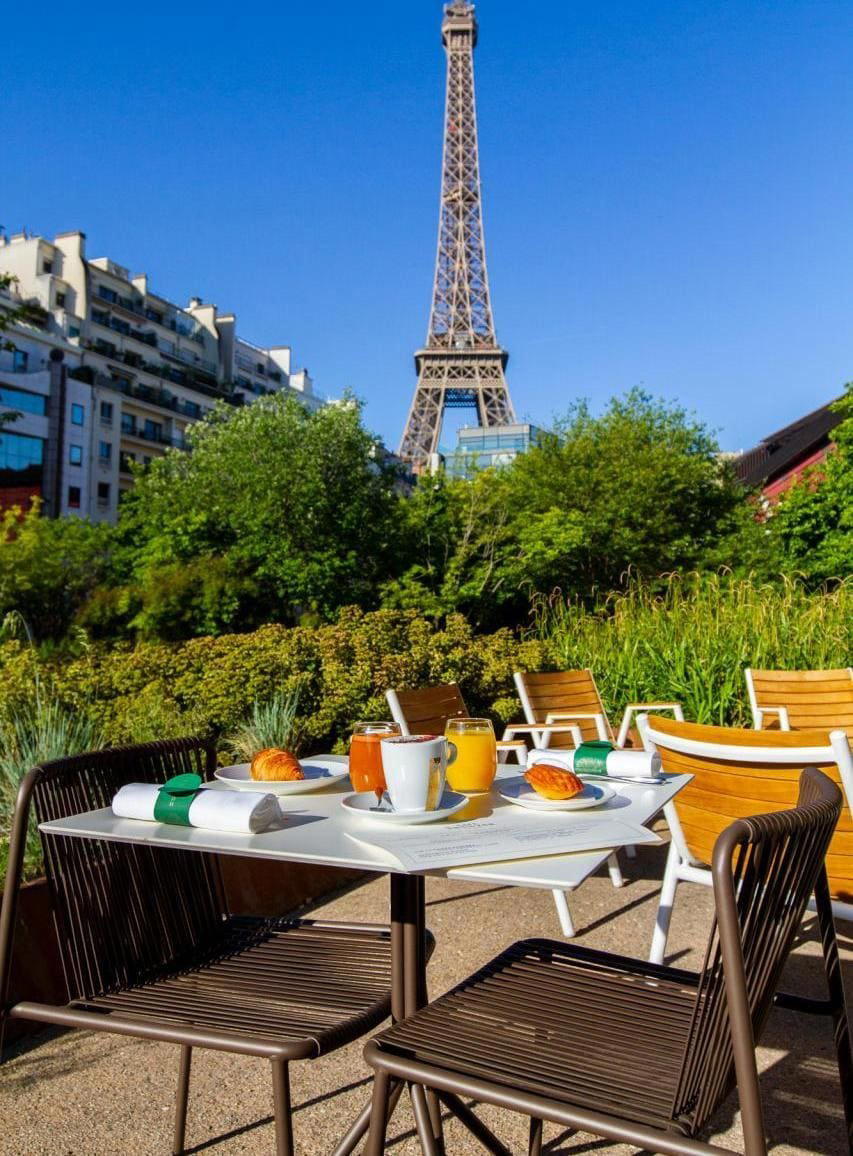
The menu
What to order
- Brioche bread roasted chicken coleslaw
- Parisian vanilla flan
- Rum baba
The Quai Jacques Chirac Address and What It Signals
Paris's 7th arrondissement has long operated as one of the city's more formally composed dining quarters. The streets running parallel to the Seine here carry a particular civic weight: government ministries, embassies, and the Eiffel Tower's south bank footprint shape the character of the neighbourhood as much as any restaurant. An address at 27 Quai Jacques Chirac places Café Jacques directly along the river, in a corridor that draws both Parisian regulars and visitors whose primary orientation is the Champ de Mars rather than a restaurant reservation. That combination of civic foot traffic and local patronage tends to produce a specific kind of café: one where the rhythm of service is determined as much by the neighbourhood's pace as by any kitchen philosophy.
The quayside setting matters more than it might in a landlocked arrondissement. Lunch along the Seine in this part of Paris carries a different cadence than the tighter, louder rooms found in the 11th or around the Marché des Enfants Rouges. Afternoon light off the water, the particular quiet of a riverside table between the lunch and dinner services — these environmental factors define the dining ritual here before the food is even ordered. Café Jacques, positioned on this quai, inherits that cadence by geography.
How Paris Café Dining Works as a Ritual
The French café tradition operates on a set of unspoken agreements that visitors consistently misread. Sitting down at a café table in Paris — particularly in a residential arrondissement like the 7th, is not the same act as taking a table at a restaurant. The expectation of pace is different. A café table is held. Coffee arrives without a timer on it. The plat du jour, if there is one, is written on a blackboard because it changes, not because it is theatrical. Bread comes with the meal, not before it as an amuse.
This ritual structure means that the dining sequence at a café like Café Jacques would follow different conventions than the multi-course tasting formats found at the Michelin-weighted addresses nearby. Paris maintains a sharp internal distinction between the café-brasserie register and the grand restaurant register, and that distinction is not purely about price. It is about pacing, about what the room permits, and about the kind of attention a table receives over the course of two hours. Addresses like L'Ambroisie in the 4th or Le Cinq at the Four Seasons George V operate at the opposite end of that register, where the dining ritual is choreographed by the kitchen's progression rather than the guest's instinct. Café Jacques, by name and by address, belongs to a different grammar of eating.
The 7th Arrondissement's Dining Context
The 7th is not Paris's most culinarily adventurous quarter. It is, however, one of its most consistent. The restaurants that survive here tend to do so because they anchor a neighbourhood clientele rather than chasing critical attention. The dining scene in this arrondissement is stratified: at the upper end, there are addresses like Arpège, Alain Passard's vegetable-focused three-star on the Rue de Varenne, which has maintained its position in the international conversation for decades. At the other end are the neighbourhood cafés and brasseries that serve the civil servants, the tourists arriving from the Musée d'Orsay, and the families whose apartments have been in the 7th for generations.
Between those poles sits a range of addresses that are harder to categorise. Paris's more creative contemporary restaurants, Kei on the Rue Coq Héron, or Alléno Paris at the Pavillon Ledoyen, operate with a different set of ambitions and a different price structure. Café Jacques, based on its name, its quayside address, and the absence of award markers, reads as part of the neighbourhood-anchored tier rather than the destination-dining tier.
That positioning is not a limitation. Some of the most instructive eating in any French city happens in the register below the starred restaurants, where the cooking is calibrated for daily repetition rather than occasion-level performance. The leading provincial examples of this approach, addresses like Auberge de l'Ill in Alsace or Bras in the Aveyron, have built their reputations on exactly this kind of consistency. In Paris, the café tradition serves an analogous social function, even at a far less formal register.
Placing Café Jacques in the Broader French Dining Map
Any serious assessment of a Paris café address benefits from understanding where it sits relative to the French dining tradition more broadly. France's restaurant culture is not monolithic. The grand houses like Paul Bocuse's Auberge du Pont de Collonges near Lyon, Troisgros in Ouches, or Les Prés d'Eugénie in the southwest represent one lineage. Mountain addresses like Flocons de Sel in Megève represent another. The Mediterranean south has its own axis, running through addresses like Mirazur in Menton and La Table du Castellet. Café Jacques does not operate within any of those lineages. It belongs, instead, to the Parisian urban café tradition, which is older than most of them and less frequently written about with the same analytical rigour.
International parallels exist but are imperfect. Le Bernardin in New York exports a French sensibility into an American context; Lazy Bear in San Francisco borrows the communal table format and applies it to a tasting menu structure. Neither maps cleanly onto the Paris café model, which is ultimately a product of a specific urban sociology that has no direct equivalent outside France.
Planning Your Visit
Café Jacques is located at 27 Quai Jacques Chirac in the 7th arrondissement, directly on the Seine. The address is within walking distance of the Eiffel Tower and the Champ de Mars, making it accessible from multiple metro lines serving that end of the 7th. Given the limited confirmed data available on booking policy, hours, and current format, contacting the venue directly before visiting is advisable. For a broader view of where Café Jacques sits relative to Paris's dining options, EP Club's full Paris restaurants guide maps the city's scene across all registers and price points.
The café address and riverside position suggest a venue that rewards visits timed to the natural light rather than engineered around a reservation window. Midday, with the Seine traffic at its quietest and the Champ de Mars crowds still thin, is typically the moment when this part of the 7th arrondissement is at its most composed.
Quick reference: 27 Quai Jacques Chirac, 75007 Paris.
Frequently asked questions
How do I find Café Jacques?
Café Jacques is located at 27 Quai Jacques Chirac, 75007 Paris, France, Paris.
Is Café Jacques suitable for a business lunch in central Paris?
The address at 27 Quai Jacques Chirac places Café Jacques in the 7th arrondissement, one of Paris's most consistently composed dining quarters and home to a significant concentration of institutional and diplomatic offices. A quayside setting along the Seine carries a register that suits a measured, unhurried midday meeting — the kind of environment the 7th has long provided for that purpose.
What do regulars order at Café Jacques?
EP Club does not hold confirmed menu records for Café Jacques. A quayside café at 27 Quai Jacques Chirac in the 7th arrondissement typically anchors its offer around short, rotating plates drawn from French café tradition: tartines, plats du jour, and café-format desserts. Until confirmed data is available, treat any specific dish claim from third-party sources with caution.
Do they take walk-ins at Café Jacques?
French cafés along the Seine in residential arrondissements like the 7th generally accommodate walk-ins across most of the day, with the midday window between noon and 14h being the tightest for seating. Arriving before 12:30 or after 14:00 typically improves your chances at quayside addresses in this quarter.
What's the defining dish or idea at Café Jacques?
The address on Quai Jacques Chirac, directly on the Seine in the 7th, points toward a venue shaped by its setting as much as its kitchen: the proposition is the river, the light, and the cadence of a properly French café hour rather than a single plate.
Is Café Jacques good for vegetarians?
French café menus in the 7th arrondissement have historically been brief and meat-forward, with vegetarian options present but rarely the focus. Visitors with dietary restrictions would be well advised to check the venue's official channels before visiting; a phone number is not currently held in EP Club's database.
Is Café Jacques worth the price?
As a point of reference, café dining along the Seine in the 7th arrondissement — one of Paris's more formally composed quarters — tends to sit in the mid-range bracket, where the premium is as much for position on the river as for what arrives at the table. The Quai Jacques Chirac address commands that location premium by any honest measure.
Cuisine and Credentials
Comparable venues nearby, for context on price, style, and recognition.
| Venue | Cuisine | Price | Notes |
|---|---|---|---|
| Café JacquesThis venue — the venue you are viewing | Modern Parisian Bistro | $30–50 | Not listed |
| Lou Bistrot | Seasonal French Bistro | $20–30 | Ternes |
| Camille | Classic French Bistro | $20–30 | Le Marais |
| Ferdi | French Brasserie with Latin American & Mediterranean Influences | $30–50 | Louvre / Palais-Royal |
| Au DéTour 18 | Traditional French Bistro | $30–50 | Batignolles |
| Grizzli Cafe | Traditional French Bistro | $20–30 | Saint-Merri |
Continue exploring
More in Paris
Restaurants in Paris
All restaurants in Paris →
Bars in Paris
All bars in Paris →



Details
- Modern
- Elegant
- Cozy
- Scenic
- Brunch
- Casual Hangout
- Terrace
- Panoramic View
- Local Sourcing
- Skyline
- A La Carte
- Vegetarian Friendly
Current opening hours
- Monday
- 11 AM–7 PM
- Tuesday
- 11 AM–7 PM
- Wednesday
- 11 AM–7 PM
- Thursday
- 11 AM–7 PM
- Friday
- 11 AM–7 PM
- Saturday
- 11 AM–7 PM
- Sunday
- 11 AM–7 PM
Hours can change for holidays and private events. Last verified .
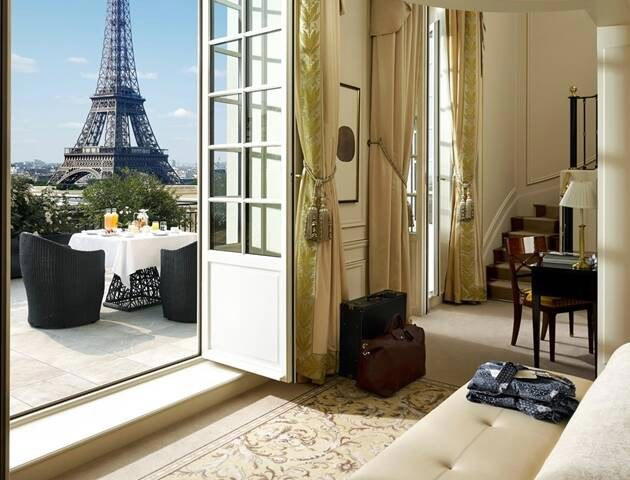
Pleasantly relaxed atmosphere with natural light, fresh produce focus, and far-reaching Eiffel Tower views from the terrace.