In Taipei's crowded field of Hong Kong-style breakfast and dim sum spots, 心心港式腸粉 focuses on cheung fun, the silky rice noodle rolls that define Cantonese morning ritual. The format is pared back and deliberate, making it a reference point for anyone tracing how Cantonese street food traditions have taken hold across Taiwan's northern dining scene.
Pearl is the En Primeur Club membership app — saves, bookings, and concierge access live there. Same editors, same standards.
- Address
- Taipei, Taiwan
- Directions
- Get directions
 Saves & bookings on Pearl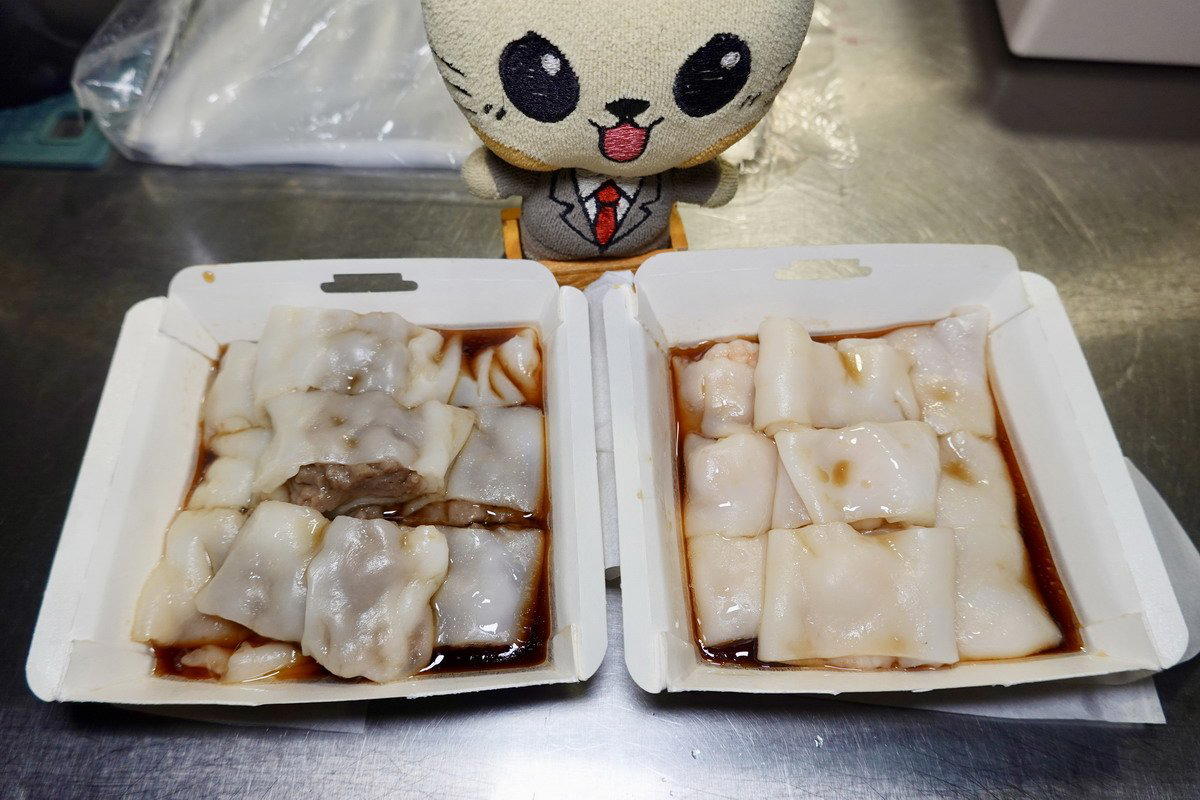
The Rice Noodle Roll as Morning Ritual
Walk through any older Taipei neighbourhood before 10am and you will find the same rhythm: plastic stools pulled to the street, ceramic bowls collecting steam, and the particular sound of a ladle scraping a flat tray. Hong Kong-style cheung fun shops have become a fixed part of Taipei's morning dining pattern, operating in a register that sits apart from the city's tasting menus at places like logy or the Cantonese fine dining of Le Palais. 心心港式腸粉 belongs to this earlier, less formal stratum of Taipei eating, where the measure of quality is the texture of a single rice noodle sheet and the balance of its sauce, not the length of the tasting menu.
Cheung fun, at its most reduced, is a discipline of restraint. A thin batter of rice flour and water is spread across a steaming tray, set briefly over heat, then rolled around a filling or left plain. The margin for error is narrow: too thick and the sheet turns gummy, too thin and it tears on the roll. Taipei's cheung fun shops, which multiplied as cross-strait culinary exchange deepened over the past three decades, have largely standardised around a Cantonese-derived template while adapting fillings and sauces to local preference. 心心港式腸粉 sits within that lineage, its name, literally Heart Heart Hong Kong-style Intestine Noodle, signalling both the geographic origin of the format and a certain deliberateness of focus.
How the Meal Is Meant to Move
The etiquette of a cheung fun shop is different from the paced sequence of a Taiwanese set-lunch or the rotation logic of a Cantonese dim sum hall. There is no amuse-bouche, no progression from cold to hot, no printed degustation. The order comes quickly and so does the food. The correct approach is to eat immediately: cheung fun deteriorates as it cools, the noodle sheet losing its slip and the filling compressing under its own weight. This is food that rewards attention paid at the moment of service rather than photographic deliberation.
In Hong Kong's original cheung fun street culture, the rolls were often eaten standing, paper-wrapped, dressed with soy sauce, sesame paste, and hoisin in ratios that varied by vendor. Taipei's versions have generally moved indoors and added seating, but the underlying tempo remains fast and functional. A table at a shop like 心心港式腸粉 is not a place for a two-hour meal in the manner of Taïrroir or the extended ritual of a dinner counter at L'Atelier de Joël Robuchon. The interaction is shorter and more direct: order at the counter or from a handwritten board, receive the rolls within minutes, dress them yourself or let the kitchen do it, eat while hot.
That speed is not a limitation. It is the format's logic. The cheung fun shop occupies the same structural position in Cantonese food culture that the tempura counter or the noodle stand occupies elsewhere: a specialist format where compression of choice and immediacy of service are signals of confidence, not shortcuts.
Taipei's Cantonese Food Thread
Taipei's relationship with Cantonese cooking is longer and more layered than it might appear to a visitor oriented toward Taiwanese beef noodles or oyster vermicelli. The post-1949 wave of mainland and Hong Kong-influenced migration seeded the city with Cantonese teahouses, congee shops, and roast meat specialists that have, in various forms, persisted across decades. Hong Kong-style cha chaan teng culture, with its condensed milk tea, pineapple buns, and egg tarts, has had a particular hold on Taipei's café scene since at least the 1990s.
Cheung fun shops represent a more specialised strand of that influence: they require a specific piece of equipment (the steam tray), a specific ingredient knowledge (rice flour blends and their hydration ratios), and a workflow that does not translate easily to a generalist kitchen. The fact that dedicated cheung fun shops have established themselves across Taipei's districts reflects genuine demand for the format in its more focused form, rather than cheung fun as a side item on a broader Cantonese menu. For travellers moving between Taiwan's cities, comparable explorations of regional Chinese food traditions are available at spots like JL Studio in Taichung or through the street food culture documented around A Xia in Tainan.
Where It Sits in Taipei's Morning Eating
Taipei's breakfast scene divides, roughly, into three registers. The first is the local Taiwanese morning shop: dan bing, shao bing you tiao, soy milk, and rice ball, served fast from small shopfronts. The second is the international café format: espresso, avocado toast, weekend brunch queues. The third, less visible to short-stay visitors, is the Hong Kong-style specialist shop, which often operates only in the morning hours and closes before noon, or sometimes before 11am when supplies run out. 心心港式腸粉 operates within this third category, where timing matters and arriving late means the leading items are gone.
That temporal constraint is itself a trust signal. A shop that sells out is a shop that is not compensating with volume or low turnover. Cheung fun is exactly that kind of preparation.
The broader Taipei dining picture spans everything from the Spanish contemporary cooking at Molino de Urdániz to neighbourhood-level spots across the city's districts. For those interested in how Cantonese culinary tradition operates at its most formal end in Taipei, Le Palais represents the opposite pole of that same cultural thread. Elsewhere in the region, GEN in Kaohsiung offers a point of comparison for how Chinese food traditions are being reinterpreted at a more contemporary register.
Know Before You Go
- Format: Hong Kong-style cheung fun specialist
- Meal timing: Morning service; arrive early as supply is limited and the kitchen closes once daily preparation runs out
- Pace: Fast counter service; expect food within minutes of ordering
- Leading approach: Eat immediately after service; cheung fun texture degrades quickly as it cools
- Reservations: Walk-in friendly
- Price tier: Low-cost breakfast shop pricing
City Peers
Comparable venues nearby, for context on price, style, and recognition.
| Venue | Cuisine | Price | Notes |
|---|---|---|---|
| 心心港式腸粉This venue — the venue you are viewing | Hong Kong Style Rice Rolls | $ | Not listed |
| Yangerlou Beef Noodle Soup | Taiwanese Beef Noodle Soup | $ | Minsheng Community |
| Wistaria Tea House | Traditional Taiwanese Tea House | $$ | Longpo |
| ååé åº-é¢å®« | Taiwanese Izakaya | Not listed | Jianming |
| Tian Jin Onion Pancake | Taiwanese Scallion Pancakes | $ | Fuzhu |
| 原創花雕雞 | Taiwanese Huadiao Chicken Hotpot | $$ | Songshan District (松山區) |
Continue exploring
More in Taipei
Restaurants in Taipei
Browse all →
Bars in Taipei
Browse all →
Hotels in Taipei
Browse all →
Wineries in Taipei
Browse all →
At a Glance
- Lively
- Casual Hangout
- Late Night
- Street Scene
Casual bustling night market street stall atmosphere with lively crowds.