Byblos
Byblos on Metairie Road occupies a corner of greater New Orleans where Middle Eastern and Mediterranean traditions have built genuine roots over decades. The address at 1501 Metairie Rd places it among a cluster of independent restaurants that define the suburb's dining identity, distinct from the French Quarter circuit. For visitors calibrating a broader Metairie itinerary, it belongs on the shortlist alongside the area's other specialty-driven independents.
Pearl is the En Primeur Club membership app — saves, bookings, and concierge access live there. Same editors, same standards.
- Address
- 1501 Metairie Rd, Metairie, LA 70005
- Phone
- +15048349773
- Website
- byblosrestaurants.com
- Directions
- Get directions
 Saves & bookings on Pearl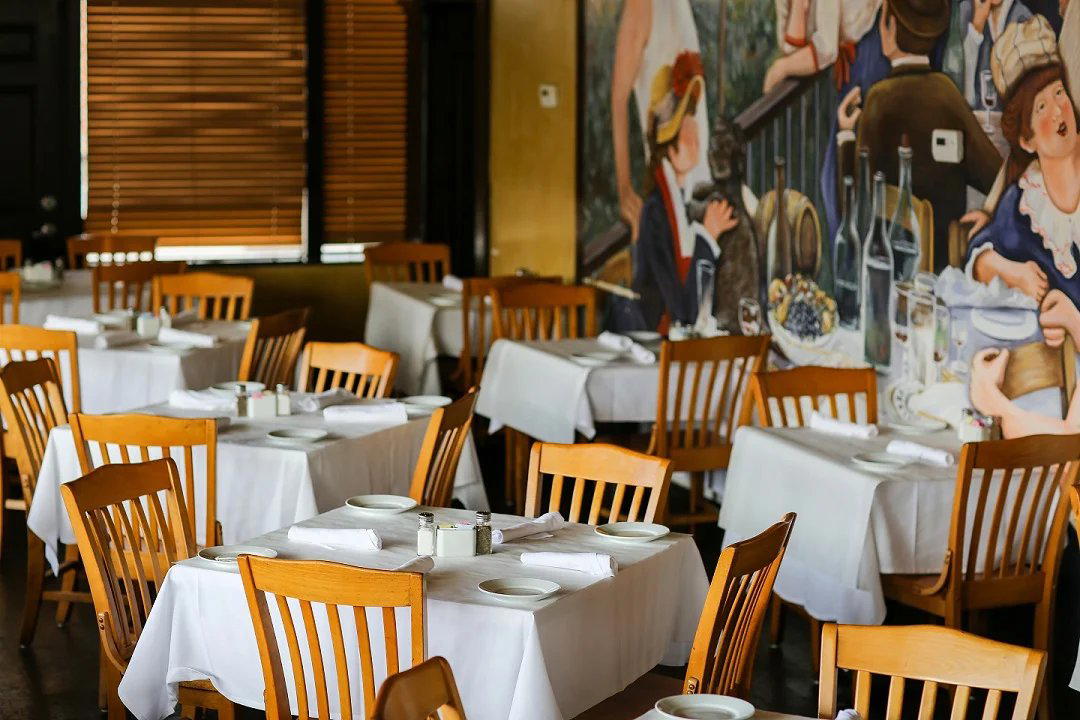
A Dining Tradition That Travels Well
Metairie Road carries a particular character that separates it from the New Orleans restaurant world just across the parish line. Where the city's dining press tends to orbit the French Quarter, the Garden District, and the Warehouse District, Metairie has built a quieter but durable independent restaurant culture across Metairie Road and its side streets. That culture runs heavily toward family-owned operations, specialist cuisines, and the kind of neighborhood loyalty that keeps a room full on a Tuesday. Byblos, at 1501 Metairie Rd, sits inside that tradition. The address is a practical one: accessible by car from central New Orleans in under twenty minutes, with parking that the city's older districts rarely offer.
The name itself signals a lineage. Byblos is one of the oldest continuously inhabited cities in the world, a Phoenician port on the Lebanese coast that gave its name to the book (via the Greek biblos) and, in the American diaspora restaurant tradition, to a particular kind of Lebanese-inflected establishment that carries both pride of origin and the obligation to explain itself to a new audience. That naming pattern appears across the country, from Chicago to Houston, and in each case the restaurant becomes a minor embassy for a cuisine that rarely gets the critical attention it deserves in the American press.
What the Meal Looks Like Here
Lebanese and broader Levantine dining operates on a set of customs that differ from European tasting-menu logic or American casual-dining pace. The meal tends to arrive not in a strict sequence of courses but in waves, with mezze placed at the center of the table and shared rather than plated individually. Cold mezze arrive first: hummus, baba ghanoush, tabbouleh, fattoush, and the pungent fermented turnips that divide rooms between devotees and skeptics. Hot mezze follow, including dishes like falafel, kibbeh, and sambousek. The rhythm is social rather than sequential, and the expectation is that the table will graze across multiple plates rather than eat through a single bowl.
This format demands a particular kind of attention from the kitchen. The cold preparations carry no margin for error: a hummus made with inferior tahini or over-processed chickpeas cannot be corrected by heat or sauce. The hot preparations require timing across a shared service model, which is a different discipline from plating individual entrees. Restaurants in this tradition are judged, by those who know the cuisine, on whether the mezze hold up individually and whether the kitchen can pace the hot dishes without bunching them. In the Metairie context, where the dining room is more likely to contain Lebanese-American families than first-time explorers of the cuisine, those standards are applied with some authority.
For visitors approaching this style of dining for the first time, the practical guidance is to resist over-ordering in the first round. The portion logic of Lebanese mezze is generous, and a table of two that orders eight cold plates will rarely have appetite left for the grilled meats and rice dishes that often represent the kitchen's other register. A more considered approach: three or four cold mezze, two hot, and one main protein dish, with bread arriving continuously and fruit or a simple pastry finishing the meal.
Where Byblos Sits in the Metairie Picture
Metairie's independent restaurant cluster includes a range of cuisines that reflect successive waves of immigration into the greater New Orleans area. Acropolis Cuisine represents the Greek presence in that mix, while Beraca Restaurant brings a different cultural register altogether. Italian-American cooking appears at A Tavola, and the café culture of the area has its own expression at Caffe Caffe. Byblos shares its name with a nearby provision operation, Byblos Market, which suggests a degree of integration between restaurant and retail that is common in Lebanese-American communities and often signals a kitchen with access to high-quality imported ingredients.
That access matters in a cuisine where pantry quality is determinative. The olive oil, the tahini, the dried herbs, and the pomegranate molasses used in Lebanese cooking cannot be substituted with generic American supermarket equivalents without consequences that any regular eater of the cuisine will immediately identify. Restaurants with a connected market or import operation tend to source more carefully, and that sourcing shows up in the food. It is a structural advantage, not a marketing point.
For a broader orientation to the area, our full Metairie restaurants guide maps the dining clusters by neighborhood and cuisine type, which is a more useful planning tool than a single venue page. Metairie is large enough that a visitor without a car will find certain concentrations of restaurants more accessible than others, and Metairie Road itself is a specific corridor rather than a blanket descriptor.
New Orleans Context and the Regional Picture
The broader New Orleans dining world pulls heavily toward Creole and Cajun traditions, and the restaurants that receive national press attention tend to reinforce that framing. Emeril's in New Orleans represents one pole of that conversation, the ambitious restaurant that codified New Orleans cuisine for a national television audience. But the city and its suburbs have always had a parallel restaurant culture organized around immigrant communities, church-hall traditions, and the kind of cooking that doesn't seek press attention. Lebanese and Lebanese-American restaurants in the New Orleans area belong to that parallel tradition, and they are better understood within it than against the Creole-dominant frame that most food writing applies to the region.
Visitors calibrating their wider itinerary against fine-dining standards should note that the reference points shift significantly when moving between categories. The discipline required to earn recognition at places like Le Bernardin in New York City, The French Laundry in Napa, or Blue Hill at Stone Barns in Tarrytown operates on entirely different metrics than the quality standards applied to a neighborhood Lebanese restaurant. That is not a hierarchy that diminishes either end. It is a recognition that different dining formats serve different functions and reward different kinds of attention. The mezze table at a well-run Lebanese restaurant offers something that no tasting menu can replicate: a genuinely communal meal where the food arrives to be shared rather than admired individually.
Those interested in the broader American fine-dining conversation as context might consider how restaurants like Lazy Bear in San Francisco, Smyth in Chicago, Atomix in New York City, Providence in Los Angeles, Addison in San Diego, Single Thread Farm in Healdsburg, The Inn at Little Washington, and Atelier Moessmer Norbert Niederkofler in Brunico have each found a distinct identity within their respective scenes. The lesson from those examples is that a clear culinary identity, consistently executed, creates durability. The Lebanese restaurant tradition in America has that identity in abundance.
Planning Your Visit
Byblos is located at 1501 Metairie Rd, Metairie, LA 70005. For current hours, reservation policy, and menu details, contacting the restaurant directly is the most reliable approach, as operational details at independent restaurants in this category can shift seasonally. Metairie Road is leading reached by car from New Orleans; ride-share services from the French Quarter run the route in under twenty minutes depending on traffic. The neighborhood around the address is residential and commercial in equal measure, with street parking generally available. For visitors planning a full Metairie evening, the proximity to other independent restaurants on and around Metairie Road makes this corridor a logical base for a multi-stop night rather than a standalone destination.
Cuisine and Recognition
| Venue | Cuisine |
|---|---|
| ByblosThis venue — the venue you are viewing | This venue |
At a Glance
- Casual
- Lively
- Group Dining
- Family
- Casual Hangout
- Private Dining
Current opening hours
- Monday
- 11 AM–9 PM
- Tuesday
- 11 AM–9 PM
- Wednesday
- 11 AM–9 PM
- Thursday
- 11 AM–9 PM
- Friday
- 11 AM–9 PM
- Saturday
- 11 AM–9 PM
- Sunday
- 11 AM–9 PM
Hours can change for holidays and private events. Last verified .
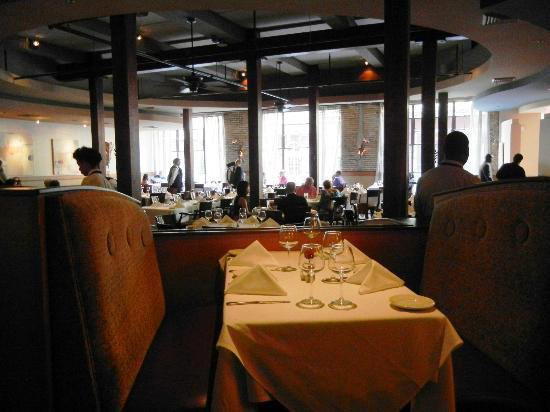
Fun and casual atmosphere with fresh, high-quality Mediterranean ingredients.
Know Before You Go
- Getting there
- 1501 Metairie Rd, Metairie, LA 70005