Our verdict
Burgerstore Room 01 operates out of beim wilden heinz on Hähnelstraße in Leipzig's Plagwitz district, where the city's independent food culture runs deepest. The format sits within a broader German shift toward sourcing-conscious casual dining, where the burger acts less as fast food and more as a vehicle for traceable ingredients and kitchen craft. For Leipzig, it occupies a distinct tier between street-level quick service and the formal dining rooms clustering around the city centre.

Pearl is the En Primeur Club membership app — saves, bookings, and concierge access live there. Same editors, same standards.
- Address
- beim wilden heinz, Hähnelstraße 22, 04177 Leipzig, Germany
- Phone
- +491624368451
- Hours
- Mon ClosedTue 9 AM–5 PMWed–Sat 4–10 PMSun Closed
- Website
- burgerstore-room-01.de
- Directions
- Get directions
The menu
What to order
- Chili Cheeseburger
- Vegan Jalapeño-Cheeseburger
- Chili-Cheese Fries
- Veggie BBQ Burger
Plagwitz and the Grammar of the Serious Burger
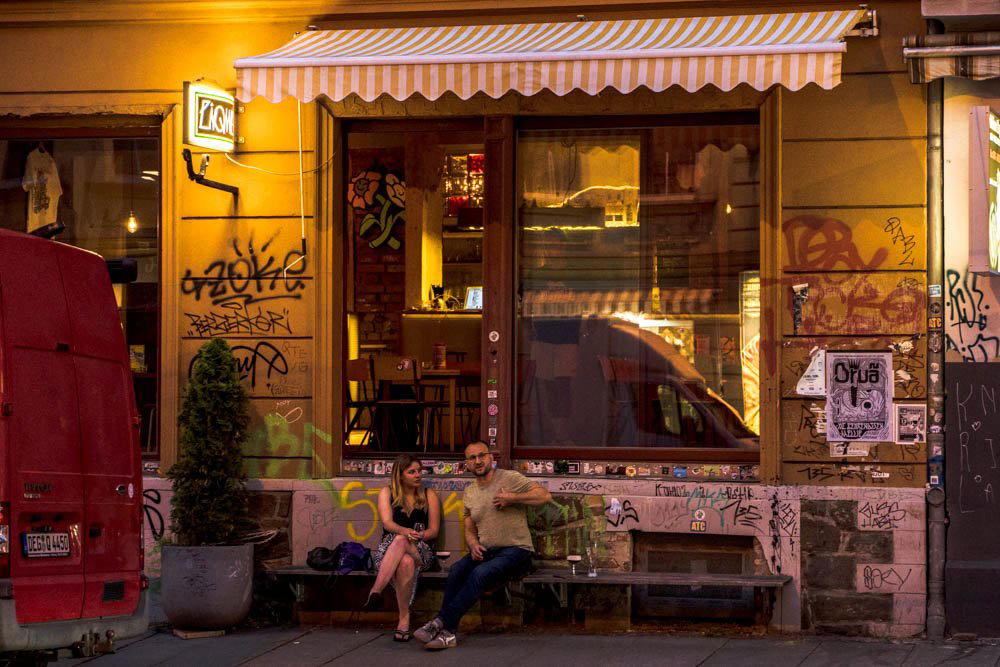
Leipzig's Plagwitz district does not arrive quietly. The former industrial quarter west of the Weisse Elster river has spent the better part of two decades accumulating independent food and drink operations, and the density of serious small venues on streets like Hähnelstraße reflects that accumulation. It is in this context that Burgerstore Room 01 occupies its address inside beim wilden heinz, a compound address that signals the kind of multi-operator hospitality format that has become common in German cities where converted industrial space offers room for clustered concepts. Walking into that block, the surrounding architecture still reads as working-class Gründerzeit rather than retrofitted luxury, and the dining options inside operate accordingly: direct, without ceremony, but with an evident interest in the ingredients on the plate.
Across Germany, the burger has undergone a gradual repositioning over the past decade. What began as an Americanised import category, dominated by franchise formats, has split into at least two distinct tiers. The lower tier retained the quick-service model. The upper tier, concentrated in cities with active independent food scenes, began applying the same sourcing logic that was reshaping pizza, ramen, and döner: tracing the protein, selecting the bun from bakeries with auditable flour sources, and treating the condiment layer as a kitchen product rather than a commodity. Leipzig's independent dining scene, anchored at the fine-dining end by operations like Kuultivo (Modern Cuisine) and Stadtpfeiffer (Creative), has created enough of a culinary reference point in the city that sourcing expectations have begun filtering down into casual formats.
Where the Ingredients Sit in the Argument
The editorial case for sourcing-conscious burger operations rests on a simple provocation: if a kitchen commits to traceable beef, regional dairy for the cheese layer, and bread produced by a bakery rather than an industrial supplier, the category stops being fast food in any meaningful sense and becomes something closer to a composed plate that happens to be eaten with hands. Germany has particular infrastructure for this kind of argument. The country's butcher culture remains granular in a way that much of Western Europe has lost, with regional breeds, farm-specific cutting traditions, and a consumer expectation that provenance is legible at point of sale. A burger operation in Leipzig that takes that infrastructure seriously is drawing on a supply chain that Michelin-decorated kitchens elsewhere in Germany, including Schwarzwaldstube in Baiersbronn, Aqua in Wolfsburg, and Vendôme in Bergisch Gladbach, already treat as foundational.
Leipzig's dining options span a wide register: the Ethiopian sourcing traditions visible at Addis Café, the Mediterranean framing at Alfa Restaurant, the Japanese precision of 997 Sushi Restaurant. Each sits within a different ingredient logic. The burger, when taken seriously as a format, belongs to a lineage that runs through German cattle-farming traditions, regional cheesemaking, and bakery craft. The question a venue in this category must answer is how explicitly it commits to that lineage, and how legibly it communicates that commitment to the person ordering.
The Casual Format and Its Demands
Casual formats carry their own discipline requirements. A tasting menu kitchen, like those at JAN in Munich or CODA Dessert Dining in Berlin, controls nearly every variable in the guest experience across two or three hours. A burger operation controls a narrower window, perhaps twelve minutes between order and plate, and must compress its sourcing argument into that shorter frame. The bun-to-patty ratio, the fat content of the grind, the temperature at service, the structural integrity across the first three bites: these are the technical benchmarks by which the format is judged, and they are less forgiving than they appear. Germany has produced serious casual-format operators in cities like Hamburg (see Restaurant Haerlin in Hamburg for the fine-dining counterpoint that contextualises what the rest of the city's food scene aspires toward) and in export markets, where operations like Le Bernardin in New York City and Lazy Bear in San Francisco demonstrate what technical discipline in a defined format can produce over time. The point is not that a Plagwitz burger counter competes with these rooms, but that the discipline logic is the same: define your format, commit to your sourcing, execute consistently.
Arriving in Plagwitz
Plagwitz is served by the S-Bahn line running through Karl-Heine-Straße, and Hähnelstraße sits within walking distance of the Lindenau and Plagwitz S-Bahn stops. The beim wilden heinz address functions as a hospitality cluster rather than a single venue, which means arrival can feel somewhat unmarked from the street: the compound model common in repurposed industrial spaces in Leipzig, Dresden, and Berlin typically requires a degree of navigation through shared courtyards or internal passages before the specific operator becomes visible. For seasonal context, Plagwitz's outdoor eating and drinking culture peaks between May and September, when the district's combination of courtyard spaces, canal-adjacent terraces, and street-level seating creates a density of alfresco dining that the indoor months cannot replicate. The sourcing argument for a burger operation also shifts seasonally: summer months in Saxony align with peak availability from regional producers, which tends to improve the vegetable and condiment components more than the core protein, where supply chains operate year-round. Visitors consulting the full Leipzig restaurants guide will find that Plagwitz carries a disproportionate share of the city's independent food operations relative to its geographic footprint. For fine-dining references in the broader German context, ES:SENZ in Grassau, Schanz in Piesport, Waldhotel Sonnora in Dreis, and Victor's Fine Dining by christian bau in Perl set the upper register of what German kitchens are doing with sourcing and technique, providing a frame of reference for understanding where serious casual formats fit in the broader hierarchy.
Planning a Visit
Given the beim wilden heinz compound address, the most reliable approach is to check current operating information directly with that location before making the journey specifically. Plagwitz rewards browsing in any case: the street-level density of independent operators on and around Hähnelstraße means that any visit to the quarter will present alternatives if a specific venue is closed or at capacity on a given day.
Frequently asked questions
Where is Burgerstore Room 01 in Leipzig?
Burgerstore Room 01 is located at beim wilden heinz, Hähnelstraße 22, 04177 Leipzig, Germany, Leipzig.
Is Burgerstore Room 01 inside another venue, and how does that affect a visit to Plagwitz?
In Leipzig's Plagwitz context, this kind of embedded format is common among smaller kitchen concepts that share infrastructure with established hosts. Visitors coming specifically for Room 01 should orient around the beim wilden heinz address rather than looking for separate signage.
What do people recommend at Burgerstore Room 01?
The kitchen's editorial reputation in Plagwitz rests on sourcing-conscious beef and regional dairy, which tends to shape a short, rotating menu rather than an extensive permanent one. Arriving with an open approach and asking staff what's current is the practical move.
What makes Burgerstore Room 01 worth seeking out?
The address places it inside beim wilden heinz at Hähnelstraße 22, which positions it within one of Plagwitz's more characterful host venues rather than a standalone shopfront. That context matters in Leipzig's west: the district has developed a consistent identity around serious, ingredient-led casual operations without the price escalation seen in central Saxony dining. The format rewards the kind of visitor who prefers conviction over spectacle.
What if I have allergies at Burgerstore Room 01?
For any allergy concern, check the venue's official channels before visiting — the address is Hähnelstraße 22, 04177 Leipzig. Kitchens operating with short, sourcing-focused menus can sometimes be more responsive to specific requests than larger operations, but confirmation in advance is the only reliable approach.
Peers Worth Knowing
A quick snapshot of similar venues for side-by-side context.
| Venue | Cuisine | Price | Awards | Notes |
|---|---|---|---|---|
| Burgerstore Room 01This venue — the venue you are viewing | Fresh Craft Burgers | $10–20 | Not listed | Not listed |
| Kuultivo | Modern Creative Cuisine | $100–150 | 1 Michelin Star | Modern Cuisine |
| Stadtpfeiffer | Modern European Fine Dining | $150–200 | 1 Michelin Star · La Liste Top Restaurants | Creative |
| Falco | Modern European Fine Dining | $100–150 | Falstaff Bar - 92 Falstaff Points | Modern European |
| C'est la vie | Modern French Fine Dining | $100–150 | Michelin Plate | French |
| Michaelis | Seasonal German Fine Dining | $50–100 | Michelin Plate | International |