Our verdict
Buja Disznó(k) Buda occupies a third-floor address on Lövőház utca in Buda's II. district, sitting at a remove from the Pest-side dining circuit that dominates Budapest's restaurant conversation. The name, a play on lusty pigs, signals a kitchen rooted in Hungarian pork tradition, positioned in the mid-tier of the city's restaurant scene where flavour-forward cooking often outpaces formal ceremony.

Pearl is the En Primeur Club membership app, where members save venues, book tables and use the concierge.

The menu
What to order
- Wiener Schnitzel
- Fried Pork
- Hungarian Sausage
Buda's Other Dining Room
Budapest's restaurant energy concentrates heavily on the Pest side: the Michelin-starred counters around the inner districts, the wine-kitchen format that Borkonyha Winekitchen (€€€ · Modern Cuisine) has made a recognisable Budapest template, the modernist Hungarian cooking that defines addresses like Babel (€€€€ · Modern Cuisine) and Costes (€€€€ · Modern Cuisine). Cross the river into Buda and the scene thins considerably. That relative scarcity is precisely what gives a place like Buja Disznó(k) Buda its context: it occupies a third-floor address on Lövőház utca, a street that runs just back from Széll Kálmán tér, and it does so without the institutional scaffolding, no Michelin plate, no press-ready biography, that props up most of the city's dining conversation.
The name is the clearest editorial statement the kitchen makes. Buja Disznó(k) translates roughly as lusty pig or lascivious swine, depending on how literal you want to be, and the plural in parentheses hints at a restlessness, more than one pig, more than one way of reading the animal. In Hungarian cooking, pork is not a protein choice; it is a structural ingredient, present in the fat that flavours a bean stew, in the paprika-stained sausage that anchors a winter platter, in the rendered lard that once substituted for olive oil across the entire country. A restaurant that plants its flag in pork tradition is making a claim about roots and continuity, not novelty.
The Address and What It Signals
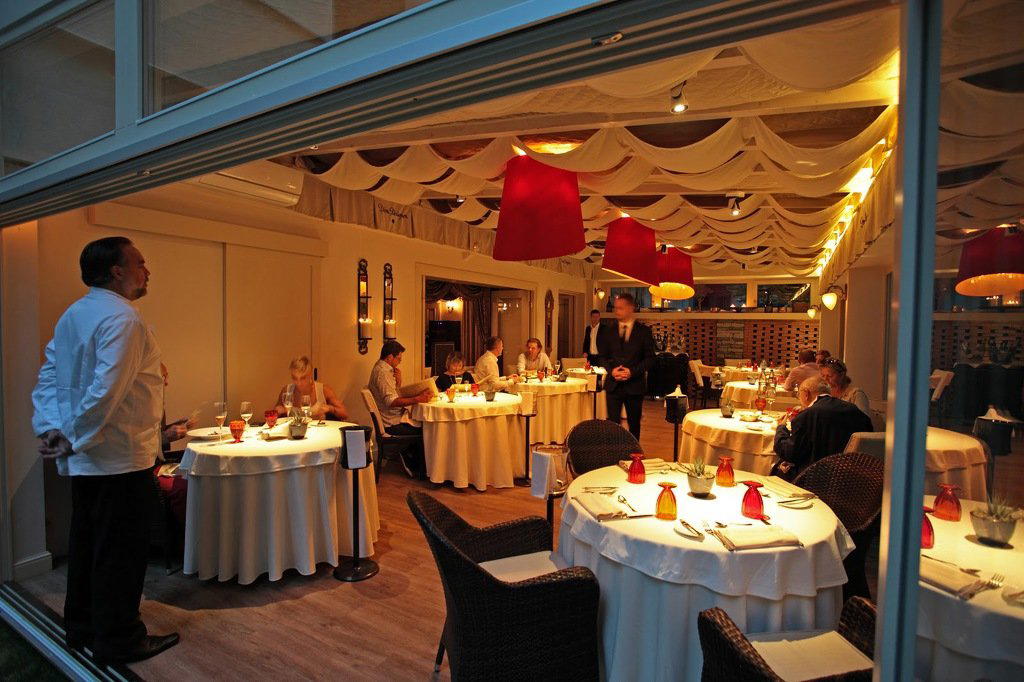
Third-floor restaurant spaces in Budapest carry their own atmospheric logic. You arrive by staircase or lift into a room that has already separated itself from street noise, from passerby foot traffic, from the casual walk-in culture that shapes ground-floor dining. The address at Lövőház u. 12 places the venue close to Mammut shopping centre and the Széll Kálmán tér transport hub, one of the busiest interchange points in the city, yet the elevation creates a remove that changes how the space reads. The neighbourhood itself is residential Buda rather than tourist Buda, which means the room's regulars are more likely to be local than transient.
This positioning echoes a pattern visible in other Central European cities where the most characterful mid-tier restaurants operate in upper-floor or courtyard spaces that require deliberate navigation. The physical act of finding the room is part of the experience's framing. Visitors arriving from Pest who have spent time at Stand (€€€€ · Modern Cuisine) or essência (€€€€ · Modern Cuisine) will notice the register shift immediately: this is a different kind of ambition, pointed inward rather than outward.
Hungarian Pork Tradition as a Kitchen Framework
The broader Hungarian dining scene has been moving in two directions simultaneously. On one track, modernist kitchens have been reconstructing national ingredients through contemporary technique, the approach that earns Budapest's Michelin recognition and that connects the city's leading addresses to a European fine-dining conversation also audible in places like Le Bernardin in New York City or Lazy Bear in San Francisco. On the other track, a smaller set of restaurants has been doubling down on the pre-technique tradition: the braised, the cured, the smoked, the fat-forward preparations that defined Hungarian domestic cooking before gastronomy became a performance category.
Buja Disznó(k) Buda's name positions it in that second track. Across Hungary, the pig-forward kitchen has regional depth: Mangalica fat in Transdanubia, smoked kolbász in the Great Plain, the disznótoros (pig-slaughter feast) tradition that historically turned late-autumn butchery into a communal meal. Restaurants working within this tradition, whether in Budapest or in rural addresses like Pajta in Őriszentpéter or Hosszú Tányér in Hosszúhetény, tend to compete on sourcing integrity and preparation fidelity rather than on plating aesthetics or technique signalling.
At the regional level, that conversation about sourcing connects to wine-country dining as well. Addresses like Sauska 48 in Villány, Kővirág in Köveskál, and Petrányi Csopak in Csopak have built kitchens around Balaton and Villány wine-region produce, where pork and lake fish share equal billing. The contrast is instructive: Buda's urban pork kitchen and the lake-country fish kitchen of Old Kőrössy Fish Restaurant in Szegedin are operating from the same broader logic, Hungarian ingredient identity as the kitchen's primary language, but in entirely different registers.
Where It Sits in the Budapest Mid-Tier
Budapest's mid-tier restaurant segment has expanded considerably over the past decade, absorbing demand that previously defaulted to either budget gulyás spots or formal fine dining. The Buja Disznó(k) name appears at this Buda address rather than in the more visible Pest dining corridor, which places it in a sub-segment where neighbourhood loyalty matters as much as destination dining. Comparable city restaurants operating in this bracket include Bilanx (€€€ · Contemporary) and Stand25 Bisztró (€€ · Traditional Cuisine) on the Pest side, both of which serve a more price-accessible version of the national ingredient story.
For visitors building a Budapest itinerary that extends beyond the Michelin-tracked addresses, crossing to Buda specifically for a meal represents a considered choice. The tram lines from Deák Ferenc tér make Széll Kálmán tér direct to reach, tram 4 and tram 6 both terminate there, and the journey from central Pest takes under fifteen minutes. The neighbourhood warrants a longer look: Mammut's immediate surroundings aside, the streets behind Széll Kálmán tér open into quieter residential blocks that feel several removes from the inner-district tourist current. Restaurants in this pocket, including spots noted in our full Budapest restaurants guide, tend to run without the reservation pressure that characterises the city's most prominent addresses.
That said, the specifics of Buja Disznó(k) Buda's booking model, seasonal hours, and current menu are best confirmed directly, since third-floor independent restaurants in this segment operate without the institutional communications infrastructure that keeps larger venues' public information current. Addresses in analogous positions elsewhere in the Hungarian restaurant circuit, Teyföl in Szentendre, Platán Gourmet in Tata, Öreg Prés in Mór, Botanica in Dánszentmiklós, operate under similar conditions, where the kitchen's work is the communication and the front-of-house detail is handled locally.
Planning a Visit
The Lövőház utca address sits a short walk from Széll Kálmán tér, reachable by tram from the Pest side of the city in under twenty minutes from the inner districts. The third-floor location means arriving with clear knowledge of the address rather than expecting street-level signage to do the work. For visitors oriented around Budapest's full restaurant range, pairing an evening here with daytime exploration of the Buda hills or a visit to the Mammut area gives the meal a geographical logic that matches the kitchen's own Buda-rooted character.
Frequently asked questions
What's the address for Buja Disznó(k) Buda?
Buja Disznó(k) Buda is located at Budapest, Lövőház u. 12. III-emelet 13, 1024 Hungary, Budapest.
How does Buja Disznó(k) Buda fit into the tradition of Hungarian pork cookery?
Hungarian cuisine has long centred pork as a foundational protein, with mangalica breeds and regional curing traditions giving the country a distinct position in Central European food culture. Buja Disznó(k) Buda uses that tradition as a kitchen framework rather than a novelty angle, situating it alongside a small number of Budapest restaurants that treat pork as a subject of culinary depth rather than nostalgic garnish. For diners approaching the city through its food culture, this framing places it clearly within a conversation about Hungarian culinary identity rather than outside it.
What should I eat at Buja Disznó(k) Buda?
The name translates roughly to 'Lush Pig(s),' which signals the kitchen's orientation clearly: Hungarian pork tradition is the organising principle here. Budapest's broader dining scene has seen kitchens either modernise national ingredients or lean into heritage technique, and this address sits in the latter camp. Specific current dishes are best confirmed directly with the restaurant before visiting, as menus shift seasonally.
Do I need a reservation for Buja Disznó(k) Buda?
The third-floor position on Lövőház utca, away from Pest's higher-footfall restaurant corridors, means walk-in prospects are more realistic than at comparable Pest-side venues, but weekends and evening services can fill quickly. Booking ahead is the safer approach, particularly for groups. Contact details are available directly through the Lövőház u. 12 address in Budapest's 2nd district.
What makes Buja Disznó(k) Buda worth seeking out?
Most of Budapest's recognised dining energy concentrates on the Pest side, from Michelin-starred inner-district counters to the wine-kitchen format that has defined the city's past decade of restaurant growth. Buja Disznó(k) Buda occupies a different position: a Buda-side room with a defined culinary focus rooted in Hungarian pork cookery, operating in a mid-tier segment that has absorbed considerable demand from diners moving away from both budget options and formal fine dining. Its Lövőház utca address is reachable in under twenty minutes from central Pest via tram from Széll Kálmán tér.
Recognition, Side-by-Side
Comparable venues nearby, for context on price, style, and recognition.
| Venue | Cuisine | Price | Awards | Notes |
|---|---|---|---|---|
| Buja Disznó(k) BudaThis venue (the venue you are viewing) | Traditional Hungarian Schnitzel House | $10–20 | Not listed | Not listed |
| MoszkvaTér | Authentic Russian Bistro | $20–30 | Michelin Plate | Varhegy |
| Horizont | Modern Brunch Cafe | $10–20 | Not listed | Terézváros |
| Franziska Pest | Healthy Brunch Cafe | $10–20 | Not listed | Belvaros |
| Kacsa Étterem | Classic Hungarian Duck Specialties | $30–50 | Not listed | Varhegy |