Buena Onda
Buena Onda brings Argentine cooking into Santa Barbara’s produce-and-coastline dining culture, where sourcing matters as much as technique. The point is not ceremony; it is the fit between Argentine fire, pastry, herbs, and California ingredients in a city that has long treated casual meals with serious intent.

Pearl is the En Primeur Club membership app — saves, bookings, and concierge access live there. Same editors, same standards.
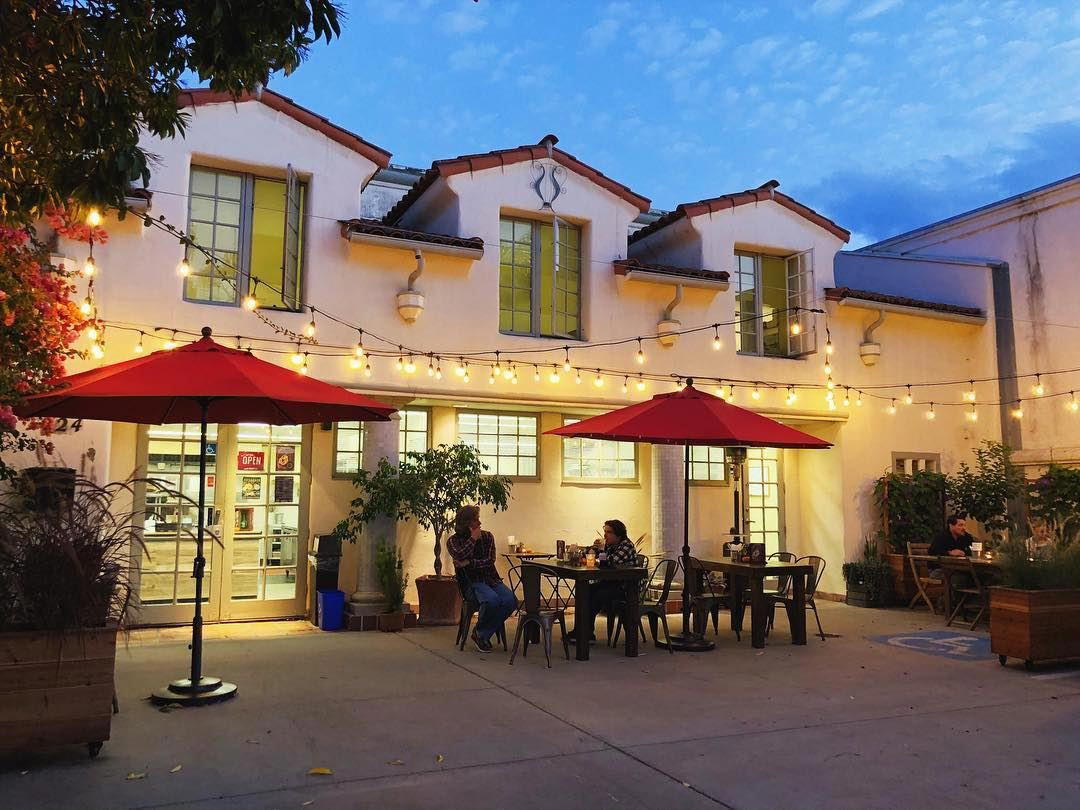
Santa Barbara conditions the appetite before a menu appears: salt air from the Pacific, whitewashed Spanish Revival façades, farmers’ market abundance, and a restaurant culture that tends to reward ease over performance. Buena Onda enters that setting through Argentine cuisine, a tradition built on beef, pastry, herbs, smoke, and the disciplined use of acidity. In this city, that matters. Argentine cooking can read heavy when handled as nostalgia alone; in coastal California, it has room to become sharper, greener, and more ingredient-led.
The useful way to read Buena Onda is through sourcing rather than spectacle. Santa Barbara County sits between ranch country, vineyards, citrus, avocado groves, and one of California’s more closely watched small-farm circuits. Argentine food has always depended on primary ingredients doing visible work: the cut of meat, the quality of the dough, the brightness of chimichurri, the way a simple salad can reset a richer plate. A restaurant working in this register does not need elaborate architecture on the plate. It needs restraint, heat management, and produce that can carry its own weight.
Argentine cooking makes sense in a produce-first coastal city
Santa Barbara dining often splits between polished hotel restaurants, seafood rooms, wine-country cooking, and casual counters that trade on freshness rather than formality. Argentine cuisine fits the latter two categories particularly well because it is both social and exacting. Empanadas, grilled meats, vegetable sides, and herb-driven sauces are not complicated ideas, but they expose weak sourcing quickly. Poor pastry turns leaden; dull herbs flatten the table; badly handled beef has nowhere to hide.
That is why Buena Onda’s Argentine identity is more than a cuisine label. It points to a set of expectations around texture, temperature, and balance: crisp edges against soft fillings, char against acidity, richness against green herbs. In Santa Barbara, where the surrounding farms can make even a simple vegetable plate feel local without announcement, the cuisine has a natural advantage. The city’s better casual restaurants tend to understand that ease is not the same as looseness.
For readers mapping the broader scene, the restaurant belongs in the part of Santa Barbara dining where format stays approachable but ingredient decisions do the serious work. That same local logic shows up differently across the city: Barbareño (Californian) turns regional identity into a more explicit dining argument, while Aperitivo (Italian/aperitivo) reads the city through the lighter rhythms of drinks and small plates. The restaurant’s lane is narrower and more direct: Argentine food translated through a coastal California pantry.
The value is in the casual register, not in ceremony
Santa Barbara can make casual dining look effortless, but the city is not cheap, and relaxed restaurants are often judged by how much thought sits behind the apparent simplicity. Argentine food is well suited to that test because its pleasures are tactile and immediate. Dough should have structure. Sauces should cut rather than coat. Grill or oven work should leave a clear mark without turning the meal into theatre.
That makes the restaurant a useful counterpoint to the city’s more destination-coded meals. It is not competing with tasting-menu formality or wine-country pageantry. It sits closer to the everyday side of Santa Barbara’s dining culture, the side where a meal can be built around handheld food, grilled protein, vegetable brightness, and a table that does not require a long explanation from the server. In a city with a large visitor economy, that kind of clarity has value.
The Argentine frame also broadens the local conversation beyond the usual coastal-Californian shorthand. Santa Barbara has Japanese, Italian, Mexican, health-driven, and old-school neighborhood threads running through its restaurant map. Nearby editorial context helps show the spread: Arigato Sushi reflects the city’s long appetite for sushi, Backyard Bowls captures the wellness-casual lane, and Arnoldi's Cafe points to the older neighborhood-restaurant tradition. The restaurant adds a South American register to that mix without needing to overstate the case.
How to place it within a Santa Barbara itinerary
For travel planning, the restaurant works as a meal to place between heavier commitments: after the beach, before a wine bar, or on a day when the schedule does not call for a long dining room. Santa Barbara rewards that kind of pacing. The city’s strongest trips often move between restaurants, bars, wineries, and coastal time rather than treating dinner as the only event of the day.
Use it as part of a wider Santa Barbara edit rather than as a standalone thesis. For restaurant context, start with Our full Santa Barbara restaurants guide. For the rest of the trip, pair meals with Our full Santa Barbara hotels guide, Our full Santa Barbara bars guide, Our full Santa Barbara wineries guide, and Our full Santa Barbara experiences guide. The pattern is simple: keep the daytime coastal, give the evening a clear food point of view, and avoid overloading the itinerary with meals that ask for the same kind of attention.
For readers building a broader West Coast food map, the restaurant also sits within a useful regional pattern: casual formats carrying serious cultural specificity. That thread runs through places as different as Jōdo Saké Bar in Los Angeles, Onigiri Time in Pasadena, ¿Por Qué No? in Portland, 'Ai Love Nalo in Waimanalo Beach, 'āina in San Francisco, 'Ama 'Ama in Kapolei, -Grilled beef Sukiyaki- KAMAKURA TANUKIAN 鎌倉 たぬき庵 in Kamakura, and ¡Salud! in Los Angeles. The common lesson is not sameness. It is that informal dining can carry a strong culinary argument when the sourcing, format, and cultural grammar line up.
Comparable venues nearby, for context on price, style, and recognition.
| Venue | Cuisine | Price | Notes |
|---|---|---|---|
| Buena OndaThis venue — the venue you are viewing | Argentinian Empanadas | $ | Not listed |
| Three Pickles | American Deli Sandwiches | $ | Laguna |
| Cajun Kitchen | Cajun & Creole Breakfast Cafe | $$ | Downtown |
| Dutch Garden Restaurant | Modern German | $$ | Hope |
| Olio e Limone Ristorante | Artisanal Italian with Sicilian Specialties | $$$ | Downtown |
| Taffy's Pizza | Classic Italian Pizza | $ | Oak Park |
Continue exploring
More in Santa Barbara
Restaurants in Santa Barbara
Browse all →
Bars in Santa Barbara
Browse all →
Hotels in Santa Barbara
Browse all →
At a Glance
- Cozy
- Casual
- Rustic
- Casual Hangout
- Family
- Group Dining
- Private Event
- Terrace
- Courtyard
- Private Dining
- Standalone
- Organic
- Local Sourcing
- Garden
- Street Scene
A warm, family-run empanada shop with a relaxed patio and a freshly baked, aromatic, community-oriented feel.