Budsara
On Chiswick High Road, Budsara occupies a corner of west London where neighbourhood Thai dining has quietly grown more considered. Positioned away from the capital's high-profile restaurant district, it draws a regular local following for whom proximity and consistency matter as much as spectacle. For visitors tracing London's wider dining map, it represents the kind of embedded, community-rooted restaurant the city's outer zones do well.
 Discover on Pearl
Pearl is the En Primeur Club membership app — saves, bookings, and concierge access live there. Same editors, same standards.
- Address
- 99 Chiswick High Rd., Chiswick, London W4 2ED, United Kingdom
- Phone
- +44 20 8995 5774
- Website
- torthai.co.uk
Chiswick and the Case for Neighbourhood Thai
London's most-discussed restaurant openings tend to cluster in Mayfair, Notting Hill, and the City fringe, where critics and expense accounts converge. The outer zones operate differently. Chiswick High Road, running through one of west London's more settled residential corridors, has long supported a restaurant scene built around repeat custom rather than destination dining. The demographics here, affluent, travelled, time-pressed, create demand for cooking that goes beyond the perfunctory, but the format is neighbourhood rather than occasion. Thai restaurants in this tier of London occupy an interesting position: the cuisine has enough range and regional complexity to reward serious treatment, yet the neighbourhood format tends to compress menus and moderate ambition. Budsara, at 99 Chiswick High Rd., sits inside that dynamic.
CORE by Clare Smyth, Restaurant Gordon Ramsay, and The Ledbury,
Ingredient Sourcing and What It Signals
In Thai cooking, sourcing is rarely a marketing exercise, it is a technical necessity. The cuisine's flavour architecture depends on fresh aromatics (galangal, kaffir lime leaf, lemongrass, Thai basil) that lose integrity rapidly after harvest, and on fish sauce, shrimp paste, and tamarind whose provenance and fermentation determine whether a dish lands with depth or reads as approximate. London's Thai restaurant supply chain has improved markedly over the past decade: specialist importers now bring refrigerated shipments of Thai produce into the UK regularly, and a handful of growers in southern England have begun cultivating Southeast Asian herbs for the restaurant trade.
Where a neighbourhood restaurant like Budsara sits on that supply spectrum matters more than it might at a venue where the kitchen can absorb higher ingredient costs into a longer tasting format. At accessible price points, the choice between fresh imported Thai basil and dried substitutes, or between quality fish sauce and commodity product, is visible on the plate. It is precisely in the neighbourhood segment, where margins are tighter and sourcing discipline is harder to maintain, that ingredient decisions define the gap between a restaurant worth returning to and one that functions mainly on convenience.
This sourcing question is not unique to Thai cooking in London. At the country end of the British dining spectrum, venues like L'Enclume in Cartmel and Moor Hall in Aughton have made hyper-local supply chains a defining editorial statement. In urban neighbourhood dining, the conversation is quieter but the principle is the same: the distance between ingredient and plate affects what ends up in the bowl.
The Chiswick Setting
Arriving on Chiswick High Road, the stretch around the W4 postcode reads as a working high street rather than a curated dining quarter. Independent restaurants sit alongside chains, and the rhythm is set by local foot traffic rather than destination visitors. For a Thai restaurant, this context is neither a disadvantage nor a limitation, some of London's most consistent Southeast Asian cooking has always been found in residential zones, away from the markup pressures of tourist-adjacent postcodes.
The address at number 99 places Budsara within walking distance of Chiswick's residential streets rather than immediately adjacent to a tube stop, which shapes the clientele: the room draws from the surrounding neighbourhood rather than from across the city. That local dependency concentrates the pressure to maintain consistency, since the audience is repeat rather than transient. It also insulates the restaurant from the seasonal visitor patterns that affect venues closer to central London's hotel districts, a pattern visible in the contrast between neighbourhood Thai restaurants in zones 2 and 3 and the more performance-oriented venues in zone 1.
Where Budsara Sits in London's Thai Dining Tier
London's Thai restaurant segment is wider and more differentiated than it might appear from the outside. At one end sits a cluster of higher-ambition, higher-price venues, restaurants that operate with trimmed menus, premium sourcing, and cooking rooted in regional Thai tradition rather than the pan-Thai compromise that dominated British Thai dining through the 1990s and 2000s. At the other end, the category blends into generalist Asian delivery and takeaway. The neighbourhood tier, where Budsara operates, occupies the middle ground: sit-down, table-service restaurants with enough menu range to cover a table's divergent preferences, priced for regular use rather than special occasions.
This tier draws useful comparison with how neighbourhood Italian or French restaurants function in London: the food is not positioned as a destination statement, but the regulars know what they are ordering, and consistency across visits matters more than novelty. The venues in this category that hold local loyalty over years tend to do so through exactly the sourcing and kitchen discipline described above, not through concept or press attention.
Dinner by Heston Blumenthal and Sketch, The Lecture Room and Library represent the £££€ and above tier where format, sourcing, and chef credentials are fully documented and verified. Budsara operates as a neighbourhood restaurant, where the case rests on utility and consistency. Beyond London, the broader British restaurant scene at its ambitious end is well represented by The Fat Duck in Bray, Gidleigh Park in Chagford, Hand and Flowers in Marlow, and hide and fox in Saltwood. Internationally, the tasting-counter format at venues like Atomix in New York City and the seafood precision of Le Bernardin illustrate how sourcing discipline scales at the highest price points, a useful frame for understanding what the same discipline means at the neighbourhood level.
Address: 99 Chiswick High Rd., Chiswick, London W4 2ED. Dress: casual. Budget: about £20 per person. Walk-ins are welcome.
Frequently Asked Questions
What do regulars order at Budsara?
In London's neighbourhood Thai tier broadly, regulars tend to anchor on aromatic curry dishes, noodle-based plates, and grilled proteins with nam jim dressings, the categories where kitchen consistency is most readable across visits. Those interested in how Thai and other Asian cuisines perform at higher price points in London can cross-reference our full London restaurants guide.
Do they take walk-ins at Budsara?
In the west London neighbourhood restaurant category, walk-in capacity tends to be more available at lunch and mid-week, with weekend evenings typically requiring advance contact. Given Budsara's position on a busy residential high street in W4, it is worth calling ahead rather than arriving without notice, particularly if visiting as a group.
How does Budsara compare to other Thai restaurants in west London?
West London supports a range of Thai restaurants from high-volume delivery-oriented operations to more considered sit-down venues. Budsara's Chiswick High Road address places it in a residential corridor where the customer base is predominantly local and repeat, which tends to favour consistency over novelty. It sits in the neighbourhood tier rather than the destination tier, comparable in format to the kind of embedded local restaurant that sustains a loyal following through kitchen reliability. For a fuller picture of where London's Thai and broader Asian dining sits across the city, our London restaurants guide provides a mapped view.
A Tight Comparison
Comparable venues nearby, for context on price, style, and recognition.
Continue exploring
More in London
Restaurants in London
Browse all →
Bars in London
Browse all →
Hotels in London
Browse all →
At a Glance
- Modern
- Casual Hangout
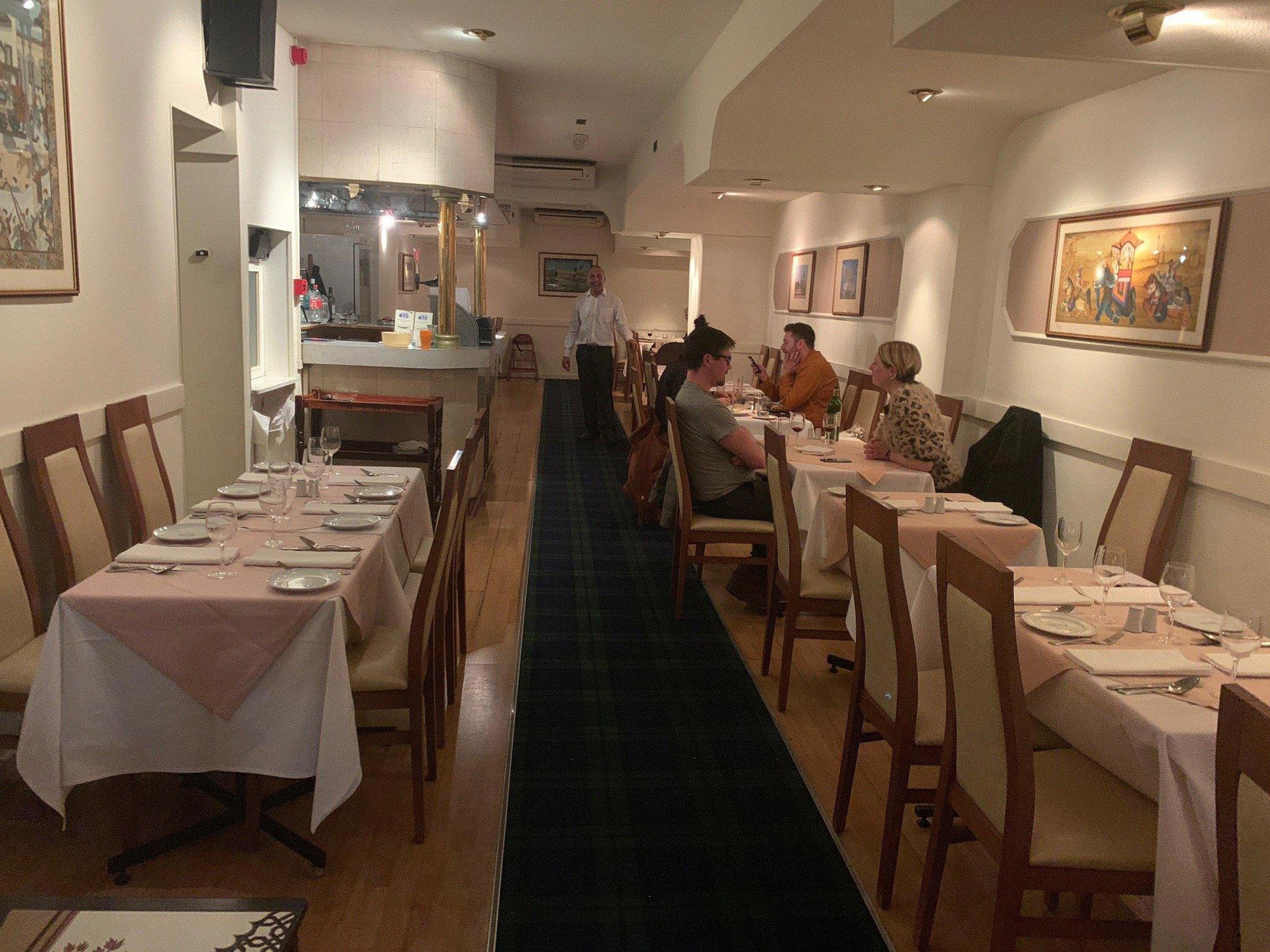
Simple but tasteful modern decor with furniture imported from Thailand.