Briciola
Briciola occupies a quiet stretch of West 51st Street in Midtown, operating within a broader Italian dining tradition that prizes restraint over spectacle. The restaurant's position in Hell's Kitchen places it at the edge of one of New York's most recognisable theatre and hospitality corridors, where neighbourhood character and menu discipline tend to matter more than scale or fanfare.
Pearl is the En Primeur Club membership app — saves, bookings, and concierge access live there. Same editors, same standards.
- Address
- 370 W 51st St, New York, NY 10019
- Phone
- +16466785763
- Website
- briciolawinebar.com
- Directions
- Get directions
 Saves & bookings on Pearl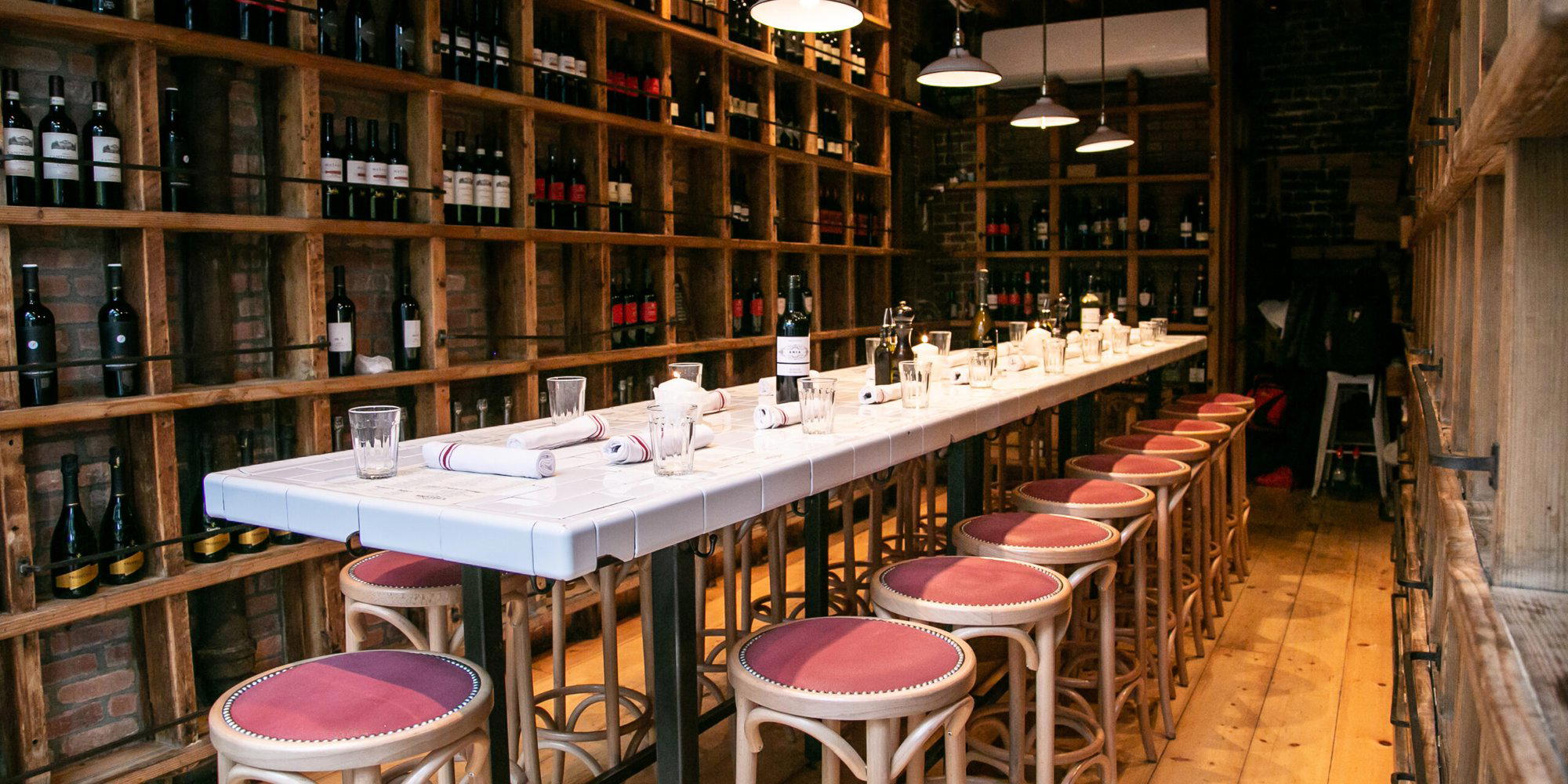
Hell's Kitchen and the Italian Trattoria Format in Midtown Manhattan
Italian dining in New York has always occupied two distinct registers. On one side sit the white-tablecloth institutions, the kind of rooms where service formality signals aspirational dining and where wine lists run to hundreds of bottles. On the other sits the trattoria tradition: tighter menus, closer tables, and a format that privileges cooking over ceremony. West 51st Street in Hell's Kitchen has, over the past two decades, become reliable ground for the latter. Briciola, at 370 West 51st, operates within that neighbourhood pattern, positioned a short walk from the Midtown theatre cluster but separated by enough city blocks to avoid the tourist-facing transience that defines dining rooms closer to Times Square.
Hell's Kitchen itself underwent a significant shift from the late 1990s onward, moving from a largely working-class residential neighbourhood into a dining and hospitality corridor serving both local residents and pre-theatre crowds. That dual audience has shaped the restaurants that took root there: they tend toward accessible formats and focused menus rather than the elaborate tasting structures that define rooms like Per Se or Eleven Madison Park further south. The expectation is competence and consistency, not conceptual ambition.
Menu Architecture and What It Signals
The trattoria format, when executed with discipline, is an argument through structure. A focused menu, one that does not sprawl across multiple proteins and preparation styles, tells the reader something about the kitchen's confidence. Regional Italian cooking in New York has historically suffered from the opposite tendency: sprawling menus that attempt to represent the entire peninsula in a single room, which typically signals a kitchen optimising for familiarity over precision. The better Italian rooms in the city operate with narrower scope. Seasonal pasta programmes, a short antipasto section, and a restrained secondi list are not signs of limitation; they indicate a kitchen that has decided what it does well and committed to that decision.
This architecture also carries practical implications for repeat visitors. A menu that rotates within a clear seasonal framework encourages return visits, because the changes are legible rather than arbitrary. Autumn in New York tends to bring root vegetables, mushroom preparations, and braised proteins; spring shifts toward lighter pasta formats and vegetable-forward first courses. For a neighbourhood restaurant in a district with a strong residential base, that seasonal legibility matters. Diners know what to expect from the frame even when the specific dishes change. This is the same logic that drives the seasonal programmes at destination restaurants further afield, from Blue Hill at Stone Barns in Tarrytown to Single Thread Farm in Healdsburg, though the scale and ambition differ considerably.
Midtown Italian in Context: Where Briciola Sits in the comparable set
Midtown Manhattan's Italian dining options span an unusually wide price and format range. At the leading end, rooms associated with celebrity chefs and wine programmes priced against expense-account dining define the upper tier. Below that sits a middle register of osteria-style rooms that have accumulated neighbourhood loyalty rather than critical recognition. Briciola operates in that middle register, geographically and conceptually closer to the Hell's Kitchen residential crowd than to the clientele that fills rooms like Le Bernardin or Masa a few blocks east.
That positioning is not a weakness. Neighbourhood Italian restaurants in New York carry a different kind of authority than tasting-menu destinations. Their credibility is built through consistency across hundreds of covers rather than the controlled precision of a twelve-seat counter. The comparison set is not Atomix or the city's other technical modern rooms; it is the cluster of reliable Italian rooms scattered across the outer edges of Midtown and into the residential blocks of the Upper West and Upper East sides. Within that set, a restaurant's staying power is the primary trust signal. Rooms that have served the same neighbourhood for more than a decade accumulate a specific kind of credibility that awards and press recognition cannot easily replicate.
For comparison outside New York, the closest analogue in format and positioning is something like Frasca Food and Wine in Boulder, which operates as a serious Italian room within a market that does not demand the same density of competition as Manhattan. The parallels are structural rather than culinary: both represent Italian dining that takes the cuisine seriously without reaching for the elaborate architecture of destination dining. For Italian cooking at one refined end of the spectrum, rooms like Atelier Moessmer Norbert Niederkofler in Brunico and Dal Pescatore in Runate represent the benchmark in the source country itself.
What the Address Tells You About the Experience
370 West 51st Street is not a destination address in the way that a Midtown landmark or a Tribeca conversion might be. It sits in a residential block of Hell's Kitchen, away from the theatre queues and tourist-facing restaurants of the immediate Broadway district. That address signals something about the intended diner: someone who lives in or near the neighbourhood, someone who has read a specific recommendation, or someone pre-theatre who has done enough research to leave the obvious options behind. Restaurants that rely on foot traffic from casual passersby tend to orient their menus and pricing accordingly. A room on a quieter residential block in Hell's Kitchen is building a different kind of relationship with its customer base, one where the return visit is the revenue model rather than the one-time tourist table.
This is consistent with how Italian dining in New York has traditionally built its most durable rooms: not through press campaigns or awards seasons, but through neighbourhood loyalty accumulated over years of consistent cooking.
Planning Your Visit
Briciola is located at 370 West 51st Street in Hell's Kitchen, within walking distance of the major Midtown theatre venues on Broadway. For diners combining dinner with a show, the positioning makes it a practical pre-theatre option without the surcharge pricing that some theatre-district rooms apply. As with most neighbourhood Italian rooms in New York, booking ahead is advisable, particularly on weekend evenings and during the autumn and winter months when demand for warm, consistent Italian cooking in the city peaks.
Same-City Peers
Comparable venues nearby, for context on price, style, and recognition.
| Venue | Cuisine | Price | Notes |
|---|---|---|---|
| BriciolaThis venue — the venue you are viewing | Italian Wine Bar & Pasta | $$ | Not listed |
| Trattoria Trecolori | Traditional Italian Trattoria | $$ | Midtown-Times Square |
| Salumeria Biellese | Traditional Italian Deli | $$ | Chelsea-Hudson Yards |
| Giano | Modern Italian Trattoria | $$ | East Village |
| Tarallucci e Vino | Authentic Italian Bistro | $$ | Midtown South-Flatiron-Union Square |
| Pastai | Southern Italian Pasta Bar | $$ | Chelsea-Hudson Yards |
Continue exploring
More in New York City
Restaurants in New York City
Browse all →
Bars in New York City
Browse all →

Hotels in New York City
Browse all →





At a Glance
- Cozy
- Intimate
- Date Night
- Casual Hangout
- Wine Cellar
- Extensive Wine List
- Local Sourcing
Current opening hours
- Monday
- 11:30 AM–12 AM
- Tuesday
- 11:30 AM–12 AM
- Wednesday
- 11:30 AM–12 AM
- Thursday
- 11:30 AM–12 AM
- Friday
- 11:30 AM–12 AM
- Saturday
- 11:30 AM–12 AM
- Sunday
- 11:30 AM–12 AM
Hours can change for holidays and private events. Last verified .
Cozy and intimate atmosphere with high-top tables and a beautiful bar, ideal for wine and pasta.