On the Saône's western bank in Lyon's 9th arrondissement, Brasserie de l'Ouest occupies a quai-side address where the brasserie tradition meets a considered approach to sourcing and waste reduction. The kitchen draws on the Rhône-Alpes larder with the discipline of a city that has long treated provenance as non-negotiable. For visitors building a Lyon itinerary around substance rather than spectacle, it warrants a place on the shortlist.
Pearl is the En Primeur Club membership app — saves, bookings, and concierge access live there. Same editors, same standards.
- Address
- 1 Quai du Commerce, 69009 Lyon, France
- Phone
- +33437646464
- Website
- maisons-bocuse.com
- Directions
- Get directions
 Saves & bookings on Pearl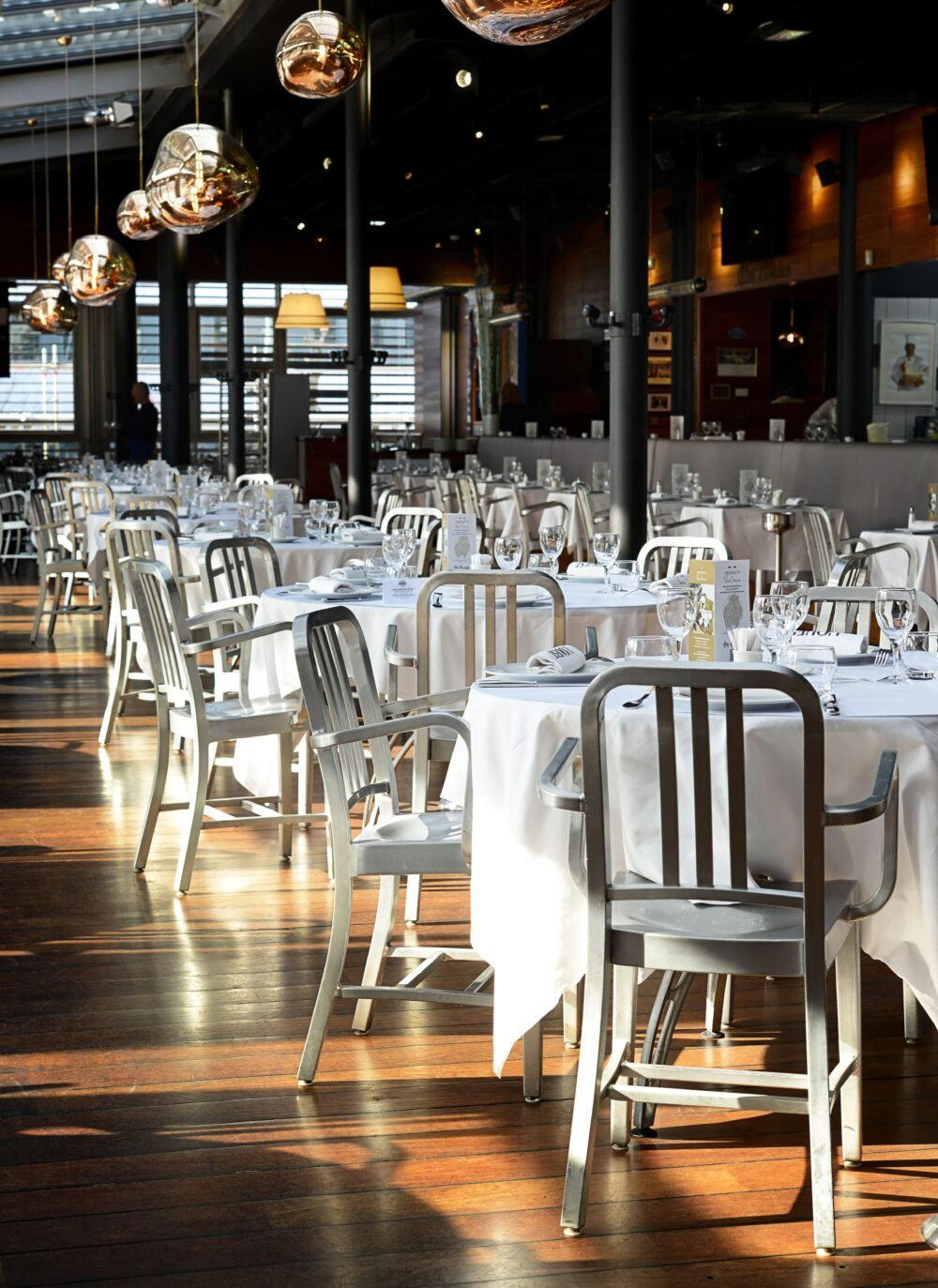
The Quai de l'Ouest and What It Says About Lyon Dining
Approach Brasserie de l'Ouest from the riverside and the setting does what Lyon's left bank never quite manages: it slows you down. The Quai du Commerce in the 9th arrondissement sits on the Saône's western edge, a stretch that feels more residential than touristic, where the pedestrian rhythm belongs to the neighbourhood rather than to coach parties crossing from the Presqu'île. That address alone positions this brasserie inside a particular Lyon dining conversation, one less concerned with Michelin positioning and more focused on the daily work of feeding a city that expects its restaurants to take ingredients seriously.
Lyon has always operated as a laboratory for French provincial cooking. The tradition of the mères lyonnaises, the women who shaped the city's bourgeois cuisine through market discipline and seasonal fidelity, left an institutional memory that the city's dining scene still draws on. La Mere Brazier is one visible heir to that tradition, but the values it represents, sourcing proximity, waste aversion, nose-to-tail cooking, now circulate well beyond the starred tier. At the brasserie level, those principles often translate more honestly than they do in kitchens performing sustainability for a tasting menu audience.
Sustainability as Operating Logic, Not Marketing Posture
The broader shift in French provincial restaurants toward ethical sourcing and reduced waste has been uneven. In Paris, it frequently reads as a premium signal layered onto already expensive menus. In Lyon, the calculus is different. The city's proximity to the Dombes, the Bresse plateau, the Drôme vegetable farms, and the Rhône Valley wine corridor means that sourcing locally is, in many cases, simply the more economical and practical choice. A brasserie on the Saône's western bank sits within reach of suppliers whose product arrives fresher and cheaper than anything shipped from outside the region.
That geographic logic underpins a style of cooking where sustainability is less a declared philosophy than an operating condition. Menus built around what the Rhône-Alpes larder produces in a given week tend to generate less waste than fixed carte formats, because the kitchen buys to order rather than holding inventory against a static menu. The brasserie format, historically a more flexible proposition than formal restaurant service, accommodates that approach with less friction than a tasting-menu kitchen would.
Across France, the restaurants doing coherent work on waste reduction and ethical sourcing tend to be in the middle tier of the market, not at the level of Mirazur in Menton or Flocons de Sel in Megève, where the resources to build supply chains are considerable, but in the brasseries and bistros where the margin for waste is narrow and the relationship with local producers is direct and commercial rather than ceremonial.
Lyon's 9th and the Brasserie comparable set
The 9th arrondissement is not where most visitors to Lyon eat. The concentration of reviewed restaurants sits in the 1st and 2nd, on the Presqu'île, where addresses like Le Neuvième Art and Takao Takano operate at the creative end of contemporary French cooking, and Burgundy by Matthieu represents the mid-market modern tier. The 9th, by contrast, is a neighbourhood of working Lyon, with a dining culture that reflects local demand rather than visitor expectation.
A brasserie at this address competes differently from its Presqu'île counterparts. The relevant comparable set is not the tasting-menu tier but the daily-service restaurants where the Lyon tradition of serious cooking at accessible prices is still practised with some integrity. That tradition has come under pressure in recent years, as ingredient costs have risen and the workforce for skilled brasserie cooking has thinned. The restaurants maintaining quality at this level do so partly through procurement discipline, which circles back to the sourcing question: buying well, buying regionally, and using whole animals and whole vegetables rather than prime cuts and pre-prepared produce.
For context on how Lyon's wider dining scene maps across price points and formats, the EP Club Lyon restaurants guide provides a fuller picture, including options at the creative end represented by Au 14 Février.
The French Brasserie Tradition and Where It Fits Now
The brasserie as a format has been under pressure across France for two decades. The category occupies the space between the casual bistro and the formal restaurant, historically associated with long service hours, broad menus, and a democratic approach to seating. Those characteristics made it well-suited to urban neighbourhoods but economically difficult to sustain as labour costs increased and diners at the upper end of the market migrated toward specialist formats.
The French restaurants that have maintained the brasserie model most successfully tend to be those that have narrowed their menus without abandoning the format's accessibility, and that have built producer relationships tight enough to absorb price volatility. Internationally, the comparison case is not with formal French fine dining, represented at its most rigorous by places like Alléno Paris au Pavillon Ledoyen or the legacy of Paul Bocuse's Auberge du Pont de Collonges, but with the kind of regional anchor represented by Georges Blanc in Vonnas or the philosophical grounding of Bras in Laguiole, both of which have built their identities around deep regional sourcing over many decades.
Across the Atlantic, the American analogue for a restaurant where sourcing discipline and format accessibility intersect is something closer to Lazy Bear in San Francisco, though the formats are different. What connects them is the idea that a kitchen's relationship with its supply chain is as much a creative act as the cooking itself.
Planning a Visit
Brasserie de l'Ouest is located at 1 Quai du Commerce in Lyon's 9th arrondissement, on the western bank of the Saône. Visitors pairing a meal here with broader Lyon exploration should note that the 9th is better treated as an afternoon-into-evening destination rather than a lunchtime detour from the Presqu'île.
Those building a longer itinerary around French provincial cooking at its most committed might also consider the Auberge tradition at its most enduring, represented by Auberge de l'Ill in Illhaeusern or Les Prés d'Eugénie in Eugénie-les-Bains, both of which share the regional-sourcing logic that defines stronger examples from this tradition. For a different expression of the same principles at table, Troisgros in Ouches and La Table du Castellet complete a French regional picture that extends well beyond Lyon's city limits. For those whose frame of reference is the French-influenced transatlantic table, Le Bernardin in New York City offers a useful point of contrast in how classical French technique travels.
Questions About Brasserie de l'Ouest
- Q: What is Brasserie de l'Ouest known for?
- Brasserie de l'Ouest is associated with the tradition of serious French provincial cooking on Lyon's western Saône bank, in a neighbourhood that serves local demand rather than the tourist-facing Presqu'île. Its identity sits within a Lyon brasserie category that has historically prized market-driven sourcing and the kind of daily-service discipline that the city's dining culture was built on. For a broader view of where it sits among Lyon's restaurants, the EP Club Lyon guide maps the full range of the city's dining options.
- Q: What's the must-try dish at the restaurant?
- The menu changes with the market. Brasseries in the Lyon tradition, shaped by the legacy of the mères and the Rhône-Alpes larder, tend to anchor their menus in market-available proteins and vegetables rather than fixed signature items. The kitchen's relationship with regional producers, typical of this category in Lyon, suggests that asking the front-of-house for the day's market-driven options is a more reliable guide than any fixed reference. Comparable creative discipline in the city's higher tier is documented at Le Neuvième Art.
- Q: How far ahead should I plan for the restaurant?
- The restaurant recommends reservations. That said, weekend evenings in Lyon's dining calendar fill quickly across the mid-market tier. Contacting the venue directly, particularly for groups of four or more, is the reliable approach. Higher-demand addresses in Lyon's creative tier, such as Au 14 Février, typically require advance planning of several weeks.
- Q: How does the restaurant handle allergies?
- Standard practice for French restaurants operating in this format is to address dietary requirements at the point of booking and again on arrival. Given the market-driven, variable menu format typical of Lyon brasseries, direct communication with the restaurant is the appropriate channel, since dishes and their components can shift week to week.
- Q: Is the restaurant a good choice for a weekday lunch in Lyon's 9th arrondissement?
- For visitors whose Lyon itinerary extends beyond the Presqu'île, the 9th arrondissement's Quai du Commerce address makes a weekday lunch a practical proposition, particularly for those arriving via Métro D from the city centre. Brasseries in this neighbourhood typically operate a weekday lunch service oriented toward local professionals rather than tourists, which tends to reflect well on value and pace of service. For comparison across Lyon's mid-market tier, Burgundy by Matthieu offers a Presqu'île alternative in the same price bracket.
Where It Fits
Comparable venues nearby, for context on price, style, and recognition.
| Venue | Cuisine | Price | Notes |
|---|---|---|---|
| Brasserie de l'OuestThis venue — the venue you are viewing | French Brasserie with Island Influences | $$$ | Not listed |
| Le Simple Goût Des Choses | Bistronomic French | $$$ | Quartier Parc Duquesne |
| Cocotte | French-Italian Bistro | $$$ | Quartier Croix-Rousse Est et Rhône |
| Le Moment | Modern French Market Bistro | $$$ | Quartier Vaise Rochecardon Industrie |
| Abstract | Modern French Bistro Bar | $$$ | Quartier Ouest des Pentes |
| Bouchon Comptoir Brunet | Traditional Lyonnaise Bouchon | $$$ | Quartier Bellecour Cordeliers |
Continue exploring
More in Lyon
Restaurants in Lyon
Browse all →
Bars in Lyon
Browse all →
Hotels in Lyon
Browse all →

At a Glance
- Modern
- Lively
- Cozy
- Group Dining
- Family
- Business Dinner
- Open Kitchen
- Waterfront
- Waterfront
- Street Scene
Current opening hours
- Monday
- 12–2 PM, 7–10 PM
- Tuesday
- 12–2 PM, 7–10 PM
- Wednesday
- 12–2 PM, 7–10 PM
- Thursday
- 12–2 PM, 7–10 PM
- Friday
- 12–2 PM, 7–11 PM
- Saturday
- 12–2:30 PM, 7–11 PM
- Sunday
- 12–2:30 PM, 7–10 PM
Hours can change for holidays and private events. Last verified .
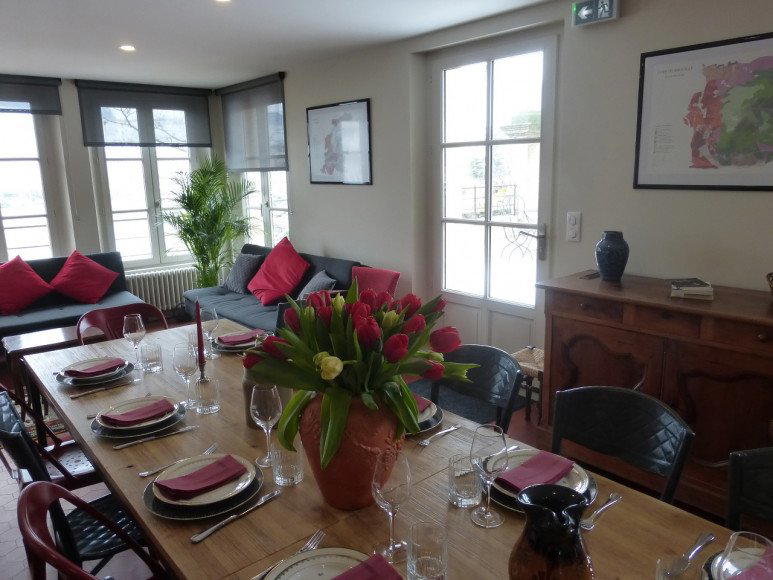
Warm and convivial atmosphere blending wood, metal, and modern design, enhanced by the dynamic energy of the open kitchen.