Bouchon De Rossi
Our verdict
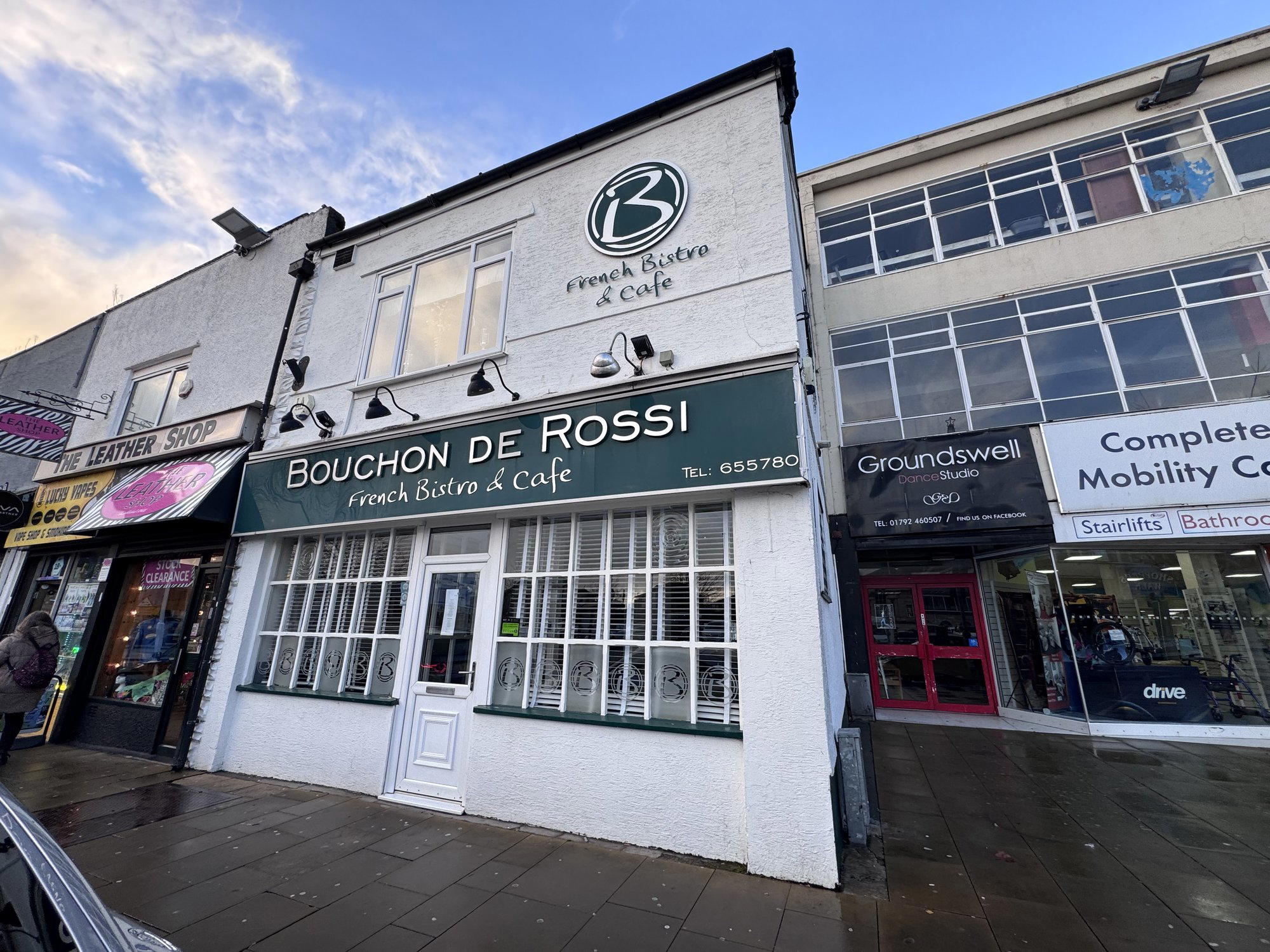
Bouchon De Rossi sits on Whitewalls in Swansea's city centre, bringing a French-inflected approach to a dining scene more accustomed to casual coastal eating. The name signals a bouchon tradition rooted in Lyon-style neighbourhood cooking, placing it in a distinct niche within the Welsh city. For Swansea, that positioning alone makes it worth attention.

Pearl is the En Primeur Club membership app, where members save venues, book tables and use the concierge.
The menu
What to order
- Fillet_steak
- Sole_meuniere
- Profiteroles
A French Accent on the Welsh Coast
Swansea's restaurant scene has long organised itself around the sea. Cockles from the Gower, laverbread from the bay, fish landed at the docks: the city's culinary identity is coastal and broadly informal. Against that backdrop, a bouchon-style address on Whitewalls represents a deliberate counter-position. The bouchon as a format originates in Lyon, where the tradition describes small, convivial rooms serving regional produce with minimal intervention, the kind of cooking where the sourcing argument and the culinary argument are effectively the same argument. That framing matters when reading what Bouchon De Rossi is attempting at 217 Whitewalls, SA1 3BG.
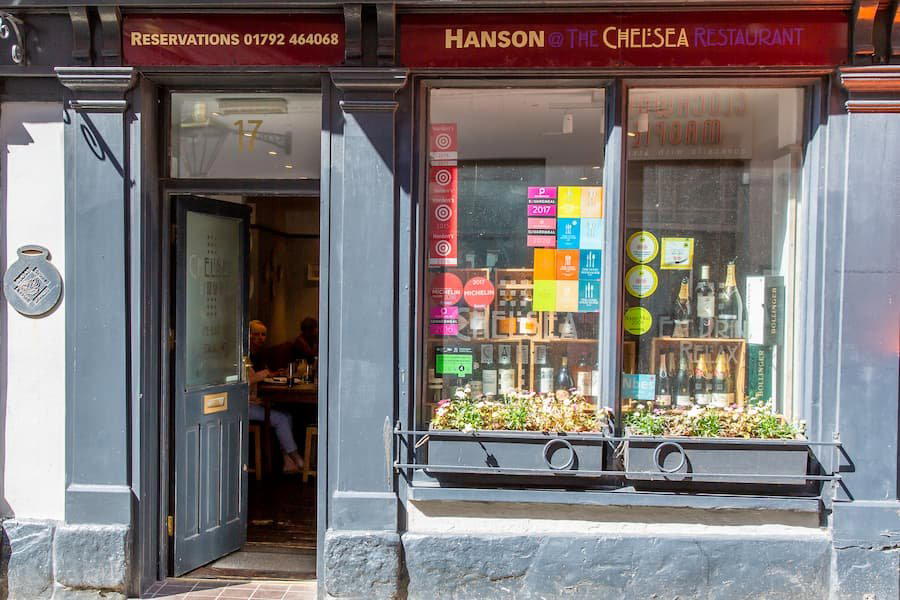
Swansea is not short of well-run neighbourhood restaurants. Gilligan's Restaurant, Hanson at the Chelsea, and Pant-y-Gwydr restaurant each occupy their own lane, and Môr has brought serious attention to Welsh seafood cooking. What the city has had less of is a format where French provincial logic, specifically the idea that a short menu cooked from nearby suppliers is a statement of culinary seriousness rather than a limitation, anchors the room. Bouchon De Rossi plants its flag in that gap.
What Bouchon Cooking Actually Means for Sourcing
The Lyon bouchon tradition carries a sourcing philosophy that is worth spelling out, because it shapes everything downstream: what appears on the plate, how the menu moves seasonally, and what the kitchen is willing to commit to on any given service. Bouchon kitchens historically worked with local charcutiers, nearby dairy producers, and whatever the market offered that morning. The menu was short because the sourcing was honest, you served what you had, not what a laminated card had promised for twelve months.
Translate that logic to Swansea and the geographic argument becomes interesting. The Gower Peninsula, classified as Britain's first Area of Outstanding Natural Beauty, sits immediately to the west and produces salt marsh lamb that commands attention well beyond Wales. Gower salt marsh lamb has the same terroir argument that premium French producers make about their grass-fed animals: mineral-rich coastal grazing that expresses itself in the meat's flavour profile. Add the shellfish and fish available through Swansea's working harbour and the proximity to Welsh dairy farms, and the raw material case for a sourcing-led kitchen in this city is strong. Whether a bouchon-format restaurant on Whitewalls is drawing on that geography in a disciplined way is a question worth asking when you visit, it is the right question to ask of any restaurant trading on this kind of positioning.
For comparison, the UK's most credentialled sourcing-led kitchens, places like L'Enclume in Cartmel or Moor Hall in Aughton, build entire tasting menus around hyper-local supply chains, sometimes from their own kitchen gardens. Ynyshir Hall in Machynlleth has made Welsh provenance central to its identity at the highest price point. Bouchon De Rossi operates in an entirely different register, closer in spirit to the neighbourhood bistro tier, but the sourcing conversation is the same one, scaled to a format where it is perhaps easier to act on than in a multi-course operation with forty covers.
Where Bouchon De Rossi Sits in Swansea's Dining Picture
Swansea's restaurant scene has developed steadily, and the city now has enough range that a visitor planning a multi-day stay can construct a meaningful dining itinerary without repeating a format. Nok Nok Authentic Thai Restaurant in Mumbles covers a different register entirely, pulling the map toward Southeast Asian cooking on the bay. Gilligan's and Hanson at the Chelsea anchor the more formal end of the city-centre offer. Bouchon De Rossi's French-inflected positioning occupies a lane that has historically been underserved in Welsh cities outside Cardiff.
The broader UK picture offers useful context. French cooking, and the bouchon format specifically, has proved durable precisely because it does not depend on novelty. While London-led trends cycle through natural wine bars, omakase counters, and fire-cooking formats, the bouchon model holds its ground because it is built on a different premise: that a well-sourced piece of protein, cooked cleanly and served without ceremony, is reason enough to return. That is the operating logic of places like Waterside Inn in Bray at one extreme of the price spectrum, and of hundreds of neighbourhood bistros at the other. Bouchon De Rossi appears to sit somewhere in the middle of that spectrum, in a city where the middle of that spectrum has room to develop.
For readers who want to benchmark against the highest tier of UK fine dining, CORE by Clare Smyth in London, Gidleigh Park in Chagford, Hand and Flowers in Marlow, hide and fox in Saltwood, Midsummer House in Cambridge, and Opheem in Birmingham each represent what a named culinary tradition looks like when it is fully resourced. Internationally, Le Bernardin in New York City and Lazy Bear in San Francisco show how sourcing-led cooking translates across different markets. Bouchon De Rossi is not in competition with any of these rooms. It is, rather, an example of what the bouchon format looks like when it takes root outside its native context and is asked to make the case for itself on local terms.
Planning Your Visit
Bouchon De Rossi is at 217 Whitewalls, Swansea SA1 3BG, in the city centre and accessible on foot from Swansea railway station. Current contact details and opening hours are best confirmed directly before travelling, as specific information is not publicly consolidated at the time of writing. For a broader picture of where this restaurant sits within the full range of what Swansea's dining scene offers, see our full Swansea restaurants guide.
Frequently asked questions
Is Bouchon De Rossi okay with children?
The Lyon bouchon format is traditionally relaxed and communal rather than formally structured, which tends to suit families better than tasting-menu restaurants. Bouchon De Rossi is in central Swansea at 217 Whitewalls, accessible and unpretentious in its cooking tradition. For specific policies on high chairs or children's portions, check the venue's official channels before visiting.
How would you describe the vibe at Bouchon De Rossi?
Bouchon cooking originates in the workers' taverns of Lyon, convivial, unfussy, and centred on the table rather than the room. That tradition tends to produce spaces that feel lived-in rather than designed. At 217 Whitewalls in Swansea city centre, Bouchon De Rossi brings that French neighbourhood-restaurant energy to the Welsh coast.
Is Bouchon De Rossi the only bouchon-style restaurant in Swansea?
The Lyon bouchon format, defined by its sourcing philosophy, communal service style, and roots in working-class French tavern culture, is sparsely represented across the UK outside London. In Swansea specifically, Bouchon De Rossi at 217 Whitewalls SA1 3BG appears to hold that category largely to itself, making it the primary address in the city for this style of French cooking.
What do people recommend at Bouchon De Rossi?
The bouchon canon runs to dishes like terrines, offal preparations, slow-braised meats, and wines poured by the pot rather than the bottle, the sourcing philosophy shapes the menu as much as any individual chef's whim. Specific current dishes are best confirmed by checking with the restaurant directly at 217 Whitewalls, Swansea SA1 3BG.
Where is Bouchon De Rossi in Swansea?
Bouchon De Rossi is located at 217 Whitewalls, Swansea SA1 3BG, United Kingdom, Swansea.
Do I need a reservation for Bouchon De Rossi?
Small French restaurants in city centres with a defined culinary identity tend to fill quickly, particularly on weekends. Given that Bouchon De Rossi operates within the bouchon tradition, intimate, counter-focused, and reliant on daily sourcing, booking ahead is the sensible approach. Contact details are available directly at the venue address, 217 Whitewalls, Swansea SA1 3BG.
What makes Bouchon De Rossi worth seeking out?
Swansea's restaurant scene has long leaned on its coastal larder, cockles, laverbread, landed fish, so a venue committed to the Lyon bouchon tradition represents a genuinely different proposition in the city. The bouchon format, built around honest sourcing and simply executed regional French cooking, is rare enough in Wales that Bouchon De Rossi at 217 Whitewalls occupies its own category in the local dining picture.
A Quick Peer Check
Comparable venues nearby, for context on price, style, and recognition.
| Venue | Cuisine | Price | Awards | Notes |
|---|---|---|---|---|
| Bouchon De RossiThis venue (the venue you are viewing) | Classic French Bistro | $30–50 | Not listed | Not listed |
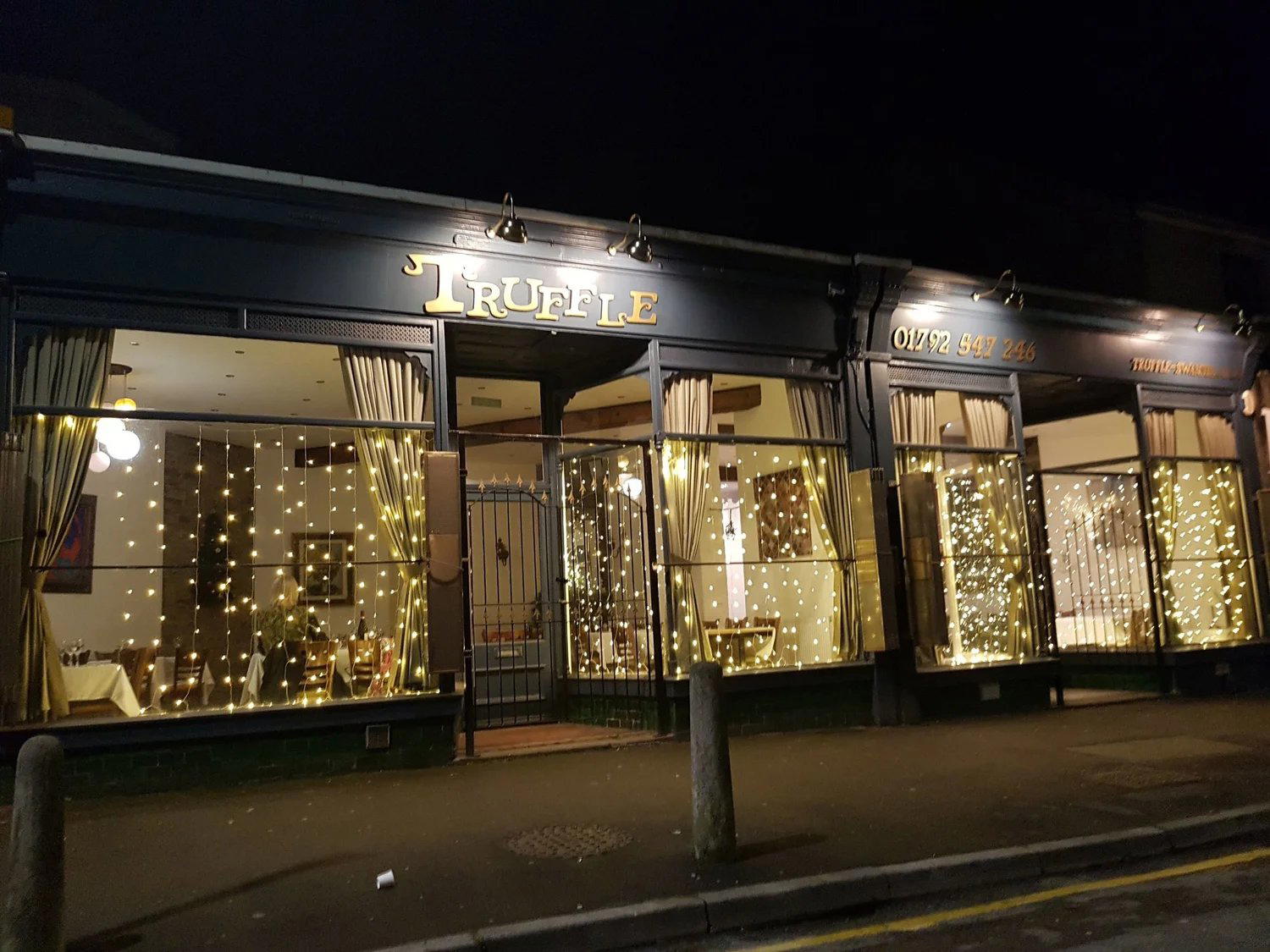
| Truffle | French Contemporary Bistro | $20–30 | Not listed | Brynmill |
| Môr | Modern European Bistro | $50–100 | The Good Food Guide GFG Good | Mumbles |
| Turtle Bay Swansea | Caribbean Jerk Pit | $20–30 | Not listed | City Centre |
| Gilligan's Restaurant | British Comfort Food & Gastropub | $30–50 | Not listed | Sketty |
| Slice | Modern British Fine Dining | $50–100 | Michelin Plate · The Good Food Guide GFG Good | Sketty |
Continue exploring
More in Swansea
Restaurants in Swansea
All restaurants in Swansea →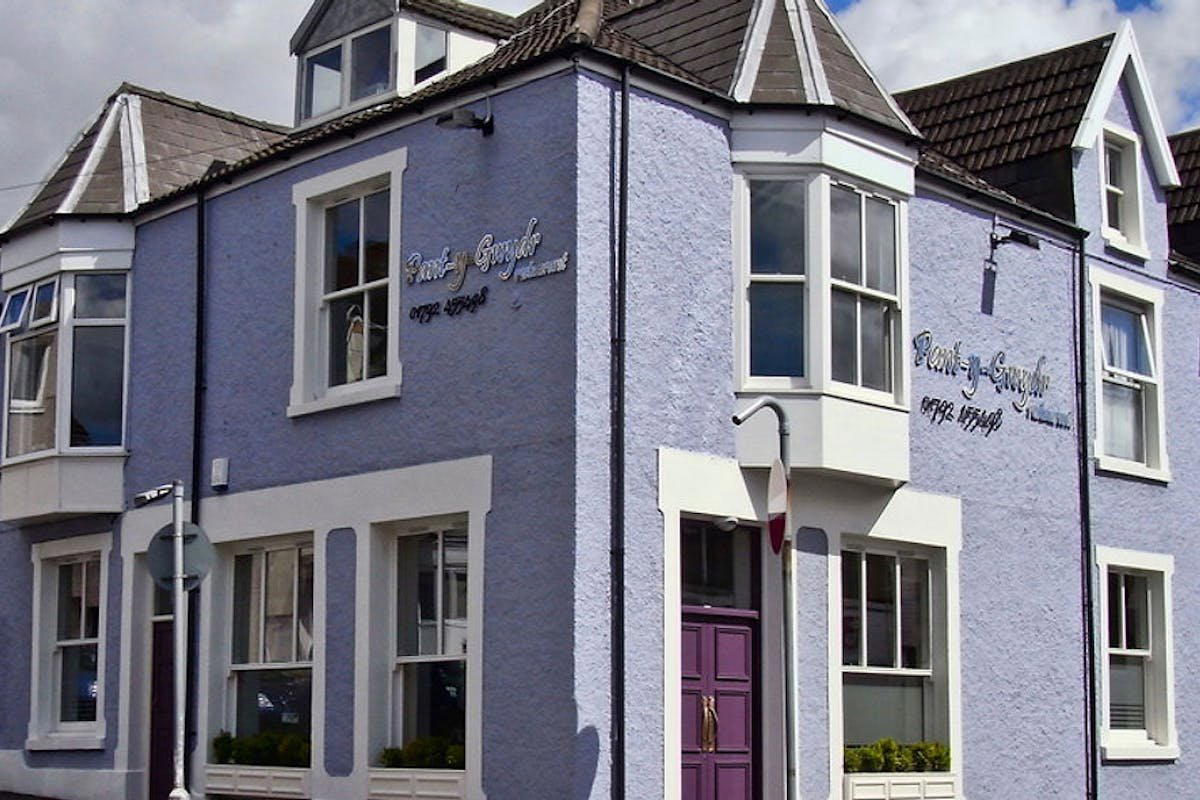
Hotels in Swansea
Browse all →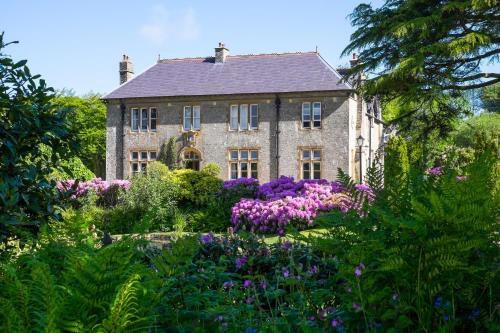
Details
- Classic
- Cozy
- Elegant
- Date Night
- Special Occasion
- Standalone
- Local Sourcing
- A La Carte
- Vegetarian Friendly
- Vegan Options
- Gluten Free Options
Current opening hours
- Monday
- Closed
- Tuesday
- 12–1:30 PM, 5:45–9 PM
- Wednesday
- 12–1:30 PM, 5:45–9 PM
- Thursday
- 12–1:30 PM, 5:45–9 PM
- Friday
- 12–1:30 PM, 5:45–9 PM
- Saturday
- 12–1:30 PM, 5:45–9 PM
- Sunday
- Closed
Hours can change for holidays and private events. Hours as of .
Busy and busy bistro atmosphere with excellent vibes from diners enjoying classic French dishes.