Hanson at the Chelsea

The Good Food Guide GFG Good
Our verdict
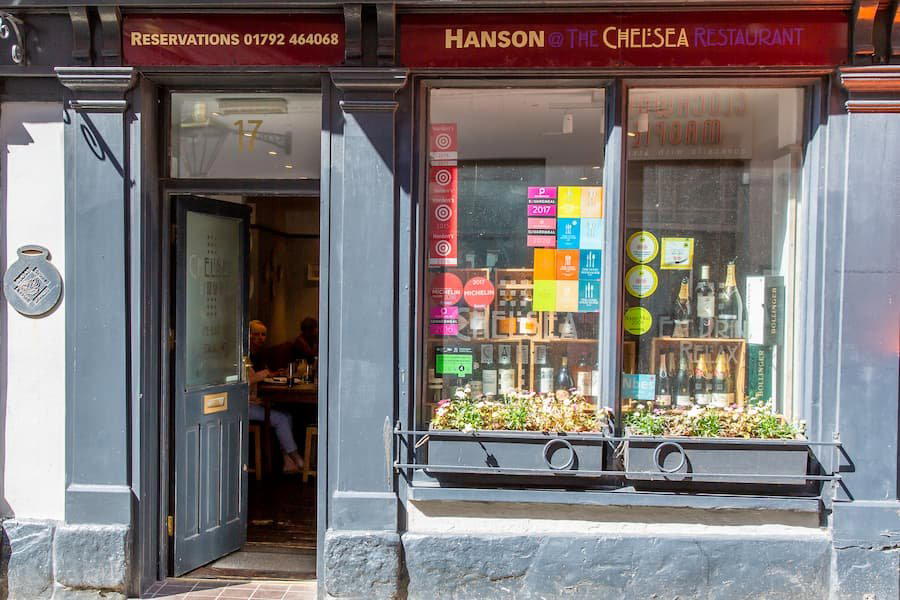
Since 2007, Hanson at the Chelsea has held its position as a Swansea dining institution built on classical French technique, Welsh lamb, Cornish seafood, and local produce sourced with genuine intent. The room is small and deliberately unhurried, with banquette seating and a menu that treats the tasting format as a proper occasion. A comprehensive whisky list and a wine selection weighted toward the classics round out an evening that earns its reputation by consistency rather than novelty.

Pearl is the En Primeur Club membership app — saves, bookings, and concierge access live there. Same editors, same standards.
- Address
- 17 St Mary St, Swansea SA1 3LH, United Kingdom
- Phone
- +44 1792 464068
- Hours
- Mon 7–9 PMTue–Sat 12–2 PM, 7–9 PMSun Closed
- Website
- hansonatthechelsea.co.uk
- Directions
- Get directions
The menu
What to order
- Scallops with Thai sauce and crispy noodles
- Rack of lamb
- Hake
- Cod Kiev
- Fish cakes
- Smoked salmon with crab and prawn blinis
St Mary Street and the Case for Classical Cooking in Swansea
Swansea's dining scene has never been structured around a single dominant style. The city sits at a productive intersection: close enough to London's influence to absorb classical European technique, grounded enough in its Welsh identity to insist on local produce, and sufficiently far from the trend cycle to let genuinely good restaurants settle into a long, unhurried rhythm. Hanson at the Chelsea, at 17 St Mary Street, belongs to that last category. Established in 2007, it has operated long enough to move past the question of whether it belongs in any serious conversation about Welsh dining. It does. The more interesting question is what it tells you about how classical cooking survives and sustains itself outside the major metropolitan markets where it typically receives attention.
The room answers that question before the menu does. Banquette seating, coordinated blond-wood furniture, and a scale that keeps the dining space genuinely intimate rather than performatively so — this is a room designed for a particular kind of evening, one that moves at the speed of the cooking rather than the pace of a busy service. In an era when restaurants in cities like London have largely abandoned this register in favour of open kitchens and counter formats, the persistence of this kind of convivial, comfortable dining room is itself an editorial statement. For a parallel in the premium British market, the same logic operates at places like Hand and Flowers in Marlow or hide and fox in Saltwood, where the room reinforces rather than competes with the food.
The Sourcing Foundation: Welsh Lamb, Cornish Seafood, and What They Signal
The sourcing logic at Hanson at the Chelsea is legible on the menu and worth reading carefully. Welsh lamb appears in its most classical form — herb-crusted roast rack, accompanied by a miniature shepherd's pie that functions as both a garnish and a second argument for the same ingredient. This is the kind of dish that depends entirely on the quality of the primary material; without genuinely good Welsh lamb, the classical preparation has nothing to work with. The same principle holds for the Cornish seafood section, which includes new-season lobster and a composition of salmon, roast scallop, king prawns, and a cockle and clam herb butter sauce that reads as both a map of the British coastline and an argument for buying from it.
Cornish seafood and Welsh lamb appearing together on a single menu in South Wales is not accidental. It reflects the same sourcing discipline that defines the better end of British regional cooking, the approach you see formalised in places like Moor Hall in Aughton or L'Enclume in Cartmel, though at Hanson the register is classical rather than modernist. The kitchen at Le Bernardin in New York, see Le Bernardin in New York City, makes a similar case for seafood sourcing as the central discipline of serious cooking, though in a very different format and price bracket. The point is that prioritising where ingredients come from is not a trend or a marketing position; it is a technical requirement for cooking that depends on flavour rather than technique to do the heavy lifting.
Starters develop this logic further. Swansea smoked salmon with crab and prawn blinis signals provenance from the first course. A handmade Gala-style pork pie with a quail's egg embedded in the set, this is British charcuterie tradition executed with care, a category that has seen a broader revival across the UK market in recent years. Goat's cheese Chantilly with an assiette of beetroot sits in a different register: lighter, more vegetable-forward, evidence that the kitchen has range beyond the main proteins.
The Classical Framework: What the Menu Structure Communicates
The menu at Hanson at the Chelsea is structured around the classical European framework that defined serious British restaurant cooking through the 1980s and 1990s before molecular gastronomy and modernist tasting menus shifted the centre of gravity. That framework, starters, mains, desserts, with a tasting menu running alongside, has since been reoccupied by a younger generation of chefs who have returned to it after the experimental decade ran its course. At places like Gidleigh Park in Chagford or Le Manoir aux Quat' Saisons in Great Milton, the classical approach is positioned as a deliberate high-end choice. At Hanson, it reads as continuity: the kitchen has been cooking this way since 2007, and the consistency is the point.
Main courses include tournedos of beef and oven-crisped confit duck with gratin dauphinoise, port sauce, and glazed orange, a dish that requires patience in both preparation and execution and that places the kitchen squarely in the tradition of French-inflected British cooking that Waterside Inn in Bray represents at its most formal. Prime steaks and a porcini risotto with avocado, wild mushrooms, and crispy roots round out the main courses, giving the menu enough range to serve a table with divergent preferences without fragmenting into incoherence.
Desserts are described as a particular strength: a traditional syrup sponge pudding at one end of the register, a chocolate crémeux with a quenelle of white chocolate mousse at the other. This is a kitchen that treats the final course as a proper conclusion rather than an afterthought, which is rarer in this market than it should be. The tasting menu is noted as a considered option for those who want the kitchen to dictate the sequence.
Drinks, Pricing, and the Practical Shape of an Evening
The wine list is weighted toward classics rather than natural or experimental selections, with affordable options across the board and a tier of reliably good luxuries for those who want them. The whisky selection is comprehensive and comes with genuine endorsement from regular visitors, in a city where independent restaurants at this level are not numerous, a strong whisky list functions as a meaningful differentiator. Swansea's broader dining and drinking options are covered in our full Swansea restaurants guide, our full Swansea bars guide, our full Swansea hotels guide, our full Swansea wineries guide, and our full Swansea experiences guide.
In the broader Swansea market, Hanson at the Chelsea occupies a different tier from Slice (Modern British), which operates at £££ with a more contemporary approach, and from The Shed (Traditional British) at the ££ bracket. Môr represents a different register again. Among these options, Hanson occupies the position of the established classical house: not the most experimental, not the most accessible on price, but the one with the longest track record and the clearest sense of what it is trying to do. The address at 17 St Mary Street is direct to reach from Swansea city centre, and the format rewards booking in advance rather than arriving without a reservation.
Frequently asked questions
Would Hanson at the Chelsea be comfortable with kids?
The room is small and homely with banquette seating, which suits a quieter family meal better than a lively group outing. The classical menu — pork pie, roast lamb, steak, risotto — has clear, recognisable dishes that translate well across age groups. It is worth calling ahead to check table availability given the compact size of the restaurant at 17 St Mary Street.
What's the vibe at Hanson at the Chelsea?
Convivial and unhurried, with a room that reads more neighbourhood dining room than formal restaurant — blond-wood furniture, banquette seating, and a scale that keeps the atmosphere personal. Andrew Hanson has been running it from the same address since 2007, and that continuity shapes the feel: the cooking is confident rather than experimental, the setting comfortable rather than theatrical.
Has Hanson at the Chelsea won any awards?
Hanson at the Chelsea has received recognition including: ‘A staple of the Swansea area’ since 2007, Andrew Hanson’s characterful restaurant continues to please, and his cooking never gets old – thanks to a solid classical grounding, excellent local ingredients and a focus on unfettered indulgence….
What's the signature dish at Hanson at the Chelsea?
The menu doesn't pivot around a single set-piece, but the Cornish seafood section draws particular attention — specifically the 'rendezvous of salmon' with roast scallop, king prawns, and a cockle and clam herb butter sauce. The herb-crusted roast rack of Welsh lamb served alongside a mini shepherd's pie also appears regularly as a benchmark of how Hanson uses regional produce within a classical French framework.
Comparison Snapshot
Comparable venues nearby, for context on price, style, and recognition.
| Venue | Cuisine | Price | Awards | Notes |
|---|---|---|---|---|
| Hanson at the ChelseaThis venue — the venue you are viewing | Classical French Seafood Bistro | $50–100 | The Good Food Guide GFG Good | Not listed |
| Môr | Modern European Bistro | $50–100 | The Good Food Guide GFG Good | Mumbles |
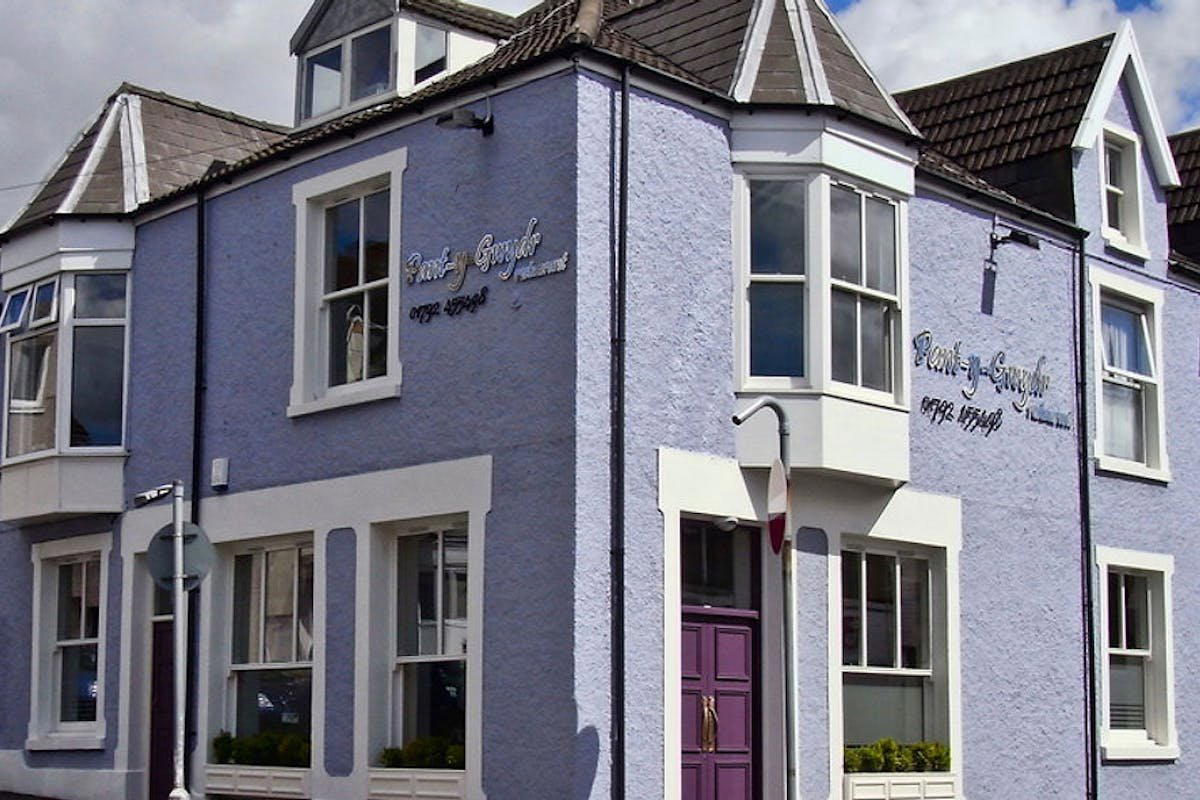
| Pant-y-Gwydr restaurant | Classic French with Vegan | $30–50 | Not listed | city centre |
| Nok Nok Authentic Thai Restaurant Mumbles | Authentic Thai | $20–30 | Not listed | Mumbles |
| Gilligan's Restaurant | British Comfort Food & Gastropub | $30–50 | Not listed | Sketty |
| Truffle | French Contemporary Bistro | $20–30 | Not listed | Brynmill |
Recognition history
Dated appearances from independent guides and award organizations, with the underlying list record or original source where available.
The Good Food Guide GFG Good
The Good Food Guide
Continue exploring
More in Swansea
Restaurants in Swansea
Browse all →
Bars in Swansea
Browse all →
Hotels in Swansea
Browse all →

Details
- Romantic
- Cozy
- Intimate
- Classic
- Date Night
- Business Dinner
- Celebration
- Special Occasion
- Standalone
- Extensive Wine List
- Local Sourcing
- Sustainable Seafood
- A La Carte
- Set Menu
- Wine
- Pescatarian Friendly
- Allergy Accommodating
Current opening hours
- Monday
- 7–9 PM
- Tuesday
- 12–2 PM, 7–9 PM
- Wednesday
- 12–2 PM, 7–9 PM
- Thursday
- 12–2 PM, 7–9 PM
- Friday
- 12–2 PM, 7–9 PM
- Saturday
- 12–2 PM, 7–9 PM
- Sunday
- Closed
Hours can change for holidays and private events. Last verified .
Warm, welcoming, and cosy with mustard-yellow walls, banquette seating, blond-wood furniture, and classy background music; intimate and homely with closely packed tables that create a convivial but occasionally cramped feeling.