Boucarou Lounge
Boucarou Lounge occupies a corner of the East Village's Lower East Side border at 64 E 1st St, where the neighbourhood's long-running tension between dive-bar grit and polished hospitality plays out in a single room. The lounge format sits in a tier of New York drinking and gathering spaces that prizes atmosphere over spectacle, placing it alongside the area's more considered neighbourhood venues rather than the high-volume spots that dominate nearby blocks.
- Address
- 64 E 1st St, New York, NY 10003
- Phone
- +1 212 529 3262
- Directions
- Get directions
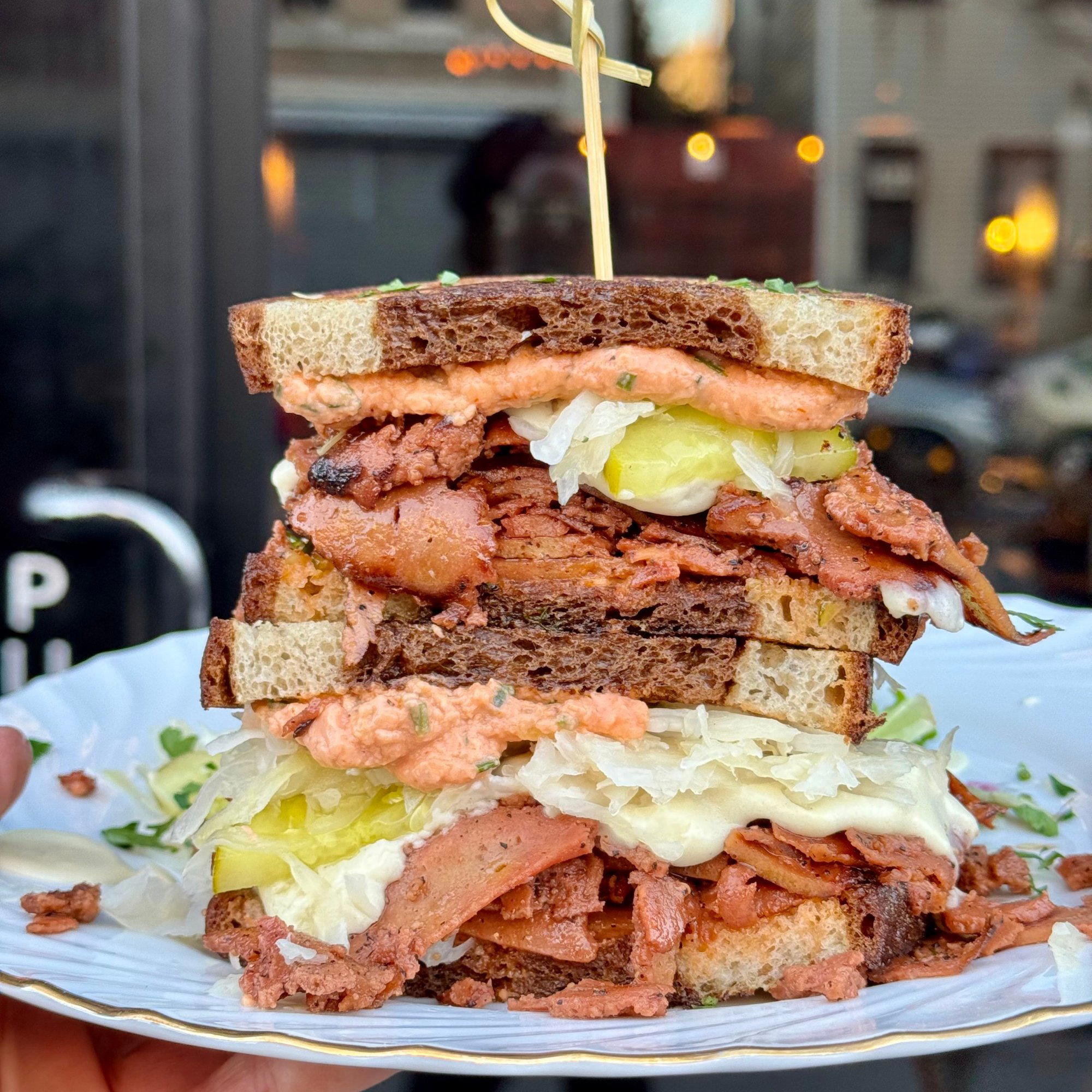
East Village's Quieter Register
The stretch of East 1st Street between First and Second Avenues has never been the loudest block in the East Village, and that restraint is the neighbourhood's actual selling point. Where the avenues pull crowds toward louder, higher-turnover operations, the side streets between them tend to collect the kind of venues that function as anchors for regulars rather than destinations for tourists. Boucarou Lounge at 64 E 1st St is a restaurant in New York City serving Senegalese-French-Japanese Fusion, with a price tier of 2, and it sits on this quieter register, in a corridor where the gap between a serious neighbourhood bar and a considered lounge experience is measured in craft and consistency rather than square footage or signage.
The East Village has long been one of New York's most contested hospitality blocks. It absorbed punk venues, Eastern European social clubs, and waves of culinary ambition that rippled outward from the opening of Veselka and similar fixtures. The hospitality culture that survived those cycles tends toward intimacy and reliability over novelty.
The Collaborative Floor: Service as Structure
In New York's mid-format lounge tier, the front-of-house dynamic tends to carry more editorial weight than critics typically assign it. At the level where tasting menus drive conversation, venues like Atomix and Eleven Madison Park have demonstrated that the collaboration between kitchen, floor, and drinks program is the product, not a support function. That principle scales down to the lounge format differently: without the architecture of a long tasting menu, the service team carries more of the pacing burden per visit.
A well-run lounge floor operates through sequencing that most guests never consciously register. The timing between a first round's arrival and the moment a second is suggested, the calibration of noise level to conversation, the fluency of the team in moving between tables at different stages of the evening: these are the signals that separate a room with atmosphere from one that merely claims it. In neighbourhoods as hospitality-dense as the East Village, guests accrue enough comparative data across a season to make those distinctions without needing to articulate them.
That dynamic also applies to how a drinks program gets communicated. The front-of-house team in a lounge setting carries product knowledge differently than a sommelier at a venue like Le Bernardin or Per Se, where the fine dining scaffolding creates space for extended wine dialogue. In a lounge, the same knowledge must be delivered faster, more conversationally, and with greater adaptation to guests who may not be signalling that they want education at all.
Where the Lounge Format Sits in New York's Spectrum
New York's drinking and gathering venues now occupy a spectrum that runs from the deliberately theatrical to the emphatically plain. On the high-production end, cocktail programs have become technical showcases, with clarified drinks, house-made amari, and ingredient provenance narrated in detail. On the other end, the resurgent interest in direct, unfussy neighbourhood bars reflects a reaction against that complexity. The lounge format occupies a middle tier: more considered than a dive, less performative than a destination cocktail bar, and more durable as a weekly-visit option than either extreme.
This tier is where regulars are built. A guest who visits a venue like Masa or Blue Hill at Stone Barns does so on a calendar of occasions. A guest who settles into a neighbourhood lounge does so on a rhythm of weeks. The economic and cultural logic of the lounge format depends on that rhythm, which in turn depends on the team dynamic being consistent enough that the room feels the same whether a guest arrives on a Tuesday or a Saturday.
Across American cities, this consistency challenge has shaped how lounge-format venues approach staffing and training. In San Francisco, venues like Lazy Bear have built collaborative service cultures into formally structured experiences. In Chicago, Smyth integrates floor and kitchen communication as a documented part of its format. The lounge model achieves something related but less structured: a shared understanding of the room's tempo that the team internalises through repetition rather than protocol.
The East Village Competitive Set
For a lounge operating on E 1st Street, the competitive frame is defined by what is within a ten-minute walk. The East Village and adjacent Lower East Side hold some of New York's highest bar and restaurant density, which means guests are rarely choosing between a neighbourhood lounge and a destination fine dining venue. They are choosing between several lounges, several natural wine bars, several cocktail programs, and several late-format venues that shift identity between 10pm and 2am.
In that set, the questions that matter are practical: Does the room hold enough seats to be viable on slow nights without feeling abandoned? Does the drinks selection give a regular enough rotation to stay interesting across a month of visits? Does the floor team recognise returning guests in a way that signals the venue is paying attention? These are not the criteria that generate press coverage, but they are the criteria that determine whether a lounge is operational five years from now.
Venues further afield that have cracked long-term neighbourhood loyalty include Frasca Food and Wine in Boulder and Emeril's in New Orleans, both of which operate in markets far less competitive than lower Manhattan but demonstrate that team coherence and consistent floor hospitality outlast any single menu cycle or press moment. The lesson applies to any format in any city: the room that knows its guests outlasts the room that impresses strangers.
For a broader orientation to New York City's dining and hospitality scene across all neighbourhoods and price tiers, see our full New York City restaurants guide. Further reading on collaborative service formats and long-form tasting experiences is available through our coverage of The French Laundry in Napa, Single Thread Farm in Healdsburg, Providence in Los Angeles, Addison in San Diego, The Inn at Little Washington, Atelier Moessmer Norbert Niederkofler in Brunico, and Dal Pescatore in Runate.
Just the Basics
Comparable venues nearby, for context on price, style, and recognition.
| Venue | Price | Notes |
|---|---|---|
| Boucarou LoungeThis venue — the venue you are viewing | $$ | Not listed |
| FUSION KITCHEN | $$ | Crown Heights (North), Asian Fusion Poke and Sushi |
| Red Bamboo | $$ | Greenwich Village, Vegan Global Comfort Food |
| Caffè Tusk | $$ | Midtown South-Flatiron-Union Square, Euro-inspired all-day café & bistro |
| Carla | $$ | Queensbridge-Ravenswood-Dutch Kills, Modern Mexican-Asian Fusion |
| WARUDE | $$ | Bedford-Stuyvesant (West), Japanese-Mexican Fusion Bowls and Tacos |
Continue exploring
More in New York City
Restaurants in New York City
Browse all →


Bars in New York City
Browse all →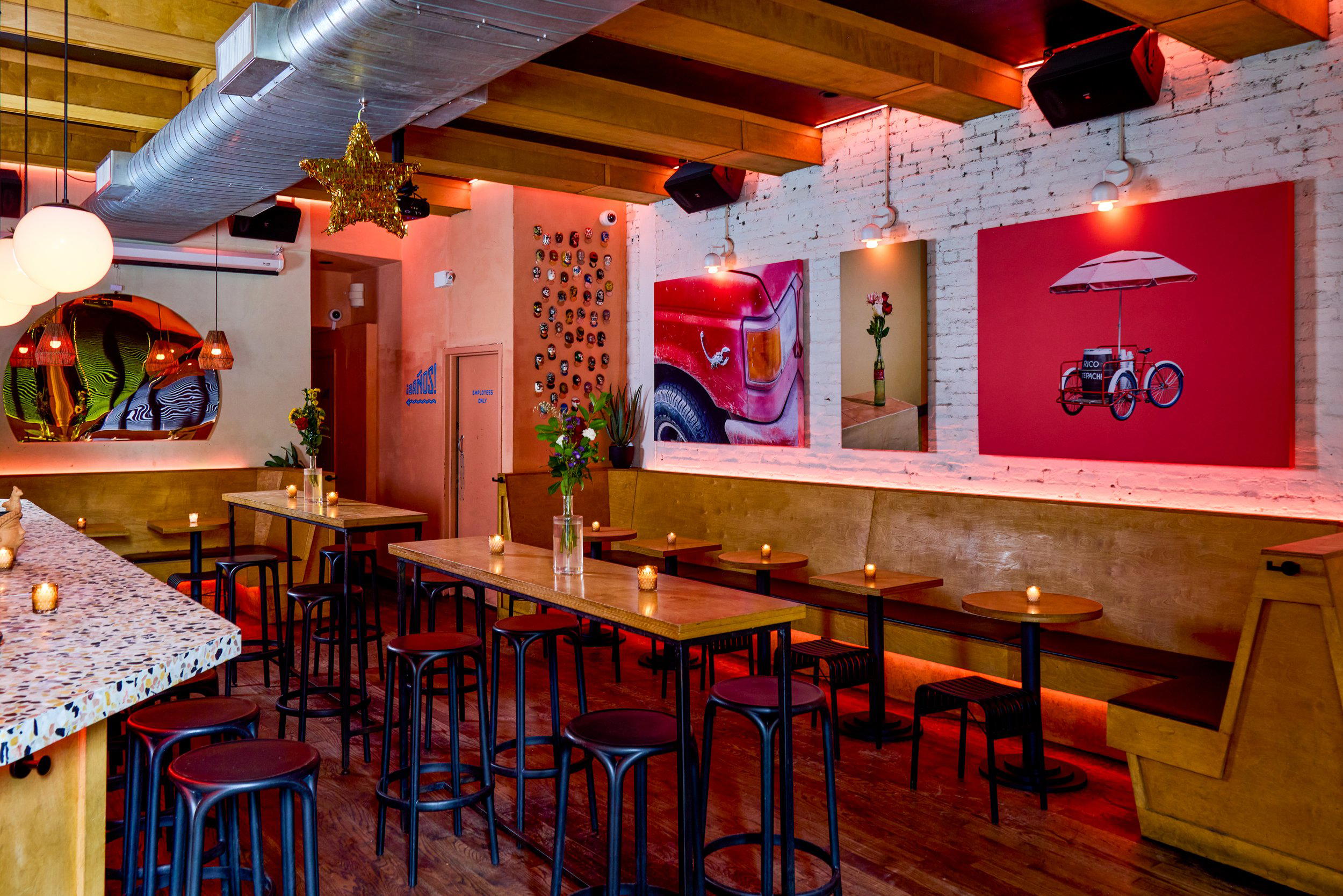

Hotels in New York City
Browse all →








At a Glance
- Elegant
- Intimate
- Trendy
- Date Night
- Late Night
- Rooftop
- Craft Cocktails
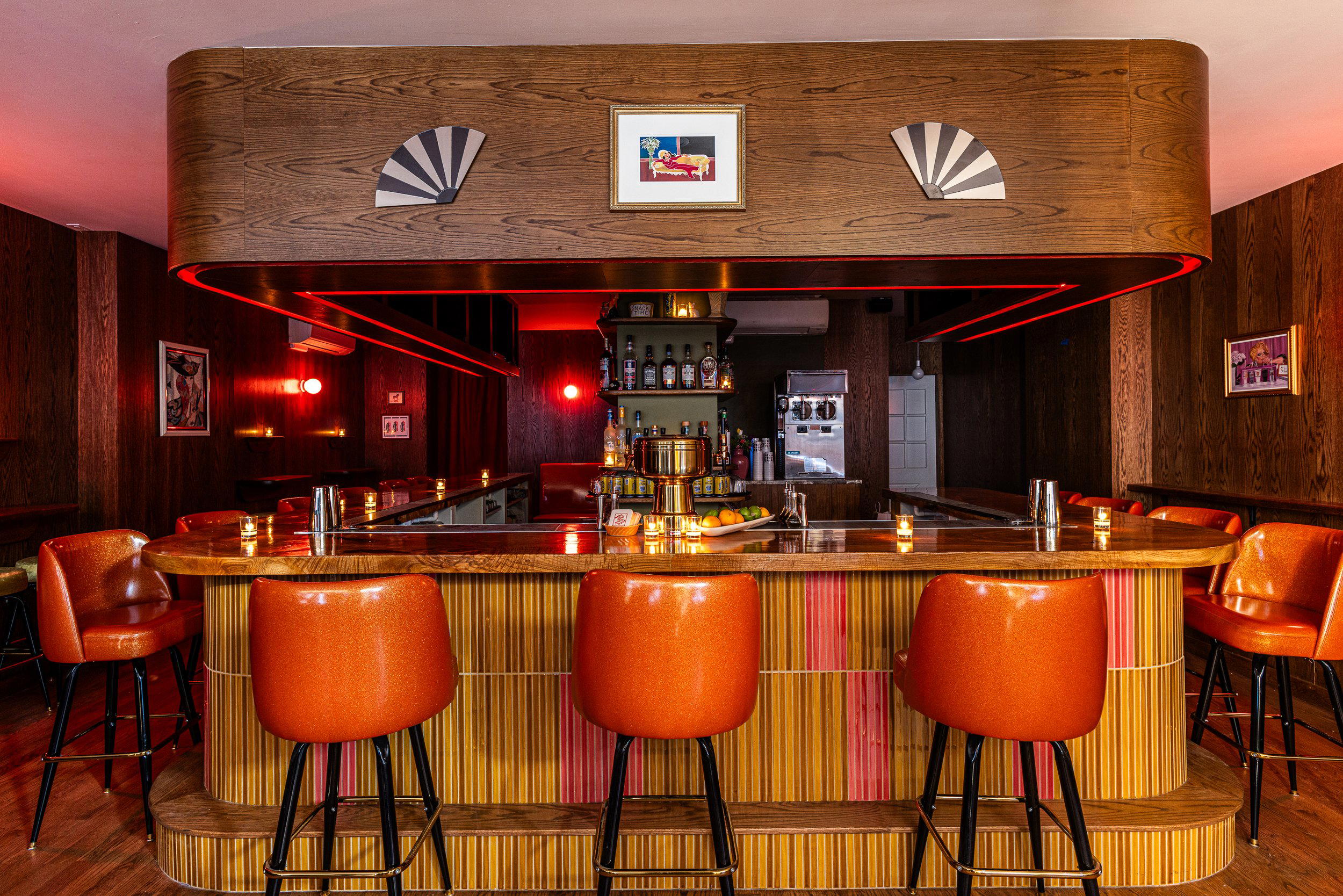
Soft red velvet seats, draped curtains, and posh atmosphere well-suited for dining and dancing late into the night.