
Tabelog 100 #98
Our verdict
BONNET D'ANE places Tokyo’s bread culture in a residential Setagaya register: small-format, take-out driven, and serious enough to have been selected for Tabelog Bread TOKYO 100 in 2020 and 2022. The appeal is not ceremony but sourcing logic: bread, Western-style sweets, and sandwiches treated as daily craft rather than luxury dining theater.

Pearl is the En Primeur Club membership app, where members save venues, book tables and use the concierge.
The menu
What to order
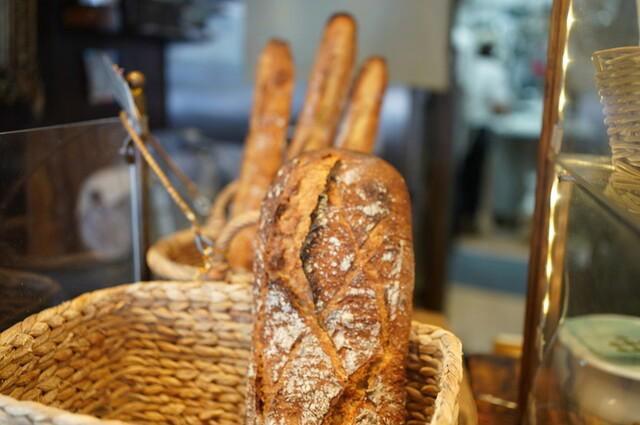
- Baguettes
- Croque monsieur
- Ham and butter sandwich
- Ham and cheese sandwich
Approaching Mishuku from Sangenjaya, Tokyo’s bakery map feels less like a checklist of famous counters than a neighborhood economy of flour, butter, fruit, dairy, and time. BONNET D'ANE belongs to Setagaya’s quieter strain: a bread shop where the transaction is quick, judgment is immediate, and the point is what goes into the bag before the day moves on.
Tokyo takes bread seriously because it has never treated it as imported garnish. Its stronger bakeries sit between French technique, Japanese precision, and commuter practicality: viennoiserie for breakfast, shokupan for home, sandwiches for train days, sweets for gifting. In that context, a Tabelog Bread TOKYO 100 selection in both 2020 and 2022 matters, placing the shop in a category where repeat local use, not destination-dining spectacle, carries the weight.
Setagaya bread culture runs on daily use, not dining-room theater
Read this address through its district. Sangenjaya and Mishuku sit outside the polished luxury circuits of Ginza and Marunouchi, yet have the residential density and appetite to support specialist food shops. Bread here competes with convenience-store reliability, department-store basement polish, and expanding café culture. A bakery must justify itself through freshness, range, and timing rather than table service.
BONNET D'ANE’s categories, bread, Western-style sweets, and sandwiches, put it in the practical middle of that ecosystem. This is not a tasting-menu bakery concept or hotel pâtisserie annex, but the Tokyo model in which a small shop covers several eating occasions: something for the walk home, the office, or a sweet that needs no reservation or formal dessert course.
Ingredient sourcing is the key lens. Bread shops reveal priorities through base materials before decoration: flour selection, fermentation discipline, dairy quality, fruit handling, and how fillings balance against bread rather than overwhelm it. Tokyo’s serious bakeries win loyalty by controlling decisions casual buyers may not verbalize but notice over repeat visits. A sandwich needs structure; a sweet bread fails if sugar flattens grain; pastry depends on fat, lamination, and timing more than display.
That is why the Tabelog Bread TOKYO 100 signal is useful. It does not place the shop with a chef-led French room such as DAN, nor the higher-spend evening category of Yakiniku Rokkoen. It sits nearer the accessible, specialist end of Tokyo dining, where narrow format and frequent repeat use matter more than ceremony. Nicolas and shiva curry wara, though different categories, illustrate the same Tokyo truth: modest pricing does not imply casual standards.
The strongest reading is as a specialist pantry stop
Tokyo travel writing often overweights the reservation chase, missing much of how the city eats. A more revealing day may include a bakery, kissaten, depachika counter, standing soba shop, and late dinner, each with its own rules. In that sequence, BONNET D'ANE is not competing for the evening, but for precision at small scale.
The take-out format sharpens expectations. There is no dining room to soften a weak product, no long beverage pairing to extend the narrative, no chef biography required. The bread must travel, hold, and make sense in the hand. That pressure often produces a more honest assessment than formal dining: the purchase either has structure and flavor after leaving the counter, or it does not.
For travelers, this stop corrects a common Tokyo itinerary mistake. Acclaimed restaurants can make lunch and dinner feel overplanned, while bakeries reward looser movement through neighborhoods. Setagaya is better read through walking routes than landmark hopping. A bakery purchase can sit between coffee, vintage shops, a residential stroll, and a later meal in Shibuya or Ebisu without turning the day into a timetable.
EP Club readers mapping a broader Tokyo food day can pair this bakery visit with sharply different formats rather than stacking similar meals. For seafood and charcoal cooking, see . 鮪と炭火焼き うお炭 秋葉原店; for Shinjuku dining context, 12/10 Shinjuku ten; for skewers, 124. KAGURAZAKA (Yakitori); for a graphic café register, 2D Cafe; and for curry, 3 Chome no Curry Ya San. The broader city index is here: Our full Tokyo restaurants guide, with adjacent planning in Our full Tokyo hotels guide, Our full Tokyo bars guide, Our full Tokyo wineries guide, and Our full Tokyo experiences guide.
Why the sourcing question changes the order
At bakeries, ordering by visual appeal can mislead. The smarter read covers categories that test different sourcing and technical decisions: a plain or lightly filled bread to judge dough, a sandwich for structure and balance, and a Western-style sweet to see how dairy, fruit, chocolate, or custard are handled. That respects the format without asking it to behave like a restaurant.
The price tier matters editorially. Tokyo has luxury bread counters and hotel bakeries where packaging and location add weight to the bill. BONNET D'ANE operates in a more everyday bracket, making the award recognition more telling. Inexpensive does not mean incidental; it means the margin for error is smaller because the shop must earn return visits from residents, not just occasional traveler attention.
There is a wider Japan itinerary point. Bread culture is not confined to Tokyo, and comparing formats across cities shows how local demand shapes small food businesses. For a different regional lens, see -Grilled beef Sukiyaki- KAMAKURA TANUKIAN 鎌倉 たぬき庵 in Kamakura.cafe in Osaka.know in Kumamoto, (Shoku) Vietnam in Kawasaki, [Curry Senmon Ten] Maruyama Kyoju. in Sapporo, and [ki:] in Kyoto. For readers tracking Japanese food culture abroad, Jōdo Saké Bar in Los Angeles and Onigiri Time in Pasadena show how formats change once removed from home context.
The verdict is practical: this is a Tokyo bakery to understand through discipline rather than drama. Its place in the Bread TOKYO 100 list gives the trust signal; its Setagaya setting explains the rhythm; its mix of bread, sweets, and sandwiches makes the sourcing question visible across more than one purchase. In a city where meals can become overdetermined, that clarity has its own value.
Frequently asked questions
What's the vibe at BONNET D'ANE?
It reads as a take-out bread stop in Setagaya rather than a sit-down bakery, with service oriented around bread, sweets, and sandwiches. The address is in Mishuku, Tokyo, and the shop opened in 2013.
What's the pricing like at BONNET D'ANE?
Pricing at BONNET D'ANE is listed as JPY 1,000 - JPY 1,999 - JPY 999 View spending breakdown.
How do I find BONNET D'ANE?
BONNET D'ANE is located in Tokyo.
Is BONNET D'ANE reservation-only?
No. the public record lists reservations as available, while the service format is take-out, so it operates as a bread shop rather than a reservation-led dining room. It is open Thursday to Sunday from 11:00 AM to 5:00 PM. Check the venue's official channels for the latest details.
What's BONNET D'ANE best at?
The clearest draw is bread, backed by its Tabelog 100 Bread Tokyo 2022 selection. The menu categories also include sweets and sandwiches, and the price range sits at JPY 1,000 to JPY 1,999.
Price and Recognition
Comparable venues in the metro at similar price points.
| Venue | Cuisine | Price | Awards | Notes |
|---|---|---|---|---|
| BONNET D'ANEThis venue (the venue you are viewing) | French-style bakery & sandwich shop | $10–20 | Tabelog 100 #98 | Not listed |
| moonbow | Curry bar | $10–20 | Tabelog 100 #96 | Shibuya, Curry bar |
| L'atelier de Plaisir | Artisanal Bakery & Café | $10–20 | Tabelog 100 #46 | Setagaya, Artisanal Bakery & Café |
| CACAO SAMPAKA Marunouchi honten | Artisanal Chocolate & Sweets | $1–10 | Tabelog 100 #15 | Chiyoda, Artisanal Chocolate & Sweets |
| HILLSIDE PANTRY Daikanyama | Bakery café and deli | $10–20 | Tabelog 100 #20 | Shibuya, Bakery café and deli |
| Daily Chico | Soft serve ice cream shop | $1–10 | Tabelog 100 #87 | Nakano, Soft serve ice cream shop |
Recognition history
Dated appearances from independent guides and award organizations, with the underlying list record or original source where available.
Tabelog 100 #98 · No. 98
Tabelog · Tabelog 100 - Bread - TOKYO - 2022














