Located on Rue Saint-Augustin in Paris's 2nd arrondissement, Bolo Bolo sits within one of the city's most active dining corridors, where ethical sourcing and environmental consciousness are reshaping how kitchens operate. The address places it steps from the Opéra quarter, in a neighbourhood where independent restaurants are carving distinct identities against the backdrop of grand French dining traditions.
Pearl is the En Primeur Club membership app — saves, bookings, and concierge access live there. Same editors, same standards.
- Address
- 10 Rue Saint-Augustin, 75002 Paris, France
- Phone
- +33 1 40 20 96 27
- Website
- boloboloparis.com
- Directions
- Get directions
 Saves & bookings on Pearl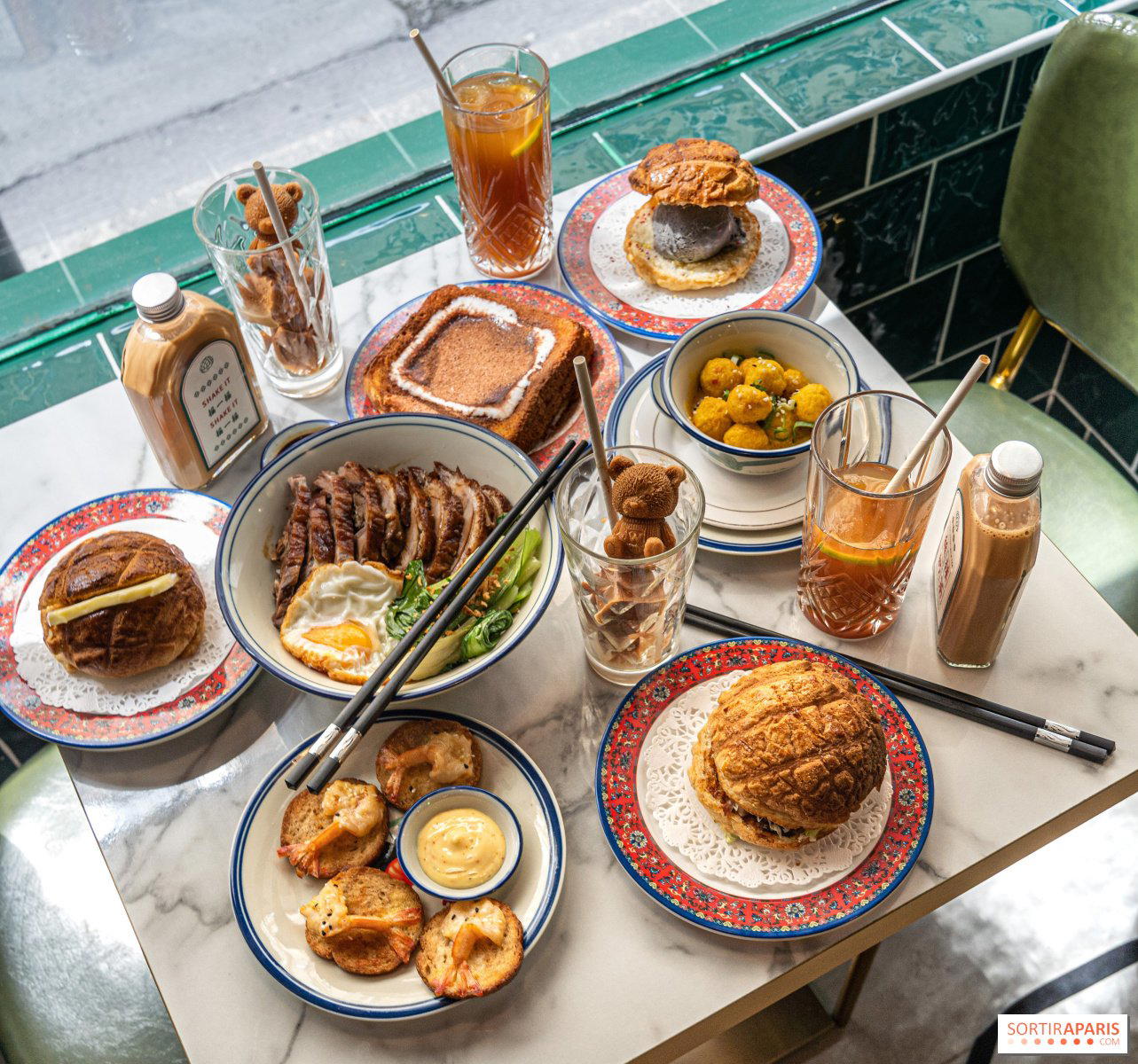
Where Paris's 2nd Arrondissement Tests Its Appetite for Responsible Dining
Rue Saint-Augustin runs through a part of central Paris that rarely gets the editorial attention lavished on the Marais or Saint-Germain, yet the 2nd arrondissement has steadily accumulated a dining scene that repays close attention. The street sits at a pressure point between the financial district's lunch trade and the Opéra quarter's evening foot traffic, conditions that tend to produce restaurants with clear propositions rather than broad-appeal menus designed to capture every passing diner. Bolo Bolo occupies this address at a moment when that proposition — in this district and across Paris — increasingly involves a reckoning with how ingredients arrive at the kitchen door.
Across the French capital, a meaningful cohort of independent restaurants has begun treating sourcing transparency as a core editorial statement rather than a box to tick for certification purposes. Kitchens that once listed a supplier name in small print at the bottom of a menu now build the logic of the menu itself around what their producers can provide each season. That structural shift changes how a diner engages with a meal: the question moves from "what do I want tonight?" to "what does this kitchen have access to right now, and what does that tell me about how they operate?" Bolo Bolo enters that conversation from its position on a street where the surrounding neighbourhood demands both creative independence and commercial legibility.
The Ethics of the Seasonal Plate in Contemporary Paris
French fine dining has long claimed a relationship with seasonal produce, but the claim has historically been more aesthetic than operational. The haute cuisine tradition, represented at its formal apex by addresses such as L'Ambroisie on the Place des Vosges or Le Cinq at the Four Seasons Hôtel George V, draws on the full resources of France's agricultural regions but does so within kitchens where luxury ingredients, airfreighted produce, and controlled supply chains remain standard. The newer ethical sourcing movement operates on a different logic: shorter chains, higher perishability tolerance, and menus that accept constraint as a design parameter rather than a problem to be engineered around.
This is the context in which kitchens positioned between neighbourhood bistro and destination restaurant find their clearest differentiation. Rather than competing on the terms set by three-Michelin-star institutions, they establish credentials through producer relationships, waste-reduction discipline, and a willingness to let supply dictate menu shape. Arpège, Alain Passard's Left Bank landmark, established the template for a Paris kitchen oriented around vegetable sourcing and farm-to-table rigour at a high level. Alléno Paris au Pavillon Ledoyen has explored its own version of ingredient traceability at the luxury end. Bolo Bolo operates at a different register of scale and price, but the underlying argument, that what a kitchen chooses not to use matters as much as what it does, runs through restaurants across multiple tiers of the Paris dining ecosystem.
The 2nd Arrondissement as a Frame for Independent Kitchens
The neighbourhood itself shapes what is possible. Unlike the heavily touristed areas around Notre-Dame or the Eiffel Tower, the corridor between the Bourse and the Grands Boulevards sustains a local lunch and dinner clientele alongside visitors who arrive with a specific address in mind rather than a general search for somewhere to eat. That audience rewards kitchens that take positions: on sourcing, on format, on the degree to which they will explain or defend their choices. The 2nd arrondissement has attracted a cluster of independently minded addresses over the past decade, and 10 Rue Saint-Augustin sits within that cluster.
Seasonality, when it is practised with genuine operational commitment rather than used as a marketing frame, changes the rhythm of a kitchen visibly. Menus shift more often. Some ingredients disappear mid-service when supply runs short. The most committed kitchens extend the principle into waste reduction: stocks made from trim, fermented preparations that extend the usable life of produce, desserts built from components that would otherwise be discarded. These are not novel techniques, French kitchens have always practised them in some form, but framing them explicitly as part of a restaurant's identity is a more recent development, and one that aligns with where younger Paris diners, in particular, are directing their attention and spending.
France's Wider Sustainability Conversation and What It Means for Paris Tables
The pressure toward more accountable sourcing is not limited to independent city restaurants. Regional addresses that have held their positions for decades are navigating the same questions. Flocons de Sel in Megève draws on Alpine terroir as a defining characteristic. Mirazur in Menton has built an international profile partly on its biodynamic garden and the proximity of the Mediterranean. Bras in Laguiole has maintained a relationship with Aubrac landscape and produce for generations. Troisgros in Ouches relocated partly to be closer to farming partners. What distinguishes these regional examples from a Paris address like Bolo Bolo is the proximity question: sourcing locally in a major capital requires more deliberate logistics than doing so from a rural property with land attached.
That logistics challenge is part of what makes Paris's ethical sourcing restaurants worth tracking. When a kitchen in the 2nd arrondissement demonstrates consistent short-chain sourcing, it is doing so against the structural friction of urban supply, which makes the commitment more operationally demanding than the same claim made by a restaurant with a kitchen garden on site. Comparable urban sustainability projects at scale can be observed at Lazy Bear in San Francisco, where a collaborative, market-driven format has become central to the restaurant's identity, and at Le Bernardin in New York City, where sourcing transparency around seafood has become a defining part of the kitchen's public positioning.
For readers building a Paris itinerary across the full range of French fine dining, from Kei's Franco-Japanese precision to the classical grandeur of Paul Bocuse's Auberge du Pont de Collonges or the Alsatian depth of Auberge de l'Ill, an address oriented around ethical sourcing and seasonal constraint offers a useful counterpoint. It locates a different set of values on the same culinary map. Addresses like Les Prés d'Eugénie, Auberge du Vieux Puits, La Table du Castellet, and Georges Blanc in Vonnas each represent a specific regional inflection of French cuisine; Bolo Bolo's positioning in central Paris asks a different question: what does responsible dining look like when the kitchen has no countryside to retreat to? See our full Paris restaurants guide for broader context across the city's dining tiers.
Planning Your Visit
Address: 10 Rue Saint-Augustin, 75002 Paris. Getting there: The address is within walking distance of the Opéra and Quatre-Septembre metro stations, making it accessible from most central Paris hotels without a taxi. Timing: Spring and autumn are the periods when short-chain sourcing kitchens in Paris operate at peak supply depth, with producer markets at their most varied and seasonal ingredient windows at their most pronounced. Dress: The 2nd arrondissement's independent dining scene skews toward smart-casual rather than formal; check directly with the restaurant for any specific guidance.
Continue exploring
More in Paris
Restaurants in Paris
Browse all →
Bars in Paris
Browse all →
Hotels in Paris
Browse all →



At a Glance
- Trendy
- Lively
- Casual Hangout
- Group Dining
Current opening hours
- Monday
- Closed
- Tuesday
- 12–2:30 PM, 7–10:30 PM
- Wednesday
- 12–2:30 PM, 7–10:30 PM
- Thursday
- 12–2:30 PM, 7–10:30 PM
- Friday
- 12–2:30 PM, 7–10:30 PM
- Saturday
- 12–2:30 PM, 7–10:30 PM
- Sunday
- 12–2:30 PM, 7–10:30 PM
Hours can change for holidays and private events. Last verified .
Trendy and crowded atmosphere evoking Hong Kong cha chaan teng vibe.
Know Before You Go
- Getting there
- 10 Rue Saint-Augustin, 75002 Paris, France