Bobo's
Our verdict
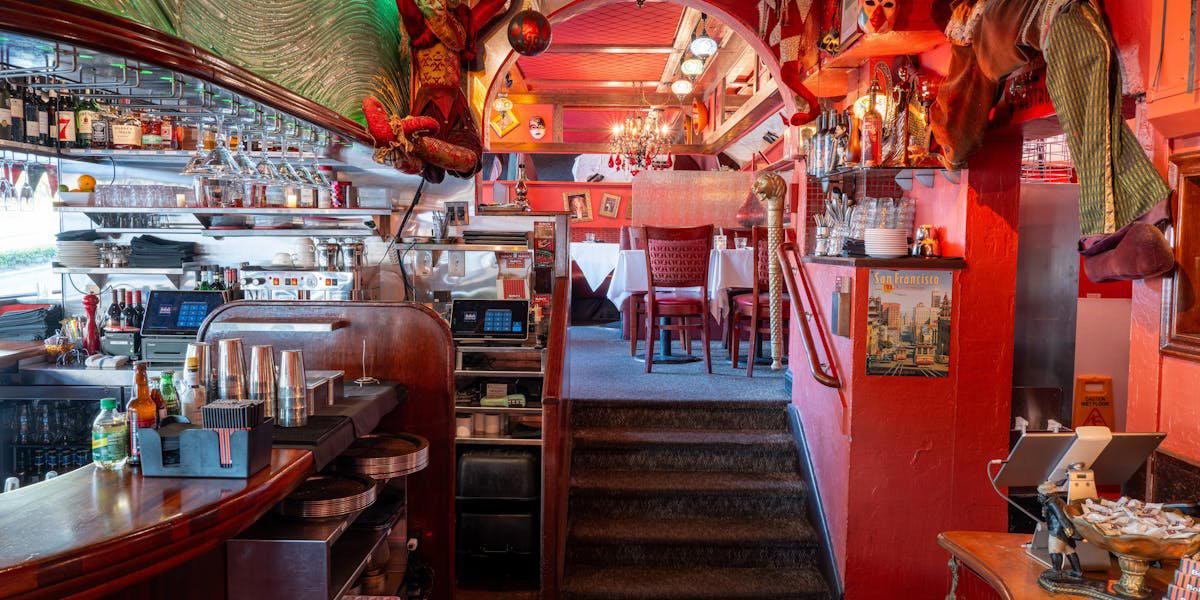
On Lombard Street in San Francisco's Marina district, Bobo's operates in a neighbourhood where casual neighbourhood staples and destination dining sit closer together than in most American cities. The address places it within reach of the city's broader California-produce tradition, where imported culinary technique meets locally sourced ingredients — a dynamic that defines much of San Francisco's contemporary restaurant conversation.

Pearl is the En Primeur Club membership app — saves, bookings, and concierge access live there. Same editors, same standards.
- Address
- 1450 Lombard St, San Francisco, CA 94123
- Phone
- (415) 441-8880
- Hours
- Mon ClosedTue–Thu 5–9 PMFri–Sat 5–10 PMSun Closed
- Website
- bobossf.com
- Directions
- Get directions
- Booking
- Book on OpenTable
The menu
What to order
- Bone-In Filet
- Dungeness Crab
- Filet Mignon
- Crab Cakes
Where Lombard Street Meets the Marina's Dining Vernacular
San Francisco's Marina district has never quite resolved its identity at the table. It is a neighbourhood of grocery-run proximity and weekend brunch lines, but also one that sits minutes from the city's more ambitious dining corridors. Lombard Street, in particular, runs through that tension: it is a transit artery and a local dining strip simultaneously. Bobo's, at 1450 Lombard, occupies that in-between space — not the destination-dining tier of SoMa or the Financial District, but not purely a neighbourhood convenience either. That positioning, wherever a restaurant lands along it, matters in a city where the gap between a $25 dinner and a $250 tasting menu is genuinely navigable on the same block.
The California Ingredient Question: Local Produce, Imported Method
The editorial context that leading frames a restaurant at this address is the broader California-ingredients story — one that San Francisco's dining culture has been writing, and occasionally rewriting, for decades. The city sits within reach of some of the continent's most productive agricultural land: the Central Valley, Sonoma and Marin County farms, the Pacific Coast fisheries. That access has made Northern California the testing ground for a particular cooking argument, that technique imported from French, Japanese, or modernist European kitchens can make its most coherent case when applied to ingredients pulled from within a hundred miles.
That argument runs through the work of the city's most recognised restaurants. Atelier Crenn translates classical French structure through a California produce lens. Benu routes East Asian technique through locally available ingredients at a level that has earned three Michelin stars. Lazy Bear applies progressive American method to a menu that reads the seasons through Northern California's farm calendar. The question for any San Francisco restaurant, whether at the top of the price tier or somewhere below it, is where it positions itself along the axis of technique versus product, and how honestly it answers that question through what arrives at the table.
Further down the California coast, Providence in Los Angeles makes a comparable argument around Pacific seafood, and Addison in San Diego applies French rigour to Southern California's grower network. The ingredient-technique intersection is not a San Francisco invention, but it is here that it has accumulated the densest critical record.
The Marina as a Dining Neighbourhood
The Marina district does not feature heavily in San Francisco's serious dining coverage, which tends to concentrate on Hayes Valley, the Embarcadero, and the blocks around Union Square. That geographic bias reflects where the city's most decorated kitchens are concentrated, but it also means that neighbourhoods like the Marina operate outside the primary critical lens. Restaurants on Lombard and Chestnut Streets serve a local population with different expectations than those of the Financial District lunch crowd or the SoMa tasting-menu set.
That is not a diminishment. Some of the most honest cooking in American cities happens at the neighbourhood level, where the audience is regular and the margin for performance-for-performance's-sake is thin. The comparison is instructive: Frasca Food and Wine in Boulder has sustained a serious wine and food program in a market that is not a primary dining capital, and the discipline required to do that is arguably more demanding than operating in a city where critical attention provides its own form of support. Smyth in Chicago similarly operates in a city where neighbourhood identity and fine dining credibility coexist, sometimes productively.
San Francisco's Broader Table: Where Bobo's Sits in Context
Quince and Saison occupy the leading bracket of the city's contemporary dining, with price points and booking windows that reflect that position. The comparison venues in that tier, Saison at $$$$ and Quince at $$$$, set a ceiling that most Marina neighbourhood restaurants do not target and do not need to.
Nationally, the conversation about ingredient-led American cooking is well-documented at the high-investment end: The French Laundry in Napa remains the reference point against which California's ambition is measured, while Single Thread Farm in Healdsburg has built its reputation on a farm-to-counter model that is among the most integrated in the country. Blue Hill at Stone Barns in Tarrytown has made the agricultural sourcing argument at the institutional level on the East Coast. These are the venues that have set the terms of the national discussion about local ingredients meeting global technique.
At the other end of the conceptual spectrum, more intimate urban formats, like Atomix in New York City or Atelier Moessmer Norbert Niederkofler in Brunico, have taken the local-ingredients argument in a more austere, high-concentration direction, where the room size and the tasting format both signal the seriousness of the sourcing commitment. That model has not penetrated the Marina in any obvious way, which says something about what the neighbourhood's audience actually wants from a dinner out.
For the full picture of where San Francisco's restaurants sit across price tiers, neighbourhoods, and culinary traditions, see our full San Francisco restaurants guide.
Planning a Visit
Bobo's is at 1450 Lombard St, San Francisco, CA 94123, in the Marina district. The neighbourhood is walkable from the Presidio and accessible from downtown by multiple bus lines. Parking on Lombard is available but inconsistent during peak evening hours. For comparison context against the city's higher-investment options:
| Venue | Cuisine / Style | Price Tier | Booking Difficulty |
|---|---|---|---|
| Bobo's | Marina neighbourhood dining | Not published | Not confirmed |
| Lazy Bear | Progressive American | $$$$ | High, ticketed format |
| Atelier Crenn | Modern French | $$$$ | High, weeks in advance |
| Benu | French-Chinese | $$$$ | High, Michelin three-star |
| Quince | Italian, Contemporary | $$$$ | High, destination tier |
| Saison | Progressive American | $$$$ | High, prix-fixe only |
Frequently asked questions
Is Bobo's a family-friendly restaurant?
Bobo's sits on Lombard Street in San Francisco's Marina district, a neighbourhood known for its residential character and proximity to the Presidio. The Marina draws a mixed crowd of locals including families, and the street-level location at 1450 Lombard St is accessible and walkable.
How would you describe the vibe at Bobo's?
The Marina district operates at a lower pitch than Hayes Valley or the Embarcadero, and Bobo's address on Lombard Street places it squarely in that neighbourhood rhythm. Expect a local-first atmosphere rather than a destination-dining scene. The area draws residents, weekend visitors from the Presidio, and a generally casual crowd rather than the industry-focused clientele you'd find further south on the peninsula.
Where exactly is Bobo's in San Francisco, and what's the easiest way to get there?
Bobo's is at 1450 Lombard St, San Francisco, CA 94123, in the Marina district. The location is walkable from the eastern edge of the Presidio and reachable from downtown San Francisco via several MUNI lines running along Lombard and Chestnut. Street parking in the Marina is more available than in most San Francisco neighbourhoods, making a drive a practical option for visitors arriving from outside the city.
What should I eat at Bobo's?
For context, Marina district restaurants at this address typically operate within California's ingredient-forward tradition, which at its most committed means seasonal produce sourced from the broader Bay Area and Central Valley. Checking directly with the restaurant for current offerings is the most reliable approach before visiting.
What's Bobo's's location?
Bobo's is located at 1450 Lombard St, San Francisco, CA 94123, San Francisco.
How hard is it to get a table at Bobo's?
No booking data or reservation policy is confirmed for Bobo's at this time. In the Marina district generally, neighbourhood restaurants on Lombard Street tend to operate with more accessible availability than downtown San Francisco's high-demand counters. Calling ahead or checking walk-in availability on arrival is a reasonable approach given the residential pace of the area.
Recognition, Side-by-Side
Comparable venues nearby, for context on price, style, and recognition.
| Venue | Cuisine | Price | Notes |
|---|---|---|---|
| Bobo'sThis venue — the venue you are viewing | Classic Steakhouse with Crab | $50–100 | Not listed |
| Alexander’s Steakhouse | Japanese-American Steakhouse | $100–150 | Financial District/South Beach |
| 5A5 Steak Lounge | Modern Japanese Wagyu Steakhouse | Not listed | Financial District |
| Bourbon Steak | Modern Steakhouse | $150–200 | Tenderloin |
| The Vault Steakhouse | Modern Steakhouse | $50–100 | Financial District/South Beach |
| Cala | Modern Mexican Seafood | Not listed | Hayes Valley |