bEAT
On Székesfehérvár's main civic square, bEAT occupies a position that puts it squarely in the conversation about what serious dining outside Budapest looks like in Hungary today. The address alone, Vörösmarty tér 1, signals intent: this is not a side-street local but a restaurant that has planted itself at the city's ceremonial centre. For travellers covering Hungary's provincial dining circuit, it warrants attention.
Pearl is the En Primeur Club membership app — saves, bookings, and concierge access live there. Same editors, same standards.
- Address
- Székesfehérvár, Vörösmarty tér 1, 8000 Hungary
- Phone
- +36301375560
- Website
- beat.hu
- Directions
- Get directions
 Saves & bookings on Pearl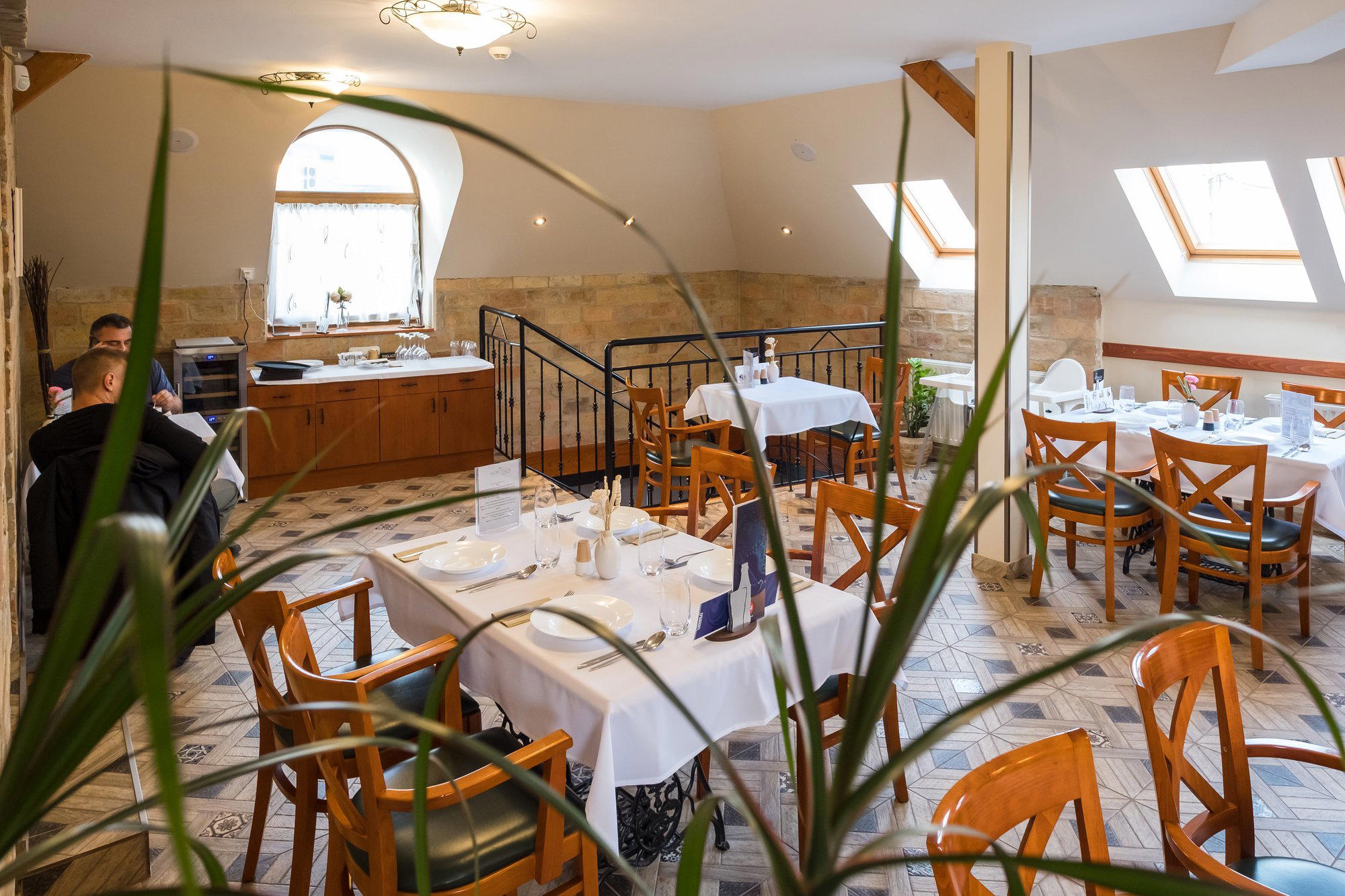
Dining at the Centre of a Provincial City's Ambitions
bEAT is a restaurant in Székesfehérvár serving modern Hungarian fusion cuisine. Roughly 65 kilometres southwest of Budapest, it is better known as Hungary's former royal seat and a compact city of around 100,000 people than as a stop on any gastronomic itinerary. That is precisely what makes bEAT's address significant. Vörösmarty tér 1 is not a quiet back street, it is the main civic square, the symbolic and geographical heart of the city. When a restaurant occupies that position, it is making a statement about who it intends to be for the community around it.
This is a pattern that has emerged across Hungary's secondary cities over the past decade. As Budapest's restaurant scene has stratified, with establishments like Stand in Budapest anchoring one end of the price and ambition spectrum, provincial cities have begun producing their own serious dining addresses, often in civic or heritage buildings that lend a kind of institutional weight to the project. bEAT fits that emerging template.
What the Location Tells You About the Room
Approaching a restaurant on a major civic square in a Central European city carries specific sensory expectations: wide-paved stone, the echo of footsteps, facades that have been municipal and grand in turns. Vörösmarty tér in Székesfehérvár delivers exactly that kind of approach, a pedestrian-scaled square surrounded by the layered architecture that Hungarian provincial cities tend to accumulate across centuries of Habsburg, socialist, and post-1989 rebuilding. Walking into bEAT from that square, the contrast between exterior civic scale and interior dining room is part of the experience. Whether the interior leans into that historic shell or works against it is the kind of detail that only a visit can confirm, but the setting frames the expectation firmly: this is not a casual neighbourhood spot.
That civic-square positioning also places bEAT in a different comparable set from the rural and small-town restaurants that have drawn attention elsewhere in Transdanubia. Properties like Öreg Prés in Mór, just 30 kilometres to the northwest, operate in a traditional register rooted in the local wine-producing culture of the Mór wine region. bEAT's urban address implies a different proposition: city-centre dining for a population that includes professionals, business travellers, and the kind of culturally engaged local audience that drives midweek covers in provincial dining rooms across Central Europe.
The Ingredient Question in Hungary's Provincial Dining
Across Hungary's secondary-city restaurant scene, the sourcing conversation has become increasingly central to how serious restaurants define themselves. The question is not simply whether a kitchen uses local produce, most do, for reasons of cost and availability as much as principle, but how deliberately it builds a culinary identity around specific regional supply chains.
The area surrounding Székesfehérvár sits within reach of some of Hungary's most characterful agricultural zones. The Mór wine region to the northwest produces Ezerjó and Tramini on mineral-rich soils. The Velence Hills and Lake Velence, less than 20 kilometres south, provide fish and a microclimate that suits particular market garden crops. The broader Transdanubian plain extends toward the Balaton basin, where producers like those working with Petrányi Csopak in Csopak have built supply relationships that connect wine-country agriculture directly to the plate.
For a restaurant in Székesfehérvár, this geography represents a genuine sourcing opportunity. The same instinct has shaped kitchens at contrasting points on Hungary's restaurant spectrum: Pajta in Őriszentpéter has built its identity around the pastoral agriculture of the Őrség region; Hosszú Tányér in Hosszúhetény works within the Mecsek foothills supply chain; Kővirág in Köveskál draws from the Balaton Uplands. What these places share is not a cuisine type but a sourcing methodology, a deliberate anchoring of the menu to what the surrounding land and water actually produce at a given time of year.
How bEAT positions itself within this regional sourcing conversation is the key editorial question. The name itself, presented in the stylised lowercase-uppercase hybrid bEAT, suggests a kitchen with a contemporary self-conception, one aware of branding and likely of the urban dining codes that have reshaped restaurant identity in Central Europe since the mid-2010s. That kind of positioning typically accompanies a kitchen that engages with local sourcing not as a rustic default but as a deliberate creative choice.
Where bEAT Sits on Hungary's Wider Provincial Circuit
For travellers building an itinerary through Hungary beyond the capital, the provincial circuit now has depth. The southern tier runs through Villány wine country, where Sauska 48 in Villány operates within a winery-restaurant model; the southeastern corridor follows the Tisza river through addresses like Tiszavirág in Szeged and Horgonyzó Kisvendéglő in Tiszalök. The northern route takes in Avalon Ristorante in Miskolc and wine-country kitchens in Tokaj and the Zemplén. The Transdanubian loop, Budapest southwest through Székesfehérvár, down to the Balaton, across to Pécs, is less established as a food-travel itinerary, but the raw material is there.
bEAT at Vörösmarty tér 1 is a logical anchor for the northern end of that Transdanubian loop. Travellers arriving from Budapest by train, the journey typically takes under 70 minutes on faster services, could cover Székesfehérvár's considerable medieval and baroque heritage before using bEAT as an evening anchor before continuing south toward the Balaton or west toward Mór.
Internationally, the model of a civic-square restaurant anchoring a heritage city's dining identity is familiar. Restaurants at a comparable position in their cities, operating in historic centres, drawing from regional agricultural supply chains, serving a mixed local-and-visitor audience, have produced some of the more interesting food to emerge from non-capital European cities in the past decade. The Lazy Bear in San Francisco and Le Bernardin in New York City represent the high end of what committed sourcing and format discipline can produce in an urban context; the provincial European version of that ambition operates at different price points and scales, but the underlying logic, place the kitchen in conversation with its geography, is transferable.
Further afield, the Danube bend town of Szentendre hosts Teyföl, which demonstrates how a day-trip town can support a restaurant with genuine culinary seriousness. Northeast Hungary's wine country is home to Padi in Rátka. The pattern across all of these, and the reason bEAT belongs in the same conversation is that provincial Hungarian dining has come into its own outside Budapest.
Planning a Visit
bEAT is located at Vörösmarty tér 1, 8000 Székesfehérvár, making it direct to reach from the city's train station on foot in roughly 10 to 15 minutes through the historic centre. Székesfehérvár is served by frequent rail connections from Budapest Keleti, with journey times typically under 70 minutes. Specific booking details, current hours, and pricing are best confirmed directly with the restaurant, as operational specifics were not available at time of writing. Given the civic-centre location and the kind of audience a Vörösmarty tér address attracts, booking ahead for weekend evenings is a reasonable precaution for any visit timed around the city's cultural calendar.
Comparable Spots, Quickly
Comparable venues nearby, for context on price, style, and recognition.
| Venue | Cuisine | Price | Awards | Notes |
|---|---|---|---|---|
| bEATThis venue — the venue you are viewing | Modern Hungarian Fusion | $$ | Not listed | Not listed |
| 67 Sigma | Modern Hungarian | $$$ | Michelin Plate | Old Town |
| KIOSK Budapest | Modern Hungarian | $$ | Not listed | Belvaros |
| Rudas Bistro | Modern Hungarian Bistro | $$ | Not listed | Gellerthegy |
| Oliva Étterem | Modern Hungarian & International | $$ | Not listed | historic centre |
| Bock Óbor Étterem | Traditional Hungarian with Villány Wines | $$ | Not listed | Villány |
Continue exploring
More in Székesfehérvár
Restaurants in Székesfehérvár
Browse all →
Hotels in Székesfehérvár
Browse all →

At a Glance
- Trendy
- Lively
- Modern
- Casual Hangout
- Date Night
- Live Music
- Craft Cocktails
- Street Scene
Current opening hours
- Monday
- 11:30 AM–3 PM, 5–11 PM
- Tuesday
- 11:30 AM–3 PM, 5–11 PM
- Wednesday
- 11:30 AM–3 PM, 5–11 PM
- Thursday
- 11:30 AM–3 PM, 5–11 PM
- Friday
- 11:30 AM–3 PM, 5 PM–1 AM
- Saturday
- 11:30 AM–12 AM
- Sunday
- 12:30–1 AM, 11:30 AM–9 PM
Hours can change for holidays and private events. Last verified .
Contemporary setting with inviting interior and lively atmosphere especially on weekend evenings.