ロレオール田野畑
Our verdict
ロレオール田野畑 sits in the coastal village of Tanohata on the Sanriku Coast of Iwate Prefecture, a part of rural Japan where the distance from urban dining circuits is itself an editorial statement. Dining here places you squarely inside the sourcing logic of northeastern Tohoku, where proximity to cold Pacific waters and mountain farmland shapes what appears on the plate.

Pearl is the En Primeur Club membership app — saves, bookings, and concierge access live there. Same editors, same standards.
- Address
- 309-5 Aketo, Tanohata, Shimohei District, Iwate 028-8402, Japan
- Phone
- +818090149000
- Hours
- Daily 12–2 PM, 6–8 PM
- Website
- laureole7.com
- Directions
- Get directions
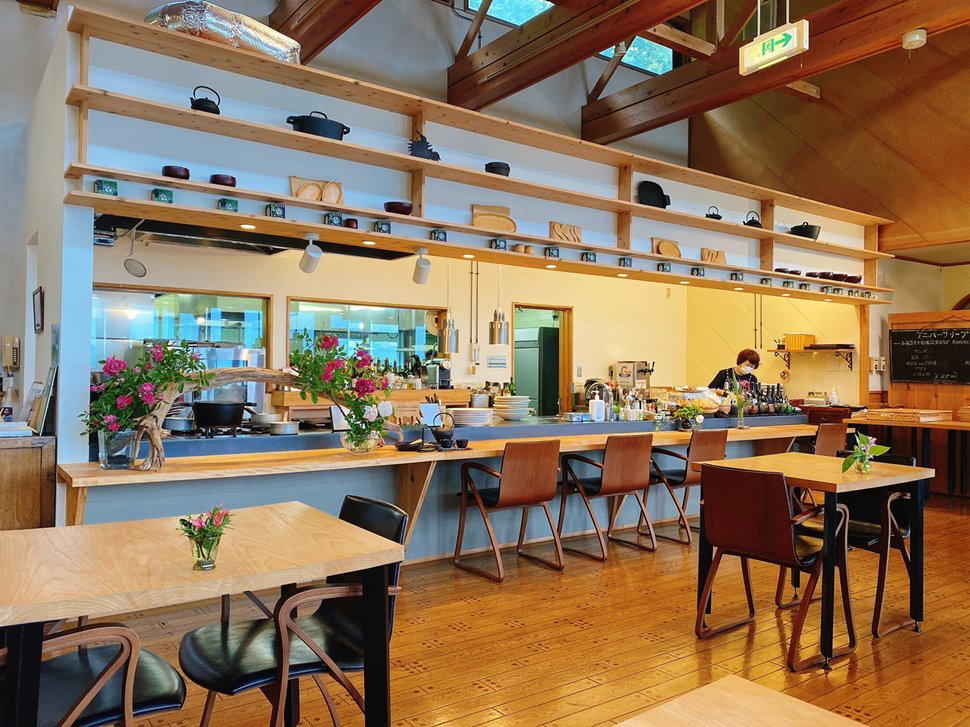
Where the Sanriku Coast Sets the Menu
Tanohata is not a village you pass through. Perched on the cliffs of Iwate Prefecture's Shimohei District, roughly midway along the Sanriku Coast between Miyako and Kuji, it sits at the end of a deliberate journey — the kind of place that requires commitment before you arrive. The approach, whether by the Sanriku Railway's Rias Line or by car along Route 45 with the Pacific visible through the tree breaks, carries a particular atmosphere: remote, austere, coastal. By the time you reach Aketo, the hamlet address of ロレオール田野畑, the surrounding landscape has already done much of the editorial work. You understand, before you've sat down, that this is a restaurant shaped by its geography rather than positioned against urban peer sets.
That geographical specificity matters more to the dining proposition here than almost any other framing. The Sanriku Coast is one of Japan's most productive coastal fisheries, where cold Oyashio currents push against the continental shelf and create nutrient-dense waters. Abalone, sea urchin, wakame, and various species of Pacific fish are harvested within close proximity of Tanohata's shoreline. Inland, the Kitakami Highlands provide cooler mountain farmland conditions that support short-season vegetables, foraged mountain vegetables known as sansai, and beef cattle. The sourcing radius available to a kitchen in this location is, in functional terms, a compressed version of the full Tohoku larder — sea and mountain within reach of the same kitchen on the same day. That compression, in any serious restaurant context, is an asset rather than a limitation.
For comparison, consider how urban fine-dining establishments elsewhere in Japan frame their sourcing relationships. HAJIME in Osaka works through a philosophy of Japanese biodiversity, constructing elaborate sourcing maps that span the archipelago. Gion Sasaki in Kyoto operates inside the deeply codified ingredient seasons of kaiseki tradition. Both approaches require distance, product is sourced, transported, and incorporated into menus that are partially about the act of assembly across geography. A kitchen sited in Tanohata has no such distance to negotiate. The product arrives with minimal intermediary steps, and the cuisine is, almost by structural necessity, a direct expression of what's available from the surrounding coast and hills.
The Tohoku Sourcing Context
The Sanriku region's reputation as a seafood source predates the restaurant industry's interest in provenance by several centuries. Tanohata-specific abalone has been documented as a tribute product historically sent to central authorities, a signal of its perceived quality within Japanese culinary culture long before contemporary farm-to-table framing existed. The 2011 earthquake and tsunami caused significant damage to the Sanriku Coast fisheries, and the subsequent reconstruction of fishing infrastructure brought new investment and attention to the region's producers. By the mid-2010s, Sanriku seafood was appearing more deliberately on urban menus in Tokyo and Sendai as part of recovery-support sourcing programs, a pattern that indirectly refined the region's culinary profile nationally.
Restaurants working directly within this sourcing network, rather than drawing on it from a distance, occupy a specific position in Japan's food geography. Venues like akordu in Nara or Goh in Fukuoka demonstrate how regionally embedded kitchens can build editorial identities around their immediate food culture without requiring the validation structures of Tokyo or Osaka's dining circuits. The pattern at ロレオール田野畑 belongs to this broader category: a kitchen whose sourcing logic is geographical rather than aspirational, rooted in what the coast and highlands of northern Iwate actually produce through each season.
Seasonality in this latitude runs on a compressed and occasionally unpredictable schedule. Winters are cold enough to affect maritime and agricultural production simultaneously, pushing menus toward preserved, dried, and fermented components alongside whatever the winter fishery yields. Spring in Tohoku arrives late and is marked by a burst of mountain vegetables, fiddleheads, butterbur, various wild greens, that appear briefly and define the season's table with particular clarity. Summer brings sea urchin volume from the Sanriku waters, and autumn the harvest cycle from the highlands. A restaurant that responds to this calendar honestly produces menus that shift substantially across the year, which is a significant draw for the returning visitor.
Rural Fine Dining and the Distance Premium
There is a category of Japanese restaurant that has developed quietly outside the major rating circuits: the rural destination table, often French-influenced in technique but Tohoku or Hokkaido in ingredient identity. These establishments exist at a remove from Michelin's urban survey geography, which historically concentrates on Tokyo, Osaka, Kyoto, and Fukuoka. They are not absent from critical attention, but they operate outside the awarding infrastructure that applies to venues such as Harutaka in Tokyo or the kaiseki counters of central Kyoto.
This positional gap has its own implications for the diner. Venues at this remove from the rating circuits require more active curation, which is precisely where platforms like EP Club's full Shimohei District restaurants guide become useful reference points. In international contexts, the parallel would be a kitchen like those found in rural France or coastal Scandinavia: technically accomplished, ingredient-led, and largely invisible to the same awarding bodies that cover their urban peers.
The name ロレオール, L'Auréole in French transliteration, signals a French culinary orientation, a common training and presentational framework for Japanese kitchens working premium ingredients from regional sourcing networks. This structure appears elsewhere: Bistro Ange in Toyohashi and Denko Sekka in Hiroshima represent variants of the French-in-Japanese-regions model, where European technique is applied to local product. The approach is not a compromise, it's a deliberate pairing that allows precision cookery to amplify rather than override what regional sourcing delivers.
Planning a Visit to Tanohata
Getting to Tanohata requires advance logistical planning. The Sanriku Railway Rias Line serves the coast and connects to the national shinkansen network at Ichinoseki or Morioka, from which Tanohata is reachable via local train and road transfers. The journey from Tokyo is a committed day of travel, which positions ロレオール田野畑 as a destination restaurant rather than an incidental stop. This also means that combining the visit with the broader Sanriku Geopark coastline, particularly the Kitayamazaki cliffs a short distance north of Tanohata, makes structural sense. As with rural destination restaurants globally, the pattern is documented in regional Japan, rural Burgundy, and coastal Norway alike, the extended travel time tends to produce a diner who arrives more deliberately present. Booking details, hours, and current pricing should be confirmed directly with the venue ahead of travel, as information for rural establishments in this district is not consistently centralised in aggregator databases.
Frequently asked questions
Does ロレオール田野畑 work for a family meal?
The restaurant is located at 309-5 Aketo in Tanohata, a remote coastal village in Shimohei District — a setting that skews toward deliberate destination visits rather than casual family outings. Families making the trip via the Sanriku Railway Rias Line should plan around the restaurant's format and confirm suitability for young children directly with the venue before booking, as no family-specific policy is publicly documented.
What is the atmosphere like at ロレオール田野畑?
Tanohata sits on the cliffs of Iwate Prefecture's Sanriku Coast, and that geography shapes the dining context at ロレオール田野畑. Rural destination restaurants in this category tend toward quiet intimacy rather than urban energy: small rooms, local materials, and a pacing tied to the sourcing rather than a city service rhythm.
Is ロレオール田野畑 worth the journey from Morioka or Sendai?
Reaching Tanohata from Morioka involves connecting to the Sanriku Railway Rias Line, placing it firmly in the category of restaurants requiring a committed travel day rather than a spontaneous dinner reservation. That distance filters the room: the guests who make the trip to this cliff-edge address in Shimohei District are there specifically for what the Sanriku Coast produces. Whether that trade-off is justified depends on what the current menu delivers, which is best assessed by contacting the restaurant directly before planning travel.
What do people recommend at ロレオール田野畑?
The Sanriku Coast around Tanohata has a centuries-old reputation as a seafood source, with sea urchin, abalone, and cold-water fish among the region's documented specialities. Visitors consistently travel here for produce tied directly to that coastal identity.
Where is ロレオール田野畑 located?
ロレオール田野畑 is located at 309-5 Aketo, Tanohata, Shimohei District, Iwate 028-8402, Japan, Shimohei District.
Can I walk in to ロレオール田野畑?
Walk-in dining is unlikely to be practical at this address. Tanohata is served by the Sanriku Railway Rias Line, but the village sits in a remote section of Shimohei District where most visitors arrive by prior arrangement. Reaching 309-5 Aketo requires planning, and destination restaurants in this category across rural Tohoku almost universally require advance reservations. check the venue's official channels to confirm booking requirements.
What's the signature at ロレオール田野畑?
The restaurant's position on the Sanriku Coast in Tanohata points to Tohoku seafood provenance as the defining thread, a sourcing tradition in this coastal stretch of Iwate Prefecture that predates the modern restaurant industry. Rural destination tables in this part of Japan frequently organise their menus around hyper-local catch and seasonal agricultural produce from the surrounding Shimohei District.
Comparison Snapshot
Comparable venues nearby, for context on price, style, and recognition.
| Venue | Cuisine | Price | Awards | Notes |
|---|---|---|---|---|
| ロレオール田野畑This venue — the venue you are viewing | Local Iwate French Fusion | $50–100 | Not listed | Not listed |
| Asperges (アスペルジュ) | Biei Vegetable French | Not listed | Not listed | 美瑛町 |
| Cheval | Seasonal French with Japanese influences | $50–100 | Michelin Plate | Nihonbashi |
| ビストロ ダイア | Neo French Bistro | Not listed | Not listed | Shinei |
| à nu Shohei Shimano | French Fine Dining | Not listed | Not listed | Hiroo |
| Au Gamin de Tokio | French Bistro | Not listed | Not listed | Ebisu |
ロレオール田野畑
The wine
- Wine program
- Curated wine list
- Sake program
Details
- Scenic
- Cozy
- Elegant
- Rustic
- Date Night
- Special Occasion
- Sake Program
- Local Sourcing
- Waterfront
- Set Menu
Current opening hours
- Monday
- 12–2 PM, 6–8 PM
- Tuesday
- 12–2 PM, 6–8 PM
- Wednesday
- 12–2 PM, 6–8 PM
- Thursday
- 12–2 PM, 6–8 PM
- Friday
- 12–2 PM, 6–8 PM
- Saturday
- 12–2 PM, 6–8 PM
- Sunday
- 12–2 PM, 6–8 PM
Hours can change for holidays and private events. Last verified .
Calm and stylish space with dramatic ocean views from the cliff edge, offering a serene and sophisticated dining atmosphere.