Our verdict
One of Leipzig's most architecturally distinctive dining addresses, Bayerischer Bahnhof occupies a 19th-century railway terminus whose vaulted stone spaces set a tone that few German restaurant rooms can match. The kitchen works within a city that has quietly developed a serious fine-dining corridor, placing this address in company with strong regional peers. Its wine program is the detail that rewards advance attention.

Pearl is the En Primeur Club membership app — saves, bookings, and concierge access live there. Same editors, same standards.
- Address
- î Bayrischer Pl. 1, 04103 Leipzig, Germany î
- Phone
- +493411245760
- Hours
- Mon–Fri 12–10 PMSat–Sun 11 AM–10 PM
- Website
- bayerischer-bahnhof.de
- Directions
- Get directions
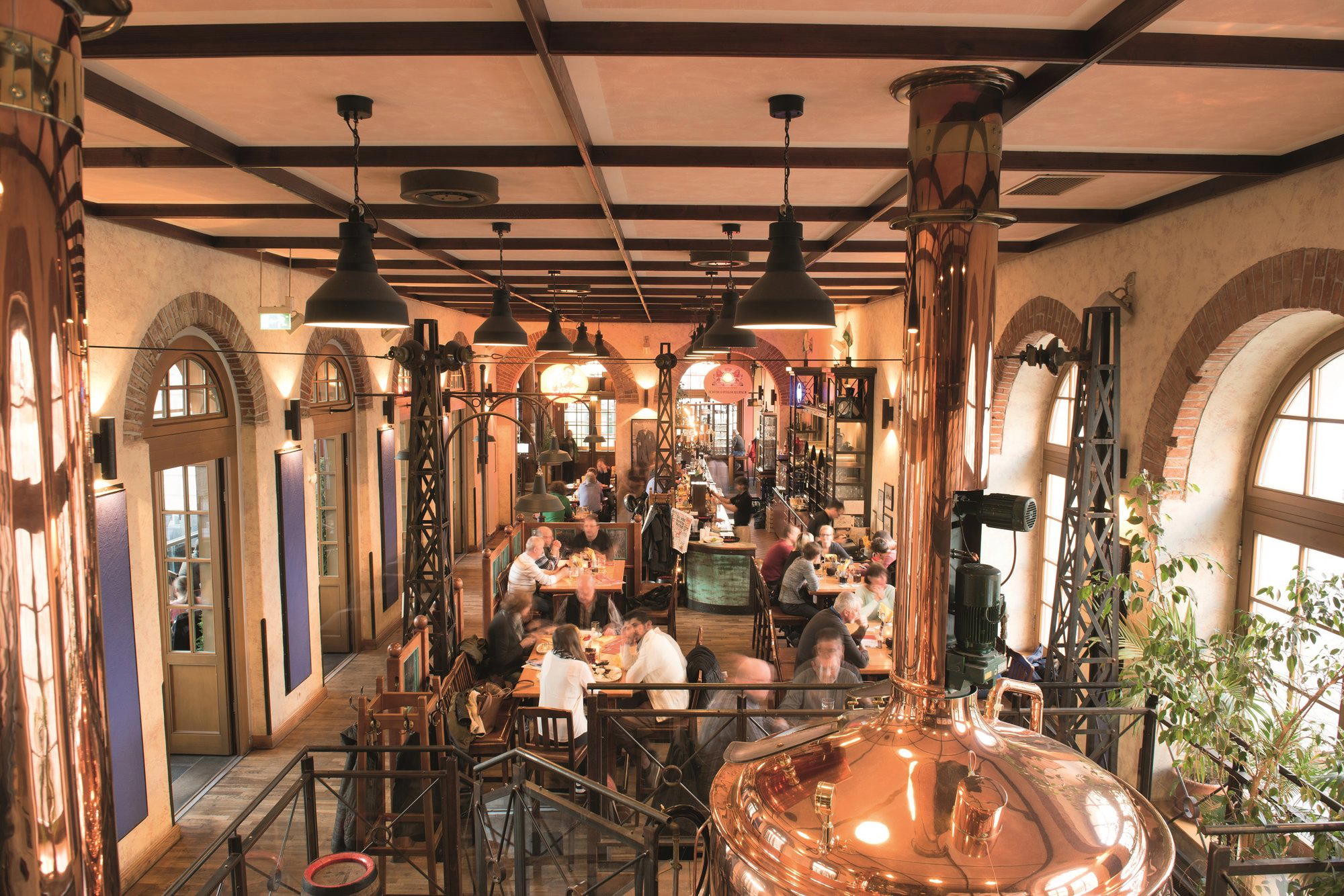
The menu
What to order
- Leipziger Gose
- Pork knuckle
- Goulash
A Railway Terminus Repurposed for the Table
Leipzig's Bayerischer Bahnhof — the Bavarian Station — holds a specific place in European railway history as one of the oldest surviving terminal station structures on the continent. When a building of that age and volume is turned over to hospitality, the architecture does half the editorial work before a single plate arrives. The load-bearing stone, the proportions of the original terminus hall, and the patina accumulated over nearly two centuries create a room that no fit-out budget can replicate from scratch. Dining here puts you inside a piece of Saxon infrastructure that long predates the city's 20th-century upheavals.
That physical setting places Bayerischer Bahnhof in a specific tier of German dining addresses where the room itself is a credential. Compare the converted-space tradition at high-end German restaurants, from monastery cellars in the Mosel to Wilhelmine-era townhouses repurposed in Hamburg, and you find that architectural weight tends to attract kitchen programs with similar ambition. Leipzig's fine-dining corridor has developed considerably over the past decade, and this address sits within a city that now fields serious competition at the €€€ and €€€€ price points, including Kuultivo (Modern Cuisine) and Stadtpfeiffer (Creative) at the upper end of the local market.
Where Leipzig's Wine Culture Has Arrived
German fine dining has undergone a quiet reappraisal of its wine programs over the past fifteen years. The dominant model for decades was deep German cellar depth, Riesling across every Prädikat, Spätburgunder in various guises, supplemented by a token Burgundy or Bordeaux selection chosen more for prestige than integration with the kitchen. The more interesting rooms now operate differently: the cellar is curated rather than encyclopedic, the sommelier's role is interpretive rather than archival, and the list reads as an editorial position rather than a catalog.
Bayerischer Bahnhof's wine program is the lens through which the venue repays closest attention. A terminus building of this scale and heritage, positioned in a city that has seen significant restaurant investment since reunification, creates the conditions for a cellar worth investigating. The question worth asking of any serious German wine list is how it handles the tension between local producers, Saxony itself produces wines, particularly along the Elbe, and the international references that German sommeliers have historically reached for. Saxony's wine output is small relative to the Mosel, Rheingau, or Pfalz, but the Elbe Valley producers have attracted growing critical attention, and a wine program anchored in this region carries specificity that a generic German list cannot match.
For comparison, the wine programs that have drawn the most sustained attention at Germany's three-star level, venues like Schwarzwaldstube in Baiersbronn, Aqua in Wolfsburg, and Vendôme in Bergisch Gladbach, share a commitment to depth over breadth and a clear philosophy about how wine relates to the food on the plate. The gap between that tier and a mid-market Leipzig address is measurable, but the direction of travel matters as much as the current position.
Leipzig's Position in German Fine Dining
To understand where Bayerischer Bahnhof sits, it helps to map Leipzig's dining development against Germany's broader fine-dining geography. The country's recognized three-star addresses cluster heavily in the west and south: JAN in Munich, Waldhotel Sonnora in Dreis, Victor's Fine Dining by Christian Bau in Perl. The east, including Saxony, has been slower to accumulate Michelin recognition, though Leipzig has attracted investment and culinary talent at a rate that suggests the gap is narrowing. Schanz in Piesport and ES:SENZ in Grassau represent the kind of committed regional ambition that Leipzig's better restaurants are beginning to mirror.
Within Leipzig itself, the dining spectrum runs from Addis Café and Alfa Restaurant at the more accessible end to Stadtpfeiffer and Kuultivo at the leading. 997 Sushi Restaurant demonstrates the city's growing appetite for specialist formats. Bayerischer Bahnhof occupies its own category within that spectrum, defined as much by its setting as by its kitchen category. See the full Leipzig restaurants guide for a complete picture of where the city's dining map currently stands.
The Broader Fine-Dining Reference Frame
Germany's most ambitious restaurant formats, whether the dessert-led innovation of CODA Dessert Dining in Berlin, the classical rigor of Restaurant Haerlin in Hamburg, or the technical precision of international references like Le Bernardin in New York City and Lazy Bear in San Francisco, share a willingness to commit to a specific point of view rather than defaulting to comfortable category conventions. The venues that hold attention over time tend to be those where the room, the kitchen, and the cellar are working toward a coherent proposition.
Bayerischer Bahnhof's inherited architecture provides an unusually strong starting point for that kind of coherence. The risk with landmark buildings is that the room becomes the concept and the food exists as backdrop. The reward, when kitchen and cellar rise to meet the setting, is a dining address with a layered identity that takes years to accumulate and cannot be manufactured quickly.
Planning Your Visit
Bayerischer Bahnhof is located at Bayrischer Platz 1, 04103 Leipzig, placing it at the historic southern terminus that gives the venue its name and much of its character. Leipzig is well connected by high-speed rail from Berlin (approximately one hour on direct ICE services) and from Frankfurt and Munich, making it accessible for a day trip from other German cities, though the dining room merits an overnight stay to give adequate time to the wine list.
Frequently asked questions
How do I find Bayerischer Bahnhof?
Bayerischer Bahnhof is located at î Bayrischer Pl. 1, 04103 Leipzig, Germany î , Leipzig.
Is Bayerischer Bahnhof a good venue for understanding Leipzig's wine culture?
Leipzig's restaurant scene has repositioned its wine offering significantly since 2010, moving away from internationally dominated lists toward German and Austrian labels, and Bayerischer Bahnhof sits within that city-wide shift. The venue's location in Saxony — a wine-producing federal state, albeit a minor one — gives regional provenance some local relevance. For visitors interested in how German fine dining is reconsidering its wine identity, Leipzig in general and this address specifically offer a useful vantage point.
What should I eat at Bayerischer Bahnhof?
The kitchen's focus aligns with Leipzig's broader shift toward regional German produce, with wine programs increasingly built around German and Austrian labels rather than the imported-heavy lists that dominated a decade ago. The architectural setting of a preserved nineteenth-century terminal tends to inform a more composed, sit-down format rather than casual grazing.
Can I walk in to Bayerischer Bahnhof?
Walk-in availability depends on the day and service period — a venue operating inside a landmark terminus in Leipzig's southern quarter draws both local regulars and visitors. Contacting the venue ahead of time is the more reliable approach, particularly for weekend evenings. The address at Bayrischer Platz 1 is straightforward to reach from Leipzig's city centre.
What makes Bayerischer Bahnhof worth seeking out?
The building itself carries documented historical weight as one of the oldest surviving railway terminal structures in Europe, which places the dining experience inside a context few German restaurants can claim. Leipzig has developed a credible fine-dining tier over the past fifteen years, and Bayerischer Bahnhof sits within that scene at an address that doubles as a heritage site. For visitors mapping German dining cities, Leipzig now warrants consideration alongside the more established circuits of Berlin, Munich, and Hamburg.
How does Bayerischer Bahnhof handle allergies?
As with any Leipzig restaurant operating at this level, raising specific requirements directly with the team at Bayrischer Platz 1 before arrival is the practical step. German food service law requires allergen information to be available on request.
How It Stacks Up
Comparable venues nearby, for context on price, style, and recognition.
| Venue | Cuisine | Price | Notes |
|---|---|---|---|
| Bayerischer BahnhofThis venue — the venue you are viewing | Traditional German Brewery with Saxon-Bavarian Cuisine | $20–30 | Not listed |
| Spinnerei BetriebsgesellschaftmbH | Café in Arts Complex | Not listed | Neulindenau |
| endless | Modern International Breakfast | $10–20 | Zentrum |
| Gaststätte Kollektiv | Traditional East German Ostalgie | $20–30 | Südvorstadt |
| Naumanns Gaststube | Traditional German Gaststube | $20–30 | Lindenau |
| Café Tunichtgut | Cozy German Café with Seasonal Specialties | Not listed | Zentrum-West |
Continue exploring
More in Leipzig
Restaurants in Leipzig
Browse all →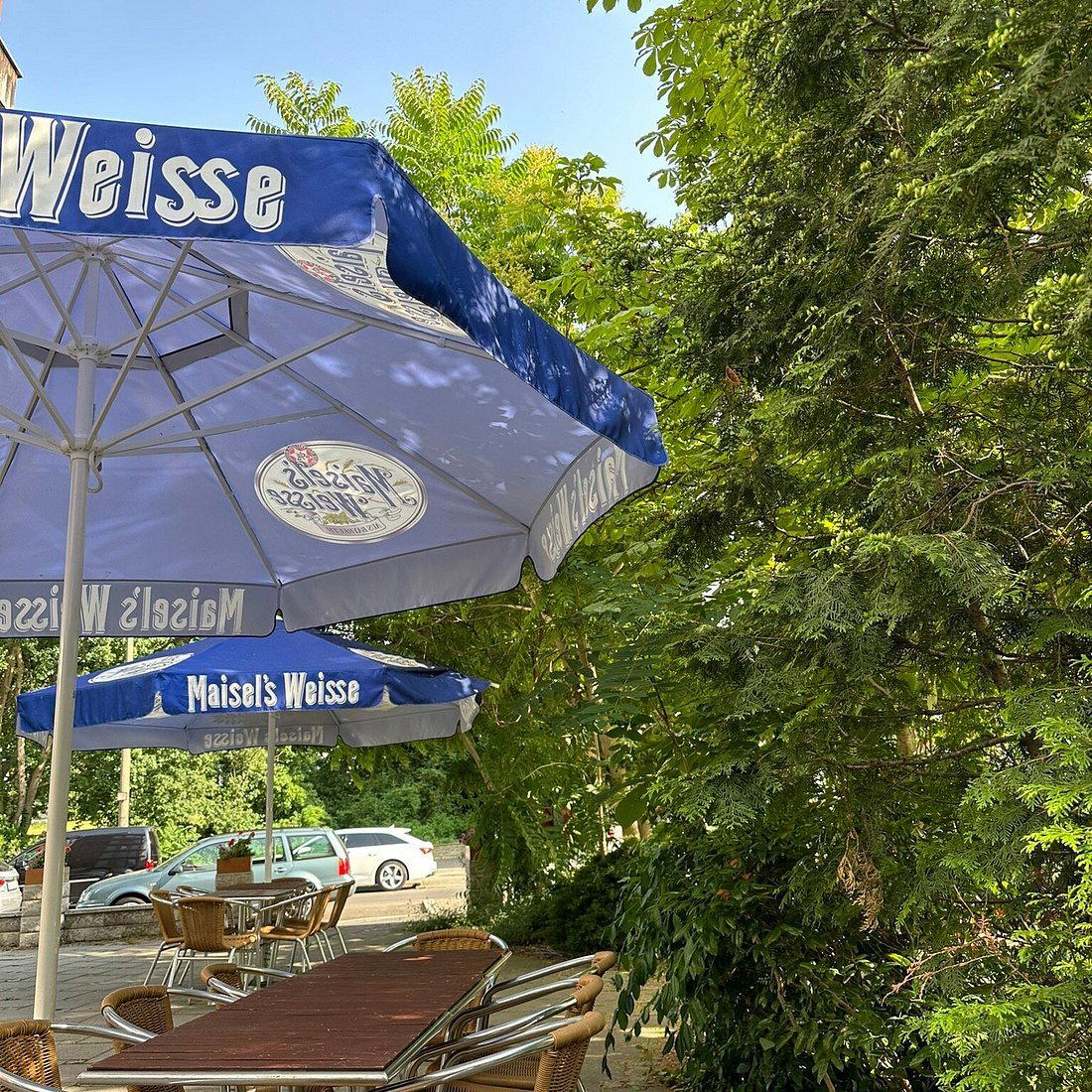
Bars in Leipzig
Browse all →
Hotels in Leipzig
Browse all →
Wineries in Leipzig
Browse all →
Details
- Historic
- Lively
- Rustic
- Well Known
- Group Dining
- Casual Hangout
- Celebration
- Historic Building
- Open Kitchen
- Beer Garden
- Beer Program
- Local Sourcing
- A La Carte
- Beer Program
- Vegetarian Friendly
Current opening hours
- Monday
- 12–10 PM
- Tuesday
- 12–10 PM
- Wednesday
- 12–10 PM
- Thursday
- 12–10 PM
- Friday
- 12–10 PM
- Saturday
- 11 AM–10 PM
- Sunday
- 11 AM–10 PM
Hours can change for holidays and private events. Last verified .
Historic train station atmosphere with individual rooms evoking the past, cozy beer garden, and lively social-centric vibe.