
Tabelog 100 #31
Our verdict
Bansen Store brings Thai and curry cooking into Mito’s casual dining map rather than the city’s formal-occasion tier. Its Tabelog 100 Asian cuisine / Ethnic cuisine EAST selections in 2022, 2023, and 2024 give it a clear trust signal, while the house-restaurant format keeps the experience closer to a neighborhood table than a destination dining room.

Pearl is the En Primeur Club membership app — saves, bookings, and concierge access live there. Same editors, same standards.
- Address
- 367-1 Hiratocho, Mito, Ibaraki 311-1113, Japan
- Phone
- +81 29-267-0273
- Hours
- Mon ClosedTue–Sun 11 AM–9:30 PM
- Website
- tabelog.com
- Directions
- Get directions
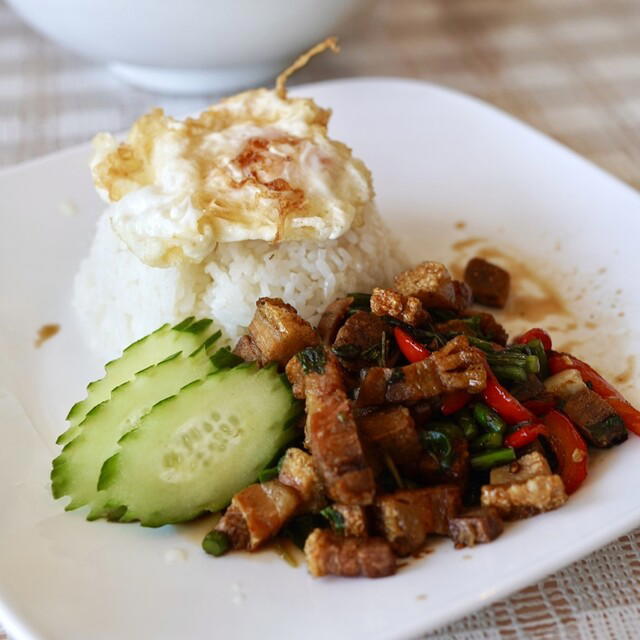
Approaching a house restaurant in Hiratocho changes the register of a meal before the first order. This is not the polished Mito of hotel dining rooms or station-adjacent business lunches; it belongs to quieter Ibaraki, where a residential setting can carry serious food credibility without announcing itself. In that context, Bansen Store matters because Thai and curry cooking sit outside the familiar Japanese categories that dominate regional dining lists, yet here they have earned repeated recognition in a field covering Asian and ethnic cooking across eastern Japan.
Thai and curry cooking in a regional Japanese frame
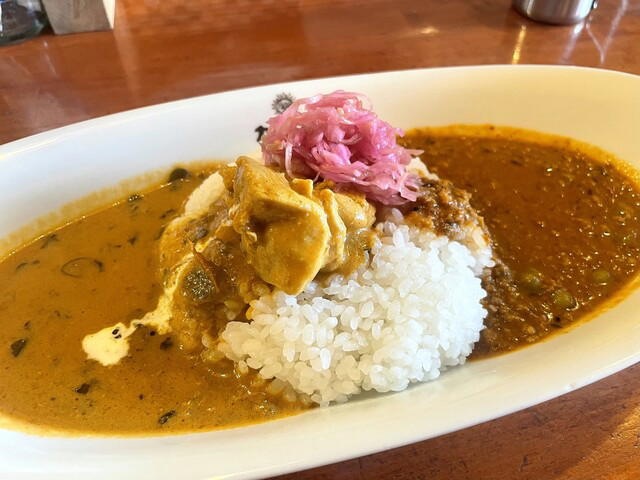
Japan’s relationship with curry is deep, but Thai cooking occupies another cultural lane. Japanese curry became domestic comfort food through adaptation, thick sauces, rice-plate formats, and family-restaurant reach. Thai curry keeps a Southeast Asian logic: herbs, chile, coconut, fish sauce, sourness, and heat arranged around balance rather than weight. A regional restaurant working in both categories must translate without flattening the cuisine into generic spice. That is the useful lens for Bansen Store: it sits where Japanese curry familiarity meets a broader Thai vocabulary, in a city better known to many travelers for gardens, natto, and access to the Pacific coast than for Southeast Asian dining.
The venue’s repeated Tabelog 100 Asian cuisine / Ethnic cuisine EAST selections in 2022, 2023, and 2024 put it in a narrower group than the price point suggests. Hyakumeiten lists tend to reward consistency and local user confidence rather than luxury cues, making them especially relevant for casual regional restaurants. A Tabelog score of 3.57 adds another signal: not a trophy-room number, but enough to show sustained approval in a category where suburban location and everyday pricing can hide serious kitchens from visitors planning around central-city dining.
Mito’s comparison set also explains the position. Agni occupies a higher dinner bracket while keeping lunch accessible, and Karma sits closer to the same everyday-spend range. That spread tells a wider story about South and Southeast Asian cooking in regional Japan: some rooms push toward occasion dining, others function as weekly restaurants, and the strongest earn attention through repeat utility rather than spectacle. Bansen Store belongs to the latter camp, with recognition that makes the casual format more interesting, not less.
A small room, a practical format, and a cuisine built for repeat visits
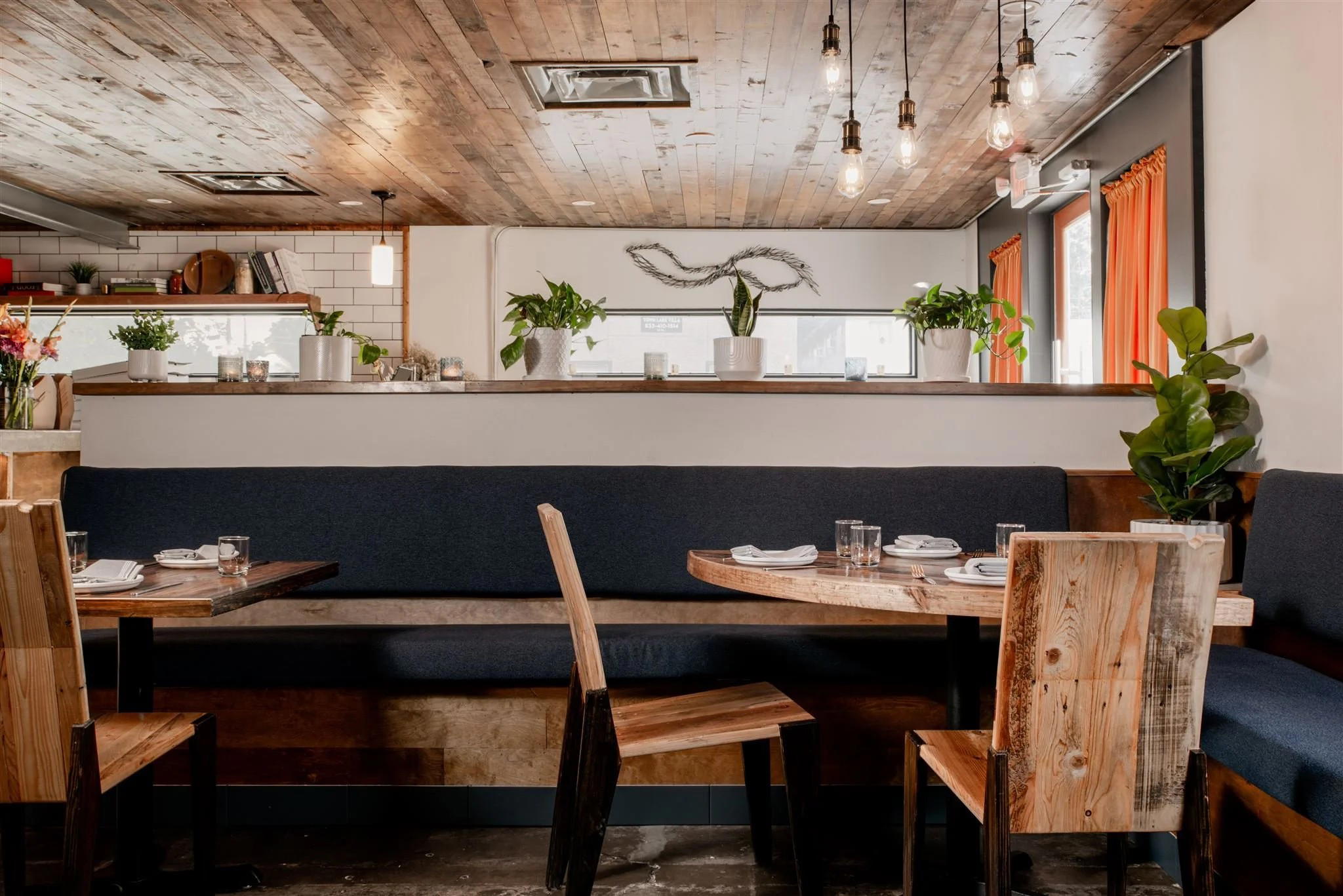
The room is modest, with 30 seats arranged around tables rather than a counter or tasting-menu stage. That matters because Thai and curry restaurants in Japan often thrive on group ordering, shared plates, and repeatable lunch-to-dinner use. The format is not built around a chef’s biography or scripted progression, but around the social grammar of friends eating together, reinforced by the restaurant’s own occasion category. Here, the table structure tells the critic as much as the menu category: the experience is collective, direct, and low-friction.
Take-out belongs to the same story. In Japan, serious food culture is often discussed through reservation counters and formal menus, but regional dining strength frequently appears in places serving several needs: a weekday meal, a casual evening, a carried-home order, a small group table. Thai curry travels better than many composed dishes, and curry has long been tied to convenience as well as comfort. The practical service format does not dilute the cultural point. It shows how immigrant and regional Asian cuisines become part of local eating habits once they move beyond novelty.
The cash-only payment structure and compact parking provision further separate it from urban dining assumptions. These details are not inconveniences so much as clues. Mito and Oarai-area eating is often car-aware, locally paced, and less dependent on the reservation platforms that shape Tokyo dining behavior. A traveler building a day around the coast, Kairakuen, or central Mito should read this as a regional meal with its own operating logic, not a city-center restaurant transplanted into Ibaraki.
How to place it on a Mito dining itinerary
For a visitor, Bansen Store does not replace Mito’s Japanese restaurants; it broadens the map. A trip focused only on local specialties can miss how regional Japanese cities eat now. Thai, curry, Korean, Vietnamese, burger shops, cafés, and izakaya sit beside soba, sushi, tonkatsu, and kaiseki, forming a dining culture less tidy than tourism shorthand suggests. Nearby Mito listings such as Kimura Ya Honten, Koji Koji, and marcador help show that range, while Our full Mito restaurants guide is the better frame for deciding how much of a trip should go to casual local dining versus formal meals.
The broader planning map matters because Bansen Store is not in the middle of a dense dining crawl. Pair it with the area’s transport rhythm, coastal movement, or a wider Ibaraki day rather than treating it as a late-night afterthought. Travelers comparing categories can also use Our full Mito hotels guide, Our full Mito bars guide, Our full Mito wineries guide, and Our full Mito experiences guide to see how thin or deep each sector runs in the city.
There is also value in reading it against Asian and curry cooking elsewhere in Japan. (Shoku) Vietnam in Kawasaki and [Curry Senmon Ten] Maruyama Kyoju. in Sapporo show how non-Japanese and curry traditions take different regional forms, while unrelated formats such as -Grilled beef Sukiyaki- KAMAKURA TANUKIAN 鎌倉 たぬき庵 in Kamakura. 鮪と炭火焼き うお炭 秋葉原店 in Tokyo.cafe in Osaka.know in Kumamoto, Jōdo Saké Bar in Los Angeles, and Onigiri Time in Pasadena show how Japanese dining culture now moves through domestic regions and overseas cities at once.
The editorial answer is simple: choose Bansen Store when the aim is a grounded regional meal with credible recognition, not theater. The award history gives it authority, the category gives it cultural interest, and the house-restaurant scale keeps expectations aligned. In Mito, that combination is more useful than another generic recommendation near the station.
Frequently asked questions
What should I budget for a meal at Bansen Store?
Pricing at Bansen Store is listed as JPY 1,000 - JPY 1,999 JPY 1,000 - JPY 1,999.
Is Bansen Store open every day?
Hours at Bansen Store: Mon: Closed; Tue: 11 AM–9:30 PM; Wed: 11 AM–9:30 PM; Thu: 11 AM–9:30 PM; Fri: 11 AM–9:30 PM; Sat: 11 AM–9:30 PM; Sun: 11 AM–9:30 PM.
Where exactly is Bansen Store?
Bansen Store is located in Mito.
What's the standout thing about Bansen Store?
Its clearest credential is the Tabelog 100 selection for Asian cuisine / Ethnic cuisine EAST in 2024, with earlier selections in 2023 and 2022. In practical terms, it is a 30-seat Thai and curry restaurant in Mito with dishes priced around JPY 1,000–JPY 1,999, which keeps it accessible as well as notable.
Budget Reality Check
Comparable venues by cuisine and price in the same metro.
| Venue | Cuisine | Price | Awards | Notes |
|---|---|---|---|---|
| Bansen StoreThis venue — the venue you are viewing | Casual Thai & Curry House | $10–20 | Tabelog 100 #31 | Not listed |
| Kimura Ya Honten | Traditional Japanese wagashi shop | $1–10 | Tabelog 100 #72 | Minamimachi, Traditional Japanese wagashi shop |
| Koji Koji | Sri Lankan | Not listed | Tabelog 100 #47 | Akatsuka, Sri Lankan |
| Ninomae | Handmade Hitachi Aki soba | $50–100 | Tabelog 100 #45 | / Suehirocho, Mito, Handmade Hitachi Aki soba |
| marcador | Casual Spanish Bar & Restaurant | $30–50 | Tabelog 100 #13 | Minamimachi, Casual Spanish Bar & Restaurant |
| Agni | Sichuan & Chinese Dining Bar with Japanese-Western Influences | $10–20 | Tabelog 100 #74 | Mito, Sichuan & Chinese Dining Bar with Japanese-Western Influences |
Recognition history
Dated appearances from independent guides and award organizations, with the underlying list record or original source where available.
Tabelog 100 #31 · No. 31
Tabelog · Tabelog 100 - Asian cuisine / Ethnic cuisine - EAST - 2024
Continue exploring
More in Mito
Details
- Cozy
- Lively
- Casual Hangout
- Group Dining
- Solo
- Family
- Standalone
- A La Carte
Current opening hours
- Monday
- Closed
- Tuesday
- 11 AM–9:30 PM
- Wednesday
- 11 AM–9:30 PM
- Thursday
- 11 AM–9:30 PM
- Friday
- 11 AM–9:30 PM
- Saturday
- 11 AM–9:30 PM
- Sunday
- 11 AM–9:30 PM
Hours can change for holidays and private events. Last verified .